Neonatal sepsis kills one newborn every 45 seconds, or 400,000-700,000 deaths per year. A rapid, accurate point-of-care test could save 100,000-280,000 newborn lives in low and middle-income countries and reduce the unnecessary use of antibiotics by more than half. @CGDev has a thoughtful, detailed proposal for a $60 million fund to accelerate the development and adoption of an effective test, including an Advance Market Commitment. I hope philanthropists will consider supporting this! See a link to the proposal in the replies.
Traditional kohl eyeliner is sometimes made from near pure lead (in this case 30%)
Its application to children is common in the Middle East and North Africa
This observational study in Ghana found eyeliner use increased odds of high blood lead rates 41x
https://t.co/I7woW2h6Jc
Help end childhood lead poisoning through better testing.
@RenPhilanthropy's @robbiebarbero and @CHAI_health have been working with global experts to draft a target product profile for an affordable, point-of-care blood lead level screening test. This test could help reach the 1 in 3 children worldwide with elevated blood lead levels, who currently have no access to testing.
The draft is open for public comment until July 8, 2026, and all feedback is confidential.
https://t.co/oP1ebkw0MH
Very interesting post by @kroetscha about how little (adoption of) innovation there is in clinical trials in part due to risk aversion and steps the FDA could take to encourage best practices. Effects on costs could be surprisingly large! https://t.co/WRtzG4uEii
@michael_wiebe That might be true, I am not sure what source you are using. But I think the bigger reason is that the housing market was probably closer to equilibrium in pre-reform São Paulo because zoning restrictions were not as binding (de facto) as those in Auckland.
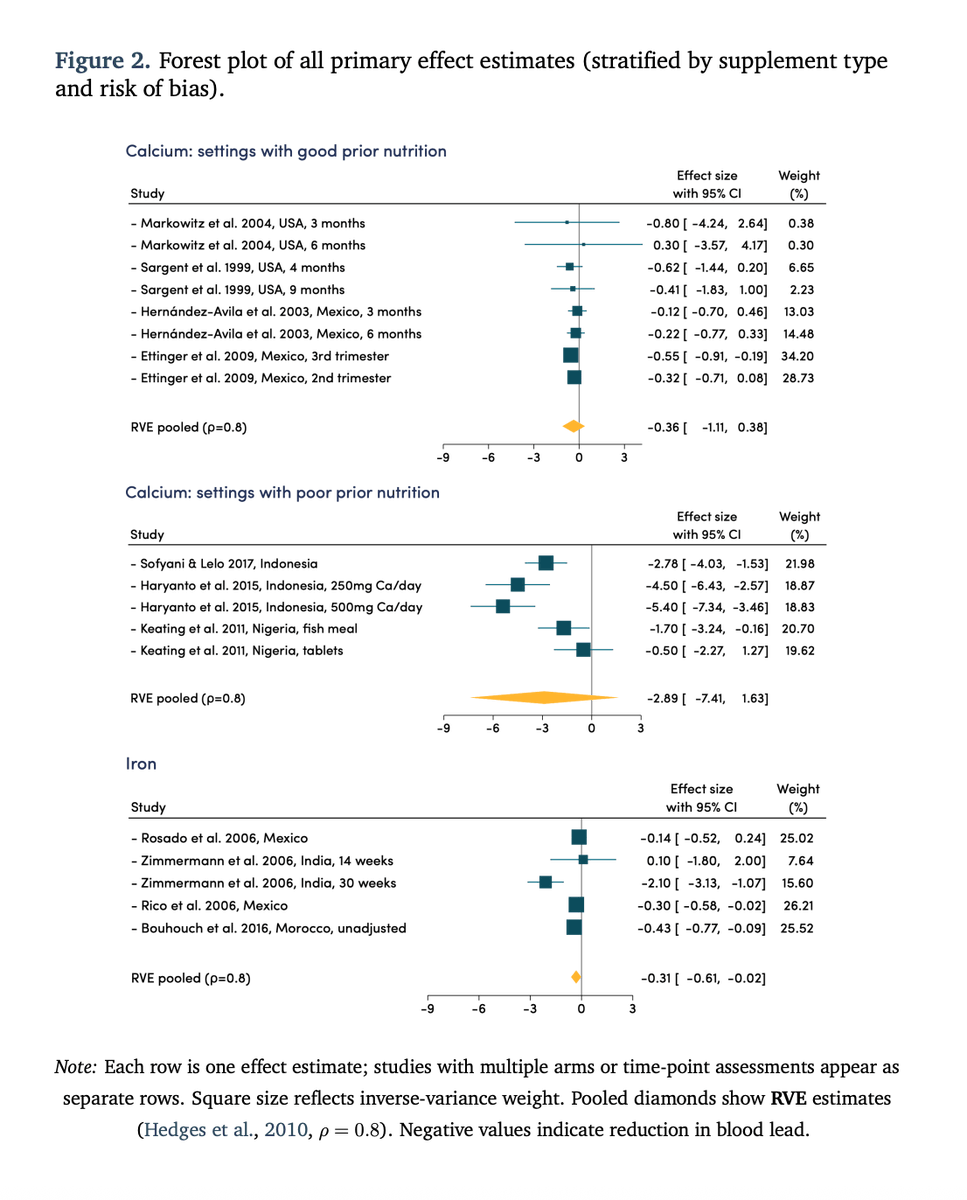
New @CGDev paper!
What can you actually do about lead poisoning? Nutritional supplements probably help a bit, are very cheap, but far from solve the problem.
A systematic review/meta-analysis of a very thin literature (more research needed!)
NSF announces $1.5B NSF X-Labs initiative to pursue generational breakthrough science efforts. NSF X-Labs will scale a new generation of transformative independent research organizations to advance breakthrough science outside of traditional institutions. https://t.co/LljEcBoBFa
✍️ New article: “Childhood stunting fell dramatically over the 20th century”
One in four children in the world today suffers from “stunting”. That’s 150 *million* children under five.
A stunted child is too short for their age due to poor nutrition and frequent infections. Stunting suggests that their physical and cognitive development have been hindered, and the effects can last a lifetime.
In many countries, stunting was once prevalent but has now been nearly eliminated. Japan is one such success story that has particularly high-quality data.
But there are still many countries, especially in Asia and Africa, where stunting affects more than a third of all children. You can see this in the chart.
How have some countries made so much progress against stunting? And what can other countries where rates are still high learn from this?
In a new article, @_HannahRitchie and Tuna Acisu answer these questions by zooming in on Japan. Their analysis is made possible by a crucial new dataset published by Eric Schneider and colleagues.
Before World War II, Japan focused on tackling infectious disease, particularly through the expansion of clean, piped water. Stunting declined at a moderate pace.
After the war, they tackled both disease *and* diet, with diversified foods, school lunch programs, and more. This multifaceted approach made progress nearly three times faster.
La raison pour laquelle les Etats-Unis consacrent une part plus importante de leur PIB à la santé est que cette dernière est un bien supérieur: une forme de consommation dont la part dans le budget des ménages croit plus que proportionnellement avec leur niveau de revenu.
À travers l’ensemble des pays de l’OCDE, une hausse de 1% du PIB se traduit par une hausse de 1,8% des dépenses de santé. La relation log-linéaire des dépenses de santé avec le PIB par habitant est très robuste et les États-Unis sont au niveau attendu étant donné leur richesse.
C’est vrai à travers tant de systèmes différents que ça n’a à l’évidence pas de rapport avec la thèse de Boris Vallaud.
Ce qui ne dit rien de l’efficacité de leur système ou du nôtre par ailleurs.
Hey, my new JPAM article is online! It's called, "Can Pollution Cause Poverty? The Effects of Pollution on Educational, Health, and Economic Outcomes" and you can read it here:
https://t.co/ESNhRDETne
Exclusive: RNA editing startup Tacit Therapeutics has launched with $19M to develop therapies for brain diseases, starting with Huntington’s. https://t.co/xn0gpJBNMC
Mark this day as a major turning point for #Dravet syndrome and the treatment of #epilepsy in general!
Today the New England Journal of Medicine published results from @StokeTx phase 1/2 studies of zorevunersen demonstrating evidence of impressive seizure reduction on top of best standard of care AND improvements in non-seizure outcomes such as communication in children with Dravet! The era of disease modification is upon us for genetic epilepsies and this is just the beginning!
https://t.co/yRCbz1YyNn
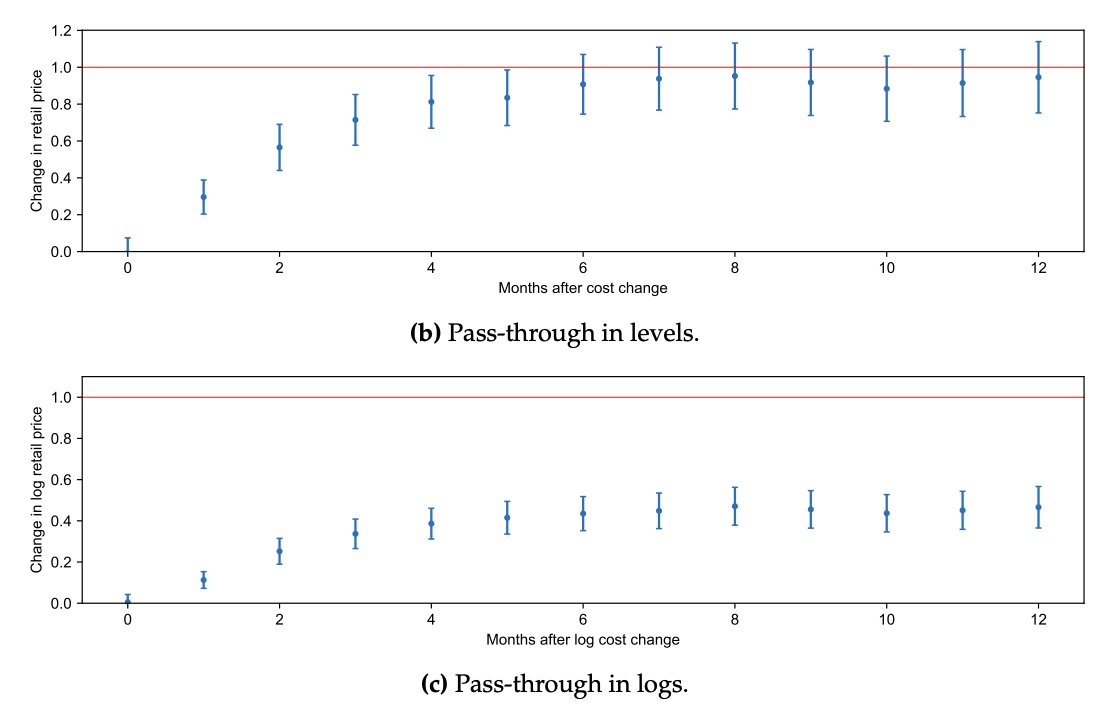
"Incomplete pass-through" (when costs rise 10%, prices rise <10%) is often "complete pass-through in levels" in disguise (costs rise 10 cents/unit, so prices rise 10 cents/unit).
Turns out this simple pattern can explain several other features of the data.
A century ago, “vitamin hunters” discovered micronutrients. Today, vitamins are taken adhoc. We revisited this with modern genetics: CRISPR screens -> new NAXD disease mouse -> over 40× lifespan increase w/ vitamin B3. Huge credit to Ankur & Skyler! https://t.co/0cRmrng7ux
🧵👇
About 2% of children in the UK have elevated blood lead levels. I made an interactive map (with a little help from Claude) so you can see the % in your local area.
https://t.co/bZgo8Vh44X