Thrilled to share a new paper published in Ecological Economics! If you’re interested in:#waterscarcity#watermarkets or #Texaswater you may find something in here for you!
https://t.co/UPJ93aM65D
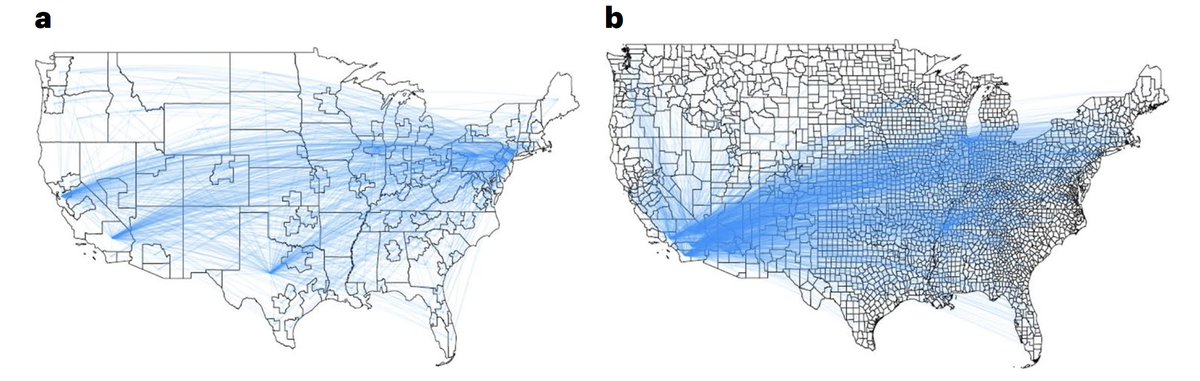
Our study: “Structural chokepoints determine the resilience of agri-food supply chains in the United States” is now out @NatureFoodJnl!
We identify the locations that are critical to supply chain security.
Paper: https://t.co/ggYywXsUoI
1/n
@groundwaterpuig Related - for those interested in an excellent read on the complex perspective(s) of overdraft in the Ogallala, I highly recommend Lucas Bessire's Running Out
Pleased to share our recent review led by McDermid et al. that highlights the important role that irrigation plays in hydrological and atmospheric processes! https://t.co/BZUCfoGKpv @NatRevEarthEnv@WimThiery@PokhrelYadu@SISeneviratne@muellern @ClimateChirper
@reedh2o Thanks for sharing, Reed! In case others are looking for the links, I started a list here:
1. https://t.co/01w523hgyD
2. https://t.co/7znYsampuA
5. https://t.co/QTIlEJ0L04
missing #3 and #4
Black Motherhood Politics in Costa Rica: Diasporic Genealogies and Links to the State
Marianela Muñoz-Muñoz https://t.co/pbK9ggqNF7
@ERIP_LASA@CAS_LASA@lasagender
@KateBrauman I tend to use either "coupled-human natural systems" CHANS e.g. Liu et al. Science 2007 or "social-ecological systems" SES e.g. Ostrom and Cox 2010 which both involve "systems" perspectives and I trade off depending on the audience/application
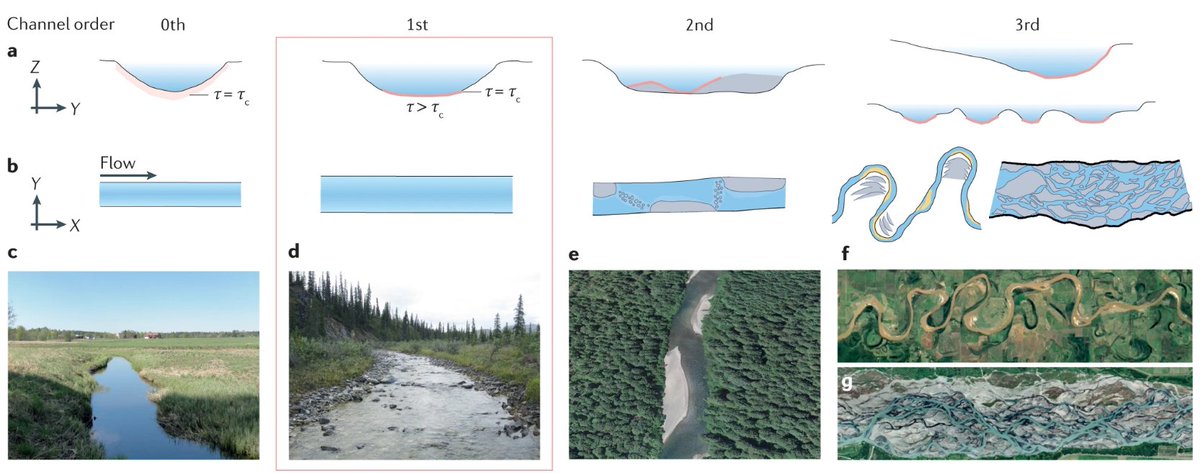
What controls the shape of rivers?
In this new Perspective, the threshold constraints on the size, shape & stability of alluvial rivers are explored by @dougsjunkdrawer @ccmasteller @DrLouiseSlater@MerrittsDorothy et al.
https://t.co/ESHrMBzL5X
https://t.co/jLGfXgaNe0
“Streamflow droughts aggravated by human activities despite management” https://t.co/s3HprNM1Gh
Global case analysis shows GW & SW abstractions aggravate streamflow #droughts (up to +3000% higher deficit), water inflows alleviate them, reservoirs both aggravate & alleviate. [1/x]
Humans are believed to have cultivated at least 6,000 plant species over time, yet today, the world mostly grows just nine species, of which rice, wheat and maize provide 50% of all calories. Crop diversification is key in climate adaptation.
https://t.co/aRdyqP3uN4
“Droughts self-propagate, just like wildfires.”
Our new study @NatureGeosci shows that reduced evaporation from drought-affected regions cause precipitation deficits downwind, that then enable the drought to expand in space. Work led by Dominik Schumacher: https://t.co/sgI7tu1ui1
Last 2 sentences of new @IPCC_CH report:
"The scientific evidence is unequivocal: climate change is a threat to human well-being and the health of the planet.
Any further delay in concerted global action will miss a brief and rapidly closing window to secure a liveable future"
The proposal is an attempt to carve out a spot for — and recognize the importance of — Colorado’s outdoor-recreation economy in the hierarchy of water uses, which prioritizes the oldest water rights, usually belonging to agriculture and cities.
https://t.co/Xthm4UH7z2
Big story from @Texas2036 poll: 9 out of 10 Texans are concerned over access to water supplies during times of severe drought. #txwater#txdrought#txlege https://t.co/T6FaltbZD3
@EllenHanak A good example of the challenges (e.g. unintended consequences) in scaling water scarcity policies (e.g. fallowing) in semi arid environments






![AnneVanLoon's tweet photo. “Streamflow droughts aggravated by human activities despite management” https://t.co/s3HprNM1Gh
Global case analysis shows GW & SW abstractions aggravate streamflow #droughts (up to +3000% higher deficit), water inflows alleviate them, reservoirs both aggravate & alleviate. [1/x] https://t.co/34cjfIdgOQ](https://pbs.twimg.com/media/FRR2_p2XIAEl-6F.jpg)


