Retired engineer: embedded systems hardware design. Education: physics and math. Interests range from Agricultural Robotics to Origin-of-Life questions.
Nested agency and grammar-based language models (39/n).
• Formally titled as “Nested pushdown automata and context free grammars (1/n”). Renaming to better reflect the design project’s origins as an exploration into physical computation.
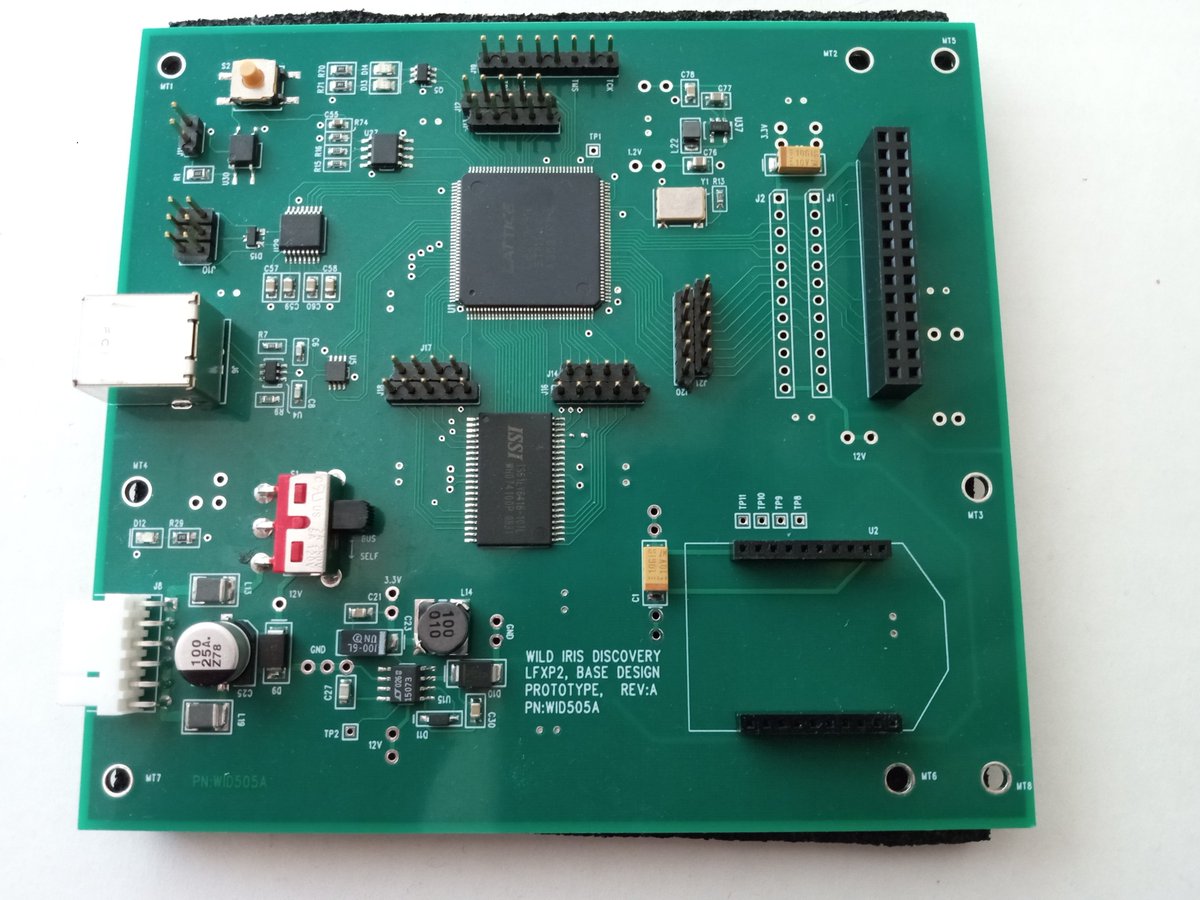
Nested pushdown automata and context free grammars (1/n). I am one of those people that needs to build something before I feel I understand how it works. In an effort to take a deeper dive into the Theory of Computation I’ve put together a nested stack machine in a FPGA. At this point the hardware seems to be working. Now the journey ahead is to start programming this bad boy and see how such an alternate processor architecture will work out in real world applications such as robotics.
The day we took shop classes out of our high schools and started giving participation trophies in sports, that was the day A.I. won.
• Every yin has its yang.
• Every virtue taken too excess becomes a vice.
• The Jungian shadow side of Pope Leo XIV’s recent encyclical is that, while purporting to protect individual human dignity, it instead, infantilizes the very people it’s intending to protect. ..By denying that humans have any independent and sufficient agency of their own.
• Rather than running away, the most effective strategy for society to deal with the ever-advancing influences of A.I. is to instead, focus on strengthening our own agency as the necessary “spiritual” immunization against it.
• The more we cast ourselves as victims needing an outside agency to protect us, the more we lose our own immunity and the more vulnerable, ironically, we end up making ourselves.
• A person whose sense-of-self is tied to their abilities and strengths, is not an individual who will be seduced by what A.I. has to offer.
• Return to a culture that honors and encourages excellence. Allow people to take pride in being the best at something. You’ll end up with a society that does not need to worry about what A.I. can or can’t do; will or won’t do.
• But then every yang now must have its yin. The shadow side of a society built on achievement and meritocracy is the inevitable inequality in abilities that it exposes.
• In a world where there are winners, there will also be losers. This is the Nietzschean view, which is the polar opposite of Pope Leo XIV’s.
• The lesson here for society and for our future going forward, ..in the end, any alignment between humanity and technology, if such a thing is possible, is a tight rope act that only occurs in a balance between two opposing forces.
• Written over 3000 years ago, but still as relevant today as it ever was, “The sharp edge of a razor is difficult to pass over; thus, the wise say the path to Salvation is hard.”
My touchstone in the past was if DigiKey stocked it in quantity, or if the part was available from multiple sources, then that was a good indicator that the part will be stable going into the future.
• If not, then try, if at all possible, to spec' a different part for your design.
• A common thread I've noticed in all these discussions lately is that none of you youngsters bother to think in terms of product lifetimes anymore.
• Are product life cycles now so short that you don't need to consider where your design will be in 5+ years’ time?
• Nor does anyone seem to consider the fate of the bench techs that will have to face their mess (design) in the future.
My response to people that say schematics are not representations of an actual circuit: "..tell me you've never had to debug a circuit board without telling me that you've never had to debug a circuit board."
As a former hardware designer, I was always doing all of my own debug. Because of that, I was always thinking ahead about the techs who will have to work on my design, years into the future. My schematics were deliberately organized to be a "tutorial" and roadmap for anyone who could read it.
@ebarenholtz Elan is right on this one. When computation becomes physical, so to must language. And in a Landauer sense, when language becomes physical, it becomes "gifted" with an independent existence, all its own.
It's ok to split ground planes, as long as you pay attention to the possible creation of ground loop paths, or any high speed signal traces that are going to cross a split-gap, or any precision analog signal lines that might be affected by a few millivolt offset that shows up across a gap, or, oh-well, you get the picture. In other words, splitting ground planes is ok, you just have to know what you're doing.
@blind_via Happens too often. Finally learned my lesson. So for proto-type runs, I always made sure I had the necessary stock of parts in-house before I sent a board off to fab.
Comparing videos of human field workers harvesting celery to some of the videos of humanoid robots we've seen posted lately, ..makes the robots seem like they're perpetually moving in slow motion.
• The video linked below is from Salinas, CA. Just a short drive south from where I live.
• Because I see this all the time, I've never been able to get too excited about humanoid robots. They are still light years away from competing with skilled human labor.
• And just a note for all you city folk reading this post, it’s hard work, but the people you see in the video are making $25+ an hour.
@ebarenholtz@bratton If you think along the lines of argument, as used behind Landauer's principle, then language becomes physical, in the same manner that information does. So I would say that physics is backing you up on this observation.
Farmers have already been fighting the right-to-repair battle with John Deere for years. With field deployed robots, this will get orders of magnitude worse. If a robot has any autonomous features at all, ..no robot manufacture will ever tolerate end users having repair access to their machines. This is one of the, gorillas in the living room, that no one in the industry wants to talk about relative to humanoid robotics.
Ditto for me..
• The Magnifica Humanitas conflates the narrower question “Can LLMs be conscious, intelligent, and have agency?” with the far deeper question “Can any constructible physical system at all, outside of human agency, possess these attributes?”
• The first is a technology challenge to be managed.
• The second is a foundational question of Christian faith, to be confronted and explained.
• MH exhaustively addresses the first question, but remains silent on the second.
If I may venture an answer, I would guess that our misunderstanding is one of definitions. @SchwabeHenning
• Your position is that God’s grace falls uniquely and specifically only on the human animal; …while at the same time, you personally don’t consider this as an expression of dualism.
• As for me, any interpretation of God’s creation that partitions it into an “us” and an “everything else” qualifies as a form of dualism.
• The early church had to learn the hard way. Centuries of dealing with one heresy after another brought home the bitter lesson that the nature of Christ divinity and the question “What does it mean to be human?” are so intimately woven together they become a Gordian knot.
• Any statement about one becomes, by extension, a statement about the other. For the Church, there are no exit doors out of this dilemma.
• And any attempt to separate them, using some variation or another of dualism, invariably turned into an open door inviting no end of theological mischief.
• In the end, the legacy the early Church left us is that these questions have no solution in this world. They must simply be left alone and remain mysteries to be contemplated.
• We would do well to hang onto this bitter lesson.
• In the end, God does not always give us answers; sometimes he gives us mysteries instead.
• Answers end a search for truth.
• While mysteries act as open invitations, beckoning us to always deepen that search.
Not intended as a reference to you. But rather an observation about how upper management has no concept of what it is we do. To them, we're just commodity labor. Hired guns, brought in for one project, then let go when the project moves to production. Then, a few months later, you hear through the grapevine they replaced you with some junior tech who knows just enough about the EDA tools to sort-of make them work doing simple mods.
@blind_via Four of five builds into your product's lifecycle, your board fab house has moved your PCB to the graveyard shift, tolerances get sloppy, and you end up with a run of boards that won't work. Best to always design for the worst cases.