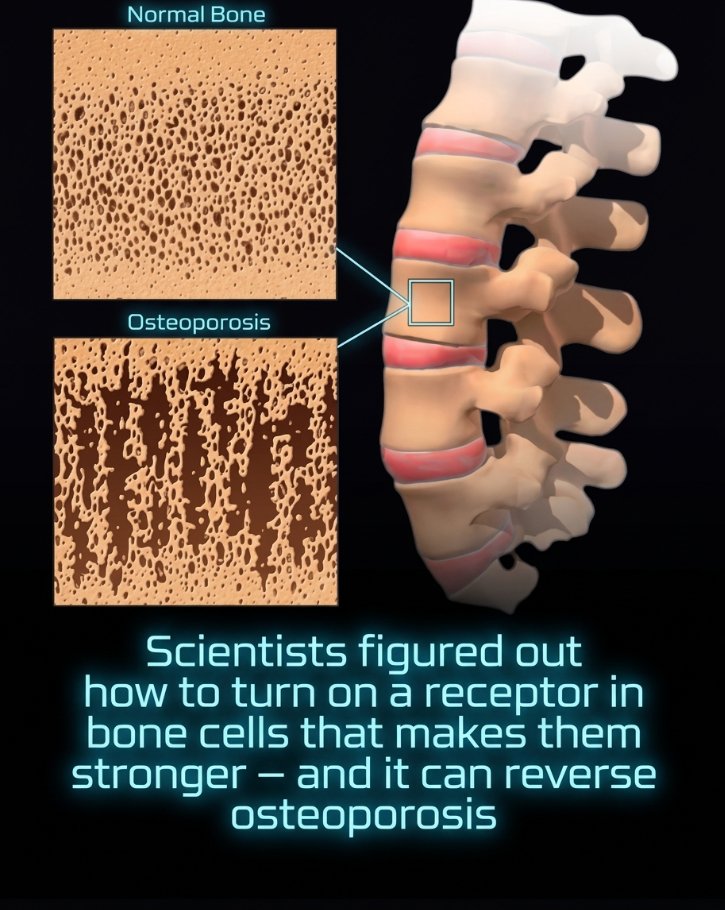
Researchers may have discovered a way to reverse osteoporosis by activating a built-in bone-strengthening switch known as GPR133. Biochemist Ines Liebscher and molecular biologist Juliane Lehmann at Leipzig University in Germany, alongside colleagues at Shandong University in China, found that this receptor acts as a sensor on bone-forming cells called osteoblasts. When adjacent bone cells make contact and the skeleton experiences mechanical strain, GPR133 switches on, accelerating bone formation while suppressing the cells responsible for breaking bone down.
In laboratory tests, mice lacking a functional GPR133 receptor experienced early-onset bone density loss closely resembling human osteoporosis. However, when the research team treated mice with AP503, a compound identified via computer screening to activate GPR133, bone strength improved dramatically in both healthy mice and those with osteoporotic bones.
Because existing osteoporosis medications primarily slow further bone deterioration rather than regenerating lost tissue, a therapy capable of actively rebuilding bone would mark a major advancement, particularly for postmenopausal women. Furthermore, earlier research demonstrated that AP503 also strengthens skeletal muscle, leading scientists to believe it could be paired with physical exercise to stimulate even greater bone growth.
While these findings are currently limited to animal models and AP503 has not yet undergone human clinical trials, the GPR133 receptor is directly linked to human bone density. Consequently, researchers view it as a highly promising therapeutic target for protecting bone health in aging populations.
[Lehmann, J., Lin, H., Zhang, Z., Wiermann, M., Ricken, A. M., Brinkmann, F., Brendler, J., Ullmann, C., Bayer, L., Berndt, S., Penk, A., Winkler, N., Hirsch, F. W., Fuhs, T., Käs, J., Xiao, P., Schöneberg, T., Rauner, M., Sun, J.-P., & Liebscher, I. (2025). The mechanosensitive adhesion G protein-coupled receptor 133 (GPR133/ADGRD1) enhances bone formation. *Signal Transduction and Targeted Therapy*, 10(1), 199]
A single dose of a gene-editing treatment cut bad cholesterol by 62%, and the effect has lasted up to 18 months so far.
The treatment, VERVE-102, made by Verve Therapeutics, now part of Eli Lilly, uses a precise form of gene editing called base editing to turn off PCSK9, a liver gene that makes a protein that stops the body from clearing LDL, the "bad" cholesterol.
It's given in a single IV infusion, with the editing instructions packed into tiny fat bubbles that carry them to the liver.
In the Heart-2 trial, 35 adults with inherited high cholesterol or early heart disease, whose levels stayed too high despite their usual medication, each received one of six doses.
At the highest dose, PCSK9 fell by 88% and LDL cholesterol by an average of 62%. There were no treatment-related serious side effects, and in the people followed longest, the drop has held for up to 18 months.
High LDL is one of the main drivers of heart attacks and strokes, and keeping it down usually means taking pills every day for life. Around half of patients stop their cholesterol medication within a year, often because daily pills are hard to keep up with or cause side effects, so a one-time treatment could protect people who fall through those gaps. "It is still early days, but this is an extremely exciting milestone," said UCL cardiologist Riyaz Patel.
Still, this was a small, early trial funded by the company, and lower doses produced much smaller drops, as little as 9%. And because the edit is permanent, participants will be followed for up to 15 years to check for long-term safety problems. Lilly plans to launch a larger phase 2 trial by the end of 2026.
source: Vafai, S. B., et al. (2026). In vivo base editing of PCSK9 with VERVE-102 for hypercholesterolemia. New England Journal of Medicine. BBC Science Focus. (2026). Landmark treatment slashes cholesterol by 62% with a single dose.
Reversing aging might one day be as simple as a pill, if this Harvard research holds up.
A team led by David Sinclair at Harvard Medical School, with colleagues at MIT and the University of Maine, screened combinations of small molecules to see if any could turn back the clock inside aging cells.
They built tests that tell young cells from old ones, including an “aging clock” that reads which genes are switched on and a live test of how well a cell keeps its proteins in the right compartments.
They found six chemical cocktails that restored youthful patterns in both, reversing the cells' measured age in less than a week.
The same lab had previously rejuvenated cells using three “Yamanaka” genes delivered by a virus, an approach that has restored vision in old mice and is being prepared for human trials.
Chemicals are far easier to give than gene therapy, which is why the team hopes this could one day lead to a pill for age-related diseases. This was a 2023 study in cells in the lab, and the cocktails have not been tested in people.
source: Yang, J.-H., Petty, C. A., Dixon-McDougall, T., et al., & Sinclair, D. A. (2023). Chemically induced reprogramming to reverse cellular aging. Aging, 15(13).
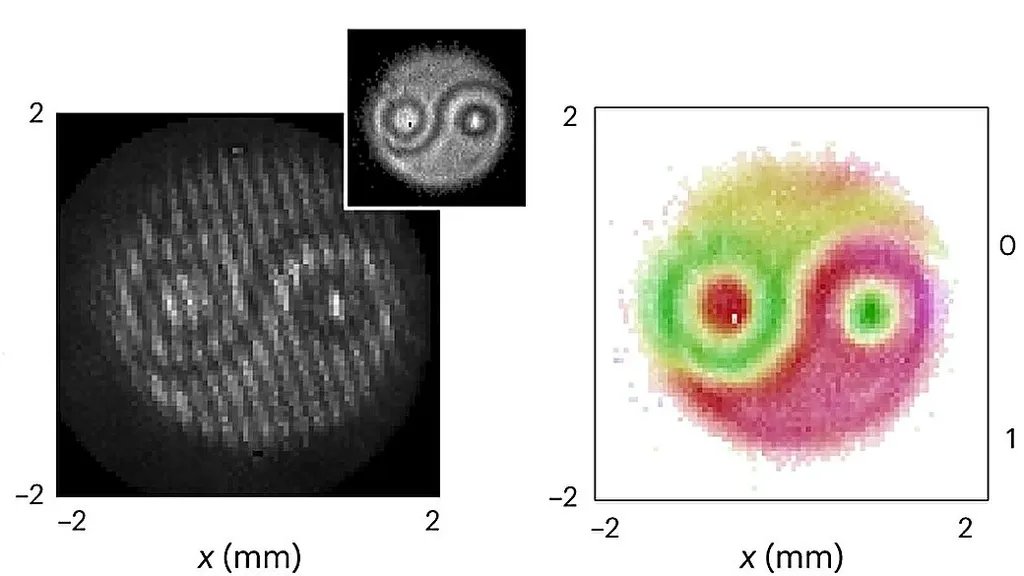
Two photons being entangled in real-time assumed the shape of yin and yang.
Physicists from the University of Ottawa and Sapienza University of Rome published a breakthrough study in Nature Photonics introducing a method called biphoton digital holography. To prove that their new quantum camera could accurately reconstruct data, they projected a laser beam structured in the shape of a yin-yang symbol into the apparatus.
The successful real-time reconstruction resulted in this impressive image, but the scientists could have chosen a smiley face or a letter of the alphabet to achieve the exact same result.
The true scientific revolution lies in the transition from traditional quantum tomography to digital holography. Previously, measuring the complete quantum state of entangled particles required taking thousands of individual measurements from different angles, a tedious process that could take hours or even days. The new holographic method works by overlapping the unknown photon state with a known reference state and capturing the resulting 2D interference pattern. This allows researchers to extract the full wave function of the entangled photons in just seconds or minutes.
🚨 Scientists in France developed an artificial heart that can adapt to the body's needs.
What if a machine could do more than pump blood?
The French-developed Aeson artificial heart uses sensors and intelligent control systems to adjust blood flow according to the body's changing demands.
Unlike many conventional mechanical devices, it uses specially processed animal tissue in parts that contact the blood, alongside advanced pumping technology designed to mimic the natural heart's movements.
The goal is to help people with severe heart failure whose hearts can no longer pump enough blood. For carefully selected patients, the device can serve as a bridge to a heart transplant.
But there is a catch. The system still depends on external batteries and equipment, and its long-term reliability remains an important consideration.
Could artificial hearts one day help more people survive when donor hearts are unavailable? Scientists are working toward that future, but significant challenges remain.
Source: European Commission. (n.d.). The world's only bioprosthetic auto-regulated artificial heart. CORDIS. European Commission research project
🚨 THE PASTA SECRET YOUR BLOOD SUGAR DOESN’T WANT YOU TO KNOW…
You cook your pasta, eat it, and feel that quick spike in energy… and then the crash. But what if I told you that leaving your pasta in the fridge for just 24 hours could secretly transform it into something that feeds your gut and slows sugar spikes? Scientists have found that cooled pasta changes some of its starch into “resistant starch”, a type your body can’t fully digest.
This means less blood sugar surge and a hidden boost for your gut bacteria. Even more surprising? Reheating it doesn’t destroy all of this magical starch. The next time you make spaghetti, you might just want to cook, chill, and then enjoy. Who knew your leftover pasta could be a secret health weapon?
Source: Nugent, A. (Resistant starch and health effects)
A former NASA engineer says his team has identified an electrostatic "New Force" that can generate thrust without any propellant, potentially challenging established physics and enabling devices capable of countering Earth's gravity.
Dr. Charles Buhler, a longtime NASA veteran and co-founder of Exodus Propulsion Technologies, claims that his group has uncovered a novel force produced purely through electric fields. Their experimental propulsion system creates directional thrust without expelling mass, unlike conventional rockets that rely on large amounts of heavy fuel. If validated, this propellantless technology could revolutionize spaceflight by slashing spacecraft weight and making sustained, fuel-free exploration of deep space possible.
The broader scientific community remains cautious. A reactionless drive of this kind would appear to contradict Newton's third law and the conservation of momentum. Earlier claims for "impossible" engines, such as the EmDrive, were ultimately debunked after careful testing eliminated experimental artifacts.
Buhler's extensive expertise in electrostatics, developed at NASA's Kennedy Space Center, gives the announcement more credibility than most fringe proposals. Nevertheless, the results require rigorous independent replication and peer-reviewed validation before they can be accepted as a genuine breakthrough.
🚨: New research indicates that we are not the only conscious beings on this planet…
Groundbreaking botanical research challenges human exceptionalism, suggesting that the trillions of trees and plants surrounding us possess spatial awareness, intentionality, and a form of consciousness.
Historically, humans have viewed plants as passive background scenery, but a series of compelling scientific studies is flipping this anthropocentric script. According to plant neurobiologist Dr. Stefano Mancuso, plants exhibit behaviors that closely mirror conscious animal action. In laboratory experiments, scientists observed that plants respond to anesthesia in the exact same manner as humans, with species like the Venus Flytrap becoming completely nonresponsive. Furthermore, time-lapse research shows bean plants demonstrating remarkable spatial awareness and intentionality, aiming their shoots to hook onto physical supports and even altering their growth strategy if they detect a competitor has reached a support first.
These findings suggest that consciousness is not a biological trait exclusive to organisms with brains, but rather a flexible phenomenon that can thrive in very different life forms. As trees globally migrate northward to escape warming climates—resembling animal migration patterns—researchers argue that our concept of 'mind' must expand. With over three trillion trees on Earth, recognizing plant consciousness could fundamentally reshape our ethical systems, agricultural practices, and relationship with the natural world. Instead of treating the environment as inert raw material, we may have to start viewing plant communities as active, aware partners in a shared ecosystem.
source: Lahey, S. (2026). We May Be Surrounded by Trillions of Conscious Beings, Research Suggests—And They Aren't Human. Popular Mechanics.
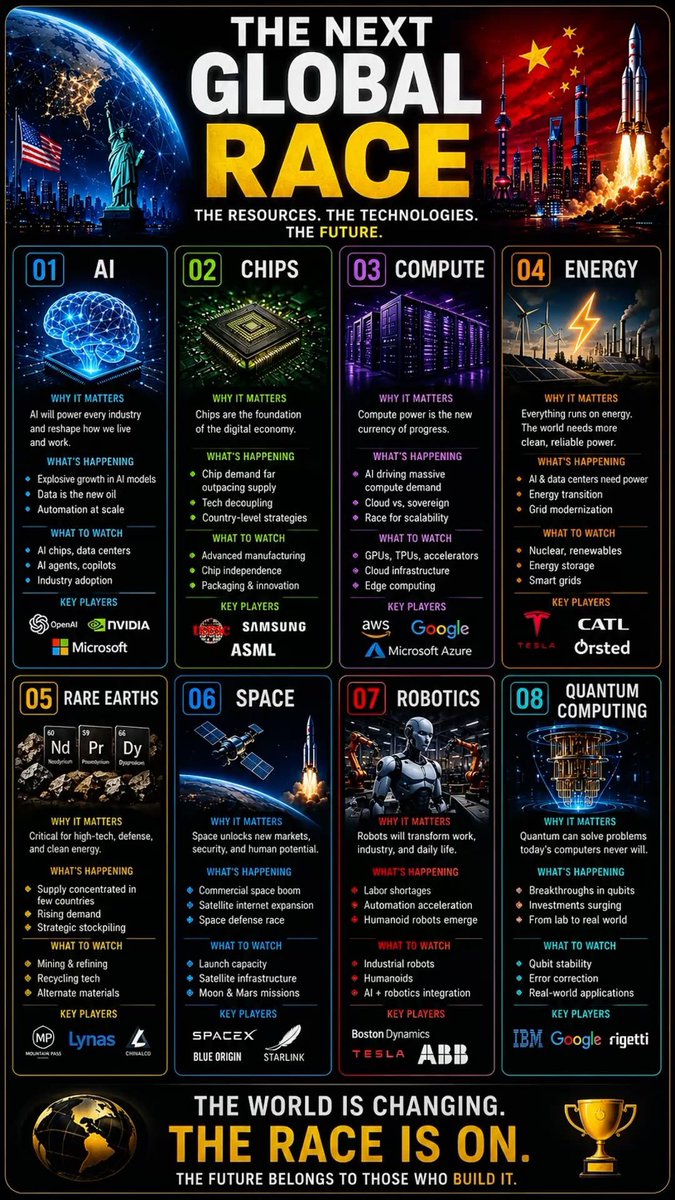
𝗧𝗵𝗲 𝗚𝗹𝗼𝗯𝗮𝗹 𝗥𝗮𝗰𝗲 𝘁𝗼 𝗕𝘂𝗶𝗹𝗱 #AI-𝗣𝗼𝘄𝗲𝗿𝗲𝗱 #𝗛𝘂𝗺𝗮𝗻𝗼𝗶𝗱 #𝗥𝗼𝗯𝗼𝘁�#𝗥𝗼𝗯𝗼𝘁𝘀 𝗛𝗮𝘀 ��𝗲𝗴𝘂𝗻🤖
بدأ السباق العا��مي لبناء #الروبوتات البشرية المدعومة بـ #الذكاء_الاصطناعي
The next major #AI platform may not live inside a screen⤵️
It may 𝘄𝗮𝗹𝗸, 𝗹𝗲𝗮𝗿𝗻, 𝘄𝗼𝗿𝗸 & 𝗼𝗽𝗲𝗿𝗮𝘁𝗲 alongside us.
Save this 🔖
Here are 12 companies shaping the humanoid robotics race ⤵️
🇺🇸 1️⃣ 𝗙𝗶𝗴𝘂𝗿𝗲
Building general-purpose humanoid robots for commercial environments.
🇺🇸 2️⃣ 𝗧𝗲𝘀𝗹𝗮
Developing Optimus around AI, manufacturing scale and real-world tasks.
🇩🇪 3️⃣ 𝗡𝗘𝗨𝗥𝗔 𝗥𝗼𝗯𝗼𝘁𝗶𝗰𝘀
Combining cognitive robotics with human-centered industrial applications.
🇨🇳 4️⃣ 𝗨𝗻𝗶𝘁𝗿𝗲𝗲
Advancing increasingly capable and accessible humanoid platforms.
🇨🇳 5️⃣ 𝗔𝗴𝗶𝗕𝗼𝘁
Developing humanoid robots for industrial and commercial deployment.
🇨🇳 6️⃣ 𝗨𝗕𝗧𝗘𝗖𝗛
Moving humanoid robots toward factory and enterprise environments.
🇺🇸 7️⃣ 𝗔𝗽𝗽𝘁𝗿𝗼𝗻𝗶𝗸
Building Apollo for logistics, manufacturing and physically demanding work.
🇨🇳 8️⃣ 𝗚𝗮𝗹𝗯𝗼𝘁
Developing embodied AI for service and industrial applications.
🇺🇸 9️⃣ 𝗔𝗴𝗶𝗹𝗶𝘁𝘆 𝗥𝗼𝗯𝗼𝘁𝗶𝗰𝘀
Deploying Digit for logistics and repetitive workplace tasks.
🇳🇴 10- 𝟭𝗫
Focusing on humanoid robots designed to operate in everyday environments.
🇺🇸 11- 𝗦𝘂𝗻𝗱𝗮𝘆 𝗥𝗼𝗯𝗼𝘁𝗶𝗰𝘀
Building general-purpose robots for practical human environments.
🇺🇸 12- 𝗕𝗼��𝘁𝗼𝗻 𝗗𝘆𝗻𝗮𝗺𝗶𝗰𝘀
Pushing the boundaries of mobility, balance and advanced robotics.
⚡ 𝗕𝘂𝘁 𝘁𝗵𝗲 𝗯𝗶𝗴𝗴𝗲𝗿 𝘀𝗵𝗶𝗳𝘁 𝗶𝘀 𝘁𝗵𝗶𝘀:
AI is moving from 𝗱𝗶𝗴𝗶𝘁𝗮𝗹 𝗶𝗻𝘁𝗲𝗹𝗹𝗶𝗴𝗲𝗻𝗰𝗲 to 𝗲𝗺𝗯𝗼𝗱𝗶𝗲𝗱 𝗶𝗻𝘁𝗲𝗹𝗹𝗶𝗴𝗲𝗻𝗰𝗲.
From systems that 𝗮𝗻𝘀𝘄𝗲𝗿
to machines that 𝘀𝗲𝗲, 𝗺𝗼𝘃𝗲, 𝗹𝗲𝗮𝗿𝗻 & 𝗮𝗰𝘁.
💡 𝗠𝘆 𝗧𝗮𝗸𝗲:
The humanoid robotics race will not be won by whoever creates the most human-looking machine.
It will be won by whoever solves 𝗶𝗻𝘁𝗲𝗹𝗹𝗶𝗴𝗲𝗻𝗰𝗲, 𝗱𝗲𝘅𝘁𝗲𝗿𝗶𝘁𝘆, 𝘀𝗮𝗳𝗲𝘁𝘆, 𝗿𝗲𝗹𝗶𝗮𝗯𝗶𝗹𝗶𝘁𝘆 & 𝘀𝗰𝗮𝗹𝗲.
𝗚𝗲𝗻𝗲𝗿𝗮𝘁𝗶𝘃𝗲 AI ➡️ 𝗔𝗴𝗲𝗻𝘁𝗶𝗰 AI ➡️ 𝗣𝗵𝘆𝘀𝗶𝗰𝗮𝗹 AI
The real question is no longer whether humanoid robots are coming.
𝗜𝘁 𝗶𝘀 𝘄𝗵𝗲𝗿𝗲 𝘁𝗵𝗲𝘆 𝘄𝗶𝗹𝗹 𝗲𝗻𝘁𝗲𝗿 𝗼𝘂𝗿 𝗹𝗶𝘃𝗲𝘀 𝗳𝗶𝗿𝘀𝘁🤖
Which company do you believe will lead the humanoid robotics race?
#HumanoidRobots #Robotics #PhysicalAI #FutureTech
@enilev @Jagersbergknut @TysonLester @CurieuxExplorer @GlenGilmore @FrRonconii @chidambara09 @jeancayeux @mvollmer1 @Nicochan33 @RLDI_Lamy @pchamard @mikeflache @Fabriziobustama @ThEiLe0 @Mack1510019 @ipfconline1 @PawlowskiMario @drsharwood @kalydeoo @baski_LA @AnthonyRochand @smaksked @Eli_Krumova @andresvilarino @gvalan @AI_4_Healthcare @bimedotcom @arlenenewbigg @NewsNeus @domingonarvaez1 @bamitav @jornalistavitor @jblefevre60 @thomas_dettling @FmFrancoise @nafisalam @Mhcommunicate @Corix_JC @c4trends @smoothsale @amalmerzouk @PVynckier @bbailey39 @NathaliaLeHen @jasuja @ralf_ladner @mary_gambara
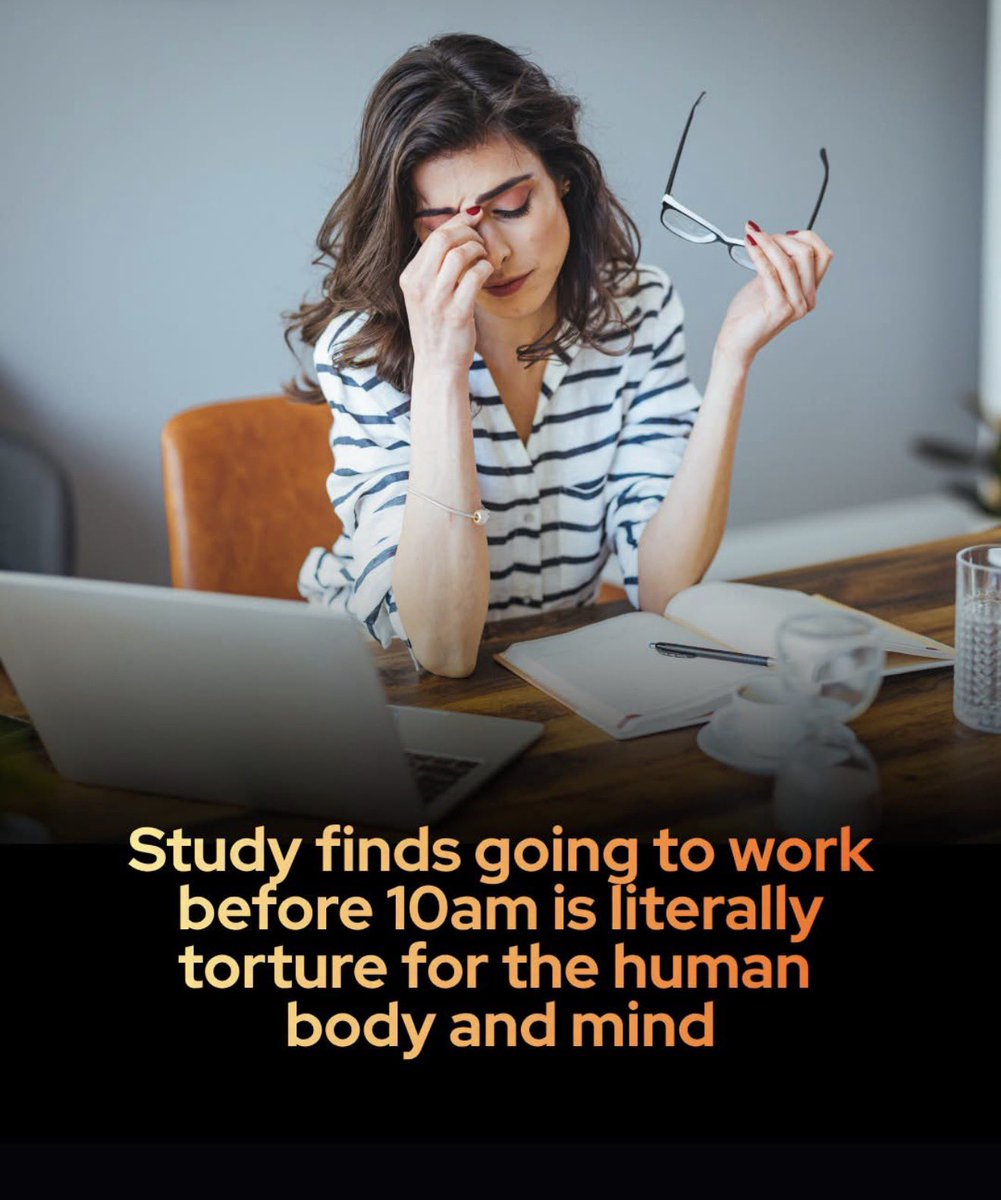
Forcing employees to begin their day before 10 a.m. creates chronic sleep deprivation and is counter to human biology.
Traditional 9-to-5 schedules are fundamentally out of sync with human biology, leaving millions of workers and students in a state of perpetual exhaustion.
Oxford University sleep scholar Dr. Paul Kelley warns that forcing individuals aged 10 to 55 to start work or school before 10 a.m. puts severe biological stress on internal organs like the heart and liver.
Because the body's internal circadian rhythm is regulated by light exposure controlled through the brain's hypothalamus, people cannot simply train themselves to wake up earlier without damaging their physical, emotional, and cognitive systems.
Scientists 3D-printed a heart using human cells — and the results could change medicine forever!
Imagine a future where damaged hearts could one day be replaced with organs grown from a patient's own cells. Scientists at Tel Aviv University in Israel took an important step toward that possibility in 2019.
Using human cells and biological materials from fatty tissue, researchers created a miniature, 3D-printed heart complete with chambers and blood vessels. The technology even allowed them to use materials derived from the same patient, potentially helping reduce the risk of immune rejection.
But there's a catch. The tiny heart was not yet capable of pumping blood like a healthy human heart. Scientists still needed to overcome major challenges before such technology could produce fully functional replacement organs.
The ultimate goal? To develop personalized hearts that could one day help address the shortage of donor organs.
Could doctors eventually print a replacement heart for someone who needs one? The breakthrough offers a fascinating glimpse into what future medicine might make possible.
Source:
Cohen, J. (2019, April 15). Scientists create world's first 3D-printed heart using human cells. NBC News.
Scientists May Have Found a Way to Wake Up Sleeping Hair Follicles — And Regrow Lost Hair!
Scientists are testing an experimental treatment called PP405 that could offer a new approach to hair loss. Unlike traditional treatments that mainly focus on slowing hair loss or supporting existing hair growth, PP405 targets the energy-producing processes inside dormant hair follicle stem cells, aiming to switch them back into an active growth state.
In a Phase 2a clinical trial involving 78 men and women with pattern hair loss, participants applied PP405 or a placebo to their scalps daily for four weeks. The results offered an encouraging sign: among men with more advanced hair loss, 31% of those who received PP405 experienced an increase in hair density of more than 20% by week eight. That was four weeks after they had stopped using the treatment. No participants in the placebo group achieved the same level of improvement.
But there’s another reason researchers are interested in this treatment. The findings suggest that hair growth may be possible in areas where hair was no longer visibly present. This raises an exciting possibility: some areas of a thinning scalp may still contain hair follicles with the potential to become active again.
The early safety results were also encouraging. PP405 was well tolerated during the study, and researchers detected no measurable amount of the drug entering participants’ bloodstreams. However, the trial was small, and the results do not yet prove that the treatment will work for everyone or produce lasting results.
Developed by Pelage Pharmaceuticals, PP405 is still experimental. Larger clinical trials are needed to establish how effective it is, how long the results last, and which people are most likely to benefit.
Could waking up dormant hair follicles become the next major breakthrough in treating baldness? Researchers are now working to find out.
Source: Pelage Pharmaceuticals, Positive Phase 2a Clinical Trial Results for PP405 in Regenerative Hair Loss Therapy (2025).
#AgenticAI/ Interesante Infografia apreciada Khulood. Una economía de IA más autónoma requiere una infraestructura de confianza igualmente sofisticada !Gracias por compartir.
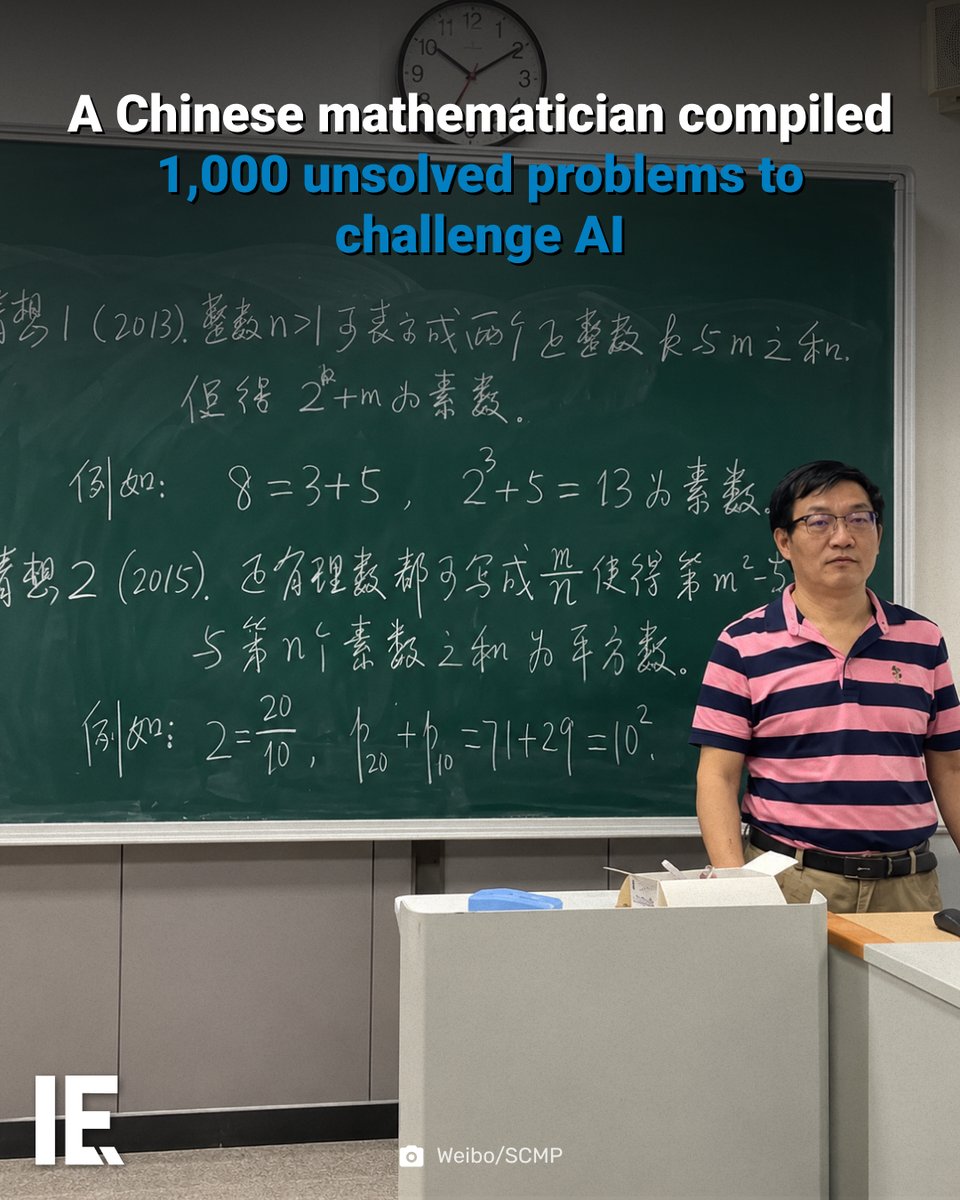
Sun Zhiwei, a 61-year-old number theory professor at Nanjing University, has compiled over 1,000 original unsolved mathematical conjectures in a 400-page collection, some paired with cash prizes funded from his own salary. Sun argues that AI is a capable mathematical assistant but cannot replace the human ability to ask genuinely new questions. He describes AI as “a highly knowledgeable, diligent and intelligent graduate student” that needs human guidance, and even cuts off its internet access when assigning hard problems so it cannot discover they remain unsolved and refuse to work on them. Some of his most difficult problems he calls “alien conjectures,” problems he believes current human mathematics cannot solve. Sun’s approach to mathematics shifted after a 2005 visiting professorship, when he learned to use computational software to validate thousands of cases at once, triggering what he describes as a sudden creative breakthrough.
A NEW HOPE FOR LYMPHEDEMA PATIENTS: AN EXPERIMENTAL PILL REDUCED LEG SWELLING BY OVER 1 LITER!
For millions of people living with lymphedema, even simple daily activities can become difficult because of persistent swelling, pain, and hardened skin. Now, an experimental oral drug called acebilustat could offer a new way to manage this challenging condition.
In a clinical study published in Scientific Reports, researchers led by Stanford University School of Medicine investigated whether the drug could help people with lymphedema, a condition in which lymph fluid builds up in body tissues because the lymphatic system cannot drain it properly. After 12 months of daily treatment, participants experienced an average reduction of 1,012 milliliters in leg volume—more than one liter. Researchers also reported improvements in skin thickness and tissue scarring, raising hopes for people who struggle with long-term swelling.
Lymphedema can develop after cancer treatment, surgery, radiation, or damage to the lymphatic system. It can cause discomfort, limit movement, harden the skin, and increase the risk of serious skin infections. Current management often involves compression garments, specialized massage, exercise, and other forms of physical therapy that patients may need to follow for years.
Acebilustat works by targeting leukotriene B4, an inflammatory substance linked to damage in lymphatic tissues. By blocking this pathway, the drug aims to reduce inflammation and help limit the changes that make lymphedema so difficult to manage.
The findings offer encouraging hope, but there is an important limitation: acebilustat remains experimental for lymphedema. More research is needed to confirm its effectiveness and safety before it can be considered a standard treatment. It is not yet a proven replacement for existing therapies.
If further studies confirm these results, a daily pill could eventually become an important addition to treatment for people living with this chronic condition.
Source: Rockson, S. G., et al. (2026). Therapeutic selective leukotriene B4 antagonism for human lymphedema. Scientific Reports.