A few random notes from claude coding quite a bit last few weeks.
Coding workflow. Given the latest lift in LLM coding capability, like many others I rapidly went from about 80% manual+autocomplete coding and 20% agents in November to 80% agent coding and 20% edits+touchups in December. i.e. I really am mostly programming in English now, a bit sheepishly telling the LLM what code to write... in words. It hurts the ego a bit but the power to operate over software in large "code actions" is just too net useful, especially once you adapt to it, configure it, learn to use it, and wrap your head around what it can and cannot do. This is easily the biggest change to my basic coding workflow in ~2 decades of programming and it happened over the course of a few weeks. I'd expect something similar to be happening to well into double digit percent of engineers out there, while the awareness of it in the general population feels well into low single digit percent.
IDEs/agent swarms/fallability. Both the "no need for IDE anymore" hype and the "agent swarm" hype is imo too much for right now. The models definitely still make mistakes and if you have any code you actually care about I would watch them like a hawk, in a nice large IDE on the side. The mistakes have changed a lot - they are not simple syntax errors anymore, they are subtle conceptual errors that a slightly sloppy, hasty junior dev might do. The most common category is that the models make wrong assumptions on your behalf and just run along with them without checking. They also don't manage their confusion, they don't seek clarifications, they don't surface inconsistencies, they don't present tradeoffs, they don't push back when they should, and they are still a little too sycophantic. Things get better in plan mode, but there is some need for a lightweight inline plan mode. They also really like to overcomplicate code and APIs, they bloat abstractions, they don't clean up dead code after themselves, etc. They will implement an inefficient, bloated, brittle construction over 1000 lines of code and it's up to you to be like "umm couldn't you just do this instead?" and they will be like "of course!" and immediately cut it down to 100 lines. They still sometimes change/remove comments and code they don't like or don't sufficiently understand as side effects, even if it is orthogonal to the task at hand. All of this happens despite a few simple attempts to fix it via instructions in CLAUDE . md. Despite all these issues, it is still a net huge improvement and it's very difficult to imagine going back to manual coding. TLDR everyone has their developing flow, my current is a small few CC sessions on the left in ghostty windows/tabs and an IDE on the right for viewing the code + manual edits.
Tenacity. It's so interesting to watch an agent relentlessly work at something. They never get tired, they never get demoralized, they just keep going and trying things where a person would have given up long ago to fight another day. It's a "feel the AGI" moment to watch it struggle with something for a long time just to come out victorious 30 minutes later. You realize that stamina is a core bottleneck to work and that with LLMs in hand it has been dramatically increased.
Speedups. It's not clear how to measure the "speedup" of LLM assistance. Certainly I feel net way faster at what I was going to do, but the main effect is that I do a lot more than I was going to do because 1) I can code up all kinds of things that just wouldn't have been worth coding before and 2) I can approach code that I couldn't work on before because of knowledge/skill issue. So certainly it's speedup, but it's possibly a lot more an expansion.
Leverage. LLMs are exceptionally good at looping until they meet specific goals and this is where most of the "feel the AGI" magic is to be found. Don't tell it what to do, give it success criteria and watch it go. Get it to write tests first and then pass them. Put it in the loop with a browser MCP. Write the naive algorithm that is very likely correct first, then ask it to optimize it while preserving correctness. Change your approach from imperative to declarative to get the agents looping longer and gain leverage.
Fun. I didn't anticipate that with agents programming feels *more* fun because a lot of the fill in the blanks drudgery is removed and what remains is the creative part. I also feel less blocked/stuck (which is not fun) and I experience a lot more courage because there's almost always a way to work hand in hand with it to make some positive progress. I have seen the opposite sentiment from other people too; LLM coding will split up engineers based on those who primarily liked coding and those who primarily liked building.
Atrophy. I've already noticed that I am slowly starting to atrophy my ability to write code manually. Generation (writing code) and discrimination (reading code) are different capabilities in the brain. Largely due to all the little mostly syntactic details involved in programming, you can review code just fine even if you struggle to write it.
Slopacolypse. I am bracing for 2026 as the year of the slopacolypse across all of github, substack, arxiv, X/instagram, and generally all digital media. We're also going to see a lot more AI hype productivity theater (is that even possible?), on the side of actual, real improvements.
Questions. A few of the questions on my mind:
- What happens to the "10X engineer" - the ratio of productivity between the mean and the max engineer? It's quite possible that this grows *a lot*.
- Armed with LLMs, do generalists increasingly outperform specialists? LLMs are a lot better at fill in the blanks (the micro) than grand strategy (the macro).
- What does LLM coding feel like in the future? Is it like playing StarCraft? Playing Factorio? Playing music?
- How much of society is bottlenecked by digital knowledge work?
TLDR Where does this leave us? LLM agent capabilities (Claude & Codex especially) have crossed some kind of threshold of coherence around December 2025 and caused a phase shift in software engineering and closely related. The intelligence part suddenly feels quite a bit ahead of all the rest of it - integrations (tools, knowledge), the necessity for new organizational workflows, processes, diffusion more generally. 2026 is going to be a high energy year as the industry metabolizes the new capability.
With BTC hitting new highs, we believe the time is now for mainstream adoption of digital assets
Great to be on @CNBCFastMoney to talk about why we are so excited about $HSDT @Solana_Company and the case for SOL @solana
From a venture perspective, @veradittakit discusses Pantera's involvement supporting the growth of the Solana ecosystem – and why its ability to attract high-quality developers is a strong signal for what may be ahead.
@HeliusHSDT $HSDT @therollupco
Helius $HSDT, in Partnership with @PanteraCapital and Summer Capital Closes Over $500 Million Private Placement to Launch Solana Treasury Company
Link to press release: https://t.co/Fkx414peOo
1/ We believe Solana is the most commercially viable blockchain for global markets and payments.
It has already emerged as a secular share gainer of onchain economic activity – and it's just getting started.
Solana is the reserve asset of @HeliusHSDT $HSDT
Here is why 👇
Helius $HSDT, in partnership with @PanteraCapital and Summer Capital, announces over $500 million in funding to launch the preeminent Solana treasury company.
Link to press release: https://t.co/dtBFZI4plI
Yesterday $AVNT @avantisfi smashed all records a 2025 TGE:
- 4 simultaneous exchange listings less than an hour apart, from leading exchanges like @upbitglobal, @binance, @BithumbOfficial and @cryptocom. We're grateful to all our new partners for their support.
- Hitting $2.2B+ daily spot volumes (top 10 coins overall by volumes), $6B+ perps volumes.
- Largest onchain airdrop on @base.
This only furthers our vision of building the universal leverage layer - an all encompassing exchange for:
- Real World Assets: Perps for equities, metals, FX, commodities, crypto.
- Real World Markets: Perps for prediction markets, sports and more.
- Zero-fee perps: High leverage scalping products for precision traders.
- Stablecoin (avUSD): Native exchange stablecoin, powered by yields from the underlying trading products.
- Native money market: Bootstrapped using avUSD, for enhanced supply yield / capital efficiency.
Feeling more locked in than ever before given everything we have to ship. Truly grateful for our incredible community, team, investors, advisors and friends.
Still day 1.
gVanta.
I confronted SEC Chair Gary Gensler with a deceptively simple question: Is a Yankee ticket a security?
Mr. Gensler claims that NFTs are securities. I see no legal difference between a Yankee ticket that offers access to a Yankee game and an NFT that offers access to an animated web series (as in the case of Stoner Cats). Mr. Gensler is misclassifying collectibles, art, and tickets as securities.
@RealKidPoker amazingly courageous of you to share this, especially because most of us think that you are one of the bravest of all time given the ballsy plays you are able to make on every street!
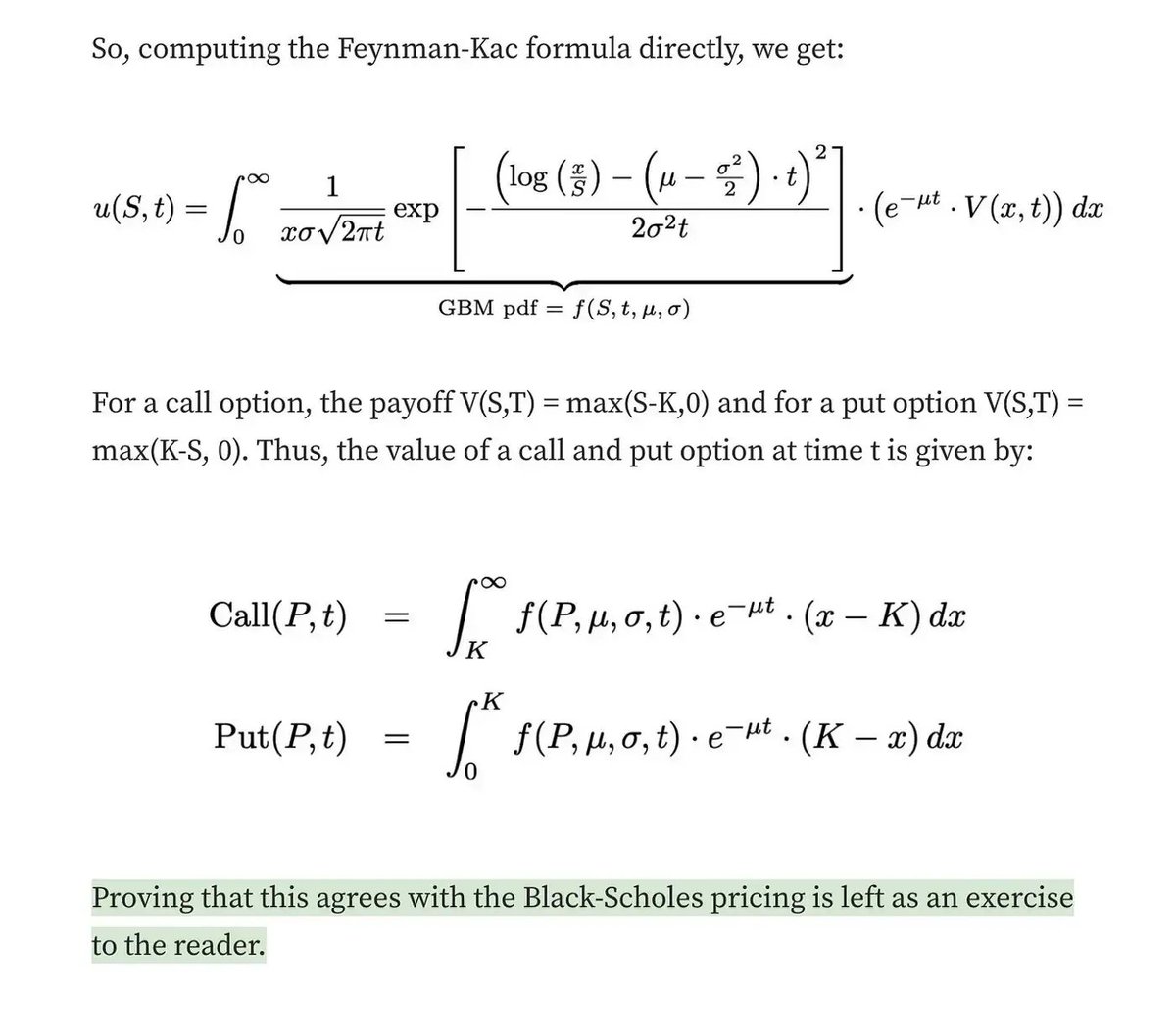
@guil_lambert left the following exercise in one of his Medium post. My solution here 👇🧵
Nothing crazy, maybe it can help you with your financial engineering pset :P
1/ The past few days have tested our industry, with fallout for months to come.
Here's an excerpt from a note to @PanteraCapital founders / investors re: impact to our portfolio & actions we took in the first 24 hrs.
Hope it can help other builders & funds navigate ahead.
⬇️
As you become an adult, you realize that things around you weren't just always there; people made them happen. But only recently have I started to internalize how much tenacity *everything* requires. That hotel, that park, that railway. The world is a museum of passion projects.
Blockchain Onboarding Cheat Sheet 📑
Covering everything you need to equip yourself when exploring new chains from bridges, DApps, tools, wallets, and charting platforms.
Constructive comments/ criticisms to improve the sheet are welcomed!
https://t.co/ITUdwklnlY
I went from zero to building full stack apps with Solidity, React, & Ethereum in a couple of months to prepare for my role at @edgeandnode
Here is a crash course of 16 high quality resources, tutorials, and videos I'd recommend for anyone looking to do the same (thread) 👇
Perhaps the more apt comp is not mature tech cos vs dot com bonanzas, but the latter vs crypto
Paired with 1. net outflows of retail capital from crypto post Luna 2. dearth of users (<1M DAA) relative to market cap, 3. macro headwinds, this bear market could be worse than 2018
Got a few friends asking what they should be reading / resources to get started so here's my take on it:
Basic Skill Tree for those looking to get into crypto 👇
Feel free to comment if there's anything that I should add!
Retweet if helpful 🙌