Press release for our new @NatureClimate paper, "Greening masks stability loss in drylands," led by the outstanding PhD Candidate, @WenZhang_eco https://t.co/BJfMzHFfL7
Greener" doesn't always mean healthier.
40 years of satellite data reveal that while rising CO2 boosts plant growth in wet years, it creates a severe "boom-and-bust" volatility during dry years across 80% of global drylands. 🛰️🌦️🍃https://t.co/z7zuwdfhcN
Our new paper is out in @GlobalChangeBio! We find increasingly widespread extreme negative vegetation responses, driven largely by drought and its compound events with heat and wildfire.
Led by Haoxiang Zhao & Bin He.
https://t.co/sOAXs0HYSF
Wildfire’s effects on invasive annual grasses can last long after the flames are gone.
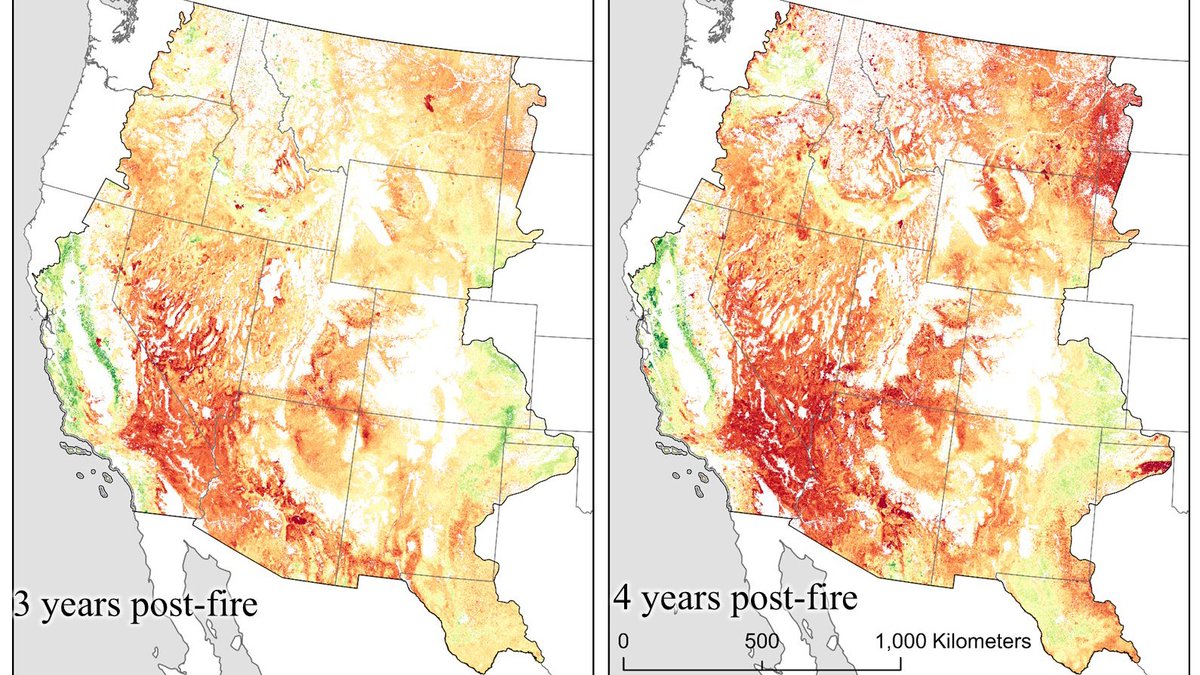
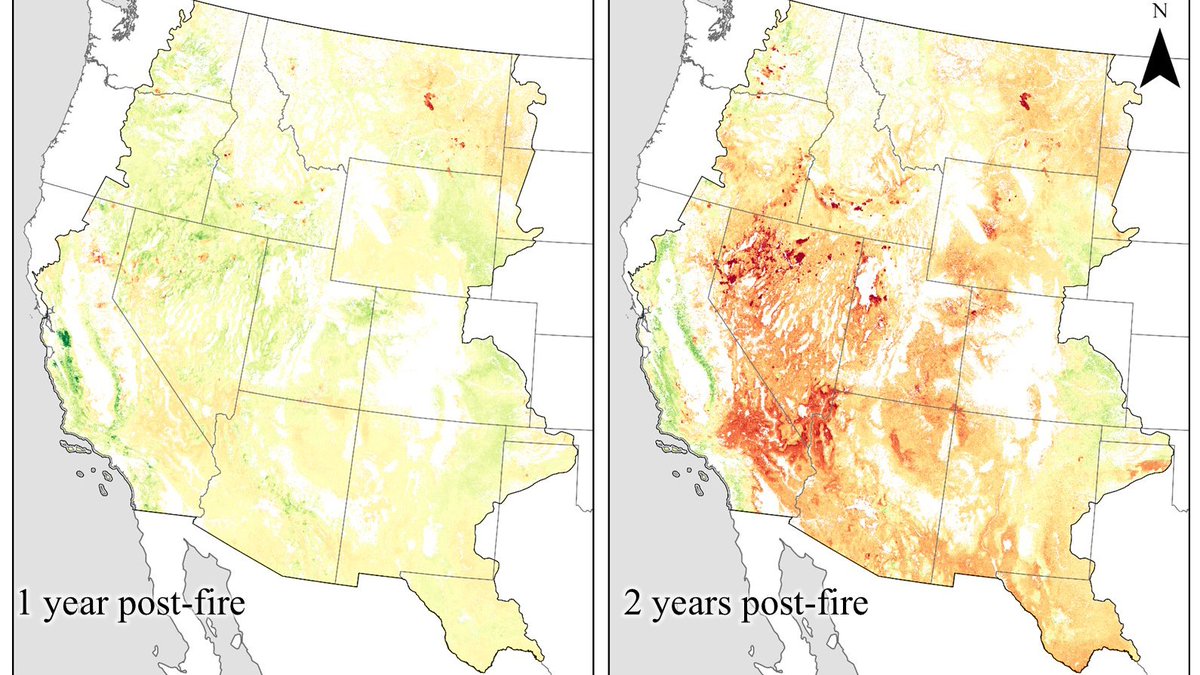
Newly released USGS data examine how invasive annual grasses may respond after wildfires burn across western U.S. rangelands. In some areas, growth of invasive annual grasses can be limited during the first year after a fire and then become more pronounced in following years.
So where are those changes most likely to happen and when?
Using remote sensing data, researchers developed Fire Invasive Response Metric (FIRM) to help land managers answer that question. Short-term FIRM data look at invasive annual grass response 1–5 years after a fire, while long-term FIRM data track potential changes for up to 30 years.
The USGS science team also developed Habitat Invasive Risk (HIR), which bring together expected invasive grass response, the likelihood of fire, and ecological integrity.
Together, these datasets can help land managers identify where invasive grasses may pose a greater post-fire risk and better prioritize monitoring and management efforts.
Download the newly released FIRM and HIR data by following this link.
https://t.co/IcvedIEhCR
📸1: Two maps compare invasive annual grass cover one and two years after wildfire across western U.S. rangelands. Green areas show less invasive annual grass cover than before the fire, yellow shows little change, and orange and red show greater cover. More orange and red appear in the second year. Credit: USGS
📸2: Two maps compare invasive annual grass cover three and four years after wildfire across western U.S. rangelands. Green areas show less invasive annual grass cover than before the fire, yellow shows little change, and orange and red show greater cover. By years three and four, increases appear across more of the mapped area. Credit: USGS
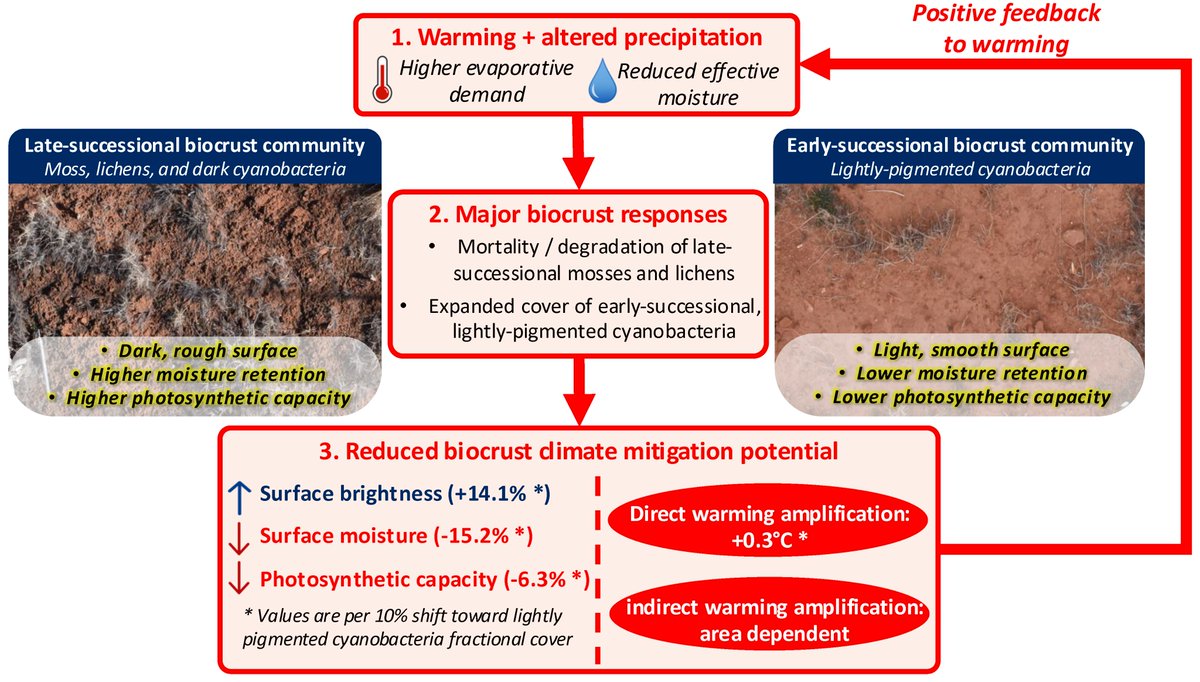
Happy to share a new paper from a field campaign with an amazing team: "Experimental evidence of a biological soil crust degradation climate warming amplification feedback," with @ecology_awesome and others https://t.co/Gq6rumQz8i
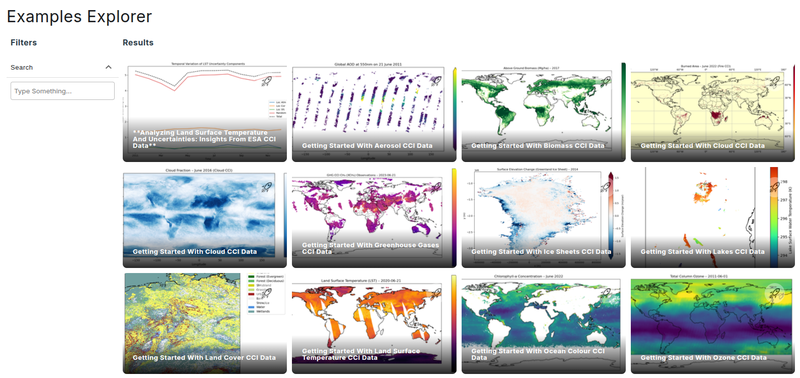
🛰️ Decades of satellite climate data, a Python package, and lots of ways to boost your research.
ESA's Climate Change Initiative provides Python code examples and extensive documentation to navigate our Toolbox. Get fast access to about 500 robust, validated satellite records via our Jupyter Lab. Start using this pre-defined, free-of-charge environment and become a pro at accessing climate data. Check it out: https://t.co/9z5SjEj55h
Excited to share our new ecohydrology handbook, edited by Brad Wilcox, Heidi Asbjornsen, Irena Creed, Keith Smettem, and me.
Written by leading experts, this 600-page book should include everything you need to know about ecohydrology 😊
It’s open access.
https://t.co/VE2nleCYbY
An exciting new publication in AGU Advances today. Our analysis showed a significant increase in global plant water stress over the last four decades. This was obvious only when structural greening effects were removed.
It's open access at,
https://t.co/khIPTYRuHA
Donald Trump just imposed a 50% tariff to increase YOUR COSTS because he felt that Canada didn't do enough to rake their forests.
How many tantrums from this failed president do Americans have to suffer through?
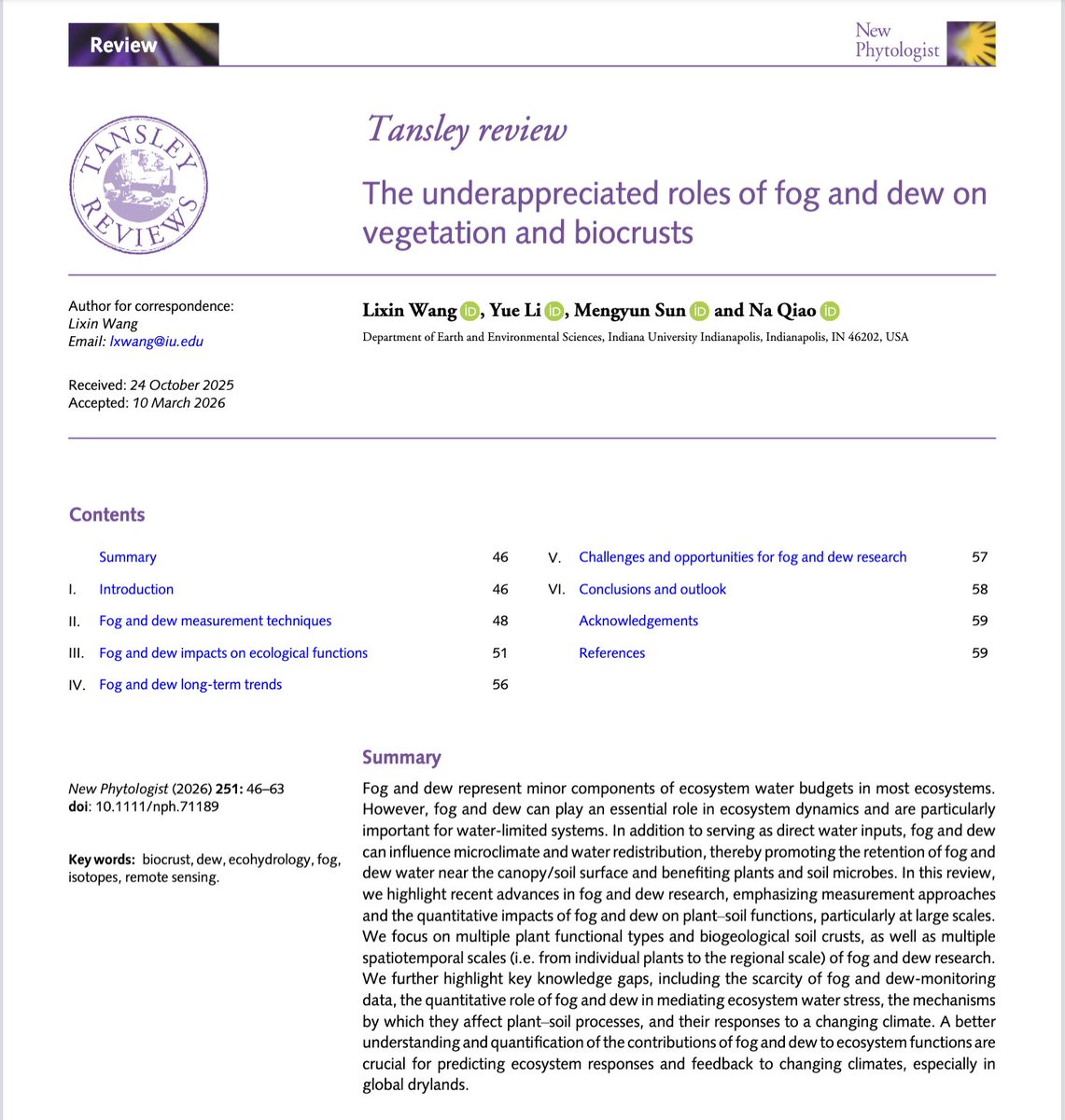
Excited to share our New Phytologist Tansley Review published in an issue today. It's open access. In this, we synthesize the effects of fog and dew on ecosystem functions, primarily in vascular plants and biocrusts.
@YueLi1614297469@NaQiao2@Mengyun_Sun
https://t.co/a8LLXCP24s
We are grateful to the Powell Center for funding our ARID proposal "Towards an integrated multi-scale understanding of dryland plant traits with application to land management". We'll recruit a postdoc for this project very soon!
https://t.co/bPlgvzkL1d
COMMENTARY: Let’s say it plainly: There has never been a president as corrupt as Donald Trump.
There is no close second in our history.
https://t.co/RRV6gbiZi1
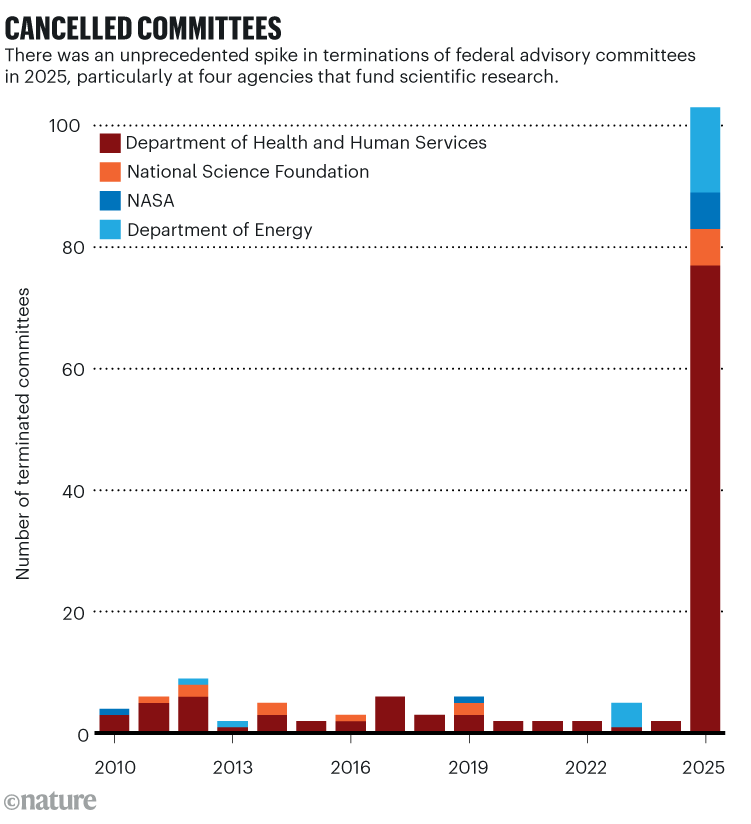
The Trump administration has downsized US science by historic margins — but it's not just via grant or workforce cuts.
Our new @nature analysis reveals the government has cut more than 100 scientific advisory panels across all major science agencies.
All 22 members of the board that advises and oversees the US National Science Foundation (NSF), a leading funder of basic science, were fired on 24 April without explanation.
https://t.co/HObFlD8bLg
U.S. President Donald Trump has fired all 24 members of the National Science Board, the body that oversees the National Science Foundation. Many science advocates see it as the latest step by his administration to erode—some would say destroy—the independence of the 76-year-old research agency. https://t.co/5LrByFdzHz
A new publication today in GRL regarding vegetation water content and flash drought development. Led by Amitesh Gupta, with Lanka Karthikeyan and @Ashok_Mishra_20
https://t.co/sikJtcTr3L
Excited to share our new lab publication led by @Mengyun_Sun in Nature Communications. Using flux-tower obs, we show that dew significantly increases ecosystem productivity, particularly in drylands.
@jiaowz, @CGerleinSafdi and Max Berkelhammer @IUImpact
https://t.co/msJQrctQwp













![MaxRLambert's tweet photo. 🇺🇲🔭The federal science workforce - our patriot scientists - "𝘩𝘢𝘷𝘦 𝘮𝘢𝘥𝘦 𝘵𝘩𝘦 𝘯𝘢𝘵𝘪𝘰𝘯 𝘩𝘦𝘢𝘭𝘵𝘩𝘪𝘦𝘳, 𝘴𝘢𝘧𝘦𝘳, 𝘢𝘯𝘥 𝘤𝘢𝘱𝘢𝘣𝘭𝘦...[𝘢𝘯𝘥] 𝘩𝘢𝘷𝘦 𝘪𝘯𝘴𝘱𝘪𝘳𝘦𝘥 𝘨𝘦𝘯𝘦𝘳𝘢𝘵𝘪𝘰𝘯𝘴 𝘰𝘧 𝘈𝘮𝘦𝘳𝘪𝘤𝘢𝘯𝘴."
https://t.co/QCxjUexmIy https://t.co/uOZmxRf8te](https://pbs.twimg.com/media/HJP3NrlacAAHNEg.jpg)