Ecological Sensing AI Lab by Youngryel Ryu (@snucals1 @SNUnow). Vision: A sustainable world where ecological information is available and accessible to anyone
New paper led by Shaoyu Wang hashtag #RSE 📢
We developed a deep-learning based GPP model, #GPPnet, which only requires multi-channel #Sentinel2 reflectance and incoming light. No land cover, no VPD, no temperature.
This simple model predicted canopy photosynthesis for both C3 and C4 (without separate models), captured drought/heatwave effects, light use efficiency and interannual variability.
Why and how multi-channel reflectance can explain variations in canopy photosynthesis remains an open question—and an exciting avenue that deserves future study.
Because all input data are available in real time on #GEE, we envision monitoring canopy photosynthesis any place, any time.
Ultimately, integrating data-driven (GPP-net), semi-empirical (NIRvP), and process-based models (BESS) will enable a wide range of applications, from near-real-time crop monitoring to global estimates of photosynthesis.
@DechantBenjamin@HelinZhang11301@FengHuaize@IjeonghoN@ChanghyunChoi13@snucals1@SeoulNatlUni
GPP-net: a robust high-resolution GPP estimation network for Sentinel-... https://t.co/vHLzoRUre4
I am pleased to announce the AsiaFlux Conference 2026, which will be held from Nov 23–28, 2026, in Bangkok, Thailand.
Important dates:
Abstract submission deadline: Sep 15, 2026
Training Course: Nov 23–24
Conference: Nov 25–27
Field Excursion: Nov 28
https://t.co/bIFZDAVCJ7
🌱Our latest blog is live: To predict ecosystem responses accurately, models must move beyond simple carbon-water trade-offs and include the full reality of plant thermoregulation: Carbon, Water AND Heat.
https://t.co/BBIdeQlMmi
@XuLian_PKU@JianingFang@ryuyr77@sungchanm_ et al
4th GEO workshop, Chiba, Japan - abstract submission and registration extended by Apr 17.
Dates: May 23-24 (WS) and 25 (excursion)
Venue: Chiba University, Japan
Registration and Excursion are free.
Application URL: https://t.co/QOFd8TZ64o
New paper in HESS 📄
We present a novel approach to estimating long-term mean transpiration–evapotranspiration (T/ET) ratios using the generalized proportionality hypothesis and watershed-scale hydrological observations.
Blog coming soon.
https://t.co/cygODHkZwu
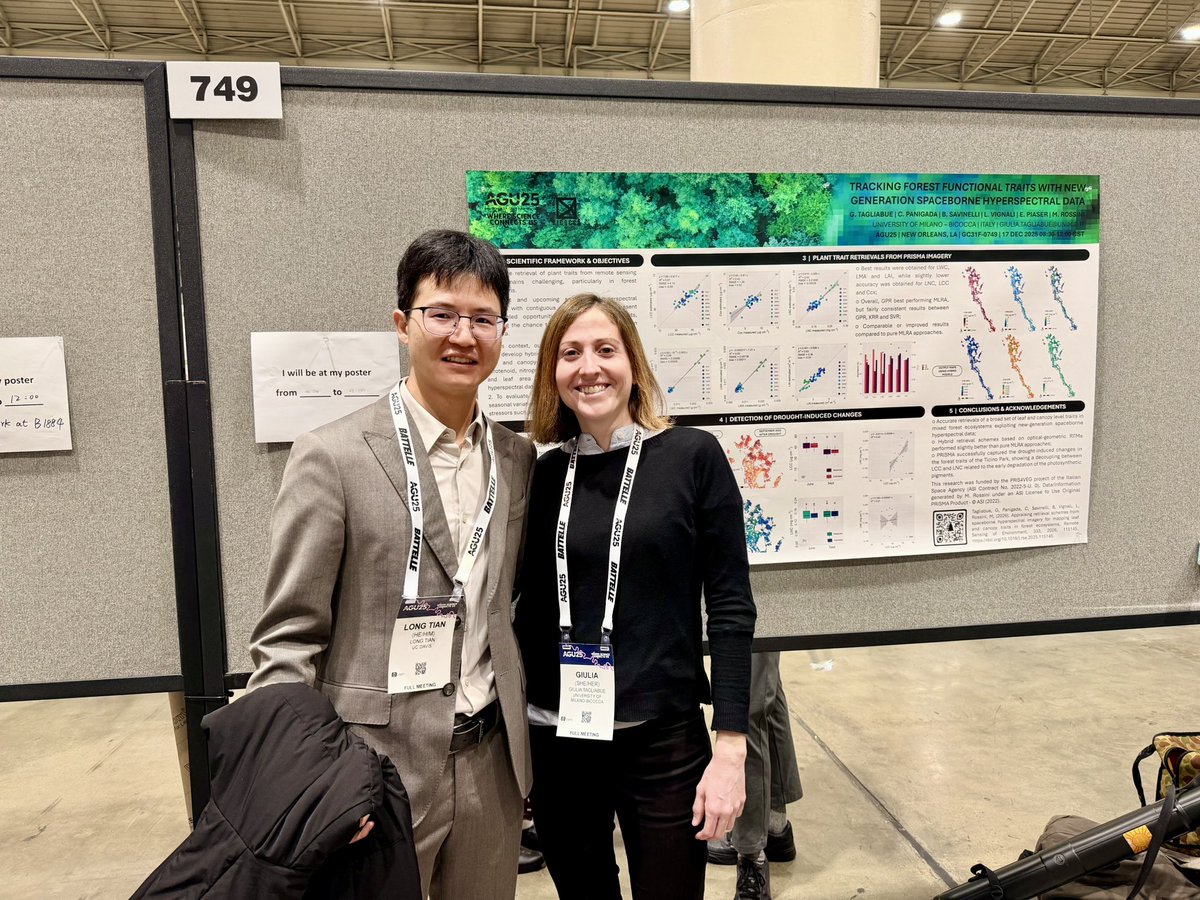
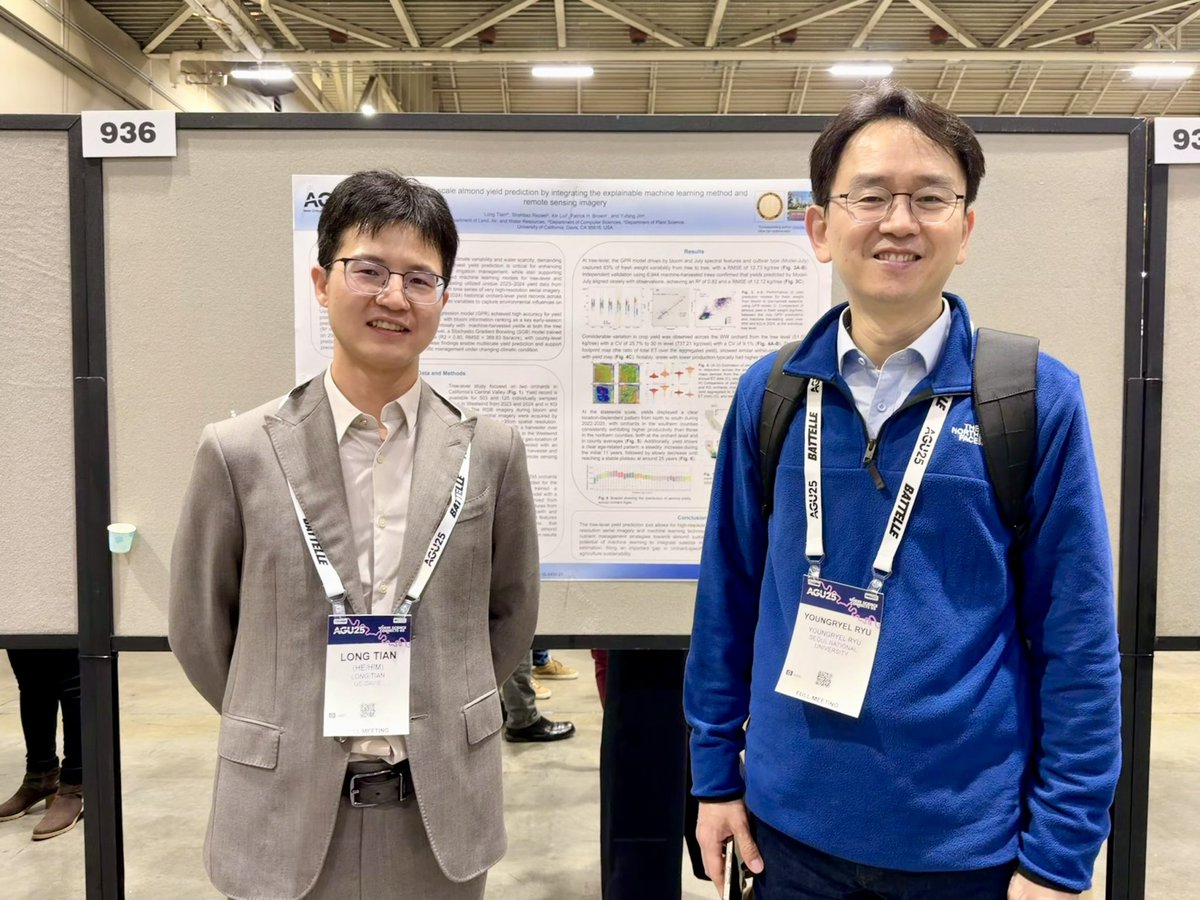
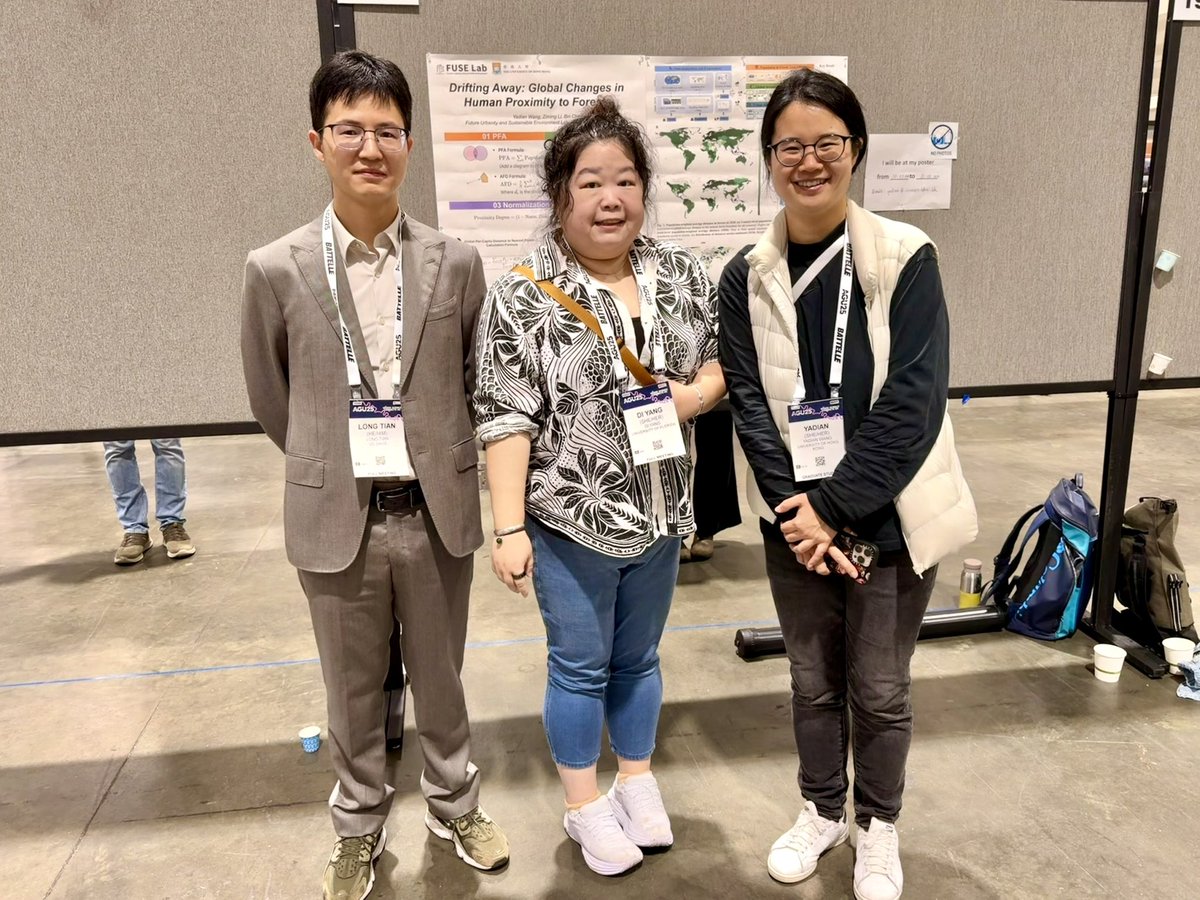
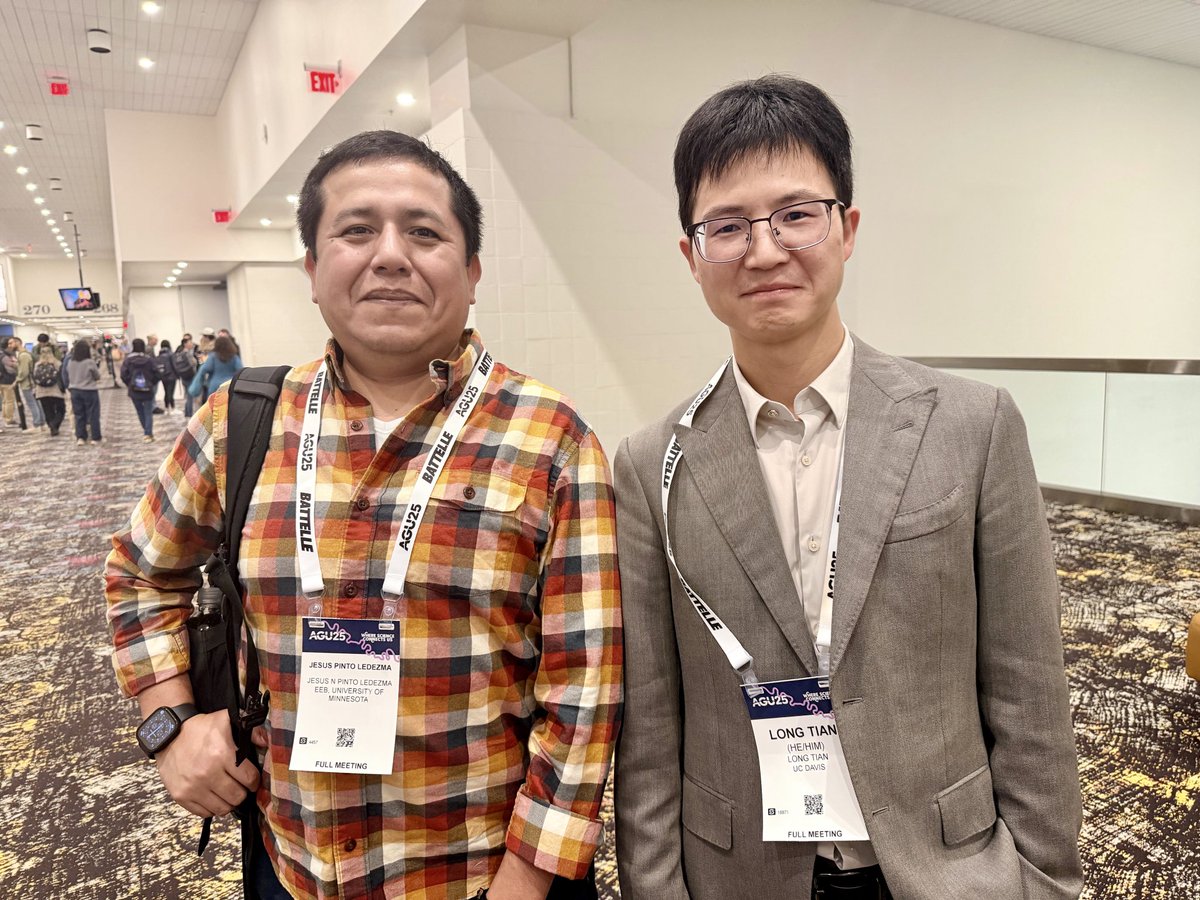
First AGU #AGU25 experience in an amazing city NewOrleans. Meeting with a lot of nice friends in of vegetation remote sensing! Especially the fantastic idea change during discussion. Looking forward to see you all next year in SF #sanfrancisco. @ryuyr77@ZhouZhang10@yangdi1031
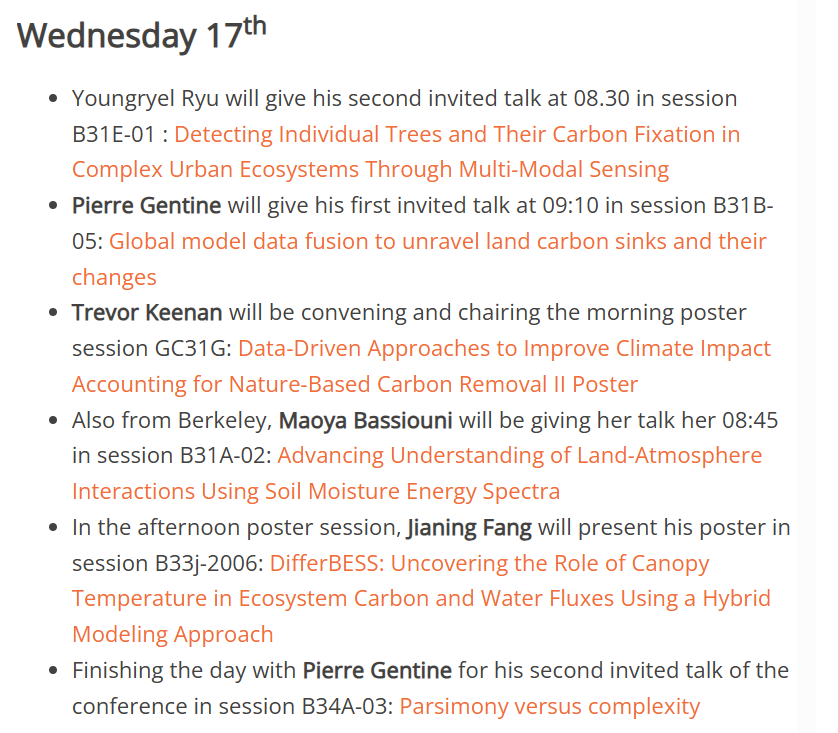
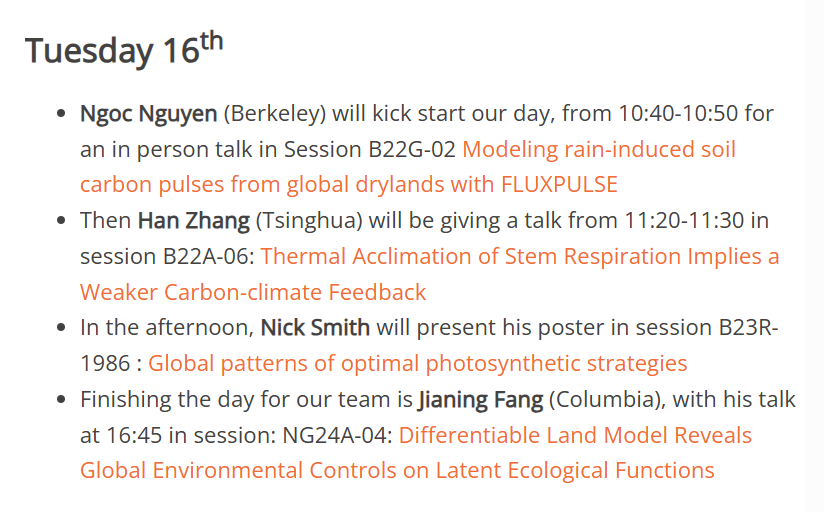
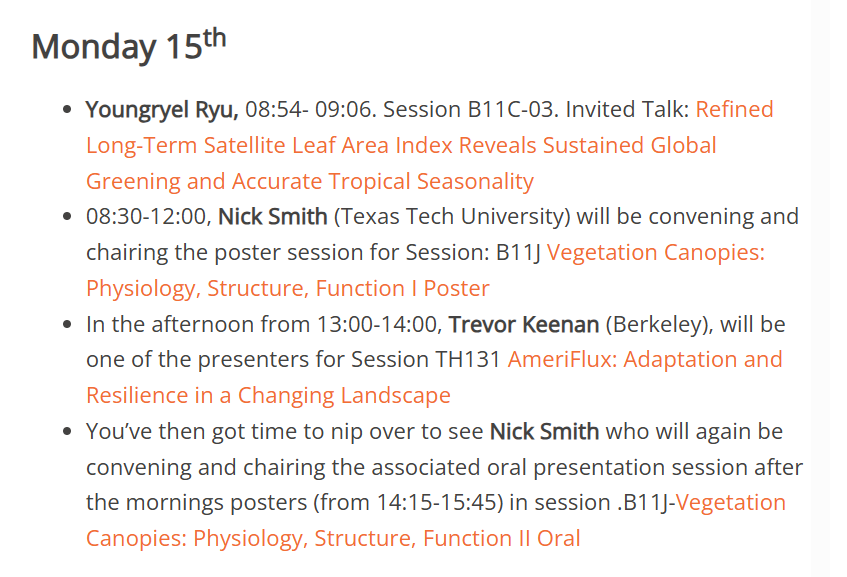
Day 3 #AGU25 let's go! Not one, not two but three invited talks on the line up from @ryuyr77 and @PierreGentine.
Also don't miss the sessions by @trevorkeenan, @JianingFang and Maoya. Details 👇
https://t.co/k01NDEDMfN
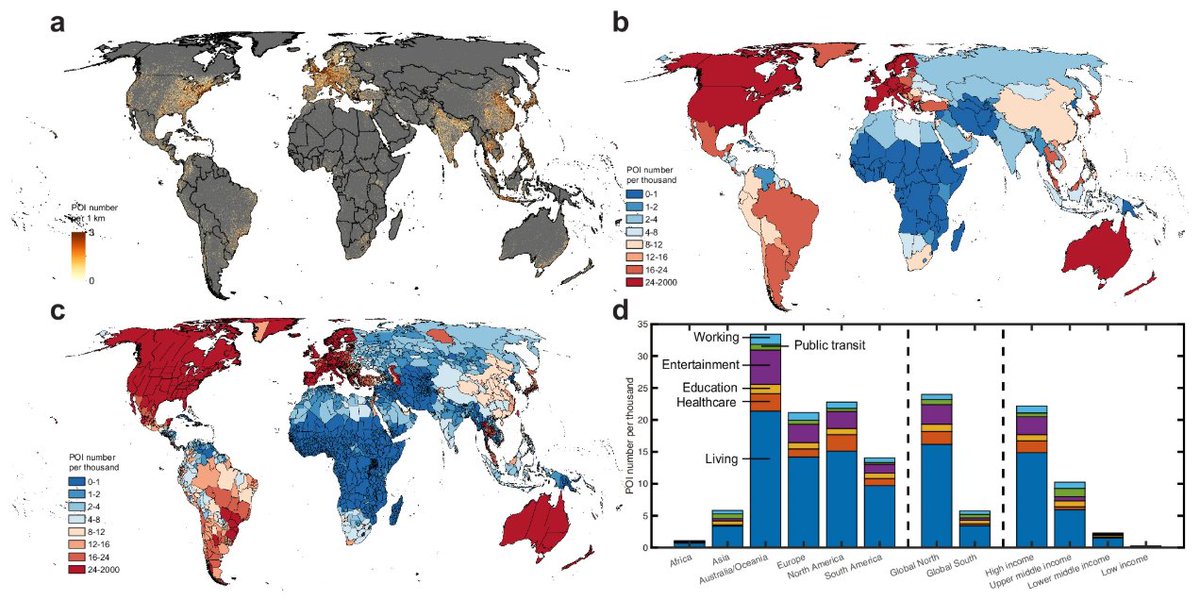
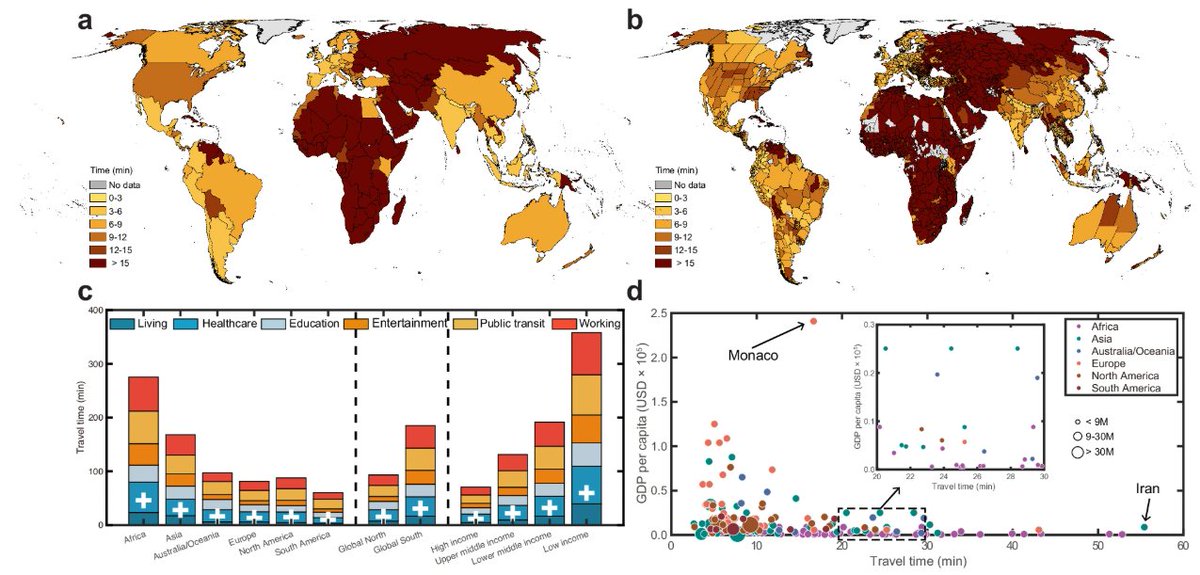
Our latest @NatureComms paper: Measuring global human accessibility to essential daily necessities and services. We compiled a global database of essential infrastructure and assessed human access to those daily essentials. @HKUniversity@HKUgeography https://t.co/aGGrHvgsL8
🚨New on the blog this week: LEMONTREE @SeoulNatlUni PhD student, Jisun Kim, shares her experience of fieldwork in Western Australia with @uwanews .
https://t.co/x7sL3UcCov
@ryuyr77
Prof. Youngryel Ryu group from Department of Landscape Architecture and Rural Systems Engineering at SNU, led by PhD student Wonseok Choi, has demonstrated the potential of mid SR basis SIF to monitor crop stresses, and published this work in Remote Sensing of Environment.
A new paper by our PhD student @IjeonghoN in Remote Sensing of Environment 📢
We developed a system that measures both directional and hemispherical hyperspectral reflectance and solar induced chlorophyll fluorescence controlled by two rotating prisms. This enables us to measure those quantities at different view geometries which will greatly support flux model development and evaluation, as well as satellite reflectance validation
The original idea was developed by Joe Berry Ari Kornfeld who inspired us to improve their system during my sabbatical leave @CarnegieEcology in 2017. Thanks Joe and Ari!
Generations of lab members devoted to develop/improve/maintain the system Jongmin Kim @DechantBenjamin Sangjun Lee @IjeonghoN
The system will be used to evaluate Korean AgroForestry satellite Joongbin Lim, and many other satellites 🛰️
@snucals1@SeoulNatlUni
https://t.co/0xreTvFymi
How do we tell when plants are stressed—before our eyes can see it? Prof. Youngryel Ryu’s team has shown that even mid-resolution hyperspectral cameras can detect solar-induced chlorophyll fluorescence (SIF), a faint light emitted by plants that reveals early signs of stress. This breakthrough could make crop monitoring faster, cheaper, and more accessible using drones and satellites.
Published in Remote Sensing of Environment: https://t.co/sr1YR9xcxI
#SNUResearch #RemoteSensingofEnvironment #SIF #PlantHealth
Hot off the press 💐New international collaborative paper led by @WonseokFromESL and @ZarcoTejada team opened the door for scalable, cost-effective sun-induced chlorophyll fluorescence #SIF monitoring in precision agriculture and ecosystem studies — bridging the gap between expensive SIF hyperspectral systems and practical applications in the field.
@snucals1@SeoulNatlUni@HyperSensLab@Hyungsuk_Kimm Anirudh Belwalkar @TomasPoblete17@YeonInsu Yeon Jae-Hyun Ryu Kyung-Do Lee @ZarcoTejada
https://t.co/SXXLxDXRA9
After 20+ years of pioneering research, we’ve moved from scepticism to solid validation in detecting solar-induced fluorescence using mid-resolution hyperspectral imagery. New study led by @WonseokFromESL & @ryuyr77 and international collaborators.
https://t.co/uXTwX1vuLa
Our annual meeting hosted this year by @ryuyr77@snucals1 brought together our international team to share research updates, plan our next steps and train our ECRs in remote sensing. A very successful week. Read more 👇
https://t.co/Xm9uPomZnO