🚀 After multiple requests from the community, we're finally doing it.
We're launching a free version of AdminCN. 🎉
You can now access 👇🏻
📊 𝗢𝗿𝗱𝗲𝗿𝘀 𝗗𝗮𝘀𝗵𝗯𝗼𝗮𝗿𝗱
📱 𝗠𝗮𝗶𝗹, 𝗖𝗮𝗹𝗲𝗻𝗱𝗮𝗿 & 𝗨𝘀𝗲𝗿𝘀
👤 𝗨𝘀𝗲𝗿 𝗦𝗲𝘁𝘁𝗶𝗻𝗴𝘀 & 𝗣𝗿𝗼𝗳𝗶𝗹𝗲
🔐 𝗟𝗼𝗴𝗶𝗻, 𝗥𝗲𝗴𝗶𝘀𝘁𝗲𝗿, 𝗙𝗼𝗿𝗴𝗼𝘁 𝗣𝗮𝘀𝘀𝘄𝗼𝗿𝗱, 𝗥𝗲𝘀𝗲𝘁 𝗣𝗮𝘀𝘀𝘄𝗼𝗿𝗱, 𝗩𝗲𝗿𝗶𝗳𝘆 𝗘𝗺𝗮𝗶𝗹 & 𝗧𝘄𝗼-𝗦𝘁𝗲𝗽 𝗔𝘂𝘁𝗵𝗲𝗻𝘁𝗶𝗰𝗮𝘁𝗶𝗼𝗻
📝 𝗩𝗲𝗿𝘁𝗶𝗰𝗮𝗹 𝗙𝗼𝗿𝗺𝘀, 𝗛𝗼𝗿𝗶𝘇𝗼𝗻𝘁𝗮𝗹 𝗙𝗼𝗿𝗺𝘀, 𝗙𝗼𝗿𝗺 𝗩𝗮𝗹𝗶𝗱𝗮𝘁𝗶𝗼𝗻 & 𝗗𝗮𝘁𝗮 𝗧𝗮𝗯𝗹𝗲
⚙️ 𝗘𝗿𝗿𝗼𝗿 𝗣𝗮𝗴𝗲
We wanted more developers to experience what AdminCN has to offer, so we're making a selection of our existing Pro pages available to everyone.
If you've been waiting to try AdminCN, this is the perfect time.
Watch the preview below 👇
Kubernetes Port Forwarding Patterns 👇
You're inside a dev cluster, access to the network is restricted, and the service you just deployed is acting up.
There’s no LoadBalancer, no ingress controller in place, and opening up a port is not an option because the network team is either slow or says no.
This is where kubectl port-forward unblocks you.
Here I've simplified for your easy understanding.
56K+ read my DevOps and Cloud newsletter: https://t.co/wwkI6UOSo4
What do we cover:
DevOps, Cloud, Containerization, IaC, GitOps, MLOps
🔁 Consider a Repost if this is helpful
Quick Linux tip:
Working with CSV files in the terminal?
You can make them readable by aligning columns neatly with column:
$ cat inventory.csv | column -t -s,
The -s, flag tells it to use commas as separators, and -t formats the output into a clean table.
Perfect for quick data inspection without opening a spreadsheet.
Part 1: What Are Linux Namespaces
On a Linux system, every process shares the same global view, the same process list, network interfaces, and filesystem view.
Namespaces change that. They let processes live in isolated “worlds,” each with its own network, process tree, and filesystem, all under the same kernel.
It’s how Linux creates the foundation for containers without running a full virtual machine.
In this series, we’ll take a look at each namespace, how it works, and how to experiment with them using standard Linux tools.
https://t.co/jeOsXj3FFk
Quick Linux tip:
When you need to create several directories at once, you don’t have to do it one by one.
The mkdir command supports brace expansion, letting you create multiple nested directories in a single go.
$ mkdir -p ~/scripts/{site-01,site-02}/{backup,monitoring,network}
This instantly creates folders for two sites, each with its own backup, monitoring, and network directories.
A neat way to save time and keep your directory structure organized.
Quick Linux tip:
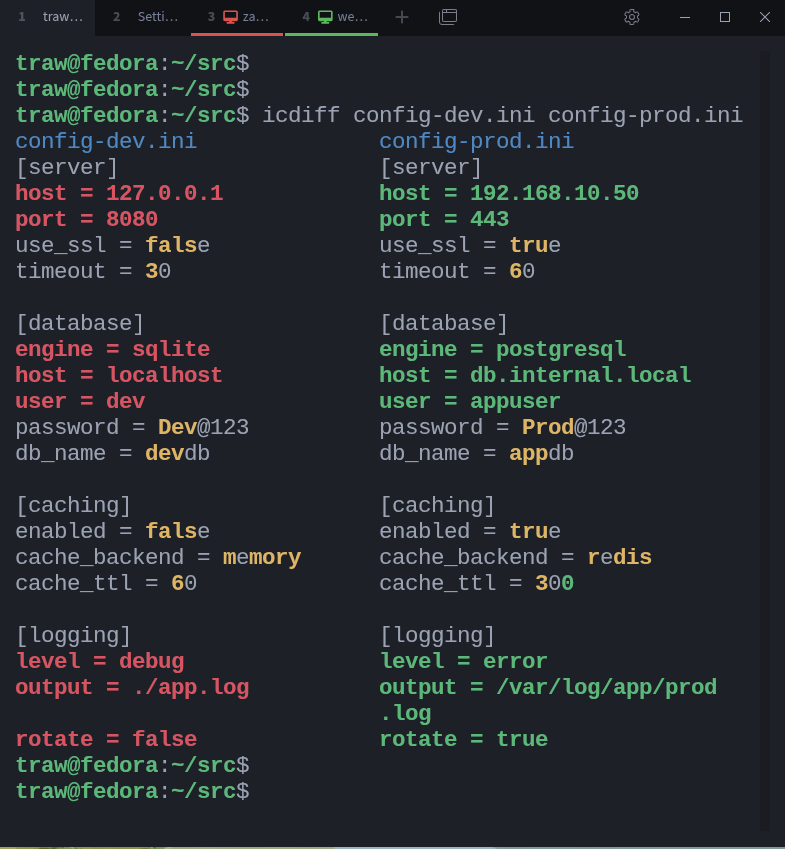
The diff command is a useful tool for finding differences between files in the Linux terminal. However, icdiff offers an even better side-by-side comparison with colorized output.
$ icdiff config-dev.ini config-prod.ini
The output will display both files side-by-side with any differences highlighted in red and green, making it easy to spot the difference.
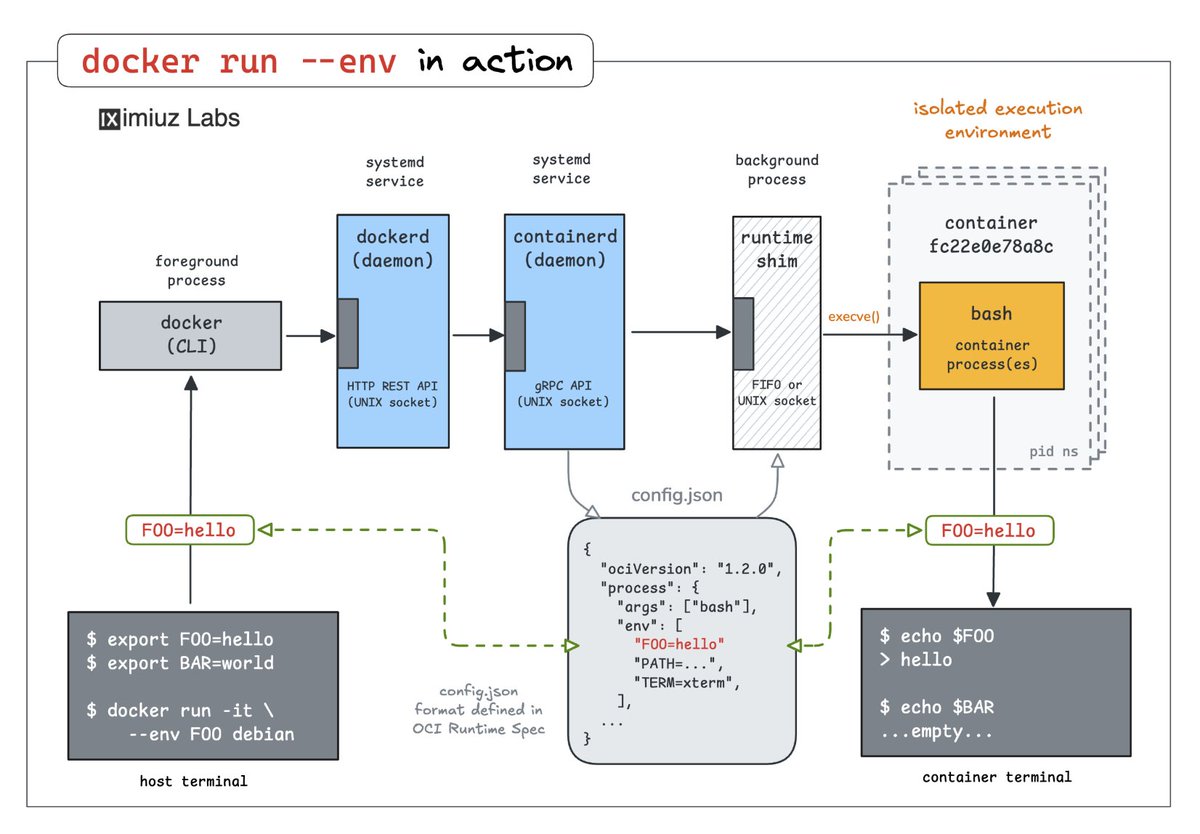
Docker 101: Pass Environment Variables to Containers 🐳
Apps are often configured via env vars. However, if you set an env var in your current shell, it won't be passed to the container, because it runs in its own execution environment.
Learn & practice: https://t.co/gBPe6DdmzU
As a software engineer, it's very important to learn about Gall’s Law, which states that complex systems cannot be created successfully from scratch.
In reality, even large systems, such as Netflix, Google, or Facebook, have started small and built incrementally over the course of decades.
Error Handling & Debugging
What is Error Handling & Debugging?
→ Error Handling ensures that when something goes wrong, the system responds gracefully instead of crashing.
→ Debugging is the process of finding, understanding, and fixing those errors.
Error Handling Techniques
→ Try-Catch Blocks → Wrap risky code so errors can be caught and managed.
→ Validation → Check user input and data before processing.
→ Fallbacks → Provide defaults or backup actions when errors occur.
→ Logging → Record errors for later analysis.
Debugging Practices
→ Print/Log Statements → Quick checks using logs or console outputs.
→ Debugging Tools → Use IDE debuggers, breakpoints, and stack traces.
→ Monitoring Tools → Spot issues in real time through error logs and alerts.
→ Reproduce the Bug → Isolate conditions under which the bug occurs.
Common Error Types
→ Syntax Errors → Code written incorrectly (e.g., missing semicolon).
→ Runtime Errors → Errors that occur while the program is running (e.g., divide by zero).
→ Logical Errors → Code runs but gives wrong results (hardest to catch).
Analogy
→ Error Handling → Like airbags in a car—they don’t prevent accidents but reduce damage.
→ Debugging → Like a mechanic investigating why the car broke down and fixing it.
Tip:
→ Always validate inputs
→ Use meaningful error messages
→ Log errors with enough detail
→ Don’t expose sensitive system info in errors
→ Automate alerts for critical failures
Grab the Backend Development with Projects Ebook
https://t.co/QdeNEmpNfI
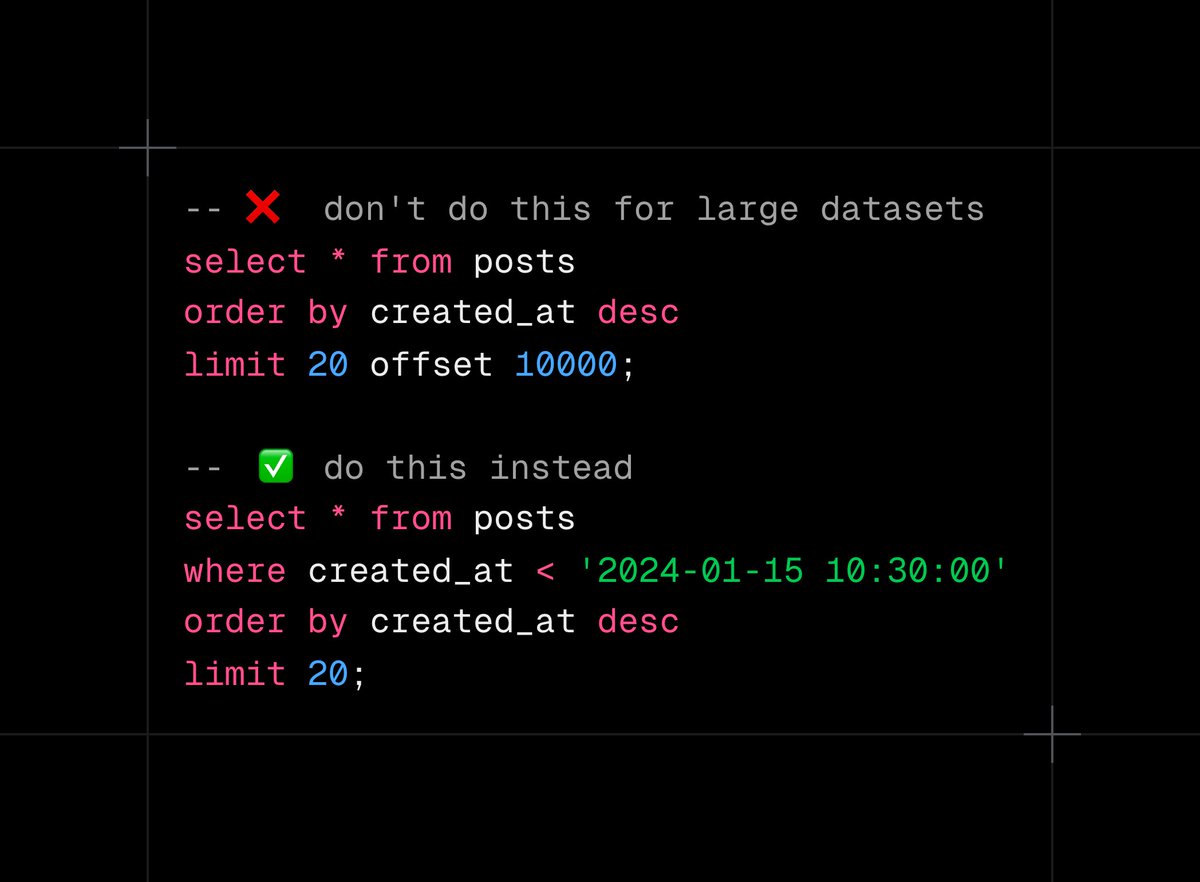
For large datasets, using limit + offset doesn't always perform well, especially when the offset value is large.
Instead, you can use a cursor-based pagination where you filter by the order values.
There is a reason services like GitHub handle pagination this way!
Send HTTP Requests in C with libcurl
actually, sending a POST request in C is really easy using libcurl. Here's how:
- set the url: point to the endpoint of the api
- add json data: pass the data by using curl_easy_setopt
- set headers: include content-type: application/json for structured requests
- send the request: use curl_easy_perform for that
this is an example of sending jaon data to an api endpoint with custom headers.
One of the most important distributed systems concepts:
→ Idempotency
It's also crucial when designing REST APIs.
You can repeat an idempotent operation multiple times without changing the system's state after the first API request.
This is especially important in distributed systems.
Network failures or timeouts can lead to repeated requests.
Your system should be able to handle transient errors like this.
Example flow for implementing idempotency:
1. The client generates a unique key for each operation and sends it in a custom header.
2. The server checks if it has seen this key before
- For a new key, process the request and store the result
- For a known key, return the stored result without reprocessing
How do you implement this in .NET?
Start here: https://t.co/ARcHwy1xLC
Are you handling idempotency in your APIs?
P.S. If you want a hands-on tutorial for mastering REST APIs, this is for you: https://t.co/wxz9N9p63y
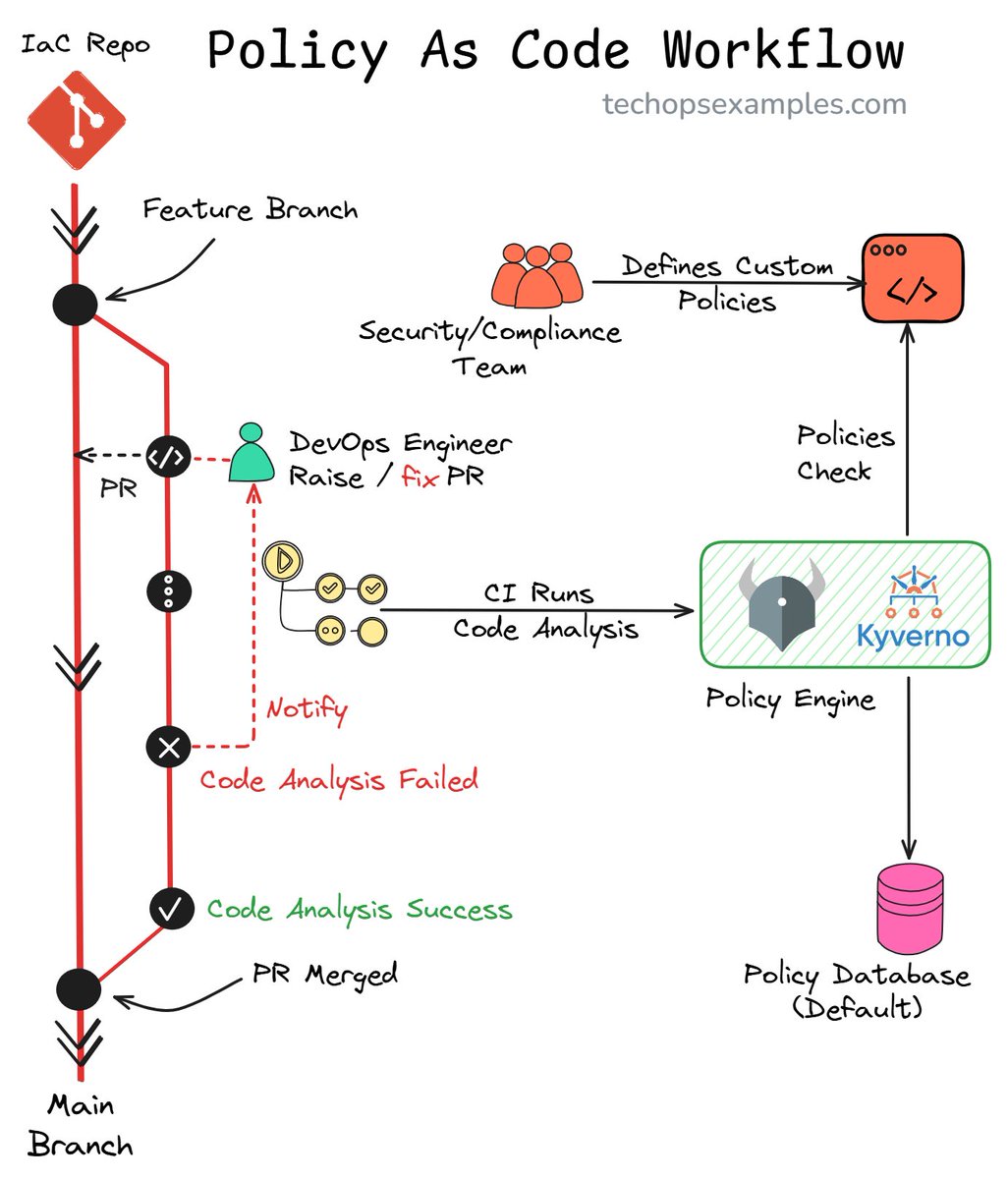
Many DevOps Engineers don’t fully understand the Policy As Code Workflow.
Here, We’ve made this to help you better understand.
🔴 52K+ read my DevOps and Cloud newsletter: https://t.co/wwkI6UOSo4
What do we cover:
DevOps, Cloud, Kubernetes, IaC, GitOps, MLOps
🔁 Consider a Repost if this is helpful
DevOps official language has to be 'YAML'
- Helm uses YAML
- GitHub uses YAML
- Ansible uses YAML
- Argo CD uses YAML
- Kubernetes uses YAML
- Azure DevOps uses YAML
- Docker Compose uses YAML
and more ...
All the sophisticated toolsets you aspire to learn and adopt run on YAML.
Get that right first.
🔴 52K+ read my DevOps and Cloud newsletter: https://t.co/WBucLdwLhJ
What do we cover:
DevOps, Cloud, Kubernetes, IaC, GitOps, MLOps
🔁 Consider a repost if this is helpful.