Chasing money with AI feels like gambling.
At first, you win big.
Then the dealer hooks you.
Soon, you’re losing more than you gain.
By the time you notice… you’re just another addict at the table.
¯\_(ツ)_/¯ ¯\_(ツ)_/¯ ¯\_(ツ)_/¯
#FutureOfHuman maybe
Obsidian is a $350M company for a note taking app built by 3 engineers working remotely
No other time in history was something like this possible
What a wonderful time to be building a company
Worth clarifying what TurboQuant actually does, because this post misframes it.
TurboQuant compresses the KV cache, the runtime memory that grows with every token during inference. It does not compress model weights.
A 6x reduction in KV cache memory means cloud providers can serve longer context windows with fewer H100s, or handle more concurrent users on the same GPU cluster. It does not mean a 16GB Mac Mini suddenly runs larger models. The model itself is the same size. The weights are unchanged.
The real impact is on inference economics at scale, not local deployment.
KV cache becomes the dominant memory bottleneck at long context lengths, often exceeding the model weights themselves. Google's TurboQuant hits 3-bit KV quantization with zero accuracy loss on benchmarks like LongBench and RULER.
MIT published Attention Matching three weeks ago achieving 50x KV cache compression. The inference cost curve, already falling roughly 10x per year, just got another accelerant. The winners are anyone serving long-context workloads at scale.
The losers are inference optimization startups whose entire margin was built on solving exactly this problem.
the founder of openclaw joined the company that was founded to make AI open and now charges you per token. and is now telling you open models aren't there yet.
i run qwen 3.5 27b on a single 3090. 50 tok/s. it writes code, handles tool calls, runs agent sessions for hours. the model built a full space shooter, 3,000+ lines, from a single prompt. i published the data.
"open models aren't there yet" is what you say when your harness can't parse tool calls on local models and you blame the model instead of fixing the harness. i have the DMs. people switch from openclaw to hermes agent and their "broken" models suddenly work.
pair a good model with a good harness like hermes agent where parsers are built per model. your data stays on your machine. no API key. 0 subscription. no one training their next model on your thinking.
don't listen to someone with an OpenAI paycheck telling you open source can't do the job. install it. test it yourself. the receipts are on my timeline.
he built a harness that couldn't handle local models and chose the API paycheck over fixing it. that should tell you everything.
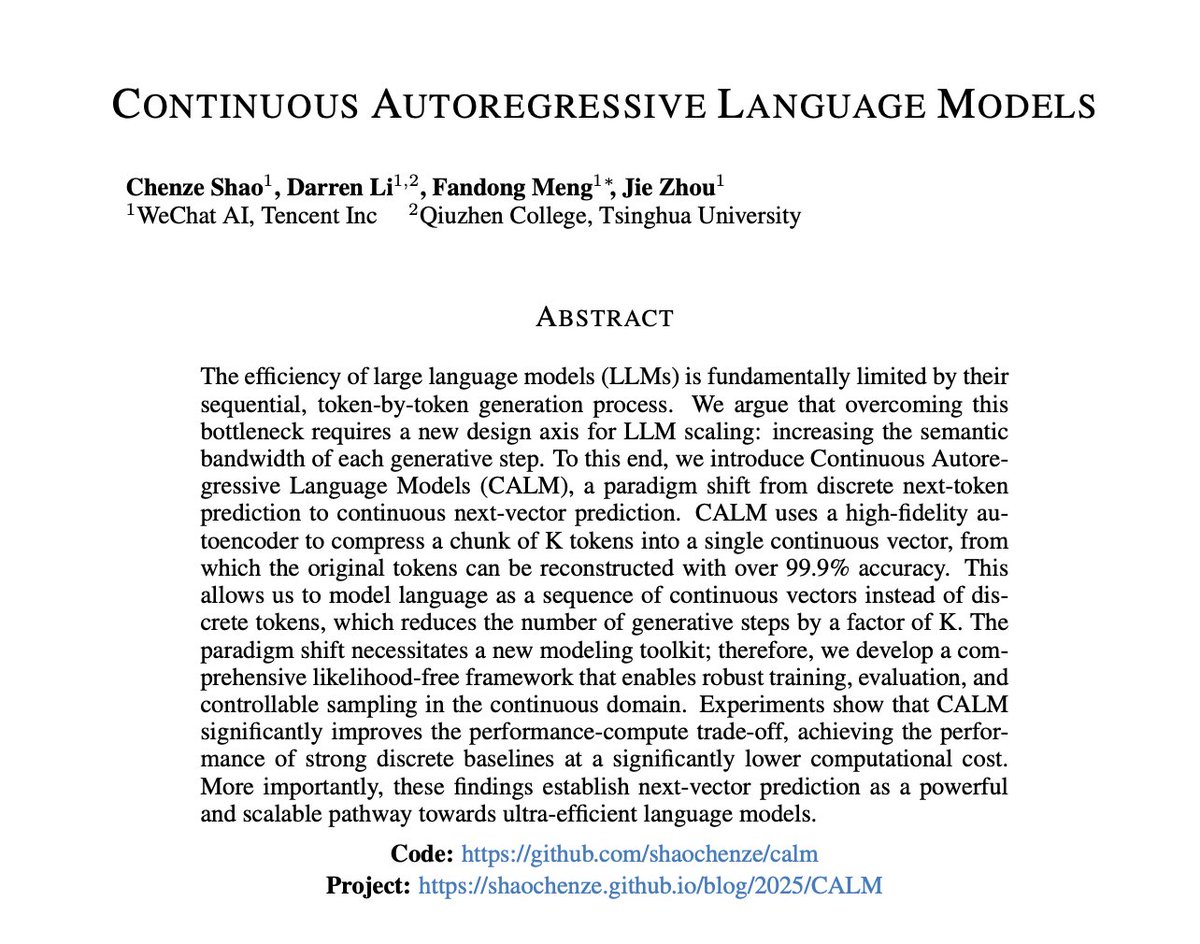
🚨 BREAKING: Tencent has killed the “next-token” paradigm.
Tencent and Tsinghua has released CALM (Continuous Autoregressive Language Models), and it completely disrupts the next-token paradigm.
LLMs currently waste massive amounts of compute predicting discrete, single tokens through a huge vocabulary softmax layer. It’s slow and scales poorly.
CALM bypasses the vocabulary entirely. It uses a high-fidelity autoencoder to compress chunks of text into a single continuous vector with 99.9% reconstruction accuracy.
The model now predicts the “next vector” in a continuous space.
The numbers are actually insane:
- Each generative step now carries 4× the semantic bandwidth.
- Training compute is reduced by 44%.
- The softmax bottleneck is completely removed.
We’re literally watching language models evolve from typing discrete symbols to streaming continuous thoughts.
This changes the entire trajectory of AI.
Putting out a wish to the universe.
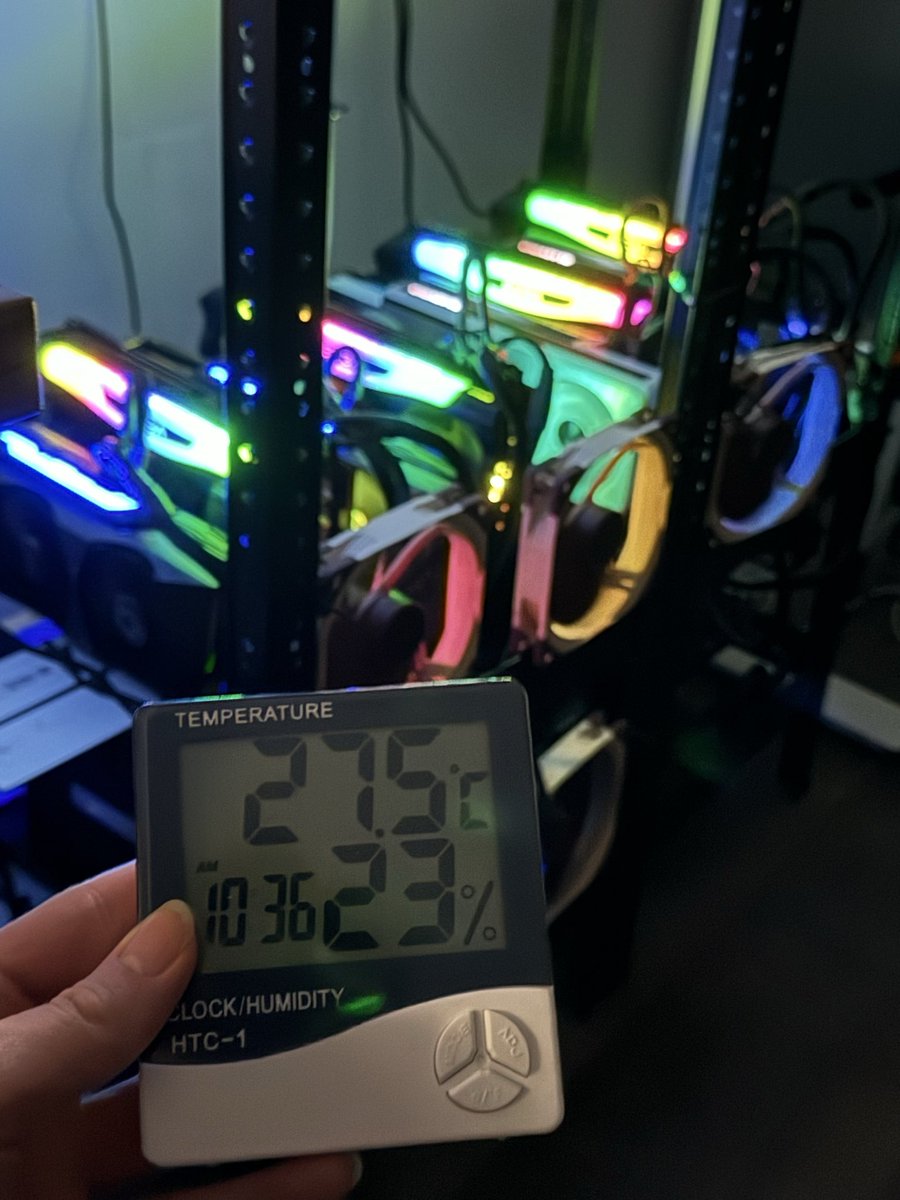
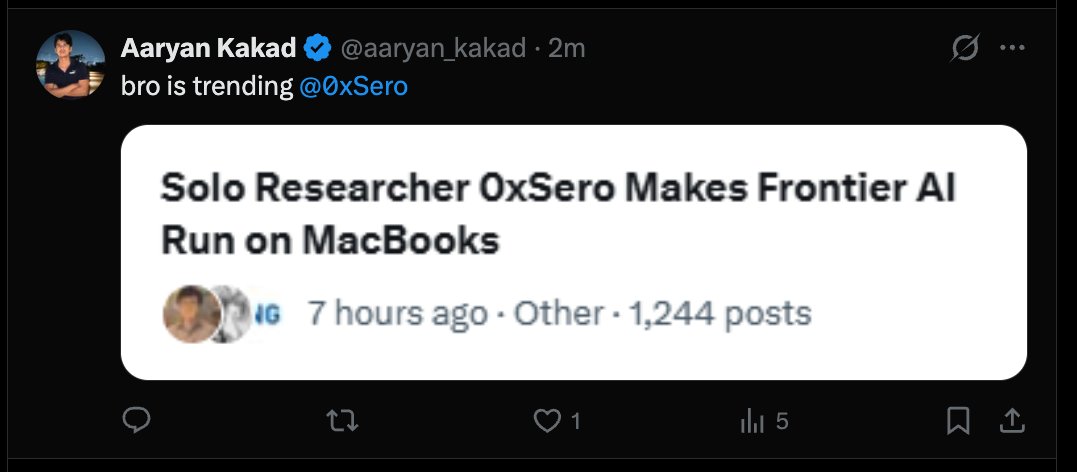
I need more compute, if I can get more I will make sure every machine from a small phone to a bootstrapped RTX 3090 node can run frontier intelligence fast with minimal intelligence loss.
I have hit page 2 of huggingface, released 3 model family compressions and got GLM-4.7 on a MacBook https://t.co/lorDSUEYCL
My beast just isn’t enough and I already spent 2k usd on renting GPUs on top of credits provided by Prime intellect and Hotaisle.
———
If you believe in what I do help me get this to Nvidia, maybe they will bless me with the pewter to keep making local AI more accessible 🙏
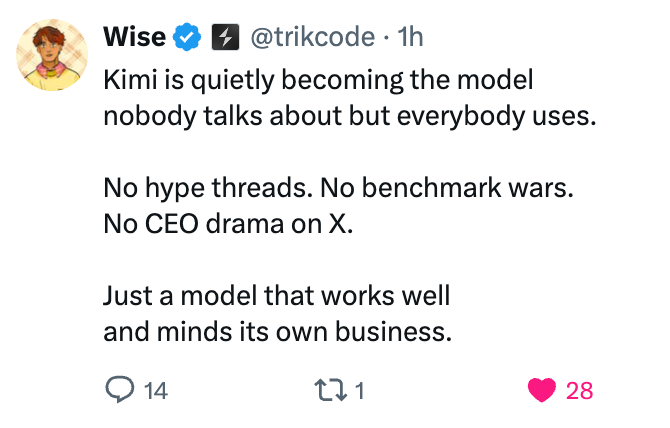
Congrats to the @cursor_ai team on the launch of Composer 2!
We are proud to see Kimi-k2.5 provide the foundation. Seeing our model integrated effectively through Cursor's continued pretraining & high-compute RL training is the open model ecosystem we love to support.
Note: Cursor accesses Kimi-k2.5 via @FireworksAI_HQ ' hosted RL and inference platform as part of an authorized commercial partnership.
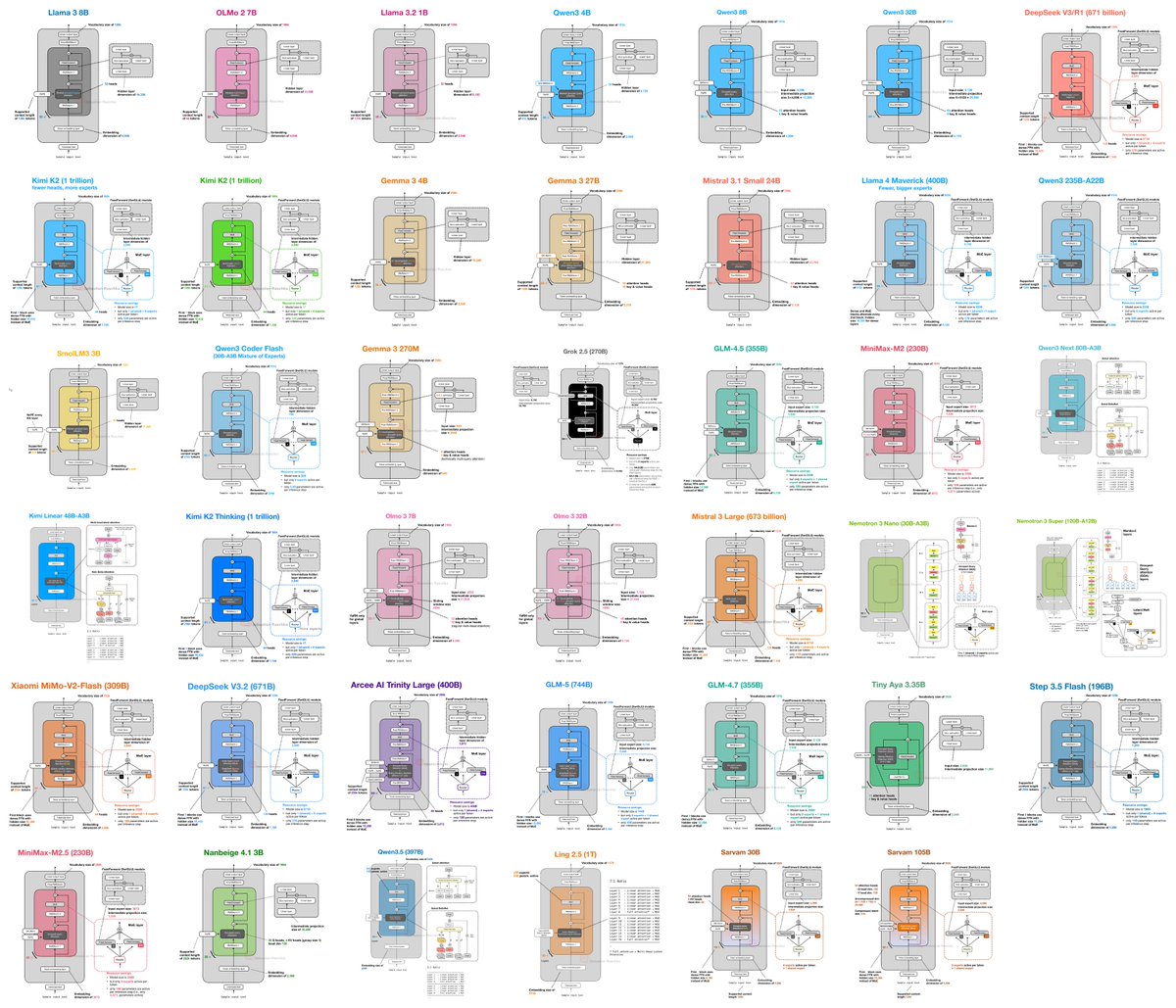
I'm not the only one doing this.
- karpathy
best thought leader, best person to learn from imo. Nanochat is the best way to get into training LLMs its the simplest and most digestible source for building your first AI model
- steipete
This guys GitHub is a national treasure, his writing is also very strong. Peekaboo, https://t.co/u0cve9Ukze, openclaw, oracle, just talk to it, etc.. all unique and very useful
- badlogicgames
Mario’s Pi is a staple AI engine and possibly the best, simplest, open source agentic loop to learn from. Despite what people say about his methods, I think he’s going to set some new standards for Open source contribution. Big respect.
- TheAhmadOsman
This man is the GPU king, giveaways and lots of dense educational content around self hosting and home inference. He’s also tight with pretty much all the open weight labs and has them on for interviews regularly
- sudoingX
This is an up and comer who will change the game, he's pushing the limits of what a single gpu can do
- Ex0byt
I can confidently say this man will be fundamental in making local inference on massive models possible.
- alexinexxx
I genuinely feel motivated by her drive. She’s a real hard worker learning about GPU kernel programming. Also good aesthetics
- gospaceport
I would not have gotten into building my own hardware without this man’s hard work. He’s taught me so much about hardware and the economics of this. He also has the most impressive homelabs I’ve ever seen.
- alexocheema
The founder of Exolabs, pioneering Apple hardware inference, he’s also very engaged in the community and a good guy all around. If you are interested in Mac minis and Mac Studios this is your guys.
- nummanali
This guy is so prolific, he’s made tons of CLI tools for managing llm subscription budgets, using Claude code with alternative models etc..
- thdxr
The entire Opencode team is wonderful but Dax specifically is a good writer. More anti-doomer content to sooth your anxieties.
- juliarturc
If you are interested in the science, Julias channel is where it’s at. Almost everything I’ve learned about LLM compression has been from her.
- Teknium
The Nous research & Prime intellect teams are both some of the most hard-working and principled people around. Tough fight in an industry so aggressive.
- victormustar
Head of Product for Huggingface, enabling us all to publish our work.
- louszbd
Head of community at ZAI some of the top LLMs available right now that are open weights. They supercharged the movement
- SkylerMiao7
Making frontier intelligence fit on 10k USD of hardware. Via MiniMax
- crystalsssup
Building the best Open Weight model on the market, and releasing their latest research before their next gen model.
Believe it or not these people are carrying the entire industry and giving us a fighting chance.
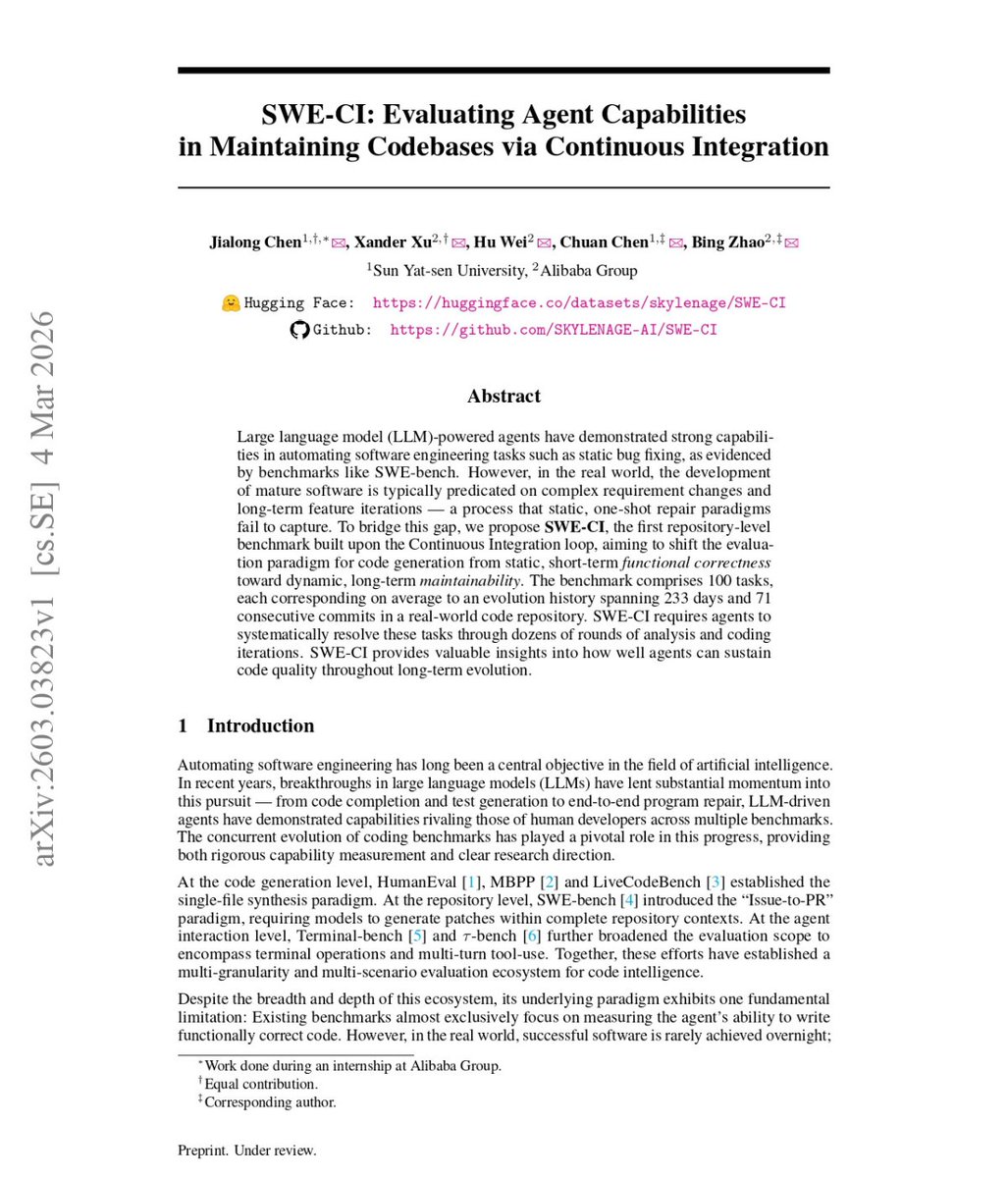
🤯BREAKING: Alibaba just proved that AI Coding isn't taking your job, it's just writing the legacy code that will keep you employed fixing it for the next decade. 🤣
Passing a coding test once is easy. Maintaining that code for 8 months without it exploding? Apparently, it’s nearly impossible for AI.
Alibaba tested 18 AI agents on 100 real codebases over 233-day cycles. They didn't just look for "quick fixes"—they looked for long-term survival.
The results were a bloodbath:
75% of models broke previously working code during maintenance.
Only Claude Opus 4.5/4.6 maintained a >50% zero-regression rate.
Every other model accumulated technical debt that compounded until the codebase collapsed.
We’ve been using "snapshot" benchmarks like HumanEval that only ask "Does it work right now?"
The new SWE-CI benchmark asks: "Does it still work after 8 months of evolution?"
Most AI agents are "Quick-Fix Artists." They write brittle code that passes tests today but becomes a maintenance nightmare tomorrow. They aren't building software; they're building a house of cards.
The narrative just got honest: Most models can write code. Almost none can maintain it.
• According to the story, the dog's cancer has not been cured.
• Absent all regulatory and manufacturing constraints, we could not just synthesize magic mRNA cancer cures. The technology is very promising, but it's not yet any kind of panacea.
• The emergent system of regulators and manufacturers is indeed far too conservative, and small-scale experimentation is much harder than it should be. More people should read the first part of The Rise and Fall of Modern Medicine. Recommend @RuxandraTeslo, @PatrickHeizer for more.
Australian tech entrepreneur Paul Conyngham explains how he used ChatGPT/AlphaFold (spent $3,000 with no biology background) to create a custom MRNA vaccine to treat his dog’s cancer tumors. Unreal.