This little book is the company building philosophy of David Ogilvy broken down into bite-sized pieces.
Buffett called Ogilvy a genius and this is a list of ideas Ogilvy wanted to pass on:
1. Discovery consists of seeing what everyone has seen and thinking what nobody has thought.
2. Those who live by their wits go to work on roller coasters. The ride is exhilarating, but you need a stomach of titanium.
3. Rule #1: There are no rules. Rule #2: Never forget rule #1.
4. Only dead fish go with the flow.
5. God is with those who persevere.
6. Brilliant thinking is rare, but courage is in even shorter supply than genius. (Peter Thiel)
7. Fear is a demon that devours the soul of a company.
8. Self-doubt is the enemy of creativity.
9. How great we become depends on the size of our dreams. Dream big dreams.
10. If you asked an oracle the secret to doing great work and the oracle replied with a single word my bet would be on “curiosity” (Paul Graham)
11.If you have to choose between agreement and conflict, take conflict every time. It always yields a better result. (Jeff Bezos)
12. It's the cracked ones that let light into the world. (Talent is likely to be found among nonconformists, dissenters, and rebels.)
13.The leader of the company has one principal responsibity: provide an atmosphere in which creative mavericks can do useful work.
14.Bureaucracy has no place in an ideas company.
15.Have a habit of divine discontent with your performance. It is an antidote to smugness.
16.Dogged determination is often the only trait that separates a moderately creative person from a highly creative one.
17.We are what we repeatedly do. Excellence is not an act, but a habit. (Aristotle)
18.Our character is a composite of our habits.
19.Habits constantly, daily, express who we really are.
20. Persistence and determination alone are omnipotent. Before them, obstacles vanish into thin air and mountains crumble into atoms.
21. People don’t have ideas. Ideas have people.
22. The best leaders give their people permission to practice magic. They get rid of sad dogs who spread gloom.
23. Habit is overcome by habit.
24. If we avoid candor we destroy trust.
25. You fight against the tyranny of politeness by telling the truth.
26. Making great work requires us to be brutally honest and totally dedicated to the truth.
27. In the absence of courage, nothing worthwhile can be accomplished.
28. Intense curiosity keeps you young. When we're green we grow, when we're ripe we rot. (Ray Kroc)
29. DON'T BOW YOUR HEAD.
30. DON'T KNOW YOUR PLACE.
31. DON'T SIT BACK.
32. DON'T GIVE IN.
33. DON'T GIVE UP.
34. DON'T WIN SILVERS.
35. DON'T BE SO EASILY HAPPY WITH YOURSELF.
36. DON'T BE SPINELESS.
37. DON'T BE GUTLESS.
38. DON'T BE TOADIES.
39. DON'T GO GENTLE INTO THAT GOOD NIGHT.
40. DEFY THE GODS.
41. We are the people we have been waiting for.
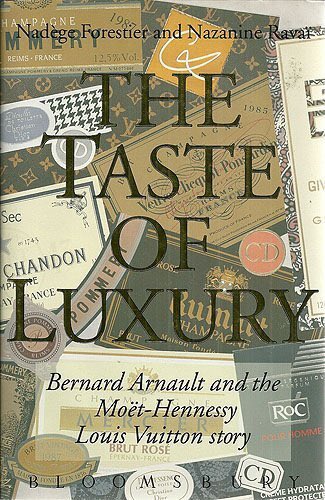
I read this biography of Bernard Arnault
When the book ends Arnault is just 42 years old
Here are my top 10 highlights:
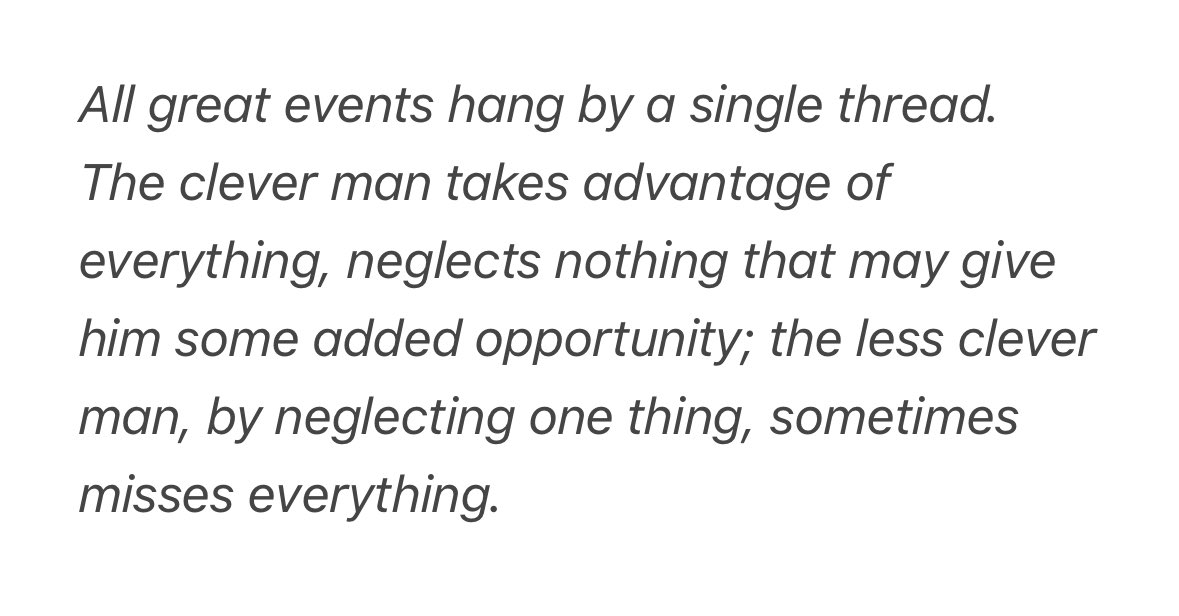
1. I may lose once but I never lose twice.
2. He had such an appetite for victory and such a capacity for work that he was bound to succeed.
3. Arnault is an iron fist in an iron glove.
4. He did not stray from his path. Relentlessly he pursued his ascent and seized every passing opportunity.
5. It is not surprising that the only man who truly fascinates Arnault is Giovanni Agnelli.
The chairman of Fiat embodies both the supremely successful industrialist and unequalled power.
That, in Arnault's eyes, is what it is all about. Politics is ephemeral; companies have a durability which guarantees the only real power worth having.
6. He had worked from the time he was a child and he had never stopped working.
His father never had to tell him to study.
That was all he had ever done.
7. Arnault learned with excessive zeal.
8. He had faith in no one but himself.
9. Arnault had understood before anyone else that it (luxury) was a true industry.
10. He does not compromise. He overturns everything in his path. It is totally foreign to his nature to compromise his beliefs.
Listen to the podcast I made about this very hard to find book (episode 296)
https://t.co/95SxYTrl0K
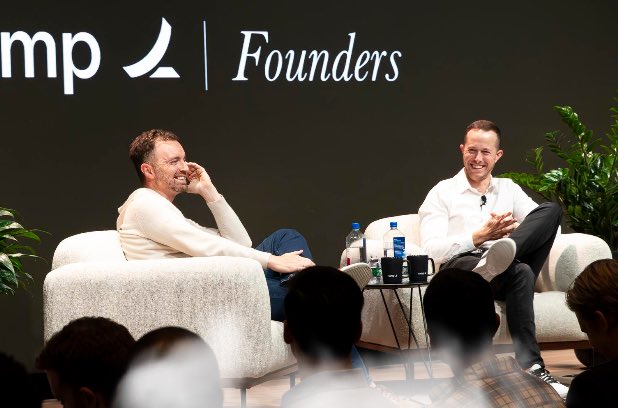
I attended a live event with @FoundersPodcast and @patrick_oshag during which David Senra summarized his lessons from years of reading biographies on the world’s best entrepreneurs and performers. I left wanting to double down on my focus and ready to relentlessly pursue my life’s work. I hope this thread may inspire the same. My key takeaways 🧵
Y Combinator just shared the startups they want to invest in for summer 2025.
The big theme is AI that turns 40-hour jobs into 40-minute tasks.
My 30 second summary and 12 takeaways below:
I read this book on history’s greatest family dynasties. My top 10 highlights:
1. A man always has two reasons for the things he does; a good one and the real one. — J.P. Morgan
2. It is impossible to create an innovative product unless you do it yourself, pay attention to every detail, and then test it exhaustively. Never entrust the creation of a product to others, for that will inevitably lead to failure and cause you deep regret. —Sakichi Toyada
3. You should make an effort to make something that will benefit society.
4. Rockefeller's clincher was to offer the victim a look at the books of Standard. A potential seller was dumbfounded to learn that Standard was able to sell at less than his own cost of production. They could kill him whenever they pleased.
5. Good was never good enough. The company's slogan was kaizen: continuous improvement.
6. For many great businessmen l'appétit vient en mangeant (“Appetite comes with eating.”)
7. Rational, thoughtful, systematic, committed, and diligent, he also cultivated an intense curiosity, a spirit of calculation, and an attention to opportunity. His competitors were amateurs by comparison. He saw them for what they were. (Rockefeller)
8. Failure will kill the business. But so will success.
9. [Nathan Rothschild's extreme levels of self belief] When his prospective father-in-law asked for proof of his prospects, Nathan told him that if he was concerned about having his daughters provided for, he might just as well give them all to Nathan, and be done with it.
10. That was the way J.P. Morgan made moves: the ground was already prepared.











![FoundersPodcast's tweet photo. I read this book on history’s greatest family dynasties. My top 10 highlights:
1. A man always has two reasons for the things he does; a good one and the real one. — J.P. Morgan
2. It is impossible to create an innovative product unless you do it yourself, pay attention to every detail, and then test it exhaustively. Never entrust the creation of a product to others, for that will inevitably lead to failure and cause you deep regret. —Sakichi Toyada
3. You should make an effort to make something that will benefit society.
4. Rockefeller's clincher was to offer the victim a look at the books of Standard. A potential seller was dumbfounded to learn that Standard was able to sell at less than his own cost of production. They could kill him whenever they pleased.
5. Good was never good enough. The company's slogan was kaizen: continuous improvement.
6. For many great businessmen l'appétit vient en mangeant (“Appetite comes with eating.”)
7. Rational, thoughtful, systematic, committed, and diligent, he also cultivated an intense curiosity, a spirit of calculation, and an attention to opportunity. His competitors were amateurs by comparison. He saw them for what they were. (Rockefeller)
8. Failure will kill the business. But so will success.
9. [Nathan Rothschild's extreme levels of self belief] When his prospective father-in-law asked for proof of his prospects, Nathan told him that if he was concerned about having his daughters provided for, he might just as well give them all to Nathan, and be done with it.
10. That was the way J.P. Morgan made moves: the ground was already prepared.](https://pbs.twimg.com/media/GFgAU-0WEAAQ4HD.jpg)


