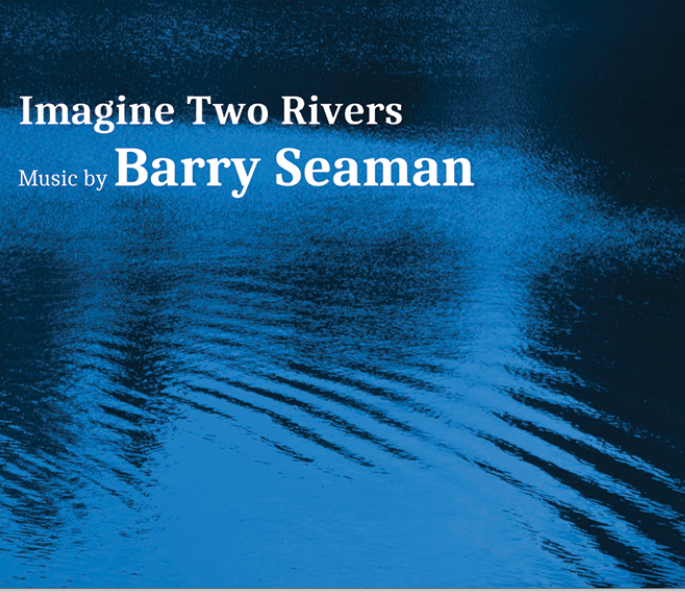
I'm so grateful to @NICMcharity@RecordsAsc for producing this memorial CD to celebrate gifted #composer Barry Seaman, who was tragically taken from us in 2020 by Covid & I remain determined that Barry's beautiful soul & #music will live on.💙 https://t.co/VaDvllhKKL
We solved a problem that didn't exist.
In the 1980s, you bought a car, turned the key, and drove away. If you wanted the heat, you turned a knob. If you wanted the radio louder, you turned another knob. You could do both without taking your eyes off the road.
Now you need to navigate three touchscreen menus just to adjust the air conditioning. The dashboard looks like NASA mission control, and half the features require a software update.
We've spent 40 years telling people not to drive distracted, then replaced every physical button with an iPad glued to the dashboard.
Apparently, the real danger was being able to adjust the temperature without looking.
The Ombudsman found maladministration. Hundreds of MPs agree. @andyburnham agrees. Supporters of #WASPI compensation outnumber opponents four to one. The case has been made. All that’s missing is a meeting, and the Prime Minister promised us one.
In June, @andyburnham said #WASPI women deserved recompense. He was right. He also promised to meet us. 16 weeks into his premiership, that meeting hasn’t happened. We’re asking him to keep his word.
I see John Lewis has quietly re-edited its Christmas ad in the hope nobody will notice.
Gone: the scenes of the feral grandkids misbehaving.
Gone: the useless, gormless looking parents.
It’s too late, guys.
We've all seen the original. Deleting is cheating. #JohnLewisChristmas
I really enjoy visiting your shops @JohnLewisRetail so it's a huge shame that you have wound me and other loyal customers up with that horrible, depressing advert, which encourages the indulgence of brattish behaviour by kids who haven't been taught any manners or basic decency.
One of the best feelings for an introvert is slipping out of a social event without anyone noticing, driving home in complete silence, and feeling more at peace with every mile
It pains me to say this, having devoted most of my working life to the trade, but far too often the news really sucks. And never more so than in this era of relentless 24-hour news cycles, rolling coverage and push notifications.
Let me illustrate this with a slightly odd example.
There’s a BBC News story today about Dame Judi Dench with the headline: ‘I can’t do a play, a film or read anymore.’
Sounds tragic, doesn’t it? One of Britain’s finest actresses, a national treasure, no longer able to pursue the art that has brought her, and us, so much joy.
But then you read the story and discover that Dench is 91.
Now, you could look at this another way. She’s still alive at 91. Still on her feet. Still giving interviews. Still capable of recounting wonderful stories and anecdotes from an extraordinary life and career.
I’m sure I’m not the only person who’s lost loved ones long before they reached 91, some of whom suffered the debilitating effects of illness or old age before they died.
And that’s not to diminish Dench’s difficulties or the sadness of losing her eyesight. It’s simply to recognise that there’s another, rather more uplifting way of looking at her circumstances.
A much-loved actress has lived into her tenth decade, enjoyed an extraordinary career and is still around to share her memories with us.
But that’s not the news line, is it?
The news line is that she can’t act or read anymore.
And I get it. I’ve been a journalist long enough to understand why. It’s a perfectly legitimate angle.
But it also illustrates something fundamentally depressing about the way we consume news. The industry is geared towards finding the tragedy, the misfortune, the conflict, the catastrophe. Even stories that contain much to celebrate are framed around what’s been lost rather than what’s been gained.
And now, thanks to the miracle of modern technology, we’re invited to immerse ourselves in this relentless procession of misery from the moment we wake up until the moment we go to bed.
So here’s a thought, from someone who’s spent most of his adult life working in news.
If you spend your days consuming it, don’t be surprised if your mental health suffers and your outlook on life becomes increasingly gloomy, cynical and bleak. So turn off those push notifications now and limit your exposure.
As for us journalists, it’s long overdue we reflected on the impact our craft has on people in the internet age, and perhaps made a conscious effort, just occasionally, to look for the positives.
👇🏻
Dame Judi Dench: 'I can't do a play, a film or read any more' https://t.co/Y7VLgCACHN
@Audz32129841 Bewildering how Billy's shocking and deeply upsetting death just dropped, no follow up despite Summer and Todd both knowing Theo responsible, a crime neither would ever forgive and would want justice.
Well after today’s announcement from the Bank of England, there is something very, very, very wrong in the system.
So … let me get this straight:
* British Gas made a profit of £1.3bn between January & June
* BP announced profits of £6.95 billion between April and June alone
* Shell has profited by £9.4bn in a year
The MEN at the top:
* John Pettigrew, boss of National Grid received £6.5m bonus on top of his salary
* Chris O’Shea, chief executive of British Gas owner Centrica was paid almost £2m last year in salary and benefits
* Centrica's non-executive directors were paid almost £1m
* Scottish Power's CEO Keith Anderson is on £1.15m.
* E.On boss Michael Lewis is on £1m
* EDF's Simone Rossi is also on £1m
* And their top execs enjoyed a share of £4.65m
* Peter Simpson of Anglian Water earned a £1.3m pay package
* Welsh Water bosses awarded themselves bonuses of over £930,000
* Severn Trent bosses awarded themselves bonuses of £5.56m
* Thames Water's Sarah Bentley, received a £727,000 bonus on top of her £2m annual salary
Meanwhile there are...
* People who haven't had breakfast and/or lunch TODAY, because they can't afford it.
* People using FoodBanks because food is becoming more of a luxury than a necessity.
* Children celebrating a birthday without presents.
* Parents worrying about new school uniforms - and some schools enforcing rules which are not cost-effective.
* People who can't get to work because they can't afford to put petrol in their cars/pay for public transport anymore.
* People who are working so much they're making themselves ill, and they STILL CAN'T AFFORD to pay their bills.
* People who have been given fines by these same energy/water companies because they couldn't afford to pay their bills in the first place - increasing their debt.
* Customers being told to do STAR JUMPS TO KEEP WARM for crying out loud!
* Hose pipe bans when gallons of water leak away everyday.
* Elderly people NOT DRINKING because they're worried about running out of water!!!
All this and energy prices are set to rise up to 75% in October...
THIS IS MADNESS!.. I'm all for supporting profits … I'm not for supporting greed at the cost of lives of others.
Something needs to change.
Why is customers' money being used to make life more comfortable for those who are making life more intolerable for the rest of us?
I actually don't understand how the energy companies are allowed to get away with this and why the government aren't stopping them instead of handing out money.....
There's a shocking article in the Spectator about "Edtech" in schools: screen use in class, homework on apps, physical books phased out. University students are routinely expected to read complex articles and books in digital formats. Nobody can read properly on a screen. /
Why do old people (like me) go to a garden centre for coffee and cake, or lunch?
Easy to park.
Free to park.
No one working on a laptop.
No one in a zoom call.
No one playing tik toks on speaker.
No one shouting into their phone.
The guy on the counter isn’t having a phone conversation while he serves you.
Tables are clean.
Toilets are clean.
Coffee is the same as most coffee shops, cakes are better.
Looks like selling Royal Mail to a Czech billionaire worked out every bit as well as selling our water system to an Australian investment bank and our steel industry to an Indian multinational
Publicly owned Royal Mail delivered letters six days a week. After privatisation, bosses tripled their salaries and cut that to three days a week. Yes, it's our old friend 'the superior efficiency of the private sector'.