I understand that children bring illness home. I have read the studies, especially re: SARS-C0V-2. And I have been alive for more than six decades so I have seen it happen multitudes of times.
Here's the thing, though. Kids don't have agency. Adults do. Forcing kids into daycare or schools with no mitigations is the problem, not the kids. The governments, "public health," school boards, etc., THEY are the problem and that's why the kids keep getting sick, and why they keep bringing illnesses home. /1
Remember when the pandemic hit and everything was remote? Work, education. Disabled people had been begging for those things to be remote for over a decade until non-disabled people needed them. Two years after, they got rid of it. They can accommodate, they just don’t want to.
@WeWillBeFree24@grok@robert71559 And like the dude with the largest most bloated security detail of any secretary of defense in US history is going to travel,without them? Yeah, riiiiight.....
@JeffreyRader@AP "The fund shall cease processing claims no later than December 1st, 2028."
So Trump's puppet government will be the only one to approve or deny claims before it ends? It sure sounds like it's meant for a very specific time frame, doesn't it.
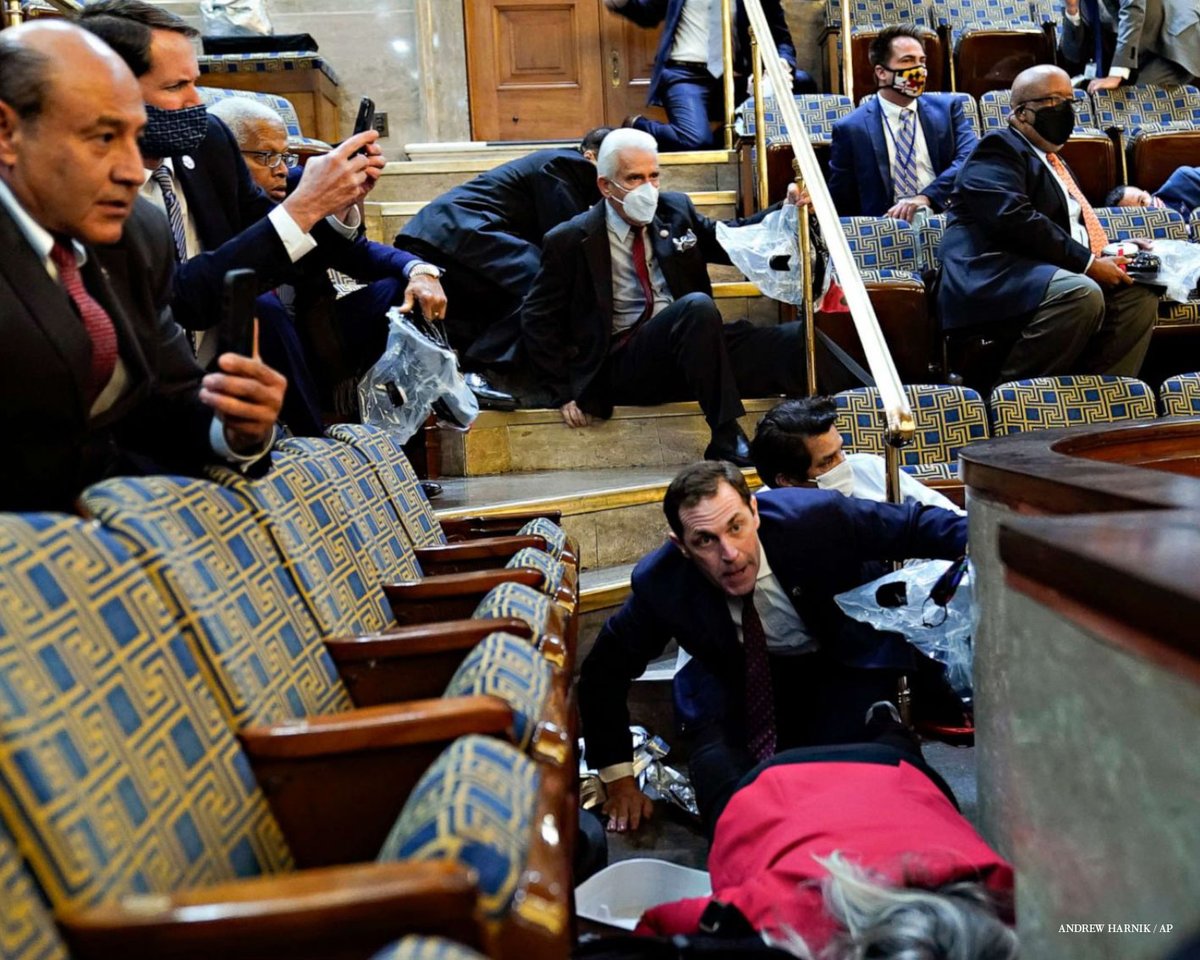
Trump didn’t just pardon his followers who stormed the U.S. Capitol.
He’s now set them up for payments through a slush fund he created to reward his allies—out of your tax dollars.
You could not make this up.
Although the full peer-reviewed trial has just been published yesterday, this data itself is not new, and it’s the basis of @ShionogiUS’s application to the FDA for the same indication (post-exposure prophylaxis)
The FDA is set to make a decision next month, on ~June 16th. You can help by signing this petition if you want to see this become available: https://t.co/njSTv2CpvN
@adamscochran Covid is more like HIV than flu. Let’s break it down a little. Flu antibodies last years while COVID antibodies are gone in weeks. Flu only infects and affects a few organs while COVID infects more cells than HIV, this means all organs all tissues all systems. Not the same.
@vir_innominatum@Susan16Park This is what I was able to find:
A "Flog" (Australian Slang): A noun used to describe an undesirable, annoying, or "dodgy" person; often considered a slightly more acceptable alternative to "wanker"
Speaking as a therapist, there is no such thing as “Covid anxiety.” The mental health field is built on ableism and most therapists don’t understand that viruses can disable or kill someone. You’re not “crazy” for not wanting to get sick. It’s called self preservation.
In the 1920s, a Stanford psychologist tracked genius children for 50 years.
Malcolm Gladwell breaks down what he discovered:
Rich families → successful. Poor families → failures.
Not average. Failures. Genius-level IQs that produced nothing.
He spent 60 minutes at Microsoft explaining why we're wrong about success:
The psychologist was named Terman. He gave IQ tests to 250,000 California schoolchildren.
He identified the top 0.1%. Kids with IQs of 140 and above.
His hypothesis: these children would become the leaders of academia, industry, and politics.
He tracked them. And tracked them. For decades.
The results split into three groups.
The top 15% achieved real prominence. The middle group had average, moderately successful professional lives.
And the bottom group? By any measure, failures.
The difference wasn't personality. Wasn't habits. Wasn't work ethic.
It was simple: the successful geniuses came from wealthy households. The failures came from poor families.
Poverty is such a powerful constraint that it can reduce a one-in-a-billion brain to a lifetime of worse than mediocrity.
There's a concept called "capitalization rate."
It asks a simple question: what percentage of people who are capable of doing something actually end up doing that thing?
In inner city Memphis, only 1 in 6 kids with athletic scholarships actually go to college.
If our capitalization rate for sports in the inner city is 16%, imagine how low it must be for everything else.
Here's something stranger.
Gladwell read the birth dates of the 2007 Czech Junior Hockey Team:
January 3rd. January 3rd. January 12th. February 8th. February 10th. February 17th. February 20th. February 24th. March 5th. March 10th. March 26th...
11 of the 20 players were born in January, February, or March.
This isn't unique to the Czechs. Every elite hockey team in the world shows the same pattern. Every elite soccer team too.
Why?
The eligibility cutoff for youth leagues is January 1st.
When you're 10 years old, a kid born in January has 10 months of maturity on a kid born in October. That's 3 or 4 inches of height. The difference between clumsy and coordinated.
So we look at a group of 10 year olds, pick the "best" ones, give them special coaching, extra practice, more games.
We think we're identifying talent. We're just identifying the oldest.
Then we give the oldest more opportunities, and 10 years later they really are the best.
Self-fulfilling prophecy.
The capitalization rate for hockey talent born in the second half of the year? Close to zero.
We're leaving half of all potential hockey players on the table because of an arbitrary date on a calendar.
Kids born in the youngest cohort of their school class are 11% less likely to go to college.
11% of human potential squandered because we organize elementary school without reference to biological maturity.
Now here's the part about math.
Asian kids dramatically outperform Western kids in mathematics. The gap is enormous and consistent across decades of testing.
Some people say it's genetic. It's not.
It's attitudinal.
When Asian kids face a math problem, they believe effort will solve it.
When Western kids face a math problem, they believe the answer depends on innate ability they either have or don't.
Here's the proof.
The international math tests include a 120-question survey. It asks about study habits, parental support, attitudes.
It's so long most kids don't finish it.
A researcher named Erling Boe decided to rank countries by what percentage of survey questions their kids completed.
Then he compared it to the ranking of countries by math performance.
The correlation was 0.98.
In the history of social science, there has never been a correlation that high.
If you want to know how good a country is at math, you don't need to ask any math questions. Just make kids sit down and focus on a task for an extended period of time.
If they can do it, they're good at math.
Why do Asian cultures have this attitude?
Gladwell's theory: rice farming.
His European ancestors in medieval England worked about 1,000 hours a year. Dawn to noon, five days a week. Winters off. Lots of holidays.
A peasant in South China or Japan in the same period worked 3,000 hours a year.
Rice farming isn't just harder than wheat farming. It's a completely different relationship with work.
There's a Chinese proverb: "A man who works dawn to dusk 360 days a year will not go hungry."
His English ancestors would have said: "A man who works 175 days a year, dawn to 11, may or may not be hungry."
If your culture does that for a thousand years, it becomes part of your makeup.
When your kids sit down to face a calculus problem, that legacy of persistence translates perfectly.
Now consider distance running.
In Kenya, there are roughly a million schoolboys between 10 and 17 running 10 to 12 miles a day.
In the United States, that number is probably 5,000.
Our capitalization rate for distance running is less than 1%.
Kenya's is probably 95%.
The difference isn't genetic. The difference is what the culture values and where it spends its attention.
Here's the most fascinating finding.
30% of American entrepreneurs have been diagnosed with a profound learning disability.
Richard Branson is dyslexic. Charles Schwab is dyslexic. John Chambers can barely read his own email.
This isn't coincidence. Their entrepreneurialism is a direct function of their disability.
How do you succeed if you can't read or write from early childhood?
You learn to delegate. You become a great oral communicator. You become a problem solver because your entire life is one big problem. You learn to lead.
80% of dyslexic entrepreneurs were captain of a high school sports team. Versus 30% of non-dyslexic entrepreneurs.
By the time they enter the real world, they've spent their whole life practicing the four skills at the core of entrepreneurial success: delegation, oral communication, problem solving, and leadership.
Ask them what role dyslexia played in their success and they don't say it was an obstacle.
They say it's the reason they succeeded.
A disadvantage that became an advantage.
Here's what Gladwell wants you to understand:
When we see differences in success, our default explanation is differences in ability.
We forget how much poverty, stupidity, and attitude constrain what people can become.
We refuse to admit that our own arbitrary rules are leaving talent on the table.
We cling to naive beliefs that our meritocracies are fair.
The capitalization argument is liberating.
It says you don't look at a struggling group and conclude they're incapable. It says problems that look genetic or innate are often just failures of exploitation.
It says we can make a profound difference in how well people turn out.
If we choose to pay attention.
This 60 minute Microsoft talk will teach you more about success than every self-help book you've ever read combined.
Bookmark this & give it an hour today, no matter what.
This is a MUST read post. It is not just about eye tracking - I promise. You want to read this. Seeing the effects of infection on how we process visual information is mind-changing and life-changing. This is the type of post you will forward to friends and family to help them understand. Trust me.
I respectfully disagree. As a general pediatrician caring for a large neurodiverse population (ASD, ADHD, dyslexia, CAPD, concussion, anxiety), I’m seeing a very different reality over the last 5 years. 🧵1/14
I am furious at how easily chronically ill patients get written off.
Seeing medical professionals tear apart patients with complex conditions, like its entertainment, is disgraceful. Calling us delusional, attention-seeking, acting like we want to be sick.
These aren’t made-up conditions. There’s research. There’s diagnostic criteria. There are specialists who dedicate their careers to this.
Yet somehow, there are still people in the field who think their personal disbelief outweighs actual evidence.
Where does that level of arrogance come from?
You don’t understand something, so you decide it’s not real?
You ignore the data, ignore other physicians, ignore the lived reality of patients and still feel justified?
That’s not skepticism, that’s ego.