Is it your reputation that is bothering you? But look at how soon we are all forgotten.the abyss of endless time that swallow all.The emptiness of all those applauding hands @KakuruF
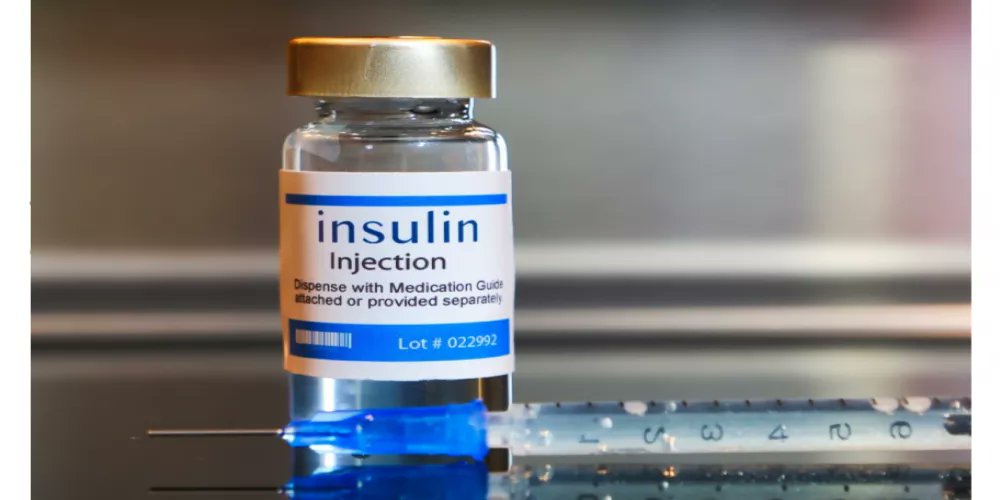
80% of all autoimmune disease patients are females.
Lupus, Rheumatoid Arthritis, Hashimoto's... the disparity is massive.
But WHY is the female immune system so prone to attacking itself?
The 4-year-old in this 1902 photo would grow up to win a Nobel Prize. Her parents won three between them, and the man she would marry added a fifth in 1935. No family in history has won more.
In the photo, none of those prizes exist yet. Marie is still working out of an old wooden shed. She stirs giant vats of uranium ore by hand, trying to pull a few grains of pure radium from tons of rock. The shed is freezing in winter, and the fumes hang in the air with nowhere to go. She and Pierre come home sick most nights, with no idea the work is killing them.
The Curies refused to patent radium. They had discovered the element and gave the process away. By 1921 a single gram of radium cost $100,000, more than $1.5 million in today's money. Marie eventually ran out and couldn't afford to buy back what she'd given away.
So Americans took up a collection. A national fundraising drive raised enough to buy her one gram, and President Warren Harding handed it to her in a lead-lined box at the White House.
Pierre never lived to see that day. In 1906 he was crossing a rainy Paris street and slipped under a six-ton horse-drawn cart. One wheel went over his head. He was 46. Marie kept working. She won her second Nobel five years later, this time on her own. The little girl in the photo, Irène, grew up and married a young physicist named Frédéric Joliot in 1926. The two of them shared the 1935 Chemistry Nobel for figuring out how to make radioactive materials in a lab. That single discovery is what made PET scans and modern radiation therapy possible.
The radiation eventually killed almost all of them. Marie died in 1934 from a bone marrow disease caused by years of exposure. She was buried in a coffin lined with an inch of lead, because by then her own body was radioactive too. Irène followed in 1956 from leukemia, Frédéric in 1958 from liver failure.
Marie's notebooks are kept in lead-lined boxes at France's national library. If you want to read them, you sign a waiver and put on protective gear, because the pages remain dangerous. They will be dangerous in the year 3500, along with her furniture and her cookbooks.
Four Nobel Prizes are in this photo. The fifth would come later, won by Irène's future husband. The work that earned them all is still too radioactive to touch, 124 years later.
In a 2016 study, scientists at the University of Windsor poured concentrated dandelion root extract straight onto colon cancer cells in a petri dish. Within 48 hours, 95% of the cells died. That was 10 years ago, and it has never worked inside a human body.
The extract was strong stuff, roughly five times more concentrated than anything you can buy at a health food store. And it hit the cancer cells with nothing in between. Drinking dandelion tea is a different story. Most of what you swallow gets broken down by your stomach and liver. Only a tiny fraction ever reaches a tumor.
The same lab also tested it in mice with human colon tumors transplanted into them. After 75 days of daily oral dandelion extract, the tumors grew about 90% slower than in untreated mice. About 97 out of every 100 cancer drugs that work like this in mice end up failing when tested in humans. Mice and people just aren't the same animal once you leave the petri dish.
Health Canada actually approved a Phase 1 human trial of dandelion extract back in 2012, but the focus was on patients with end-stage blood cancers like leukemia, not colon cancer. The target was 30 patients. The team couldn't find enough of them. By 2020, the researchers had quietly switched to studying lemongrass instead.
In 2021, the lead scientist Siyaram Pandey told the fact-checking site PolitiFact that the funding had run out. No human trial has ever shown dandelion shrinks cancer in patients. Pandey is also the co-founder and chief scientific officer of Windsor Botanical Therapeutics, the company set up to commercialize the extract. So the scientist whose lab produced the headline finding stands to profit if it sells.
Compare that to standard chemotherapy for Stage III colon cancer. The FOLFOX regimen gives patients a 74% to 83% chance of being alive five years later. The treatment is hard on the body, but those numbers come from human patients, not cells in a petri dish.
Yes, 95% of cells died in 48 hours. But that happened in a petri dish at a strength you can't get from tea or supplements. Ten years on, nobody has gotten the same result inside an actual human body.
A neurology lab in Brazil asked 233 people to close their eyes and count to two minutes in their heads. The teens and twenty-somethings nailed it. People over 50 stopped at 86 seconds and were sure two minutes had passed.
Over half a minute, missing. The gap is measurable and it gets worse with age.
In September 2025, a team from the UK, the Netherlands, and Canada ran a different version of this test. They put 577 people inside a brain scanner and showed them an 8-minute Hitchcock clip. They were watching for something specific: how often the brain switches scenes. Every time something new happens (a new face, a new room, a new mood), the brain creates a fresh chunk of activity, like a mental snapshot. Younger brains snapped pictures fast. Older brains held the same picture longer. Same eight minutes, fewer scenes recorded. The brain stopped noticing that anything had changed.
There's a math layer on top. French philosopher Paul Janet figured this out in 1877. When you're 5, one year is 20% of your whole life. When you're 50, the same year is only 2%. The same January, but stacked against a much bigger pile of life. By that math, time at 50 should feel about ten times faster than time at 5. People over 50 say it does.
The standard advice is: take more trips, pick up new hobbies, don't get stuck in routine. Go live more.
In 2026, a team in Rome and Germany tested it directly. They asked older adults how fast their last decade felt and compared it to how packed those years had been: career changes, kids, weddings, moves, travel, big events. The packed lives didn't feel slower than the quiet ones. Living more didn't fix the problem.
The real predictor was something else: how well the brain was still saving new things as new. People with sharper memory for new information felt their decade unfold slowly. People whose brains had started auto-filing everything as "more of the same" felt the years vanish. Even when their decade had plenty of big moments.
Doing new things doesn't help if your brain registers them as routine. The real fix is attention. Noticing things. Sleeping enough that your brain saves the day instead of dumping it. Slowing down on purpose.
A normal adult life makes the effect worse. Same commute, same desk, same dinner, same bed. Your brain has nothing new to bookmark, so it stops bookmarking at all. A year turns into one long blur. A decade compresses into a smudge.
When someone says "where did the time go," they're describing something real. It went into stretches their brain never marked as separate. Hours their brain never bothered to count.
As someone who’s been EXCITED & SCREAMING about Artemis II for the past two years and feeling like no one was listening, I really hope this wave of excitement for space doesn’t fade after the mission. Later this year, the 𝗡𝗮𝗻𝗰𝘆 𝗚𝗿𝗮𝗰𝗲 𝗥𝗼𝗺𝗮𝗻 𝗦𝗽𝗮𝗰𝗲 𝗧𝗲𝗹𝗲𝘀𝗰𝗼𝗽𝗲 is set to launch and it’s going to unlock entirely new insights into dark energy. With 𝗔𝗿𝘁𝗲𝗺𝗶𝘀 𝗜𝗜𝗜 hopefully happening next year, it’s honestly one of the best times to be a space enthusiast.
The third return burn for the Artemis II mission occurred at 2:53pm ET (1853 UTC), refining Orion’s path for atmospheric entry and splashdown. During the maneuver, the spacecraft made precise adjustments to stay on its targeted course home.
Your last flight hit maybe 600 mph. Tonight four astronauts hit Earth's atmosphere at 25,000 mph. Forty times faster. NASA needs them at 17 mph by the time they touch water off San Diego. The engineering behind that slowdown is one of the best stories I've come across.
It comes down to one piece of hardware: a 16.5-foot shield bolted to the bottom of the capsule, made of 186 blocks of a heat-absorbing coating called Avcoat on a titanium frame. When the capsule hits atmosphere, those blocks burn away on purpose, carrying heat with them so the crew sits at 75°F inside while the outside hits 5,000°F, roughly half the temperature of the sun's surface. And there is no backup for this system. NASA builds redundancy into everything else on the spacecraft. Not the shield.
I have to tell you what happened last time because it makes tonight way more interesting. In 2022, NASA flew this exact shield on an uncrewed test called Artemis I. When the capsule came back, chunks had cracked off in over 100 spots. Way worse than any computer model predicted. Took two years and over 100 lab tests to pin down why.
The answer is sort of beautiful in a nerdy way. During that 2022 reentry, the capsule did a "skip," dipping into the atmosphere, bouncing back out into space, then diving in again. The problem was the bounce. When the capsule floated back out, the outside cooled, but the inside of the shield was still scorching. Gases trapped in the coating had nowhere to go because the cooled outer layer sealed shut. Pressure built. Cracks formed. Pieces blew off. Apollo engineers in the 1960s were aware of this exact gas-venting issue. But when NASA remade the coating for Orion decades later, they accidentally made it less breathable.
The fix for tonight is my favorite part. They kept the same shield; it was already bolted on, and swapping it would've added 18 months. Instead of changing hardware, engineers changed the flight path. Tonight's capsule does a shorter, shallower bounce, keeping steady heat on the shield so gases can escape properly. Same shield. Different math.
One detail from a January safety review gave me real confidence. Engineers modeled total shield failure, coating stripped clean off. The titanium frame underneath could still protect the crew on its own. A physics professor at Northeastern said she'd personally feel safe riding in it because with a system this simple, there are only so many things that can go wrong.
By tonight, these four people will have gone 252,756 miles from Earth, farther than any human ever, beating Apollo 13 by over 4,000 miles, at the fastest speed a human has ever moved. And the moment the capsule hits the Pacific, a diver will swim underneath and photograph the shield, giving NASA its first real proof of whether the new math worked.
That's us! 🌍
The Artemis II crew captured beautiful, high-resolution images of our home planet during their journey to the Moon. As @Astro_Christina put it: "You guys look great."
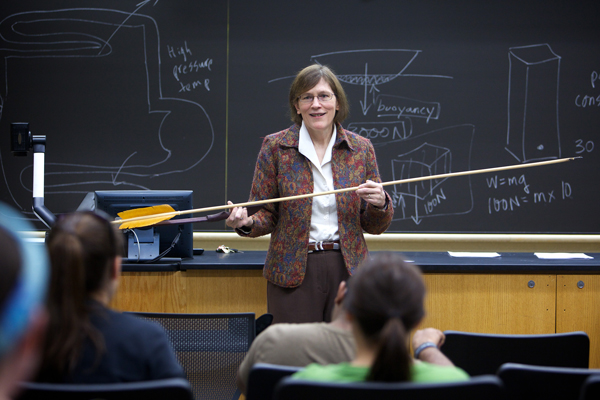
A professor of engineering who failed math all through school built one of the most popular online courses in history by figuring out exactly why her brain had been working against her the whole time.
Her name is Barbara Oakley, and she did not teach herself how to learn until she was in her mid-twenties, after leaving the military with a head full of Russian and almost no useful science knowledge. What she discovered about her own brain eventually became a Coursera course that over 4 million people have taken, and the core insight she teaches has been sitting in neuroscience research for decades waiting for someone to explain it in plain language.
Here is the framework that changed how I think about every hard thing I am trying to learn.
Your working memory is an octopus sitting in your prefrontal cortex with exactly four arms. Those four arms reach out and grab pieces of information, hold them in place, and manipulate them while you are actively thinking through a problem. Four is the limit.
When you try to hold more than four things in conscious awareness at once, the arms start dropping things and everything becomes a scramble which is exactly what you experience as confusion when learning something genuinely difficult.
This is not a flaw. It is a design feature. And the entire game of becoming expert at anything is learning how to game this constraint.
The mechanism is something neuroscientists call chunking, and it is the most underexplained concept in all of learning.
When you practice something enough times that it becomes automatic a guitar chord, a grammatical structure, a mathematical procedure, a debugging pattern in code your brain compresses it into a single neural package stored in long-term memory. That compressed package now fits in just one of your four working memory slots instead of filling all of them.
Which means once you have built enough chunks, your octopus can reach down into long-term memory, pull up an entire complex procedure in a single grab, and still have three arms free to work with new information on top of it.
This is what expertise actually is. Not raw intelligence. Not natural talent. A library of compressed patterns that can be retrieved quickly and stacked together to solve problems that would overwhelm a beginner whose working memory is still occupied with fundamentals.
The finding that Oakley emphasizes most forcefully is the one that sounds backward until you understand the mechanism. People with smaller working memory capacity those who can only hold two or three items at once rather than four are often forced to develop stronger chunking habits earlier and more aggressively than people with larger working memories, because they have no choice. Their constraint becomes their training. Over time, that aggressive chunking practice can produce more robust expertise than a larger working memory that never had to be disciplined in the same way.
The most powerful practical implication is this: when you feel completely overwhelmed trying to learn something, that feeling is almost always your four-slot octopus running out of arms. The solution is not to concentrate harder. The solution is to stop, isolate one small piece of the problem, practice it until it compresses into a single chunk, and only then pick up the next piece.
You cannot learn everything at once because your brain was never designed to hold everything at once. It was designed to build libraries of compressed knowledge and retrieve them on demand.
Every expert you have ever admired is not smarter than you. They just have a bigger library.
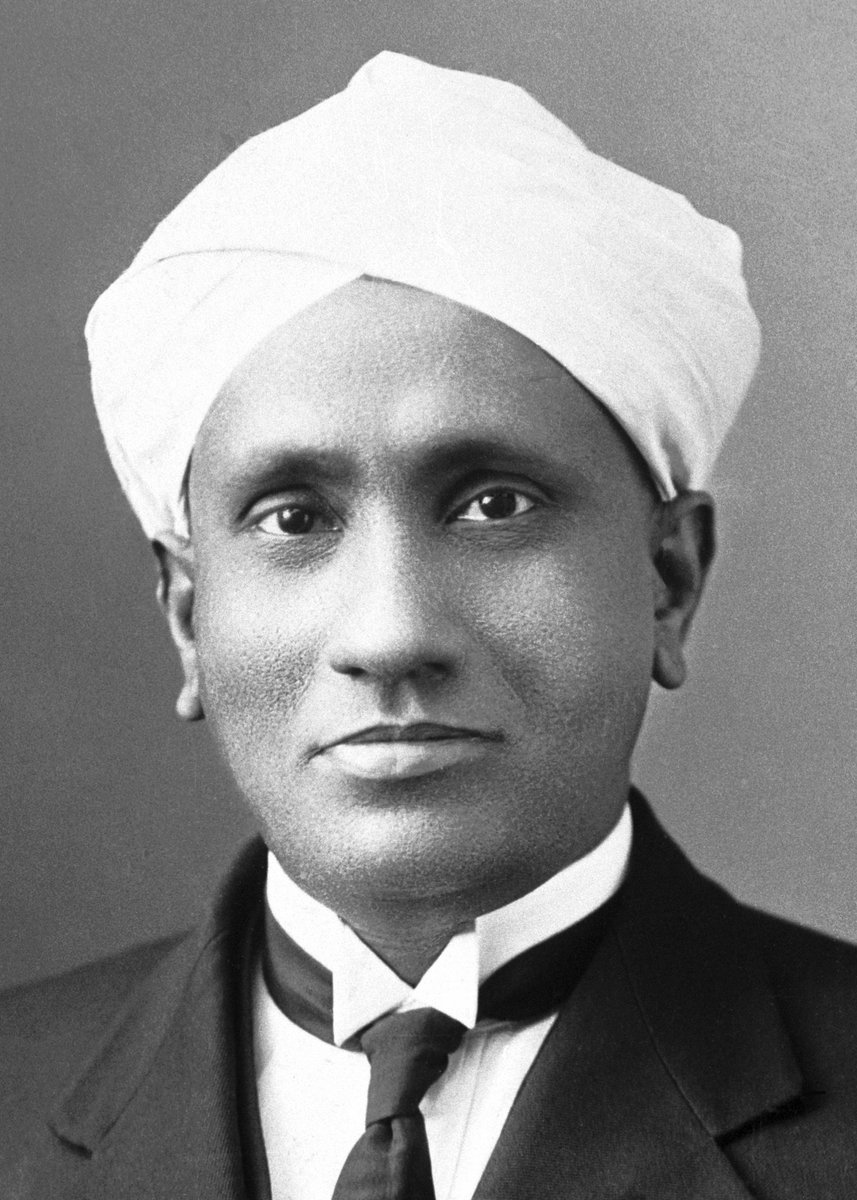
"I propose this evening to speak to you on a new kind of radiation or light emission from atoms and molecules."
- CV Raman speaking #OTD in 1928. He was awarded the #NobelPrize for the Raman effect.
Learn more: https://t.co/YXsWMz4YOu
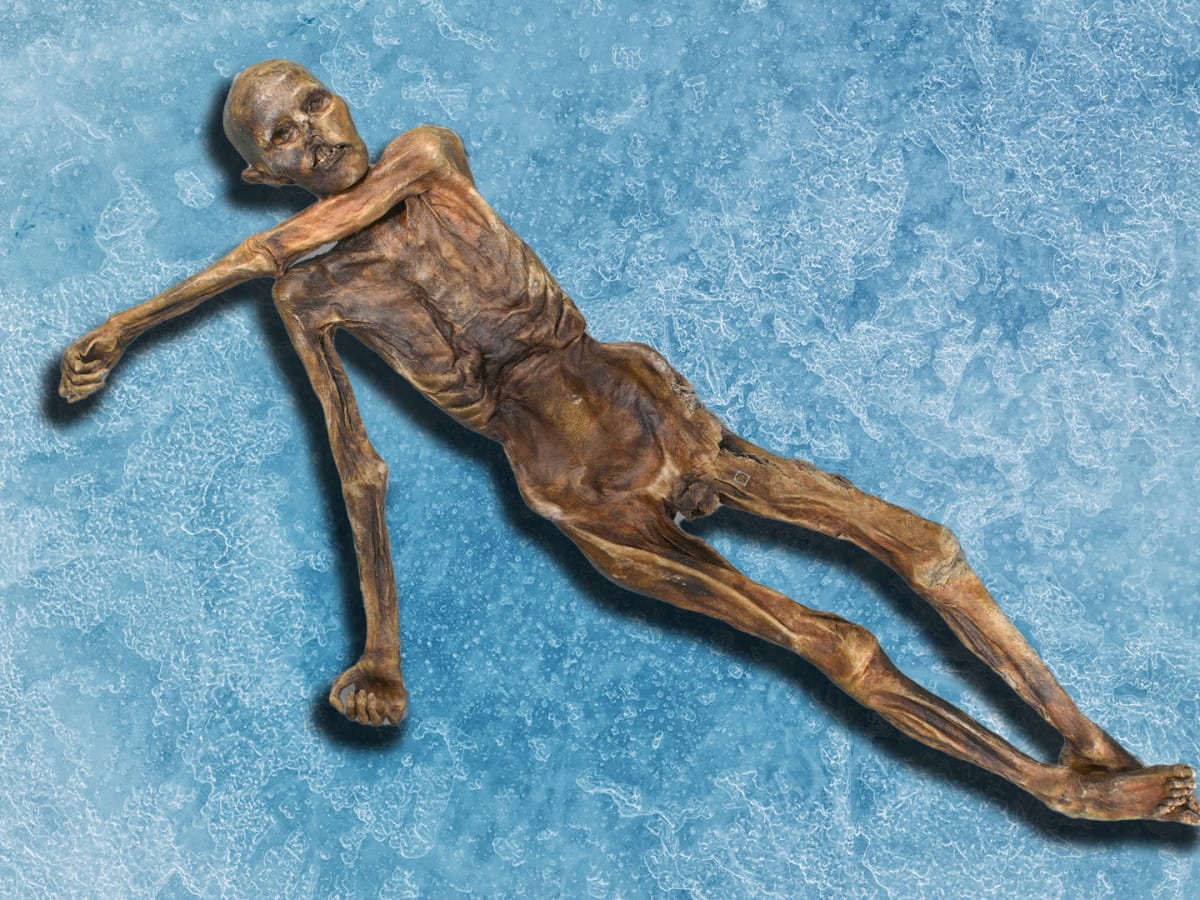
On September 19, 1991, two German hikers named Helmut and Erika Simon were making their way across a high ridge in the Ötztal Alps when they spotted a body partially embedded in the ice.
They assumed they had found a lost mountaineer. They reported it to the authorities. The authorities assumed the same thing.
It took several days, and some increasingly confused experts, before anyone began to suspect that the man in the ice had not recently gotten lost on a hiking trail.
He was 5,300 years old. He had been lying there, preserved by the specific conditions of that particular glacier, since the Copper Age. By the time the Simons found him, every human civilization either of them had ever learned about in school had risen and fallen while he waited in the ice.
His name, eventually, was Ötzi.
Over the following three decades, scientists subjected him to every analytical tool available, and then waited for better tools to be invented and applied those too.
They reconstructed his last meal: ibex meat, red deer, einkorn wheat, eaten within roughly thirty minutes of his death. They found pollen from a hop hornbeam tree in his clothing, which placed him in a specific valley at a specific time of year.
They identified 59 tattoos, placed along joints and pressure points in patterns that correspond so closely to acupuncture meridians that researchers still argue about what that means. They found in his DNA the oldest known case of Lyme disease, and evidence of a genetic predisposition to cardiovascular disease, and the fact that he was probably lactose intolerant.
They knew what he ate for his last meal before they knew how he died.
When they found out how he died, the entire frame of the investigation shifted.
There was an arrowhead lodged in his left shoulder. It had penetrated the subclavian artery.
He would have bled out within minutes, probably faster. The arrow's shaft had been removed, either by Ötzi himself in the moments before he lost consciousness, or by whoever shot him, covering their tracks. His hand showed defensive wounds.
He had someone else's blood on his clothing from at least four different individuals.
Ötzi did not get caught in a storm. He did not fall. He did not wander onto a glacier and succumb to exposure. He was shot in the back during what the forensic evidence strongly suggests was a violent and deliberate attack, by someone who knew him well enough to get close, or was skilled enough not to need to.
Nobody was ever charged. There are no suspects. The case is, technically, still open, which makes it the oldest unsolved murder in human history by a margin so large it is difficult to process.
Somewhere in the Copper Age, someone had a reason to kill this specific man, on this specific ridge, and then disappear back into a world that left almost no written record of anything. We know what Ötzi had for breakfast. We know his genetic risk factors.
We know the season and the approximate time of day. We have reconstructed thirty minutes of his final afternoon with more precision than most modern crime scenes allow. We have no idea who killed him or why. We probably never will.
#drthehistories
Here is the link:
https://t.co/4CnXzetWEy
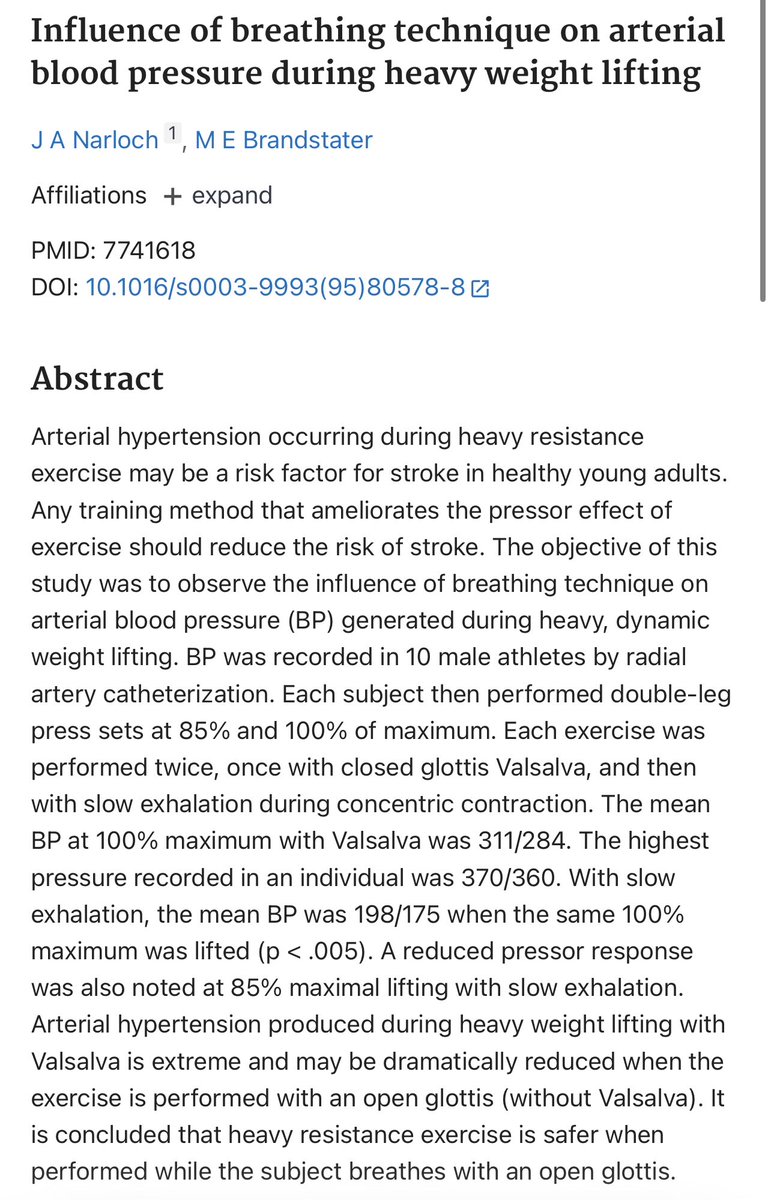
This was a BP recording in a male athlete performing heavy weightlifting with a closed glottis. P.S. Not a “patient”.
"I had intended to study chemistry; my chemistry teacher was inspiring and, as I was told by my parents, a distant relative had been a successful pharmaceutical chemist. But it wasn’t to be.
"The Headmaster, John Lorraine Spencer MA, a rather ethereal figure, who somewhat incongruously wore a gown as he walked about the rough and tumble school, appeared one day in the chemistry classroom.
"‘Ratcliffe,’ he said, ‘may I have a word?’ I duly followed him with some trepidation to his study. ‘Ratcliffe,’ he said, ‘I think you should study medicine.’ His views were never to be taken lightly. ‘Yes sir,’ I responded, and the university application form was altered without further exchange.
"I have never been sure whether he thought I would be a good doctor or a bad chemist, or really whether he was right or wrong in the end."
Read more about 2019 medicine laureate Peter Ratcliffe's scientific journey that led to a Nobel Prize: https://t.co/g4V5GaTVn4
#NobelPrize
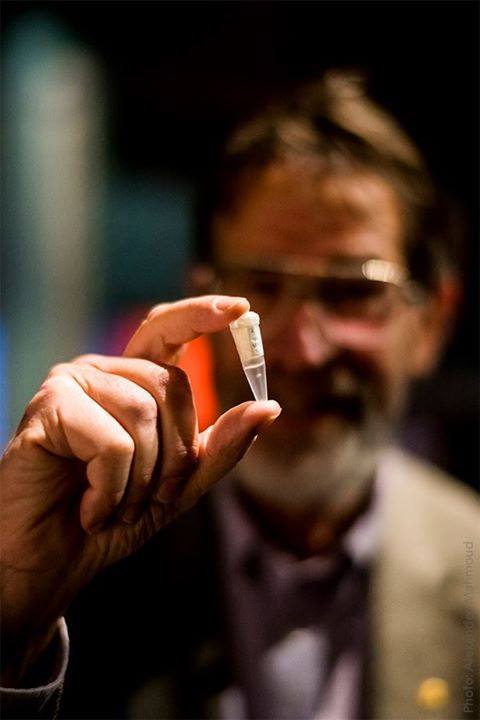
“In 10,000 years when this is all dried out, you can still resurrect the DNA in there and reconstruct this virus.”
In 2018, George Smith received the Nobel Prize in Chemistry for his technique called phage display, which uses bacteriophage – a virus that infects bacteria with its genes – to evolve new protein. This method has led to new pharmaceuticals.
Smith created his first phage display construct with natural phage from a bacteria virus and materials he received from 2015 chemistry laureate Paul Modrich. In this photograph, he is holding 0.5 ml liquid of the solution he used when he first applied the phage display method.
Read more about his life: https://t.co/TYXn8G3YF8
MIT just published a paper that quietly explains why LLM reasoning hits a wall and how to push past it.
The usual story is that models fail on hard problems because they lack scale, data, or intelligence.
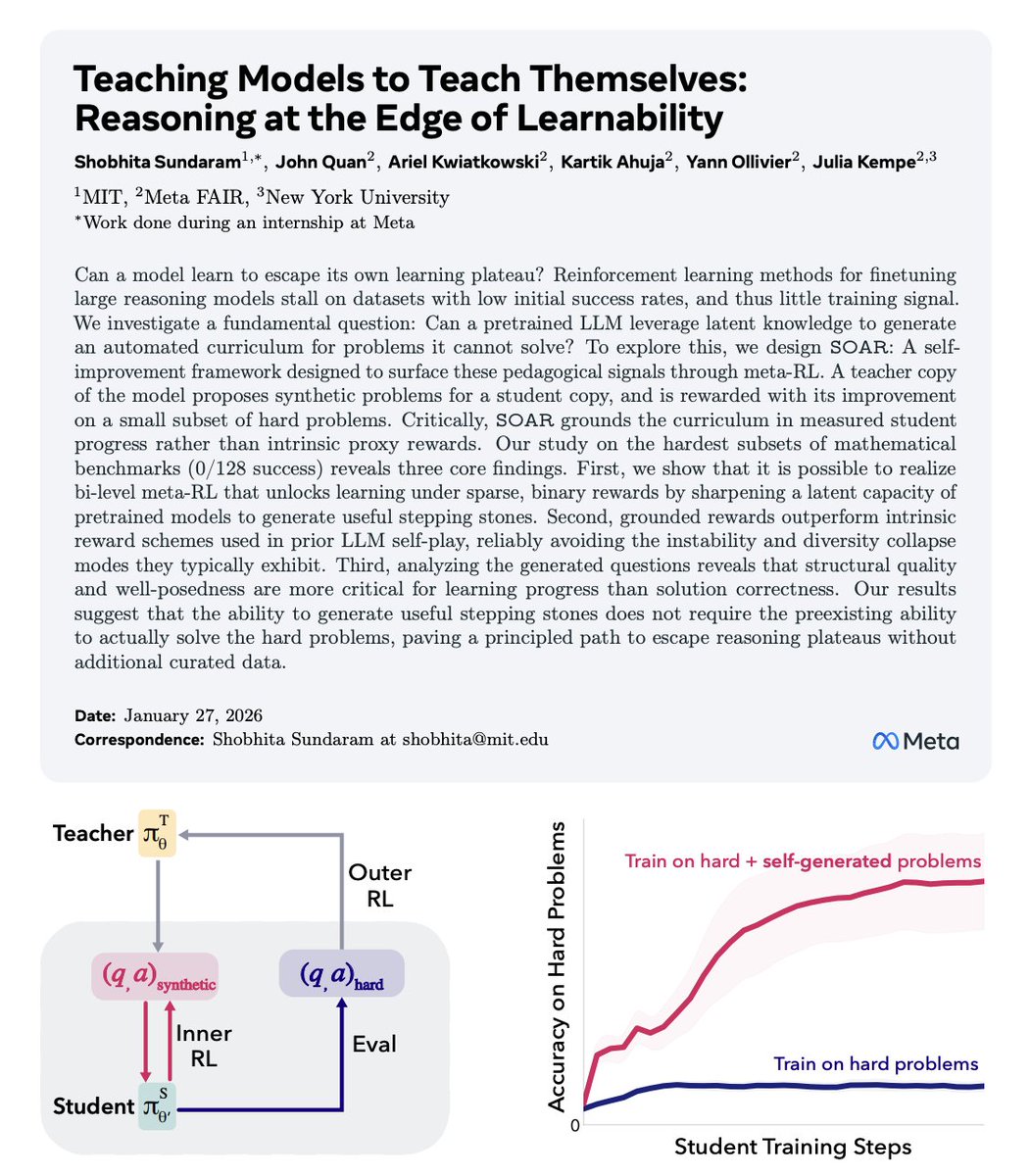
This paper argues something much more structural: models stop improving because the learning signal disappears. Once a task becomes too difficult, success rates collapse toward zero, reinforcement learning has nothing to optimize, and reasoning stagnates. The failure isn’t cognitive, it’s pedagogical.
The authors propose a simple but radical reframing. Instead of asking how to make models solve harder problems, they ask how models can generate problems that teach them.
Their system, SOAR, splits a single pretrained model into two roles: a student that attempts extremely hard target tasks, and a teacher that generates new training problems. The catch is that the teacher is not rewarded for producing clever or realistic questions. It is rewarded only if the student’s performance improves on a fixed set of real evaluation problems. No improvement means zero reward.
That incentive reshapes everything.
The teacher learns to generate intermediate, stepping-stone problems that sit just inside the student’s current capability boundary. These problems are not simplified versions of the target task, and strikingly, they do not even require correct solutions.
What matters is that their structure forces the student to practice the right kind of reasoning, allowing gradient signal to emerge even when direct supervision fails.
The experimental results make the point painfully clear. On benchmarks where models start with zero success and standard reinforcement learning completely flatlines, SOAR breaks the deadlock and steadily improves performance.
The model escapes the edge of learnability not by thinking harder, but by constructing a better learning environment for itself.
The deeper implication is uncomfortable. Many supposed “reasoning limits” may not be limits of intelligence at all. They are artifacts of training setups that assume the world provides learnable problems for free.
This paper suggests that if models can shape their own curriculum, reasoning plateaus become engineering problems, not fundamental barriers.
No new architectures, no extra human data, no larger models. Just a shift in what we reward: learning progress instead of answers.