@charliekirk11 What kind of whack argument is this? 80 years ago a group of Germans killed 6MM Jews, 5MM non Jews. Why are you not posting this about Germany descendants?
@JohnWSCarpente1 @Janan668848 @AlexInAir 18000 flights every day in China and Chinese aviation record in terms of fatality has been close to impeccable on par with the US. Maybe do some research before typing nonsense on the web?
@WealthyAlgo @unusual_whales Another typical comment making connection between being introvert and bad public speaker lmao please Google what introvert/extrovert truly means
@MBTA_CR Absolutely worst arrangement to have empty buses towing air to Ashmont while everybody is stuck at Quincy Center because CR is packed like bananas
Investing cheat code: study other investors.
Here are 10 big fund managers who have placed ENORMOUS bets on a single stock!
1: Bruce Berkowitz - Fairholme Capital
88% of his portfolio is in $JOE
This is a business model that has me fascinated:
Negative customer acquisition cost (CAC).
i.e., you get paid to acquire customers.
I'll show you how it works.
🧵
12 Biases that distort your Decision-Making:
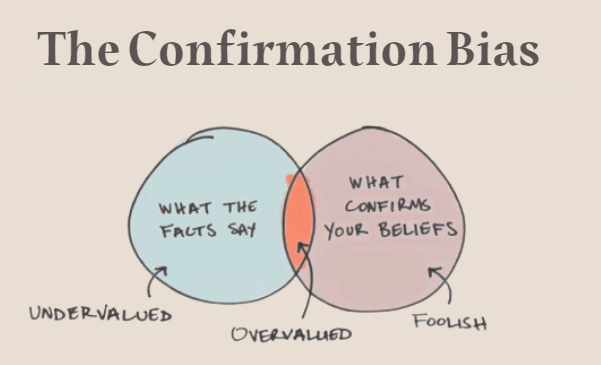
1. Confirmation Bias - We interpret new information as confirmation of our existing beliefs.
2. Availability Bias - We tend to rely on information that comes to our mind easily/the quickest.
3. Action Bias - We favor action over inaction. That's why we sell or buy prematurely.
4. Zero-Risk Bias - If a risk is considered small, we assume there is no risk at all.
5. Overconfidence - We overestimate our own knowledge and ability.
Often because we know too little to know better. (Less knowledge => more confidence)
6. Survivorship Bias - This is a sample bias that occurs when we assess only successful outcomes and disregard failures.
7. Gambler’s Fallacy - We tend to think that past events affect future possibilities.
8. Dunning-Kruger Effect - The less you know, the more confident you are.
The more you know, the less confident you are.
9. Cause-Effect Fallacy - We always look for cause-effect relationships.
Thus, we find patterns even in totally random data.
10. Hyperbolic Discounting - We are wired to prefer instant gratification (e.g. payouts).
Even when offered significantly more in the future.
11. False Consensus Effect - Too often, we overestimate the degree to which others agree with us.
12. Psychological Denial - When something terrible happens, we tend to fall into a state of denial.
Q: How do you build effective teams?
Keith Rabois, Founders Fund Partner and former COO of Square, has a great framework for building effective teams that he calls: “Barrels and Ammunition.”
When most companies begin scaling, they just hire a lot of people. Naively, they expect that—as they add people—their velocity of shipping will increase. But startups don’t work that way, and in fact you sometimes get less done when you add more people.
Keith argues that the reason for this is that most people in your company—even great people—are what he calls “ammunition.” But what you need in your company are “barrels”. He defines barrels as extremely talented people who can take ideas from inception all the way through to fully shipped product.
To increase company velocity, you need to add “barrels” and then stock them with “ammunition.” Most companies start with one barrel (the founder) and then double their throughput when they add another one.
In the clip below, he explains this framework and some specific tactics for identifying and managing barrels:
When an athlete is told to run at 85% they run faster than if they're told to run at 100%.
It's called the 85% rule and here's why it works:
Carl Lewis was a 9 time Olympic gold medalist who was known as a master finisher but a slow starter.
He began races 2nd to last but usually ended up finishing first.
It became known that he's wasn't performing at full throttle.
He was going at 85% the whole time.
Why 85%?
When you have your best performances it's never when you're trying your hardest.
Instead the task usually feels easy & effortless.
Going at 85% is a mindset about relaxation & performing at a high level while being in flow.
It's about pacing, form & finishing.
At 85% you're not striving or straining by operating at the very limit of your ability.
You have room to think, focus & adapt.
Applying the 85% rule helps you balance intensity while being focused & relaxed.
Here's a few example of how to do it:
At work:
Instead of going full throttle, take your time, release the pressure & focus.
Put an emphasis on optimizing your systems & adopt a mentality of expending 85% of your mental energy towards a task.
Your perception of energy is the biggest component to your productivity.
In your diet:
Instead of trying to be perfect aim to get 85% of your food choices right.
This takes the pressure off of you and gets you away from an "all or nothing" mindset.
You want to be adaptable to any situation and hitting 85% is enough to get your body in shape.
In your workouts:
Instead of going to failure for every exercise aim for 85% intensity so you can focus on good form & keep your body injury free.
We have a rule to keep 1-2 reps in the tank when lifting and this fits perfectly into it.
Keys to the 85% rule:
1) Relax
2) Focus on form
3) Set your mind to 85% intensity
4) Work just below your maximum threshold
5) Stop when you feel close to 100% of your mental/physical capacity
Instead of putting the pressure by trying to go 100 aim for 85% instead.
Doing so might help you unlock new levels of performance.
I've been hired by Google, Epic Games and Affirm to name a few.
Here are the 10 of the trickier interview questions - and how to respond well:
Number 1: "How would you handle a situation where you strongly disagree with the higher-ups' decision?"
THREAD with advice on all 10:
Interaction design separates good from great products.
The best way to learn it is with examples.
So I made this massive post with 43 original examples!
1) Remove friction with suggested options
Spent the last 30 days in America
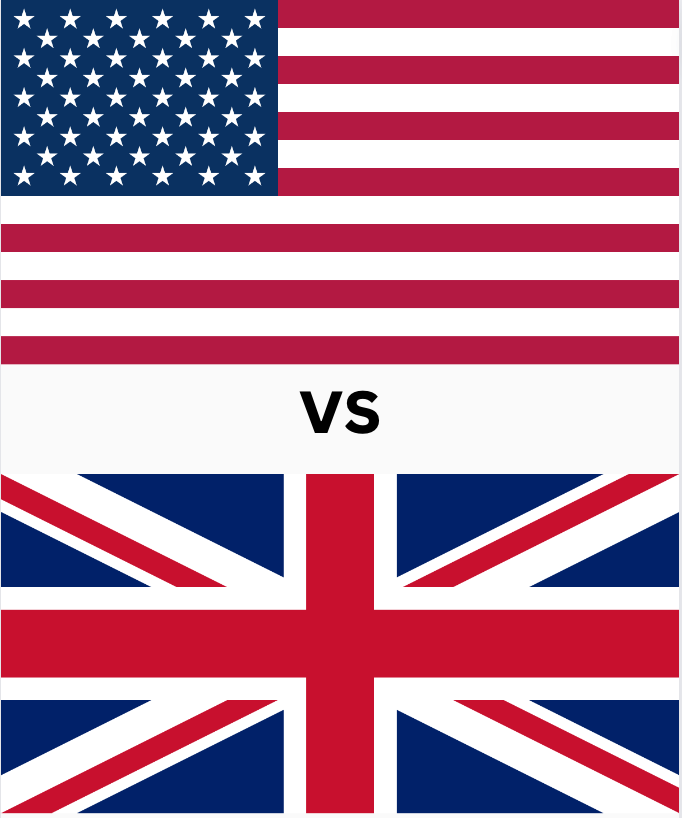
Some thoughts on the USA vs the UK:
1. Flags - In America, if you fly the national flag -- it's normal. In Britain, if you fly the national flag -- you're labeled a neo-nazi.
2. Accents - In America, if you drive for 2 hours -- people's accents don't change much. In Britain, if you drive for 2 hours -- people's accents change a lot.
3. Work - In American culture, people sell themselves well when meeting strangers. In British culture, you're taught to downplay everything you do.
4. Fashion - In America, the biggest companies are tech. In Europe, the biggest companies are fashion.
If you're European -- you immediately become the top 10% of fashion sense in America.
This rule even applies to Brits -- who are notoriously the worst dressed in Europe.
5. Nice cars - In America, if you have a nice car -- most people will ask: "Wow. What do you do for work?"
In Britain, if you have a nice car -- some people will wait for you to leave it, and scratch their key down the side of it.
6. The British accent - Most Brits don't realize this but Americans love the British accent.
You immediately appear smarter and more attractive than you are. The British accent is a commodity in the rest of the world -- except Britain.
If you have a British accent, the worst ROI you get for it is ironically in Britain.
Unfortunately, the reverse isn't true for American accents.
7. History - In the 1700s, Americans were the ones that decided to get on a random boat for 50 days and travel across the whole world in search of a better life.
The Brits were the ones that said: "What a silly idea. Why would I do that?!"
This historical A/B test can explain 99% of their differences generations later.
8. Decentralisation - In America, if you want to get into politics - Washington.
If you want to get into tech - San Francisco.
If you want to get into finance - New York.
If you want to get into entertainment - LA.
In Britain, if you want to get into elite politics, tech, finance, or entertainment: You move to London.
(Remote work and Manchester's boom is changing this slightly)
9. Anti-Fragile - American kids are told they can do anything. This is great -- but can result in fragile self-esteem when reality meets their imagination.
British kids take the piss out of one another. This looks bad on the surface -- but it results in anti-fragile self-esteem. You learn to publicly laugh at your own insecurities.
10. Comedy - Chris Rock once broke down the difference between him (American) and Ricky Gervais (British).
American comedy is often so loud. They shout to get their joke across to everyone in the room.
British comedy is usually subtle. The best joke is the one that only the smart people in the room understood.
11. Road rage - There appears to be less road rage in America relative to Britain.
In Britain, there are 10x more car horns and fights.
I suspect this might be because of bigger roads -- or that you're unsure if the person you're starting a fight with has a gun.
12. Naming conventions - America often calls things what they are.
E.g. Joshua Tree in LA -- because it has a lot of Joshua Trees.
In British culture, it's more obscure.
E.g. Big Ben's own Wikipedia page has a debate about why a clock is called Big Ben. All we know is it involved some bloke called Ben.
13. War scar tissue - During WW1 and WW2, Britain saw millions of people die near their own soil. Major British cities got bombed into rubble.
Americans have barely seen any losses near their land. And the wars where they did take damage (E.g. Iraq, Afghanistan, and Vietnam) - they were all so far away from America.
As a result, the British culture is more stoic. Brits mentally prepare for the worst outcome. It's the spirit that got us through watching our country get blown up twice.
Bonus thought:
14. Meta point - I poked more fun at Britain than America.
Why? Because I'm British. And mocking yourself rather than someone else is a very British thing to do.
And I love that part of British culture.
------
Nuance: This is largely satire from my own personal observations. The sample size is 1 and none of the above is a scientific fact.
Don't know how to improve your communication?
13 things to get you started today.
1. Explain a complex topic to a kid
2. Explain a complex topic in a Tweet
3. Explain a complex topic in 1 paragraph
4. Write one paragraph explaining your job
5. Rewrite any email, reduce it's length by 50%
6. Rewrite any email, remove jargon ambiguous words
7. Explain Google Drive to your grandparent in <5 mins
8. Share learnings from a YT Video in a LinkedIn post
9. Explain Google Drive to a 10 year old in <5 mins
10. In 100 words, summarise how ChatGPT works
11. In 7 slides, present your product/startup idea
12. Compare two different common thoughts
13. Share 10 life learnings in a LinkedIn post
Challenging yourself to communicate briefly, concisely, and tweaking the same message for different audiences is a great way to improve your communication.
Bookmark this Tweet and practice 2 of the above every day.