@alexanderOpalic If it would actually make a push for universal basic income and we could enjoy our lives a bit before we're back to being dust I wouldn't mind
@zarazhangrui Gamify it with leaderboard stats and add a "CO2 emissions saved" meter etc 😹
Or write another hook that prevents opening new tabs until you've removed some old ones 🙀
@troyhunt I feel like they spent about 100:1 setting up that interview vs the footage of it they actually used though. He got to say, what, 2 sentences?
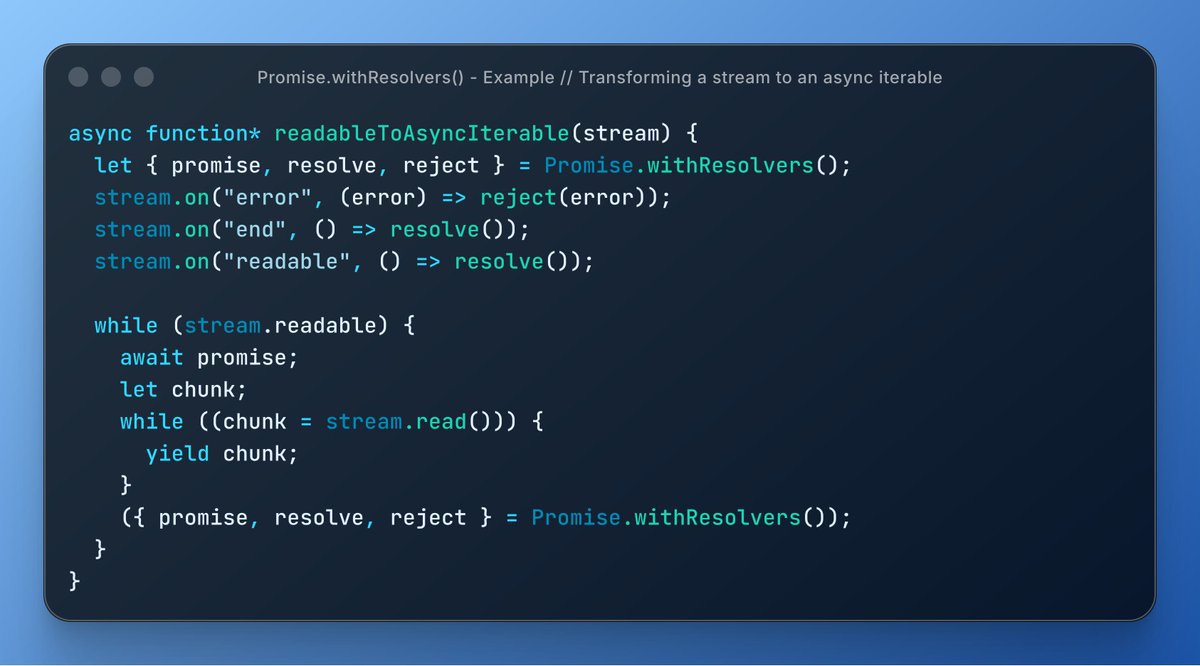
Creating a resolvable Promise just got cleaner 🧹
`Promise.withResolvers()` returns { promise, resolve, reject }
No more wrapping logic inside the constructor.
Learn more 👇
https://t.co/yD7HQUaaT5
@alexanderOpalic Or maybe you have done too little backend or library development? 😅 A lot of "front end with a database" stuff is a bit is pretty boring and not very challenging.. I used to assign a "feeling of achievement factor" to tasks and would value few hard ones over boring simple tasks
@alexanderOpalic@danielkelly_io@vuejs True, you need to be flexible, but I just find the #dx better without having to pass props down all over and worrying about memoizing and hyper focusing on rerender consequences for every little component you do. Had some benefits but easier to get wrong.
@WebReflection@matteocollina I get that setTimeout() can take additional args without needing an arrow function to pass them (which would capture more context and possibly leak). My point was your comparison is functionally not the same so if you want to preserve `this` you need to use bind/apply. No fuss!😺
@WebReflection@matteocollina No I mean inside fn() this will be bound to the timeout object, so if you want it to work as an array func you would have to to setTimeout(fn.bind(this), millis, arg1, etc..)