Do we want our farmers, teachers, doctors and priests to be profit-driven?
Modern finance and economic theory encourages essentially all human activity to be profit-driven. This leads to a dystopian world.
The "market" that currently fashionable schools of economics like to extoll is built on a bedrock of human civilization, spirituality and culture and those are themselves not market driven. Modern economic theory ignores or actively denies that there is any such bedrock. In fact, the dogma is that economics fundamentally shapes all of them. "Yet she moves ..."
That raises the question: who supports that bedrock? The ones who are in the "market", companies like us. In fact, I would make an even stronger assertion: the entire purpose of profit is to sustain this bedrock, which I categorise into nature (food and spirit), nurture (teaching and spirit), culture (entertainment and spirit), scripture (spirit).
I look at technology as the means to an end, not an end itself.
Elon Musk was asked: “What’s one invention that’s made us worse, not better?”
His answer: short-form video.
He called it straight-up “brain rot.”
And he’s not wrong. A local news report highlighted how kids are getting flooded with dopamine hits every 15–30 seconds from YouTube Shorts and TikTok-style content. Brain scans show overactivation in the reward centers, which over time trains the brain to crave instant gratification, shortens attention spans, and contributes to attention problems, behavioral issues, and even emotional dysregulation.
Doctors are now seeing cases where it’s hard to tell the difference between true ADHD and what they’re calling “environmental ADHD” caused by excessive screen use.
78–84% of kids aged 2–12 are on YouTube, often for 2+ hours a day.
This one feels especially urgent for parents.
How much short-form video are your kids (or you) consuming daily — and have you noticed any real impact on attention span or mood?
BREAKING: Just five minutes before Trump's announcement to halt the attacks on Iran, massive trades reportedly hit the market.
In one move, $1.5 billion in S&P 500 (ES) futures was bought while $192 million in oil (CL) futures was sold.
These orders were 4–6x larger than anything else at the time.
The trader seemingly made huge gains.
Unusual.
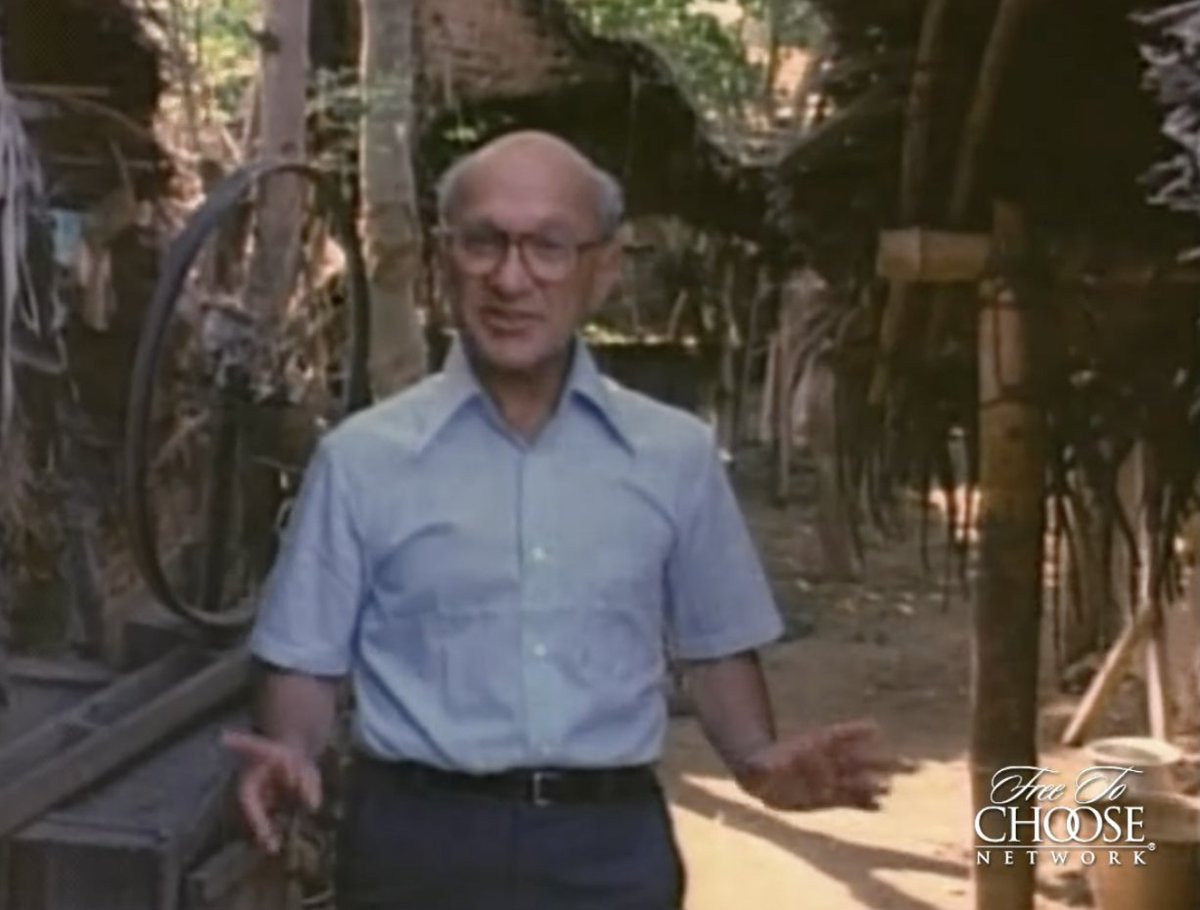
Milton Friedman (1980) on India’s unrealized economic potential:
“The characteristics of the Indians that so many outside observers deplore reflect rather than cause the lack of progress. Sloth and lack of enterprise flourish when hard work and the taking of risks are not rewarded.”
“India has no shortage of people with the qualities that could spark and fuel the same kind of economic development that Japan experienced after 1867, or even that Germany and Japan did after World War II.”
“Indeed, the real tragedy of India is that it remains a subcontinent teeming with desperately poor people when it could be a flourishing, vigorous, increasingly prosperous and free society.”
Perplexity CEO Aravind Srinivas on the biggest threat to the data center industry:
It's not competition. It's not regulation. It's decentralisation.
"The biggest threat to a data center is if the intelligence can be packed locally on a chip that's running on the device and then there's no need to inference all of it on like one centralized data center."
He outlines how this could work in practice. Personalisation doesn't necessarily require on-device model training.
Retrieval augmented generation, tool calls, and local data can already tailor AI to individual users.
But the real unlock? Test time training.
@AravSrinivas describes a future where AI lives on your device, watches how you work and gradually automates your repetitive tasks.
"Imagine we crack test time training where the AI watches tasks you repeatedly do on your local system, adapts to you over time and starts automating a lot of the things you do."
The key insight: in this model, the intelligence belongs to you. It's your data, your device, your personalised AI brain.
And if that future arrives, the economics of centralised infrastructure start to collapse.
"That really disrupts the whole data center industry. It doesn't make sense to spend all this money, 500 billion, 5 trillion, whatever on building all the centralized data centers across the world that do a lot of the intelligence workloads for people."
The companies spending trillions on centralised infrastructure may want to rethink where intelligence actually needs to live.
Those who create the value are paid once. Those who control access get paid forever, #DAOs break this pattern. DAOs move profit back to the edge by giving contributors ownership, governance, and programmable revenue share; not just access. #Web3
In farming, the biggest cost is fertilizer and pesticides. Farmers do the work, but the suppliers capture the margin.
In housing, buyers make a long-time commitment. Banks and lenders collect interest for decades.
In SaaS, software companies build the product. Cloud providers charge rent on compute and storage.
Now AI is heading the same way.
Data centers and GPU infrastructure are positioning themselves as the "pipe" for intelligence.
Value is created at the edge. Profit is captured in the middle.
This Toll Collector Layer is everywhere.
In insurance, the car (or house) is built once. Insurance gets paid every year.
In payments, commerce happens everywhere. Visa and Mastercard take a cut of every swipe.
In marketplaces, sellers do the work. Amazon takes fees on every sale.
In mobility, drivers do the driving. Uber takes a percentage of every ride.
In advertising, brands spend billions.
Ad exchanges take a slice of every impression.
In ticketing, artists fill stadiums. Platforms collect fees per ticket.
In pharmacy, drug makers make the drugs. PBMs sit in the middle and capture the spread.
Once we see the middle layer, we can’t unsee the gap between where value is created and where profits are captured.
The linked article goes over the history of how Mrs Indira Gandhi buckled under US pressure and devalued the rupee by 57% one day in 1966 and how her action destroyed the rupee's standing in global trade and made India much poorer in one stroke.
The amount of damage she did to our nation is immense and that is not even counting the Emergency.
I was not aware of her 1966 decision and we need these historical facts to be brought out.
https://t.co/euan0Hcpen
Indian stock exchanges are closed today for Mumbai's municipal elections.
The fact that our exchanges, which have international linkages, are shut down for a local municipal election shows poor planning and a serious lack of appreciation for second-order effects.
As Munger said: "Show me the incentive, and I will show you the outcome."
The holiday exists because no one who matters has any incentive to oppose the market holiday.
It also tells you how far we have to go before global investors take us seriously.
All my new code will be closed-source from now on. I've contributed millions of lines of carefully written OSS code over the past decade, spent thousands of hours helping other people. If you want to use my libraries (1M+ downloads/month) in the future, you have to pay.
I made good money funneling people through my OSS and being recognized as expert in several fields. This was entirely based on HUMANS knowing and seeing me by USING and INTERACTING with my code. No humans will ever read my docs again when coding agents do it in seconds. Nobody will even know it's me who built it.
Look at Tailwind: 75 million downloads/month, more popular than ever, revenue down 80%, docs traffic down 40%, 75% of engineering team laid off. Someone submitted a PR to add LLM-optimized docs and Wathan had to decline - optimizing for agents accelerates his business's death. He's being asked to build the infrastructure for his own obsolescence.
Two of the most common OSS business models:
- Open Core: Give away the library, sell premium once you reach critical mass (Tailwind UI, Prisma Accelerate, Supabase Cloud...)
- Expertise Moat: Be THE expert in your library - consulting gigs, speaking, higher salary
Tailwind just proved the first one is dying. Agents bypass the documentation funnel. They don't see your premium tier. Every project relying on docs-to-premium conversion will face the same pressure: Prisma, Drizzle, MikroORM, Strapi, and many more.
The core insight: OSS monetization was always about attention. Human eyeballs on your docs, brand, expertise. That attention has literally moved into attention layers. Your docs trained the models that now make visiting you unnecessary. Human attention paid. Artificial attention doesn't.
Some OSS will keep going - wealthy devs doing it for fun or education. That's not a system, that's charity. Most popular OSS runs on economic incentives. Destroy them, they stop playing.
Why go closed-source? When the monetization funnel is broken, you move payment to the only point that still exists: access. OSS gave away access hoping to monetize attention downstream. Agents broke downstream. Closed-source gates access directly.
The final irony: OSS trained the models now killing it. We built our own replacement.
My prediction: a new marketplace emerges, built for agents. Want your agent to use Tailwind? Prisma? Pay per access. Libraries become APIs with meters. The old model: free code -> human attention -> monetization. The new model: pay at the gate or your agent doesn't get in.
Life of a GenZ :
- Born just in time to buy the crypto top
- WW3 at the age of conscription
- Pandemic at the age of enjoyment
- Ai implementation at the age of employment
Even vehicles in China now come equipped with dedicated U-turn indicators. The Chinese take their innovation and technological leadership very seriously, and they develop new technologies with a clear long-term vision in mind.
🌍#WRIExplains: The Land-Use Climate Change Feedback Loop👉 https://t.co/yGHqmCcR80
Land-use change is a big driver of global warming—deforestation and agriculture alone cause nearly 25% of human-made greenhouse gas emissions.
Cutting down trees, plowing up grasslands and draining wetlands release GHGs that fuel climate change. But satellite monitoring shows that this relationship is a two-way street. Climate change itself is increasingly leading to the loss and degradation of forests, grasslands, wetlands, rivers and even farms, creating a dangerous feedback loop.
In case you didn't know...
Both male & female Reindeer grow antlers, but males lose them in late Autumn. All Santa’s reindeer are therefore female, which means Rudolph is persistently misgendered.
John Carter (2012) was punished for being earnest. A sincere, old school pulp adventure released into a cynical blockbuster era, full of practical scope, clear mythology, and romantic conviction.
Something incredibly exciting is happening in Gudalur in The Nilgiris District which has been facing serious human wildlife conflict for years but this is now set to change. The Tamil Nadu Forest Department has just launched another AI-powered Command and Control Centre using 46 AI enabled thermal cameras to detect wildlife movement early and warn people with real time alerts. This is backed by round-the-clock monitoring and rapid response teams. We plan to minimise wildlife and Human deaths aiming zero casualties.These are still early days, but the effort is on ground. Funded by @TN_Plan the project is painstakingly executed by the dynamic & committed DFO Thiru N. Vengatesh and his energetic team. This initiative is one of its kind following a whole of landscape approach. #tnforest #elephants ##wildlifeconservation #humanwildlifeconflict @IUCN@WWF@wii_india
How did solar get cheap?
Phase 1: 1950-1990s - NASA
Solar was invented in the US by Bell labs and pretty much only used by NASA who needed something very lightweight to power their space assets.
Phase 2: 2000 - Energiewind
The German government passed a law where it guaranteed that if you put solar panels on your roof the German government would pay you a high feed in tariff. Demand exploded.
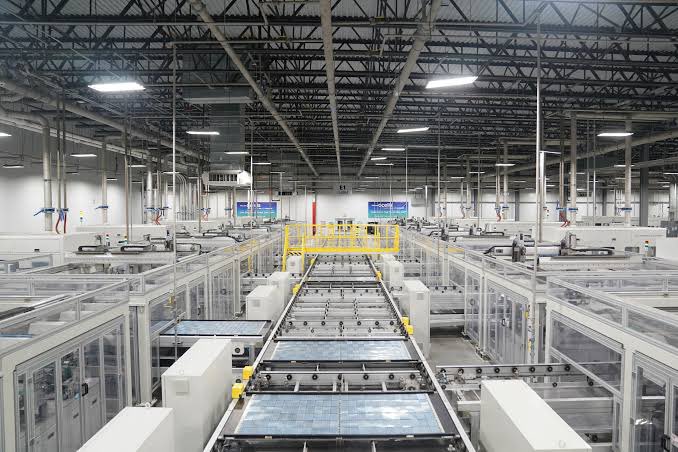
Phase 3: 2005 - 2015 - China
In Europe German manufacturers could not meet their demand at home and Chinese entrepreneurs saw this fixed arbitrage opportunity and went all in. Chinese companies like Suntech took on huge government loans and built vast factories. Spain and Italy joined Germany with solar subsidies. Because of the price fixing in Europe the market arbitrage held as the solar cell manufacturing output in China exploded.
Phase 4 2015-2025 - Swanson’s Law
Once the big Chinese gigafactories were built, Swanson’s Law kicked in. This is the learning curve where manufacturers compound marginal gains and accumulate 1,000s of solutions to solved problems.
1. Ingots, originally they grew small Si crystals this was a slow batch process. Later they used continuous Czochralski pulling where you refill the crucible whilst the machine is still running. Saving hours of cooldown per batch. They also learnt how to grow huge single crystals that were 2-3 meters long.
2. Wafers, originally they sliced the crystals into wafers using saws. This was slow and turned 40% of the Si crystal into sawdust (kerf loss). The fix was diamond wire cutting, the wire was razor sharp, fast, much thinner than the saw, easier to keep clean and far less wasteful (4% kerf loss). Wafer costs plummeted.
3. Cells, you have to print silver lines on the back of the wafer to collect electricity. Over 15 years silver printing resolution improved and silver use was reduced by 70% whilst also blocking less sunlight. The mirror backing used to be aluminium which captured some solar energy as heat and was lost, so they added a dielectric passivation layer that captured more photons and improved cell conversion efficiency without changing materials.
4. Modules, engineers realised that by laser cutting panels in half they reduced electrical resistance in the cells. This means the panel runs cooler and produces more power.
Bifacial modules then emerged, instead of plastic backing. Panels were made with glass front and back, this means panels also collect energy bouncing from the ground below the panel which again boosts the panel output in operation.
These gains all compound to make the panels 90% cheaper over the course of 10 years.
Chinese manufacturers are now looking at perovskites as a paradigm switch. It’s essentially a superior crystal to silicon for absorbing light. You can make them from liquid chemistry and you can print them.
Silicon is great at capturing red and IR light perovskites can be tuned for blue spectrum.
You can then go tandem and pair both silicon and perovskites in the same modules.
Now panels are cheap, because they’re simple things to make. They cost around $0.10/watt ex factory. A solar installation costs around $3.00/watt and the panels themselves are now a very small part of the cost of a solar installation which is dominated by land, labour and structures.
Much of industry is like this. If you can consolidate manufacturing under one roof, you learn all the improvement opportunities much faster, because you just see more stuff.