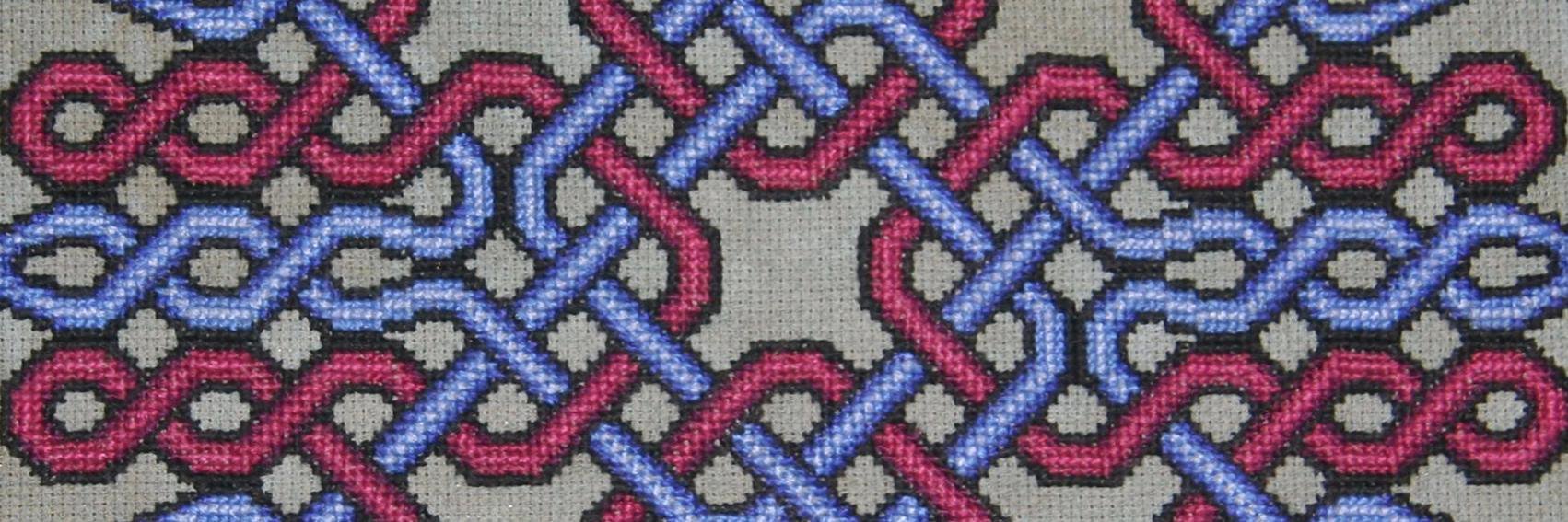
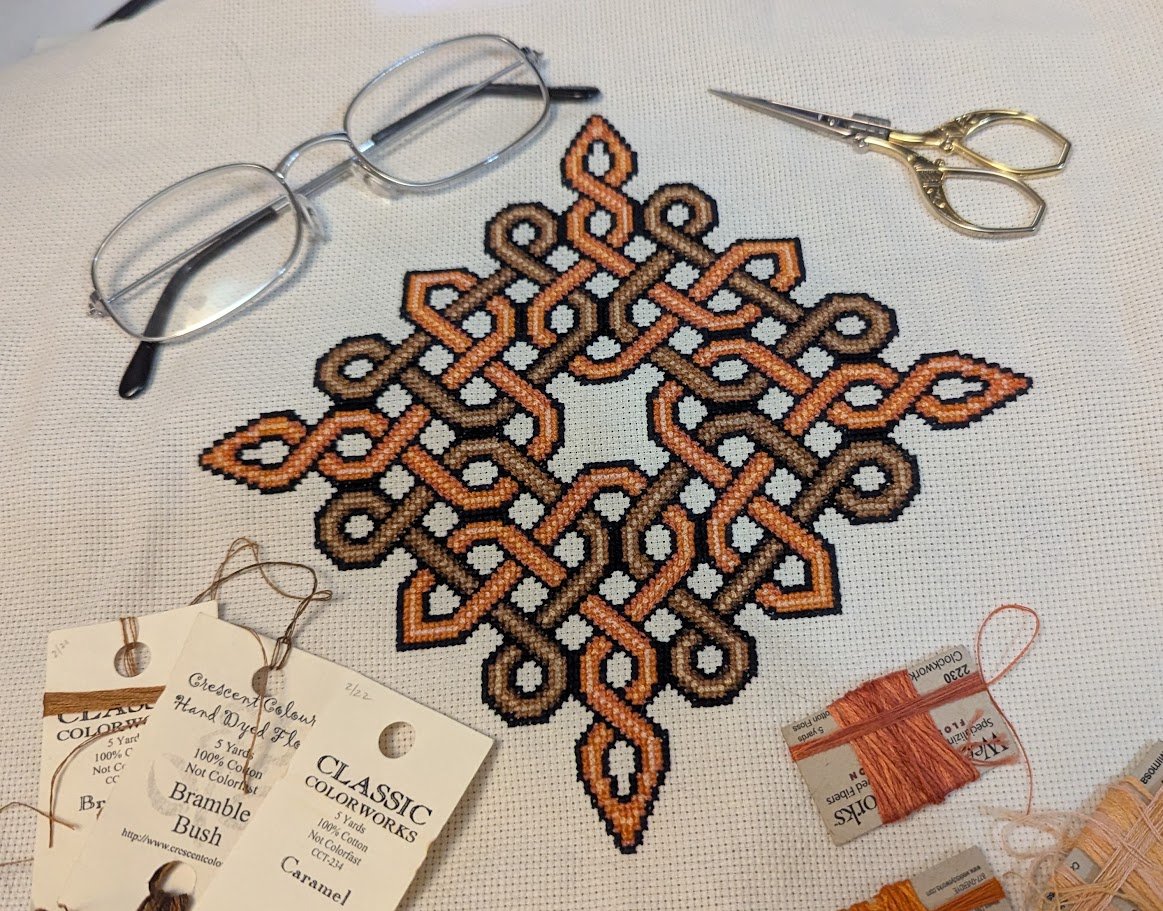
I finished this Enanglements cross-stich just a couple weeks ago. The pattern is called Chain Reaction and the vibrant colors come from hand-dyed flosses. #CrossStitch#FabricArt#Embroidery#Knot
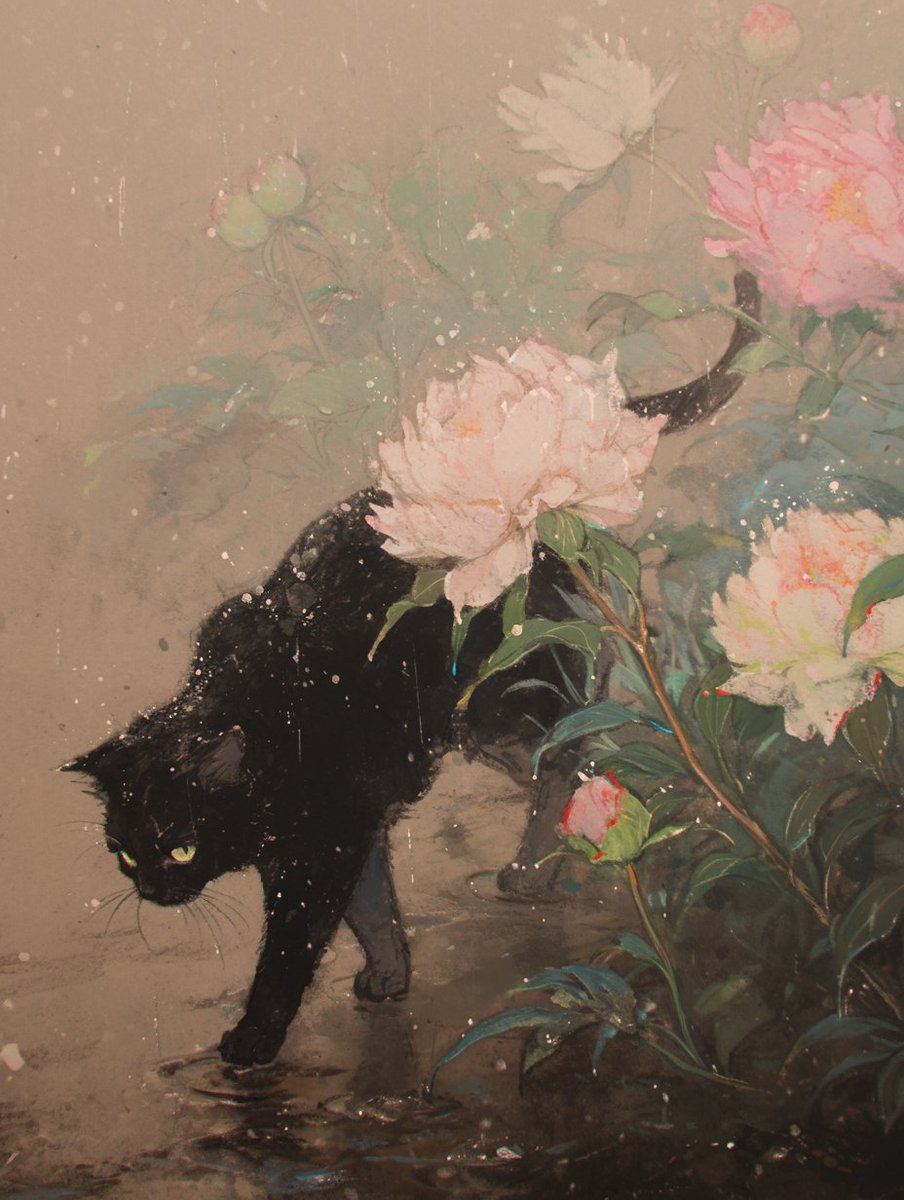
Dreaming. Year: 2019.
Painter Fumika Koda is a contemporary Japanese nihonga artist who, after adopting abandoned cats, centred her entire painting practice around them.
Whilst the term nihonga emerged in the late 19th century, the Japanese painting techniques and material traditions on which it is based date back much further.
Traditional nihonga favours mineral pigments, sumi, gofun, and binders such as nikawa over oils and acrylics. Mineral pigments, ink (sumi), and oyster shell powder (gofun) provide the colour,whilst nikawa (animal glue) acts as the binder that adheres them to surfaces such as silk or paper. Different tones and textures can be achieved from the exact same mineral depending on its particle size.Natural mineral pigments are generally classified into around ten grades, ranging from No. 5 to No. 13, all the way up to the finest grade known as ‘Byaku’. The coarser the particles are ground, the more intense the colour becomes; conversely, the finer they are ground, the lighter, brighter and more powdery the finish becomes.
Black Cat. An 18th-century scroll painting by Min Zhen. Ink on paper. The painting measures 78.5 x 38.5 cm, with a total length of 231 cm including its full mounting. It's currently in the collection of the Princeton University Art Museum (USA)**
Looking at the painting's background, we notice the space has been left completely blank (except for the signature - seal). There's no ground line or any surrounding object to indicate where the cat is standing. By using this empty space, Min Zhen keeps the viewer's focus entirely on the cat.
The artist was born in Nanchang in present-day Jiangxi province, China, and spent most of his life in Hubei. He was orphaned at the age of twelve. Contemporary sources write that he developed a reputation for being a strange, reclusive figure. He'd sometimes paint directly with his fingers instead of using a brush.
Min Zhen is traditionally associated with the Eight Eccentrics of Yangzhou (Yangzhou Ba Guai) group (though the core list varies). During the Qianlong era (1735-1796), this group openly rejected the emperor's principle that 'poetry and painting must adhere to ancient models.' Instead of academic polish, they championed individuality, wet brushwork, and abbreviated strokes.
In traditional Chinese society- especially from the Song Dynasty (960-1279) and continuing through the Qing period -cats were a very important part of daily life. They held a prominent place, especially for their roles in catching mice and protecting homes and books. When bringing a new cat into their homes, people didn't just make an ordinary purchase; they performed a ritual known as pin mao / na mao, meaning 'betrothing / welcoming the cat.'
The prospective adopter would complete the betrothal gift by presenting salt (which was a state monopoly and quite expensive ++ sometimes tea or sugar was given instead) to the owner of the mother cat, or, if the kitten was taken from a stray, by offering a string of fish directly to the mother cat.
Magaziner: In the last two years of the Trump Administration, 52% of migrants apprehended at the southern border were released, not detained. I did not hear my Republican colleagues trying to impeach the secretary or acting secretary at the time