For my first post, I’m sharing a letter @NVIDIA signed on why open models matter.
AI will transform every industry, power every company, and be built by every country.
Open models strengthen safety and cybersecurity, accelerate innovation and diffusion, and enable sovereignty.
The world needs both frontier closed models and frontier open models.
https://t.co/AUKzoQ5Ikb
We need more power.
Data center power demand in the US is projected to surge +253% from 2026 levels, to a record 194 gigawatts by 2035.
One gigawatt is roughly equivalent to the capacity of a single traditional nuclear reactor.
As a result, data centers are expected to account for ~20% of US electricity consumption by 2035, up from ~6% today.
To put this into perspective, data centers are estimated to consume ~12% of US electricity by 2030.
Much of this growth is concentrated in a handful of grid regions, such as PJM, which serves the District of Columbia and 13 states, including Virginia, Pennsylvania, and Ohio.
Electricity is the next AI bottleneck.
Markets are at all time highs... they are delusional
we’re losing:
- ~30% of fertilizers
- ~20% of LNG
- ~10% of oil
- ~30% of helium
These aren’t isolated commodities.... they sit at the core of entire production chains:
- Petrochemicals -> fertilizer -> food production
- Petrochemicals -> sulfur -> mining (copper, uranium, nickel)
- Petrochemicals -> plastics -> cars, electronics
- Petrochemicals -> drugs, rubber, textiles
- Helium -> semiconductors / AI chips
- Gas -> power generation
- Diesel -> transportation
So this isn’t just an energy problem... it’s a full-spectrum supply shock hitting food, industry, tech, transportation and power at the same time.
Our world doesn't function without Hormuz supplies.
And there is no policy tool that can replace missing physical supply.
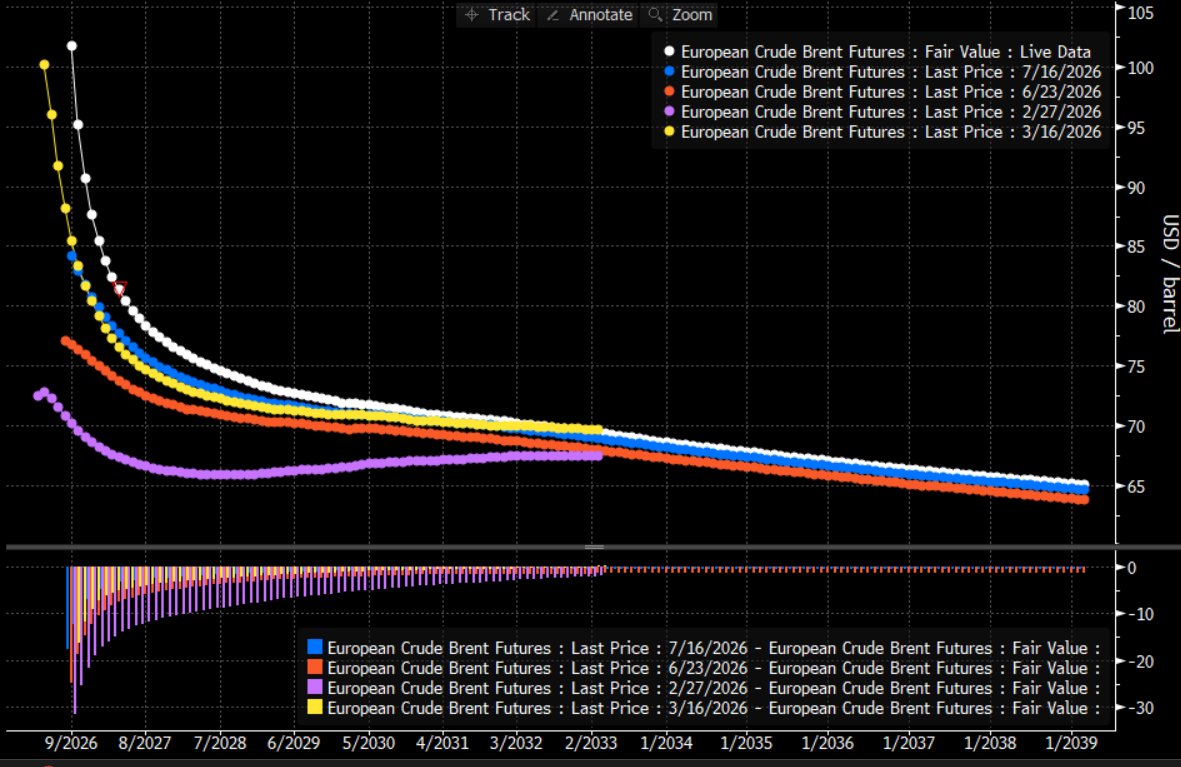
Analysts at Signum Global Advisors led by Andrew Bishop have created a "TACO index" to attempt to discern when Pres Trump might de-escalate the Iran situation.
The index is comprised of Brent crude, the 10-year yield, the number of Hormuz crossings, and the SPX.
In backtesting they found that a 2.3 to 3.4 standard deviation move — or an average of 2.9 standard deviations -- has seen action from the President in the past.
Putting that in today’s terms, the analysts find it’s not yet time to TACO — but it’s getting closer. “Extrapolating linearly would suggest that a TACO could happen as early as July 22 and ‘should’ happen no later than July 30 (unless conditions materially improve, which seems unlikely) – with history suggesting July 26 as most likely,” they said.
The energy shock is reaching the long end: higher oil prices are helping drive long-term bond yields sharply higher as investors reprice inflation risk. UK 30y yields have climbed to 5.73%, US yields to 5.14%, Japan to 3.89% and Germany to 3.65%. Most striking: Japan now yields more than Germany after decades of near-zero rates.
With the Mag 7 losing its magnificence, the market continues to broaden out in a constructive way. Even though the S&P 500 cap-weighted index has not made a new high since June 2, this is preferable to a scenario in which the mega caps drag the index sharply lower. Sideways is fine (for a while).
‼️‼️🇫🇷🇺🇲🇮🇷 BREAKING | The sudden decision by Air France to ground all commercial flights to Saudi Arabia and the United Arab Emirates for a full week delivers a massive shock to global aviation and signals an acute, immediate escalation in the Middle East crisis.
This drastic operational halt cuts off two of the most critical commercial and transit hubs in the Persian Gulf, reflecting an intelligence assessment that the airspace over the region is no longer safe for Western commercial carriers. By preemptively clearing its airliners out of the Gulf corridor, Air France is reacting directly to the impending threat of a high-intensity kinetic conflict, likely anticipating that imminent U.S. military strikes against Iran could trigger massive, uncoordinated retaliatory missile salvos and drone swarms across the entire theater.
This suspension is poised to trigger an immediate domino effect across the global aviation industry. As a premier European carrier takes this extreme precaution, other major international airlines will face intense pressure to rapidly reroute or cancel their own flights to avoid the airspace entirely. The financial and logistical fallout will be instantaneous, choking vital travel corridors, snarling international supply chains, and signaling to the global markets that the Persian Gulf is on the absolute brink of a full-scale, hot war.
See the latest updates with us: @visionergeo
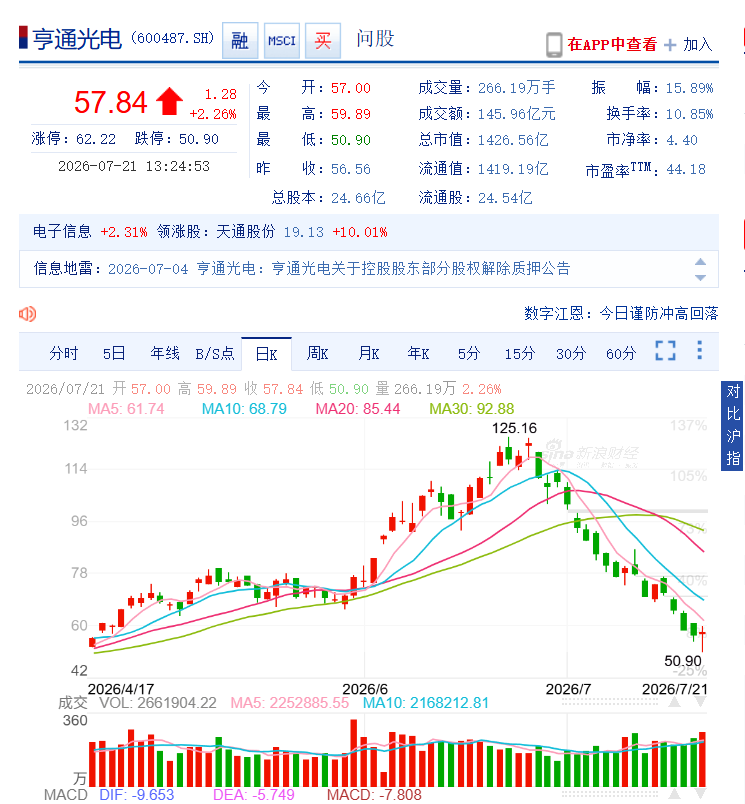
CHINA JUST SPENT $9 BILLION TO STOP ITS STOCK MARKET FROM COLLAPSING.
Two state owned funds, China Reform Holdings and China Chengtong, put nearly $9 billion into Chinese stocks over the weekend.
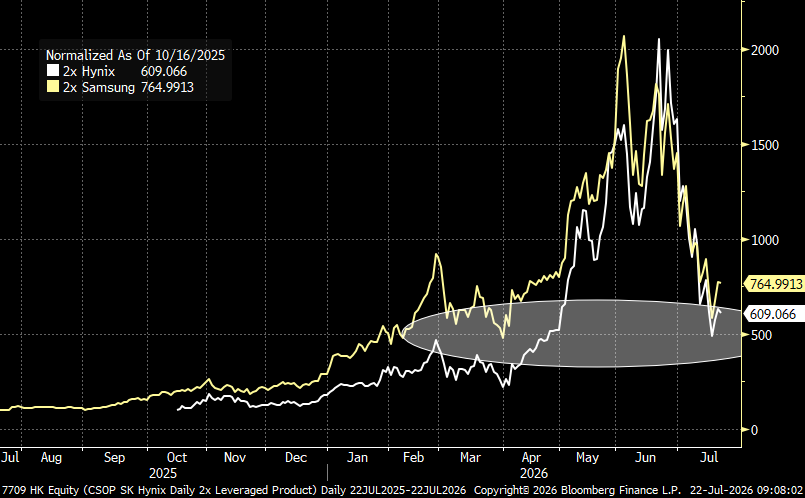
Before this, Chinese stocks had a brutal two weeks. Rising Middle East tensions, a global AI-chip selloff, and an $8.6 billion IPO from chipmaker CXMT drained cash out of the market.
Together, these wiped out $1.48 trillion from the Chinese stock market.
Regulators met with market participants before the state funds stepped in.
This is China's usual move during a bad selloff: state money buys just enough to stop the bleeding.
This rescue pushed prices up, but investors aren't fully convinced yet.
For the recovery to last, buying needs to spread beyond state backed stocks into private companies and financials.
That didn't happen last time China tried this, in 2021, when a similar $1.3 trillion crash came right back days after the government stepped in.