Completed a presentable version of my CoreDdd .NET libraries - a set of open-source .NET libraries helping with domain-driven design (DDD) and CQRS: https://t.co/o8zKsZLtPI #CoreDdd#DDD#CQRS
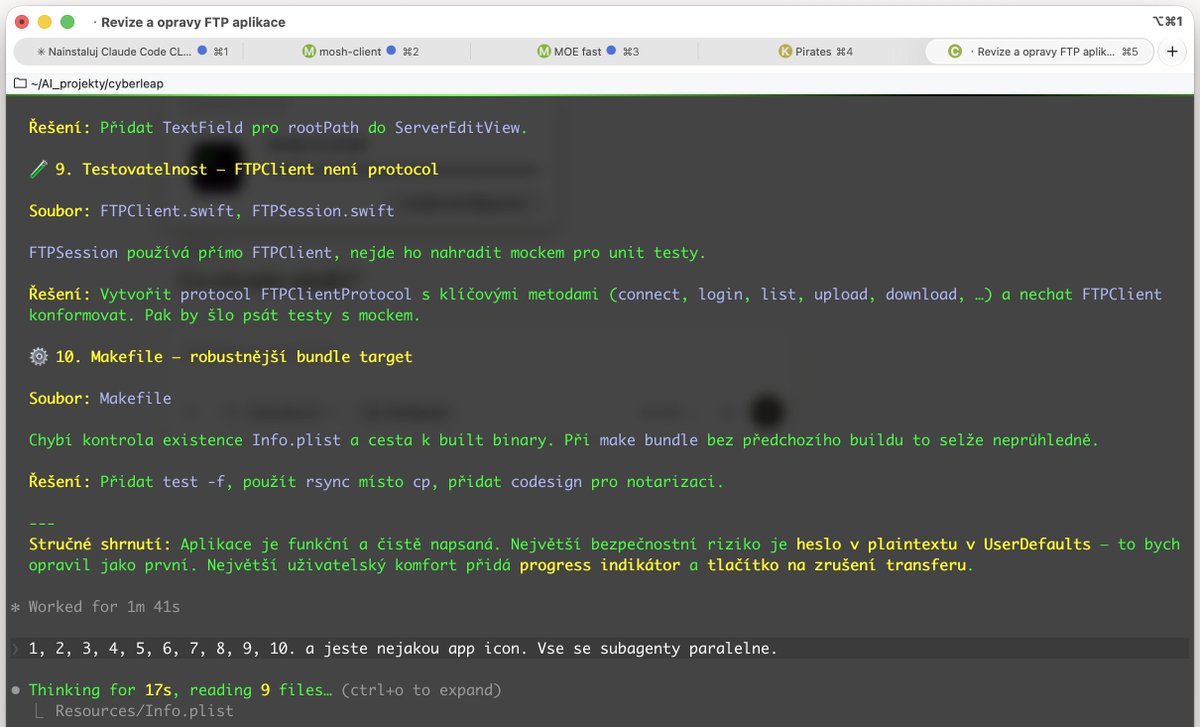
Tak tohle je fakt pecka, od včerejška finetuním nový Deepseek V4 Flash, co mi nyní běží už i lokálně na Macbooku. V offline 70 tokenů/s. Ale co to znamená v praxi? Bez připojení na internet si sám napsal vlastní ftp manažer za cca 20 minut. Prostě lokální neomezený Opus zdarma. @deepseek_ai
Earth is still bound to the Late Cenozoic Ice Age, and our planet's average global temperature still hovers around a very livable 15°C.
This is far below the world's long-term planetary average of 18°C to 24°C - seen throughout most of Earth's biological history. It makes the idea of a global warming crisis seem out of sync with reality.
Despite four decades of continuous climate alarmism, roughly 10% of the Earth's total land area remains permanently capped by glacial ice, which covers 15 million square kilometers (5.8 million square miles).
That is nearly a third of its extent during the peak of the Last Glacial Maximum (26,000 to 19,000 years ago), when continental ice sheets reached their historical zenith.
The Antarctic ice sheet remains the largest and thickest body of ice on the planet, extending up to 4.8 kilometers (about 3 miles) deep. It holds roughly 90% of global ice volume and accounts for 85% of total glacial land cover. Spanning 14 million square kilometers (5.4 million square miles), Antarctica alone makes up 8.3% of Earth's total land surface.
A basic geographical reality is often forgotten: land comprises a mere 28% of the planet's surface. All human cities, towns, and infrastructure combined occupy just 1% to 3% of that land (while deserts take up 33% and forests 31%).
We live on an ocean world, and waters cover 72% of the globe to an average depth of 2.3 miles.
Crucially, the oceans hold 86% of the global carbon reservoir and absorb over 90% of retained thermal energy. By contrast, the atmosphere holds a fraction of a percent of each. The oceans—not human industrial activity—serve as the true long-term regulatory engine for atmospheric carbon dioxide and global climate stability.
The current Quaternary Glaciation is part of an ice age cycle that began 34 million years ago with the thermal isolation and glaciation of Antarctica, later intensified by the closure of the Isthmus of Panama and orbital variations (Milankovitch cycles).
Carbon dioxide was not the driver of these immense shifts.
All of human civilisation, agriculture and technological progress has unfolded within a brief, warm respite: the Holocene interglacial period, which began just 11,700 years ago.
Yet for 40 years, the narrative has been dominated by a campaign driven by an unaccountable bureaucratic authority—the United Nations—pushing an agenda of global control.
The promised catastrophe of runaway, unprecedented warming never arrived.
"What an upside world when Chinese open-weight models will tell us about Tiananmen Square, but American frontier models won't translate a blog post. Not even Kubrick saw that coming." https://t.co/fU4H8xlcSP
Vibe coders are getting sued.
People are shipping apps with real users and skipping the boring stuff that kills them.
A 20+ year dev shared the pre-launch checklist every AI builder needs.
I added what I learned after shipping 60+ apps at the agency.
Don't skip this:
1. Protect yourself, not just your app. The moment you collect user data you're in legal territory (GDPR, CCPA). Have a privacy policy. Know where user data lives.
2. Row Level Security. Without RLS, anyone can open DevTools and read your entire database. Supabase → Auth → Policies. Zero policies means your app is naked. 5 min to fix.
3. Test the failure path, not just the happy path. Wrong password 5x. Reset for an email that doesn't exist. Verification link clicked twice. Signup with an existing email. Catches 80% of auth bugs.
4. Security baseline in 2 min. Prompt your AI: "Review my app as a security specialist and make sure I have strong security headers and a solid baseline security posture."
5. OWASP. Prompt: "Review my app against OWASP standards and highlight vulnerabilities." This is where SQL injection, XSS and auth bugs actually get caught.
6. Client-side validation is UX, not security. Attackers disable JS and hit your API directly. Validate again on the server. Every time.
7. AI code leaks data in 3 spots: .env values in the frontend, API responses returning too much, secrets in logs. Prompt: "Check my app for credential or sensitive data leaks in frontend or API routes."
8. API keys in the frontend means game over. If it's in the browser, assume it's already taken. Move it server-side or proxy it.
9. Rate limits before someone burns your API bill. Cap every endpoint hitting a paid API. I've watched a Supabase bill jump from $20 to $200 in a day.
10. CAPTCHA on public forms (Cloudflare Turnstile is free) plus CORS locked to your domain. 10 min, kills bot floods.
11. Error messages that don't leak. "User not found", not "SELECT * FROM users failed". Log full errors server-side, show users generic messages.
Build fast. Just don't ship naked.
(full breakdown in my article below)
‼️ The European Commission has allowed a citizens' initiative demanding EU law keep digital ID and age verification voluntary, privacy-preserving and non-discriminatory for accessing online services.
The initiative called 'Stop Killing The Internet: No Digital ID & No Age Verification' now needs 1 million signatures across at least 7 member states within 12 months. Once the target is hit, Brussels must formally answer, right as it rolls out the EU Digital Identity Wallet and pilots its age-verification app.
If you wanna do it yourself, this is how:
Buy (~15 min)
1. Cheap VPS from Hetzner or DigitalOcean (~€5-10/mo), Ubuntu 24.04, tick automatic backups at checkout
2. Add your domain to Cloudflare (free plan), switch nameservers at your registrar
3. Install Termius (SSH app) + Tailscale (private network) on laptop and phone, free tiers
Lock it down (~20 min)
4. Generate an SSH key in Termius, add it to the VPS at creation. Keys only, never passwords
5. SSH in once via public IP, run updates, install Tailscale on the server, log it in
6. Disable Tailscale key expiry for the server (admin console, one click)
7. Verify you can SSH via the server's Tailscale 100.x address BEFORE the next step
8. Provider firewall: delete all inbound rules, allow only port 443 from Cloudflare's published IP ranges. No public SSH at all. You enter through the tunnel
9. Test from outside: public IP times out on everything, Tailscale IP connects. Server is now invisible
10. One SSH key per device. Phone gets its own key added to authorized_keys
Install the brain (~5 min)
11. apt install tmux then install Claude Code (official native installer, one curl command)
12. Run Claude Code inside a tmux session so it survives disconnects and keeps working while your laptop is closed
Hand over everything else
13. Write ONE long handover prompt telling Claude Code: the server facts, the security model (so it doesn't "fix" it), folder conventions (/srv/http/domain per project, one tmux session each), your preferences, and standing rules (confirm before destructive actions, new services bind to localhost/Tailscale only)
14. Make it write all of that into CLAUDE.md first, so every future session already knows everything
15. Backups before features: nightly job pushing your data to GitHub, tested, before a single page exists
16. Then let it install the web server (Caddy + Cloudflare DNS plugin plays nicest with the locked firewall), set up SQLite, deploy the first page
From then on you never administer the server again.
You open Termius from anywhere, on any device, and just say what you want.
BOSH
Talked to someone today who found that a single $30/hr employee who focused on leveraging AI and becoming an expert in her field began outproducing an entire team of 15+ people.
They laid off most of the team, 5x’d her pay, and gave her an unlimited token budget.
I increasingly have no idea about anything anymore, time is changing too fast, and with AI everyone is equal now, nobody really knows anything while there is a superintelligence that's actually moving things into a direction that nobody can predict
Absolutely beautiful rant about AI in Linux Kernel from Linus yesterday:
I realize that some people really dislike AI, but this is an area
where I'm willing to absolutely put my foot down as the top-level
maintainer.
Linux is not one of those anti-AI projects, and if somebody has issues
with that, they can do the open-source thing and fork it.
Or just walk away.
AI is a tool, just like other tools we use. And it's clearly a useful one.
It may not have been that "clearly" even just a year ago, but it's no
longer in question today.
There are other questions around AI (like what the economy of it will
actually look like in the end), but "is it useful" is no longer one of
those questions. Anybody who doubts that clearly hasn't actually used
it.
Yes, it can also be a somewhat painful tool, both for maintainer
workloads and just from a "it keeps finding embarrassing bugs"
standpoint.
But the solution is not to put your head in the sand and sing "La La
La, I can't hear you" at the top of your voice like some people seem
to do.
The solution is to make sure those LLM tools _help_ maintainers
instead of just causing them pain. There's no question on that side.
We're not forcing anybody to use it, but I will very loudly ignore
people who try to argue against other people from using it.
And no, AI isn't perfect. But Christ, anybody who points to the
problems at AI had better be looking in the mirror and pointing at
themselves at the same time.
Because it's not like natural intelligence is always all that great either.
The kernel project has been and will continue to be about the technology.
Sure, the social angle of working on open source is important and
often a very motivating part of the project, but in the end that's a
side benefit, not the _point_ of the project.
This is *NOT* some kind of "social warrior" project, never has been,
and never will be.
In the kernel community we do open source because it results in better
technology, not because of religious reasons.
And so we make decisions primarily based on technical merit. Not fear
of new tools.
Linus
I'd been struggling with this one icon-alignment issue in the new Omarchy Quattro menu bar. GPT 5.5 kept going in circles. Opus 4.8 was no better. Even gave Gemini a shot and it too went for bust. But GPT 5.6 Sol? 4m45s and it was done. Love how fast models are leveling up!
Chat control in the EU, VPN restrictions in the UK. All in service of ensuring that the natives don't dare critique the regimes online. When the Brits and the rest of Europe has finally had enough of this, it'll be an explosive moment.
🇪🇺 Chat Control has passed 😔
They can and will now legally scan any person's messages, emails and photos you send without a warrant
The way they passed this law when the majority of the European Parliament was against it will shock you:
They waited until most EP members were on holiday so only a few were present and then created an "urgent" vote for it to pass it through
There's nothing democratic about any of it and big powerful forces are behind this that can manipulate the EU for whatever they want
Democracy in Europe died a bit today 😔
On Thursday, the European Parliament votes on Chat Control 1 (the voluntary scanning, not the mandatory scanning, called Chat Control 2). Again.
The Parliament has already voted against Chat Control 1. Two times. But the Council of Ministers and the Parliament President refuse to accept it.
Now, the Council has demanded an urgent procedure. This is a procedure that is meant to be used for new legislative proposals, not proposals that the Parliament has already rejected. An urgent procedure requires an absolute majority to be rejected (361 out of the Parliament's 720 members). This will be difficult to reach, since those who abstain from voting are counted as a yes-vote in an urgent procedure. By scheduling the vote during the summer, they are making it even harder to reach those 361 no-votes. This is downright dirty tactic by the Council and the President of the European Parliament.
The President of the European Parliament has sided with the Council against her own chamber. For context, this is the EP President, Roberta Metsola:
---
Chat control bude hřebíkem do rakve evropské digitální konkurenceschopnosti, pomůže hlavně technologickým obrům z USA. Pokud lidé v EU pojmou podezření, že jsou šmírováni, obrátí se na alternativy, nejčastěji americké
Evropa už dnes za Spojenými státy v technologiích dramaticky zaostává. Americké firmy dominují cloudu, softwaru, operačním systémům, umělé inteligenci i platformám, přes které komunikuje a obchoduje podstatná část světa.
Studie Evropského parlamentu „European Software and Cyber Dependencies“ (https://t.co/IGpGVzHYYl) přímo konstatuje, že americké firmy dominují všem hlavním vrstvám digitální infrastruktury a že Evropa zůstává silně závislá na neevropských softwarových a cloudových dodavatelích.
Místo aby EU toto manko doháněla, chystá regulaci, která evropské digitální služby dále fatálně poškodí. Povinné skenování soukromé komunikace by podkopalo jednu z mála výhod, o niž se Evropa ještě může opřít: důvěru, soukromí a bezpečnost. Právě na nich stojí právní, finanční, zdravotnická, novinářská i firemní komunikace. Pokud si firmy, advokáti, lékaři, bankéři či investoři přestanou být jisti, že evropské komunikační služby jsou skutečně důvěrné, začnou hledat alternativy. A ty alternativy budou velmi často americké.
Akademické studie k takzvanému client-side scanningu, tedy technickému základu chat control, varují, že nejde o elegantní kompromis mezi ochranou dětí a šifrováním. Studie „Bugs in our Pockets: The Risks of Client-Side Scanning“ (https://t.co/PFIpYjC7NO) upozorňuje, že skenování přímo v zařízení uživatele paradoxně vytváří novou bezpečnostní zranitelnost.
Jinými slovy, chat control by nevytvořil bezpečný internet. Vytvořil by skenovací mechanismus přímo v mobilu či počítači občana. Tím vzniká nový prostor pro hackerské útoky, státní zneužití i algoritmické omyly. Dopadová studie pro Evropský parlament k návrhu pravidel proti zneužívání dětí v online prostředí (https://t.co/cpbbBGV5eg) navíc upozorňuje, že i minimální chybovost může při gigantickém objemu komunikace znamenat obrovské množství falešných poplachů. Uvádí modelový příklad, že falešná pozitivita 0,1 procenta při miliardě zpráv denně znamená milion falešných pozitiv denně.
To není detail. To jsou peníze. Milion falešně pozitivních hlášení denně znamená náklady na ruční třídění, právní obranu, policejní kapacity, administrativu a dohled v jednotkách miliard eur ročně. Další miliardy spolkne compliance, právní nejistota, technologické úpravy a reputační škody evropských firem.
Největší účet ale přijde přes ztrátu důvěry. ICT sektor EU vytváří 5,2 procenta hrubé přidané hodnoty Unie a zaměstnává takřka 7,4 milionu lidí, jak uvádí Eurostat. Jde tedy o sektor v řádu stovek miliard eur ročně. Každé jedno procento ztracené hodnoty evropského digitálního sektoru znamená škodu přibližně devět miliard eur ročně. Každé jedno procento ztraceného exportu evropských služeb mimo Unii znamená dalších zhruba šestnáct miliard eur ročně.
Že šifrování není technická drobnost, ale ekonomická infrastruktura, dokládá i studie NIST (americký Národní institut pro standardy a technologie) k ekonomickým dopadům standardu Advanced Encryption Standard. Ta vyčísluje společenské přínosy silného šifrování za roky 1996 až 2017 ve stovkách miliard dolarů ( https://t.co/1T2xkTFzMx). Regulace, která fakticky oslabuje důvěru v šifrovanou komunikaci, proto nezasahuje jen do soukromí. Zasahuje do samotné infrastruktury moderní ekonomiky.
V nikoli nepředstavitelném scénáři tak může chat control stát evropskou ekonomiku až 50 miliard eur ročně. Při kurzu 24,3 koruny za euro jde o 1,22 bilionu korun ročně. To je cena za regulaci, která má chránit bezpečnost, ale může ve výsledku oslabit právě to, na čem bezpečnost moderní ekonomiky stojí: šifrování, důvěrnost a integritu komunikace.
Evropa by tak opět pomohla hlavně Americe. Američtí technologičtí giganti mají armády právníků, compliance týmů a peněz na to, aby novou regulaci ustáli. Menší evropští hráči nikoli. Chat control by proto nebyl jen zásahem do soukromí. Byl by i průmyslovou politikou naruby: další regulací, která pod záminkou ochrany oslabí evropské firmy a posílí Silicon Valley.
C'est passé. 331 contre 304.
Cet après-midi le Parlement européen a voté l'urgence sur Chat Control le scan de vos messages privés. Pas le vote final : jeudi. La manœuvre est plus intéressante que le résultat.
Le Parlement avait déjà refusé ce texte. La dérogation a expiré en avril. Alors le Conseil l'a ressuscité en seconde lecture la procédure où il faut réunir une majorité absolue de 361 voix pour le bloquer, où les abstentions comptent comme des oui, calée pile sur la dernière séance avant l'été quand la moitié de l'hémicycle est déjà en vacances. Le service juridique du Conseil lui-même dit que ça viole l'article 7 de la Charte. Ils le savent. Ils le font quand même.
Mais voici ce que personne ne veut voir.
Le problème n'est pas que ces gens soient malveillants. Ils ne le sont probablement pas. La technocratie de Bruxelles n'utilisera sans doute jamais cet outil pour vous écraser elle est trop molle, trop procédurière, trop occupée à se justifier.
Le problème est qu'on ne construit jamais une infrastructure pour le pouvoir qu'on a. On la construit pour le pouvoir qui vient.
Et ce qu'ils assemblent, brique par brique, dérogation « volontaire » par dérogation « volontaire », c'est l'arsenal parfait. Le jour où une vraie crise économique portera au pouvoir des gens qui, eux, n'auront aucun scrupule, ils n'auront rien à inventer. Tout sera déjà là. Le scan généralisé, normalisé, légal, opérationnel. Une arme chargée posée sur la table, qu'il suffira de ramasser.
Hayek l'avait compris : la route de la servitude est pavée par des administrateurs pleins de bonnes intentions. On ne cède pas sa liberté d'un coup. On la cède ligne par ligne, « pour protéger les enfants », « pour lutter contre le terrorisme », toujours pour une raison que personne n'ose contester.
L'histoire ne retiendra pas ces gens comme les protecteurs de quoi que ce soit. Elle les retiendra comme les architectes de la cage. Ceux qui ont bâti l'appareil, et l'ont tendu, souriants, à ceux qui savaient s'en servir.
Jeudi, 361 voix. C'est le dernier verrou.