Excited to share our paper on machine learning generative models for designing peptide inhibitors of protein-protein interactions https://t.co/1MRvXE5LIj! A collaboration between Wolfson and Gal labs of Tel Aviv University [1/6] @TelAvivUni@TAD_Tau @PLOSCompBio
Immune Molecules From a Llama Could Provide Protection Against a Vast Array of SARS-like Viruses Including COVID-19, Researchers Say | Mount Sinai - New York https://t.co/3ws6sigwxS
Next-generation #llamaceuticals. Scripps Research’s Prof. Ian Wilson is teaming up with Wally the llama to generate antibodies that are capable of recognizing a wide range of coronaviruses. https://t.co/ydKaSdQEdG @10News
https://t.co/JJDLnNyFEZ
1/5 We @xiang_yufei @XXenog discovered “super-immunity” in Llama Wally and rapidly isolated a large repertoire of specific ultrahigh-affinity nanobodies that bind strongly to all known sarbecovirus clades using integrative proteomics.
Save your effort & time for nanobody humanization before preclinical & clinical trials🤗🤗 free online, easy to use. @XXenog Besides, cute-iest software logo! 🥰🥰
Join this GEN webinar to learn how SARS-CoV-2 Reporter Virus Particles (RVPs, pseudotyped viruses) enable researchers to rapidly test neutralization titers of antibodies and vaccinee sera in a safe BSL-2 environment. Register with the link below! #biotech
https://t.co/HmAFF9L830
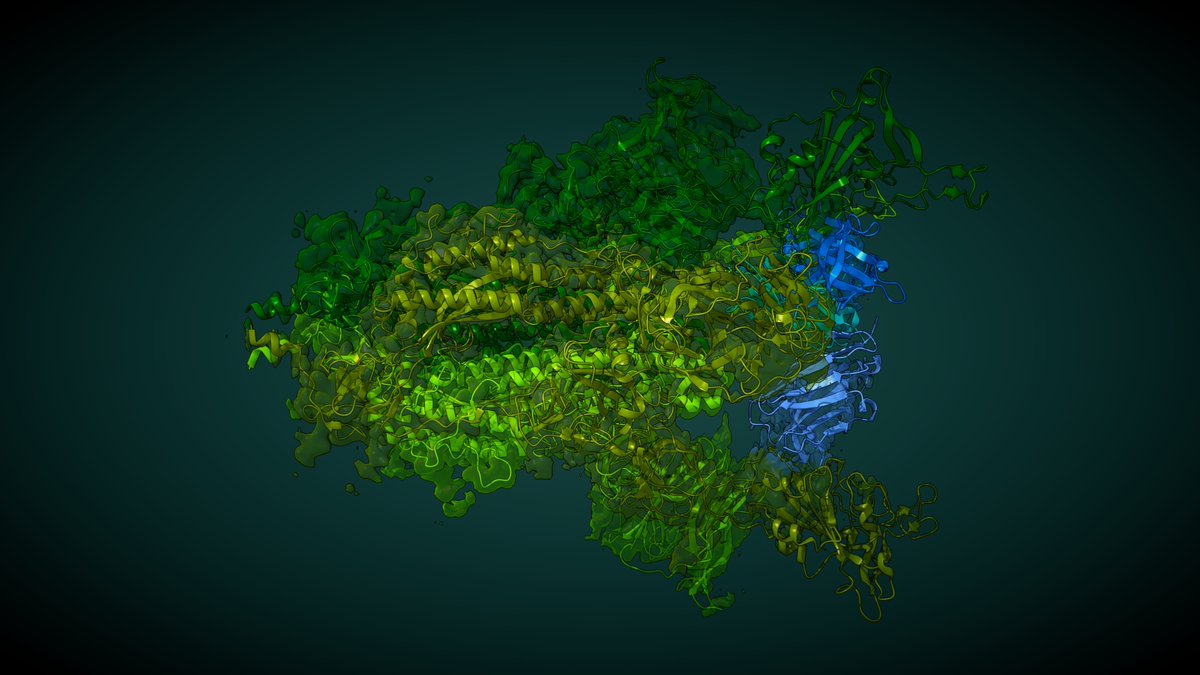
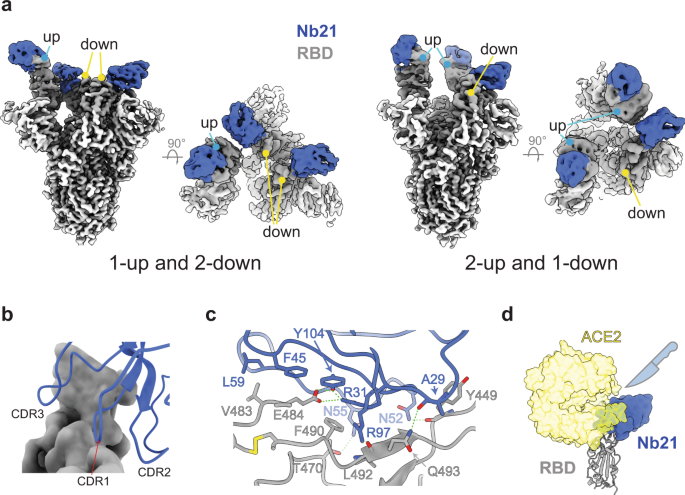
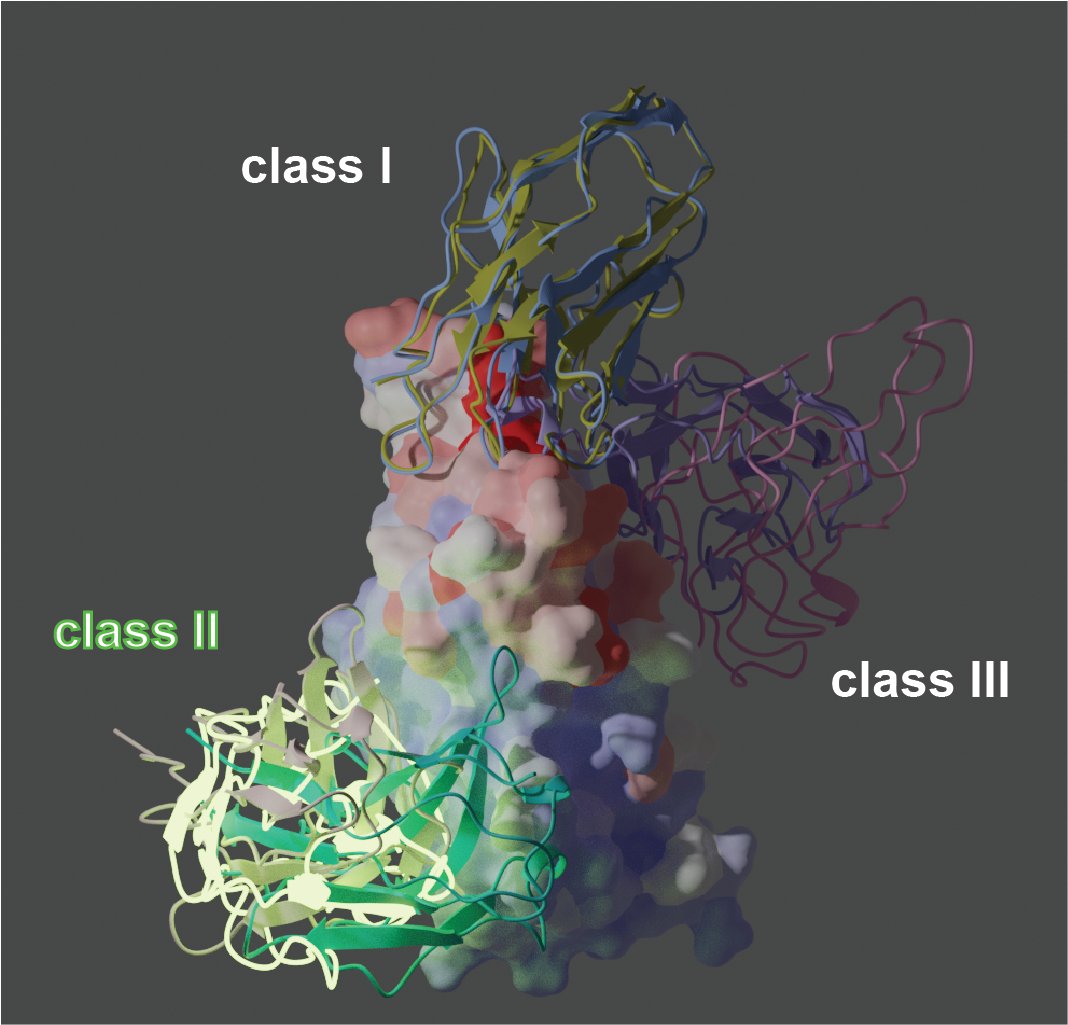
The labs of Yi Shi @DinaSchneidman Cheng Zhang & Wei Huang present the structures of potent neutralizing nanobodies bound to the receptor binding domain of the SARS-CoV-2 spike protein @Proteomics_Shi@xjtuhw@ChengZh42895446
We found potent neutralizing nanobodies are highly resistant to different SARS-CoV-2 variants and discovered a novel class of nanobodies (III) that can latch on unique and conserved viral epitopes that are likely inaccessible to human antibodies. https://t.co/hHHDd6kneg
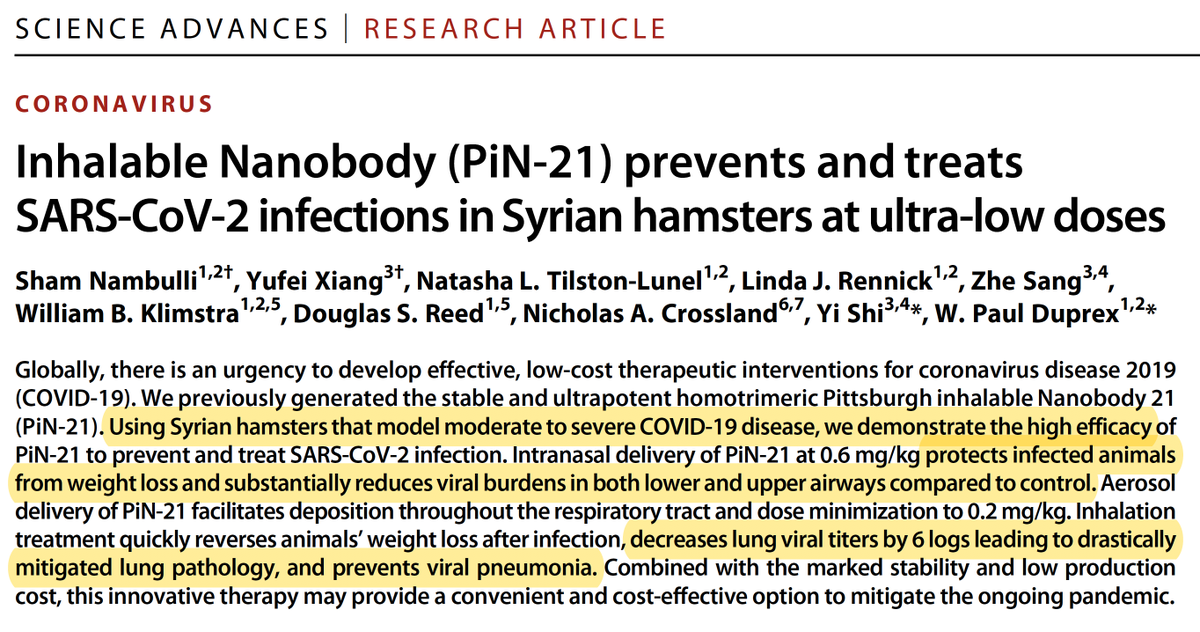
An innovative future path for help in preventing and treating covid illness: inhaled nanobodies https://t.co/OC8YkqeRFt Just out @ScienceAdvances by @10queues@PittCVR@nambulli@xiang_yufei and colleagues;
marked efficacy in the well-regarded hamster model