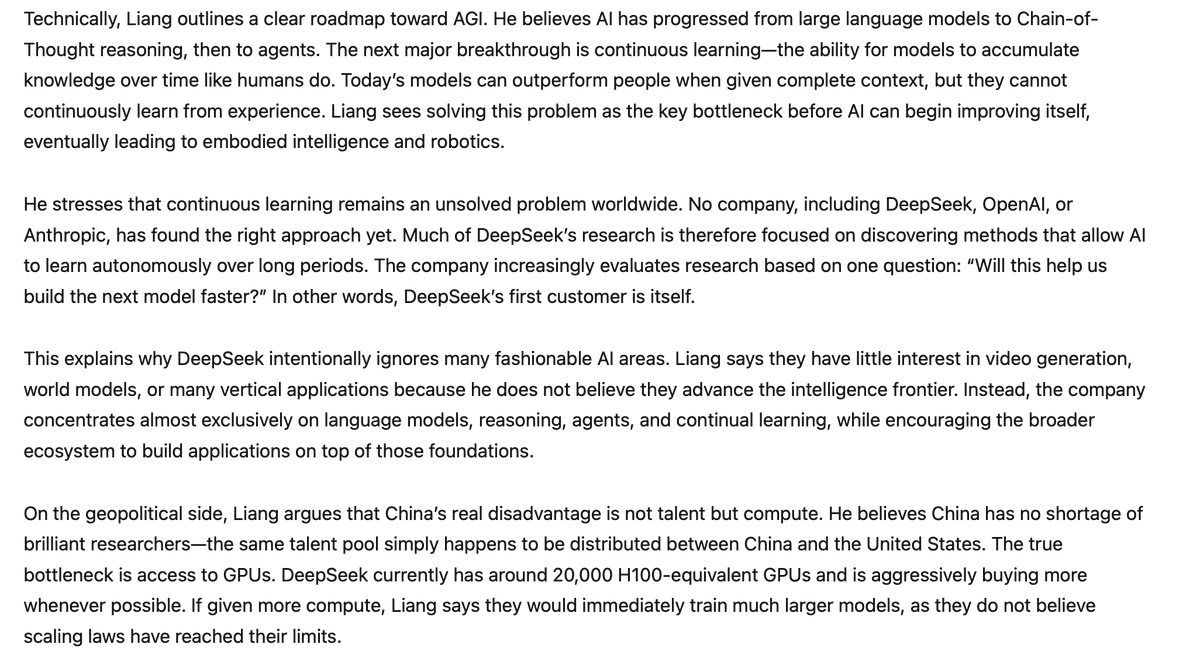
As expected, there is no hope from OpenAI and Anthropic; they want to stay ahead of everyone while using these cheap tricks to eliminate any competition. There are so many people dying every day from all types of diseases with no cure available; instead of solving these problems, they keep using the scary campaign against society.
Mark Zuckerberg explains his AI philosophy
“The AI Future Is for Everyone”
>superintelligence is coming
>that debate is over
>real question is WHO gets access
>a few AGI labs behind closed doors… or everyone?
>zucc: EVERYONE
>it’s surprising how much doom comes from the people building it
>“why are you building the thing you think ends humanity?”
>claiming AI is so dangerous so the only safe path is concentrating power
>lol, lmao even
>that IS the dangerous part
>history shows betting on benevolent absolute power staying benevolent is a mistake
>no single “aligned” superintelligence can be benevolent to everyone
>“humanity isn’t a monoculture”
>someone’s values win. someone’s get nuked
>solution: widely distribute superintelligence
>everyone checks everyone
>no single lab deciding humanity’s values
>balance of power becomes the foundation of safety
BASED AND CHECKED
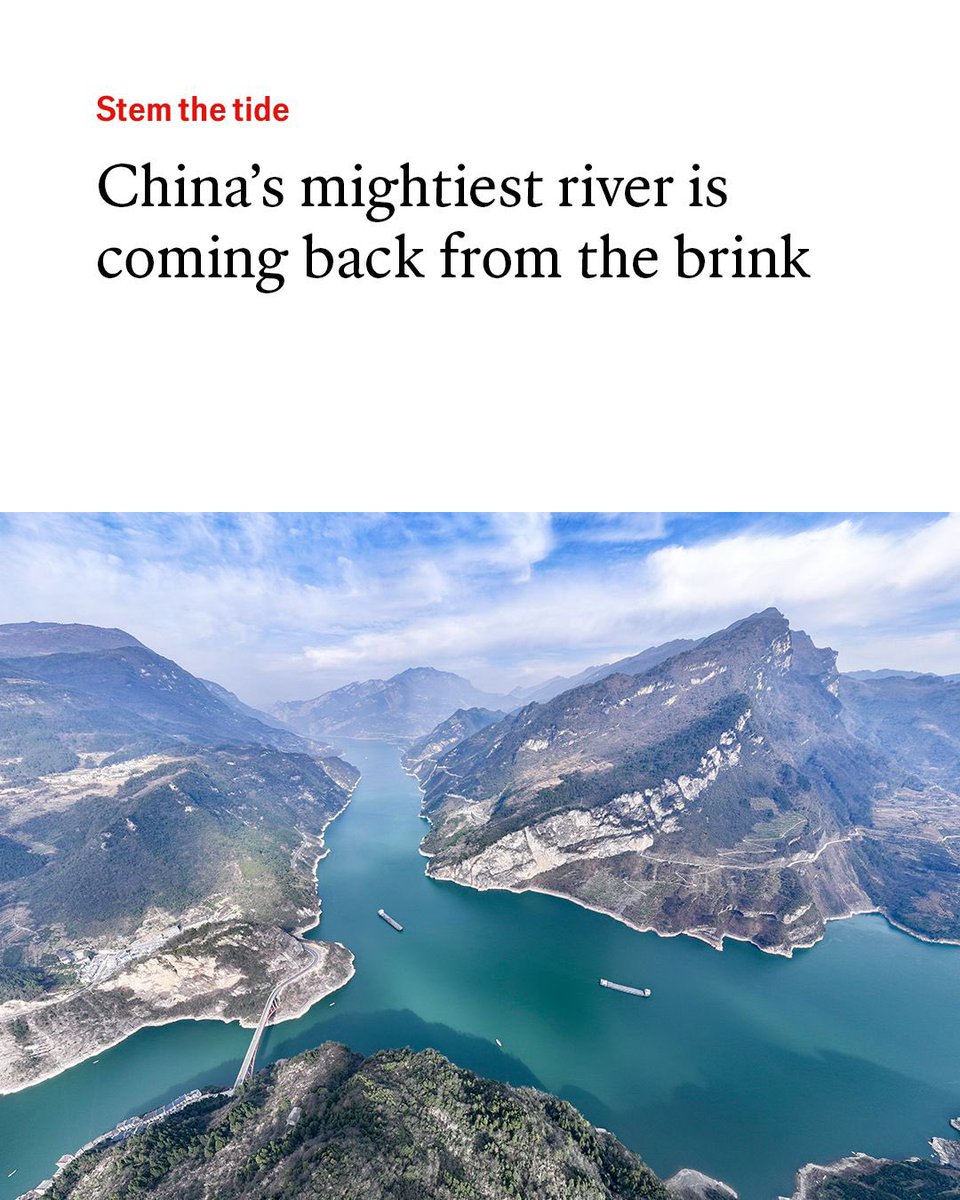
The Economist just dropped another classic:
“China’s mightiest river is coming back from the brink”
(The Economist, 2026)
But eco-authoritarianism is not all roses
Fish stocks up 200%+. Sturgeons breeding again. Porpoises recovering.
A 6,300 km river brought back from ecological death in a few years.
And still they manage to make it sound like a human-rights violation with a green filter.
The cope is relentless.
Every time China fixes something the West spent decades lecturing about, the headlines twist themselves into pretzels to find the dark side. Success is never allowed to stand on its own. It must be framed as accidental, authoritarian, temporary, or somehow still a failure.
The formula never changes. Deliver results → insert the “yes, but…” → remind everyone that competence without the correct ideology is suspicious.
Here are ten titles that are already jokes the moment you read them:
China builds the world’s largest high-speed rail network – tragically, people can now arrive on time
(The New York Times, 2024)
800 million lifted out of poverty – but did anyone ask if they miss the dirt floors?
(The Guardian, 2021)
China’s EV factories dominate the planet – a clear threat to Western parking lots
(Financial Times, 2025)
Yangtze fish stocks triple after fishing ban – eco-authoritarianism claims another victim (the fishermen’s freedom to go bankrupt)
(The Economist, 2026)
China plants billions of trees – nature recovers without a single democratic consultation
(BBC, 2023)
World’s biggest renewable energy capacity installed – still somehow China’s fault for the climate
(Bloomberg, 2025)
Poverty eliminated in record time – experts warn success may discourage future suffering
(Washington Post, 2020)
Chinese high-speed trains run at 350 km/h – democracy would have preferred a slower, more inclusive timetable
(The Atlantic, 2022)
Belt and Road builds ports and railways across continents – developing countries cruelly denied the right to remain underdeveloped
(Foreign Policy, 2023)
China’s space station completes missions without exploding – suspiciously competent for a non-Western power
(CNN, 2024)
Same script every single time.
China delivers results → Western media delivers the “yes, but…”
They can’t celebrate competence when it doesn’t come wrapped in their preferred ideology.
The cope is becoming performance art at this point.
Dario is an absolute prime example of a certain class of Western elites who have so thoroughly convinced themselves of their own moral superiority that they can announce plans for completely destroying another society while describing THEM as a "threat" - completely oblivious to how insane this reads.
@HedgieMarkets I’ve asked the SpaceXAI team to preserve any rare books in a library and scan them the hard way vs just cutting off the spine and scanning
🦔AI companies are bulk-buying rare books, scanning them through high-speed machines that cut the spines off, and shredding the originals. A service called ISBNdb facilitates orders of up to a million books and keeps buyers anonymous. Pre-2022 books are premium because they're free of AI-generated text. A federal judge ruled the practice is fair use because eliminating the original means only one copy exists at a time. Anthropic hired the former head of Google Books partnerships to obtain "all the books in the world."
My Take
This got to me. A bookseller told 404 Media that rare books with almost no surviving copies are being fed into this pipeline. Books that survived wars, fires, and centuries of handling are being shredded so an AI can learn to write a better marketing email.
ISBNdb's website literally says "'AI company destroys two million books' is not a headline that generates sympathy," and they still built an entire business around making it happen quietly. They offer NDAs as a feature. They coach clients to call it "digital preservation."
I've covered AI companies scraping the internet, torrenting libraries, and stealing music. This is worse because it's irreversible. You can re-upload a website. You can reprint a bestseller. You can't replace the last three copies of an 18th-century botanical text once someone shreds them for training data. And the judge said it's legal. So it's going to accelerate.
"We shred rare books and offer NDAs so nobody finds out" is a legitimate business model in 2026. What a timeline.
Hedgie🤗
Nobody is saying that all software has to be open source. What they’re saying is that open-weight AI should be allowed. By implication, they’re rejecting your company’s incessant machinations to kneecap the open model ecosystem. Read the room.
Since 1978, China has planted more than 66 billion trees in an effort to slow the expansion of two major deserts, making it the country with the largest tree-planting effort in history.
China has carried out the world’s largest afforestation program, planting tens of billions of trees to combat desertification and restore damaged ecosystems. After decades of deforestation, overgrazing, and expanding deserts, China launched the Three North Shelterbelt Program in 1978 to slow the growth of the Gobi Desert and protect farmland and cities from dust storms.
The effort later expanded to areas surrounding the Taklamakan Desert, where trees were planted along highways, rivers, and desert borders to stabilize shifting sands. These programs helped increase China’s forest coverage from around 12% in the early 1980s to more than 24% today, with NASA satellite data showing China contributed about 25% of the world’s increase in leaf area between 2000 and 2017.