📢 Preprint! Does the environment of a father before conception influence offspring?
Even more, how do paternal genetics & age interact with exposures to affect F1 outcome?
We tested this systematically, with intriguing findings & some cautionary tales
https://t.co/THGgCcMQNL
We report many proteins not predicted by the genetic code.
They are stable & abundant O( 10³ ) copies / cell.
Generative mechanisms include codon-anticodon mismatches & RNA modifications.
Their abundance depends on codon frequency & protein stability.
https://t.co/lAxvulC4zx
⚠️For PhDs who are thinking about jumping ship and diving into industry:
Industry isn't necessarily better than academia.
I have straddled both worlds. Here are 5 MYTHS about academia vs. industry:
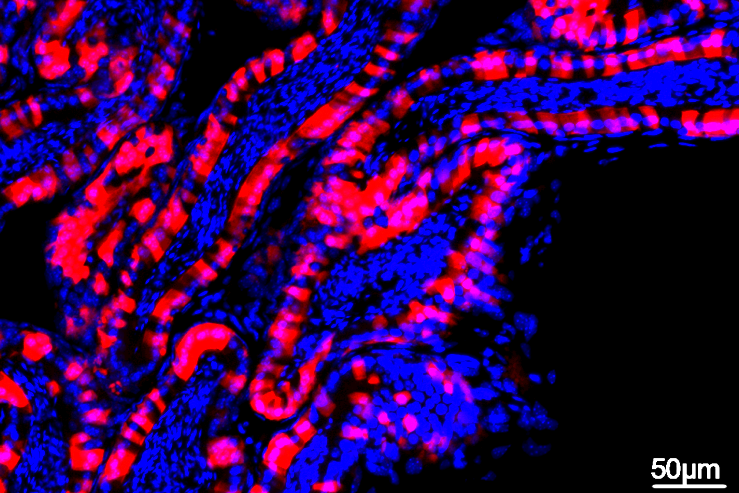
#newscience alert! Apparently, Cre recombinase expressed in the central nervous system or in adipose tissue can somehow transfer through the bloodstream to recombine genes in the male reproductive tract?!? Check it out in @eLife
https://t.co/mf7rGfCYvd
@LGMartelotto Is there a way that the non-marketing truths learned from this meeting be made publicly available? Tweetorial/meeting summary on biorxiv etc
We’ve generated a synapse-resolution map of an insect brain, includes 3016 neurons and half a million synaptic sites! Out today in Science https://t.co/l3W5PEbhtJ
Summary below and in @bpedigod’s thread. @ZlaticLab, @albertcardona, @neuro_data, Carey Priebe, and many others
MPRA on 680,000 sequences comprehensively covering all active regulatory elements in 3 cell lines (HepG2,K562,iPSCs). Tour de force by @vagar112 & @TakaInoue5, @JShendure and @KircherLab as part of our @ENCODE_NIH project.
https://t.co/uqkvzuVFNi
We are very happy to share our pre-print on the Three Rules for Epigenetic Inheritance of Human Polycomb Silencing!
What are these three rules? Read more to find out….
https://t.co/25JT7dFaq9
#epigenetics#polycomb#heterochromatin
📣 Excited to share our latest work, in which we set out to reconstitute #3Dgenome folding in vitro to get more insight into the underlying mechanisms. Summary of our surprising findings below! 1/7
https://t.co/AA34QkTXmY
Hey chromatin scientists, want to reorganize DNA loci as you wish? We have a new tool for you that can create novel pairwise interactions across microns of space in living cells, in less than ten minutes: VECTOR https://t.co/oL7oViH4rw
Excited to share the latest work from our lab, part of a collaboration with Ye Zheng's lab at Salk. We studying 3D genome organization in Tregs and investigated the role for Foxp3 in establishing Treg specific 3D genome interactions.
https://t.co/FHGYZg4b00
@twang5@mayanknkc@KaraQuaid Repetitive elements are almost entirely masked on Hi-C related datasets because the during the processing step multi-mapping regions are taken out. This applies even to high resolution datasets, where repetitive regions contribute to artifactual loop calling and insulation scores