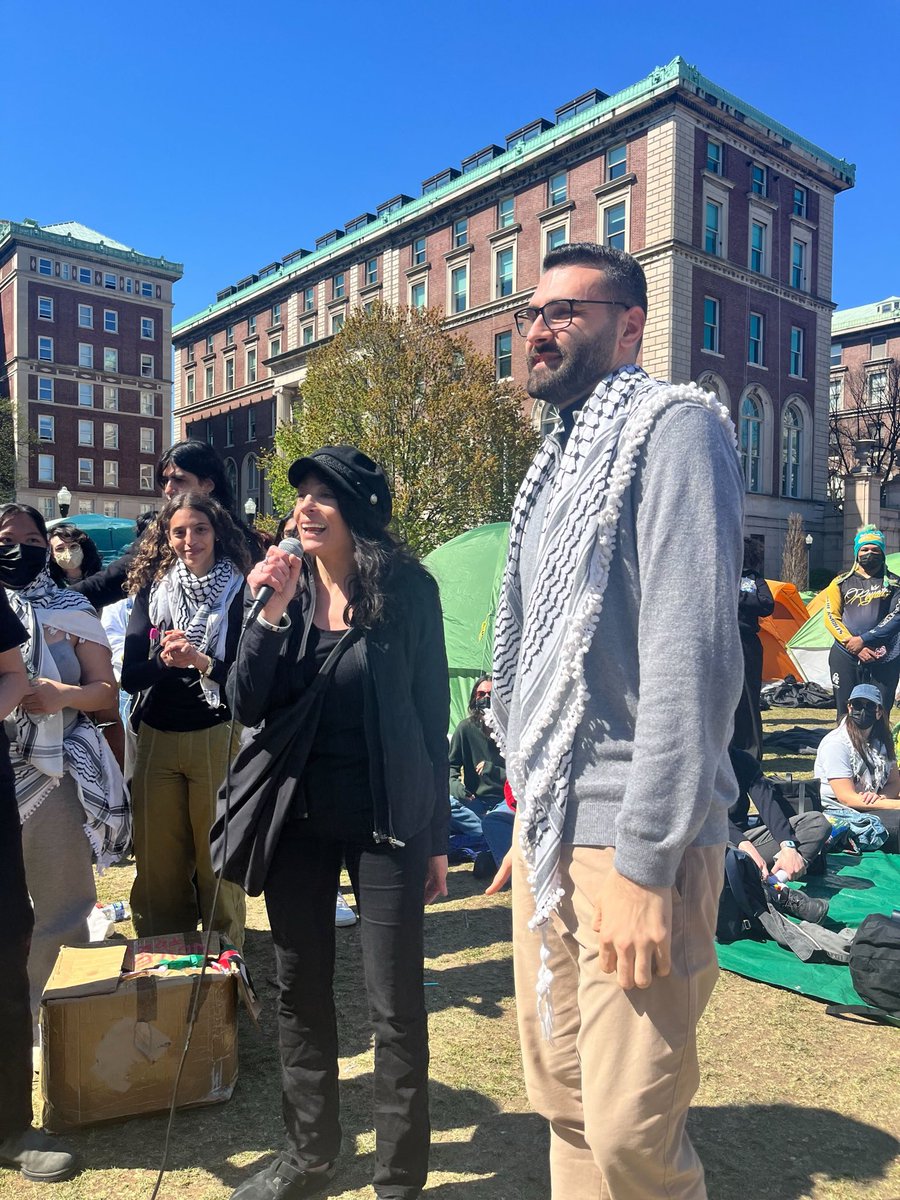
El Sayed and Mamdani are continuing the tradition of Muslim leaders co-opting Palestine to build their political credibility and consolidate power, only to then cast it aside for expedience.
On the Joint Venture in the Destruction of State and Society in the Horn of Africa
Over the past few years, it has become impossible to ignore a troubling reality: the Horn of Africa has increasingly lost ownership over its own political destiny and has become largely subordinate to political rivalries originating in the Middle East. Decisions concerning war and peace, economic direction, and even social cohesion are no longer primarily shaped within our societies. Increasingly, they are conceived elsewhere, formulated in Middle Eastern capitals and then transplanted into our region. The tensions between Mogadishu and Hargeisa, Addis Ababa–Mekelle–Asmara, or Port Sudan and Darfur cannot be understood solely through local rivalries. They are also contemporary expressions of external ambitions that have found fertile ground in our internal fractures.
This pattern is unmistakable. On the eve of consequential national decisions, senior officials—presidents, ministers, generals—quietly depart for foreign capitals. Only after these visits do domestic institutions convene, not to deliberate but to endorse outcomes already determined. Parliaments, cabinets, and regional councils increasingly serve as ceremonial bodies, providing legal cover for decisions made elsewhere. Sovereignty, once defended with blood and sacrifice, is reduced to performance.
External influence in the Horn is not new. What distinguishes the present moment is the emergence of a class of political entrepreneurs who function not merely as weak leaders under pressure, but as active collaborators in external projects. In this sense, they are no different from the chieftains of the nineteenth century who facilitated the ivory and slave trades through Zanzibar. The method is strikingly similar: private deals, personal enrichment, and the systematic weakening of indigenous authority structures in exchange for external favor and protection. Then, as now, intermediaries prosper briefly while societies are hollowed out.
Today, foreign powers no longer need to conquer territory directly. They outsource domination to local actors willing to trade national interest for personal survival or wealth. Negotiations bypass institutions and are conducted with individuals, behind closed doors, often unwritten and unaccountable. Political leaders cease to be custodians of the state and become brokers of access—managing violence, territory, and allegiance on behalf of external patrons. Even historically resilient states, such as Ethiopia, are increasingly treated not as sovereign actors but as dependent clients of wealthy microstates.
Public discourse in the Horn remains saturated with accusations of violated sovereignty. Yet sovereignty is not a slogan; it is the capacity to make autonomous decisions and to be accountable to one’s own people. If the most consequential choices are made elsewhere, what sovereignty remains? Who is mortgaging the future of entire societies for short-term gain?
At the heart of this arrangement lies a dangerous assumption: that the fate of the next generation can be sacrificed without consequence. The kleptocratic nexus linking external powers and domestic collaborators appears to believe that the aspirations, anger, and agency of today’s youth can be indefinitely suppressed or managed. This is a fatal miscalculation. A generation raised amid war, dispossession, and humiliation does not forget. Nor does it remain passive. The political and social debts accumulated today will be collected, and the price will be far higher than those who profit from the present disorder anticipate.
1/2
@samirasamatalis A man full of resentment. It doesn’t surprise me though since he owes his entire existence in public life, if we can call it that, by performing the ‘reasonable’ voice for the establishment during the early days of the ‘War on Terror’
@samirasamatalis A man full of resentment. It doesn’t surprise me though since he owes his entire existence in public life, if we can call it that, by performing the ‘reasonable’ voice for the establishment during the early days of the ‘War on Terror’
Of course, it's great that The Voice of Hind Rajab receives such a sympathetic and warm public response, but am I the only one who can't help but be bothered by the insane dissonance when watching this video?
Precious little Hind Rajab was brutally murdered in a destroyed city, being bombed and intentionally starved, right before the eyes of a complicit, idle world. This isn't history, it's still happening right now. Every day there are dozens of Hind Rajabs in Gaza, being butchered in their decimated, millennia-old home, simply for being Palestinian.
Meanwhile, in Venice - although it could've been LA, Tokyo, Amman, or even fuckin' Tel Aviv - wealthy, influential people are wearing their fancy suits, indulging in an extravagant event, being served cocktails and hors d'oeuvres by working-class waiters, and having an evening of culture and entertainment while watching poor Hind's story.
Venice is just 2,500 kilometers away from Gaza, a mere 4-hour flight from the Tel Aviv airport named after the orchestrator of the 1948 Nakba. Yet it feels like a whole different world. A spoiled and content world, who takes just a moment, in the middle of his indulgent celebration, to shed a tear and give a standing ovation in honor of a little girl, murdered in a Holocaust that is still being carried out in full force. Their tears drop on their thousand-dollar ironed suit, while at the same time, 4 hours away, another Hind Rajab is being murdered in a destroyed city, bombed and starved to death.
And those who brutally murder those thousands of Hind Rajabs are still considered "allies" in Venice, in Italy, in Europe, in the entire West. Hell, there must have been some Israelis in the audience last night, some modern-day Nazis who came to watch a film about Auschwitz, while the showers are on and the crematoriums are working at full capacity.
"That was so moving", they'll tell their date while waiting for a taxi to take them back to their fancy hotels. Gotta get some hours of shut-eye, breakfast buffet opens at 7.
**********
Anyway, congratulations to the creators of this important movie. I sincerely hope it drives some viewers into real action.
Here's footage of the same site as the Time magazine photo that @BillAckman and others are saying was staged. They will all retract and apologize after watching this.
You can tell by countless details that it's the precise same site and that the photographer did not stage it.
Why does Bernie easily call Trump’s riviera stunt a war crime, but not Israel’s assault on Gaza? Why is Netanyahu singled out instead of seen as the product of decades of Israeli occupation, dispossession, and war crimes? Maybe @hasanthehun can answer that.
@AbdisalamAato The scale of the work—real work—ahead for the Somali people is largely unappreciated by most, and the urgency is entirely absent from the current political class.
The real blow here—and one they may not recover from for a long time—is that after all the time spent pandering to Republicans, they lost this fantastically. I worry their only take way from all this might be perhaps moving even further to the right for next time
The Democrats ran a soulless, cookie-cutter, corporate campaign—and still lost. We can’t be certain if a genuinely progressive, anti-war, pro-labour approach would have got Kamala Harris into the White House, but at least then the party would have understood why they lost.
"The host city for the DNC is Chicago, whose metro area is home to more Palestinian Americans than anywhere else in the country. But you would not know this looking at that stage.
Despite the appeals of Palestinian American delegates and activists, no Palestinian American is scheduled to address the convention from the main stage. I suspect this is because of what such a speaker might feel compelled to say." — Ta-Nehisi Coates.
https://t.co/GT4JY6o4mJ