Ex-Google engineer reveals how to build AI agent loops, harnesses, LLM ops, and evals in 19 minutes.
Trace → evaluate → diagnose → fix → ship → repeat.
That loop is how agents self-improve over time.
Agentic loops + harness + memory + evals - that’s the senior engineer stack.
This is better than $500 paid courses on the same topic, explained in under 20 minutes.
Watch it, then save the framework below.
O Google acabou de transformar mais de 1 bilhão de computadores em depósito de IA.
Inclusive o seu.
Sem pedir. Sem avisar. Sem um único popup.
O Chrome baixou 4GB de modelo de inteligência artificial no seu disco. O arquivo se chama weights.bin, são os pesos do Gemini Nano. Fica numa pasta chamada OptGuideOnDeviceModel dentro do seu perfil do Chrome.
Você não autorizou nada. Até existe uma configuração para impedir, mas tá enterrada em submenus que ninguém encontra. E as AI features vêm ligadas por padrão.
Se você deletar o arquivo, o Chrome baixa de novo. Sozinho. Em silêncio. Você decide o que fica no seu disco e o navegador simplesmente ignora.
Funciona assim em Windows, macOS e Ubuntu. Logs forenses no macOS mostram que o arquivo foi instalado dia 24 de abril de 2026, misturado com patches de segurança. Desenvolvedores dizem que isso já rola há mais de um ano.
E tem um detalhe que deixa tudo mais ridículo:
O Chrome 147 coloca um botão "AI Mode" na barra de endereço. Você vê aquilo, sabe que tem modelo de IA no seu computador, e assume que suas buscas rodam localmente.
Não rodam. O AI Mode é 100% cloud. Tudo vai para os servidores do Google. O modelo de 4GB no seu disco não tem nada a ver com aquele botão.
Ele serve para quê? "Help me write" e detecção de scam. Coisas que vivem em submenus de clique-direito que você provavelmente nunca abriu.
O Google ocupou 4GB do seu disco sem pedir, para rodar coisas que quase ninguém usa, enquanto a IA que você de fato vê manda tudo para a nuvem.
Na Europa, pesquisadores já apontam violação do Artigo 5(3) da Diretiva ePrivacy, que exige consentimento antes de armazenar software no dispositivo do usuário.
Como desativar:
→ chrome://flags
→ Busque "Optimization Guide On Device Model"
→ Desative
→ Reinicie o Chrome
→ Delete a pasta OptGuideOnDeviceModel
Seu computador só é seu se você ficar de olho.
요즘 죽어나간다는 한국 게임업계 AI 썰
https://t.co/CwO8T7l98c
와 시발 요즘 AI로 그룹만들어서 유사 부서 돌린다는 소리 듣고 생각난건지 쌩 인간 PM을 AI로 갈아버렸다고? 소심하게 자판기나 돌려보는 양놈들하고는 다르게 진짜 정도를 모르�� ㅋㅋㅋ
It is hard to communicate how much programming has changed due to AI in the last 2 months: not gradually and over time in the "progress as usual" way, but specifically this last December. There are a number of asterisks but imo coding agents basically didn’t work before December and basically work since - the models have significantly higher quality, long-term coherence and tenacity and they can power through large and long tasks, well past enough that it is extremely disruptive to the default programming workflow.
Just to give an example, over the weekend I was building a local video analysis dashboard for the cameras of my home so I wrote: “Here is the local IP and username/password of my DGX Spark. Log in, set up ssh keys, set up vLLM, download and bench Qwen3-VL, set up a server endpoint to inference videos, a basic web ui dashboard, test everything, set it up with systemd, record memory notes for yourself and write up a markdown report for me”. The agent went off for ~30 minutes, ran into multiple issues, researched solutions online, resolved them one by one, wrote the code, tested it, debugged it, set up the services, and came back with the report and it was just done. I didn’t touch anything. All of this could easily have been a weekend project just 3 months ago but today it’s something you kick off and forget about for 30 minutes.
As a result, programming is becoming unrecognizable. You’re not typing computer code into an editor like the way things were since computers were invented, that era is over. You're spinning up AI agents, giving them tasks *in English* and managing and reviewing their work in parallel. The biggest prize is in figuring out how you can keep ascending the layers of abstraction to set up long-running orchestrator Claws with all of the right tools, memory and instructions that productively manage multiple parallel Code instances for you. The leverage achievable via top tier "agentic engineering" feels very high right now.
It’s not perfect, it needs high-level direction, judgement, taste, oversight, iteration and hints and ideas. It works a lot better in some scenarios than others (e.g. especially for tasks that are well-specified and where you can verify/test functionality). The key is to build intuition to decompose the task just right to hand off the parts that work and help out around the edges. But imo, this is nowhere near "business as usual" time in software.
February so far in AI… in just 19 days 👇
Feb 19-20 – Gemini 3.1 Pro
better coding, stronger agents, longer context
Feb 18 – Google Lyria 3
AI that turns text, pics, or video into 30-second music tracks with lyrics
Feb 18 – Sarvam 105B AI LLM (India)
big open model focused on indian languages and use cases
Feb 17 – Claude Sonnet 4.6
A faster model for coding and long reasoning
Feb 17 – Fujitsu AI Dev Platform
automates full software development
Feb 16 – Qwen 3.5
cheaper, stronger agent-focused model
Feb 12 – Gemini 3 Deep Think
built for science and heavy research
Feb 12 – MiniMax M2.5
open model, strong at coding
Feb 12 – Seedance 2.0
realistic 1080p text-to-video
Feb 11 – GLM-5
huge open model, strong reasoning
Feb 10 – RynnBrain
AI for robotics and the physical world
Feb 5 – Claude Opus 4.6
major upgrade for coding and tool use
Feb 5 – GPT-5.3-Codex
faster coding-focused GPT
Feb 5 – Kling 3.0
4K AI video with audio
이런 이유로 바이브 코딩을 한다고 해서 바이브 코딩을 더 잘하게 되는 것은 아닐 확률이 높다. 일부러 의도적 수련 시간을 만들어 넣고, 환경을 좀 더 제약적으로 바꾸고 업무를 하지 않는다면. 참고로 인간을 더 똑똑하게 만드는 Intelligence Augmentation 쪽 연구가 제삼의 길이 될거라고 생각한다
바이브코딩은 블랙박스를 다루는 일이기 때문에 오케스트레이터니, 랄프니 세부사항들과 러스트처럼 가드레일 좋은 환경 제외하면 딱 3가지 남는듯.
1. 관리: 커밋을 잘게 나눠 컨텍스트를 제한한다.
2. 생성: TDD로 의도를 잘 표현한다.
3. 버그: 로그를 잘 심고 반복적으로 피드백한다.
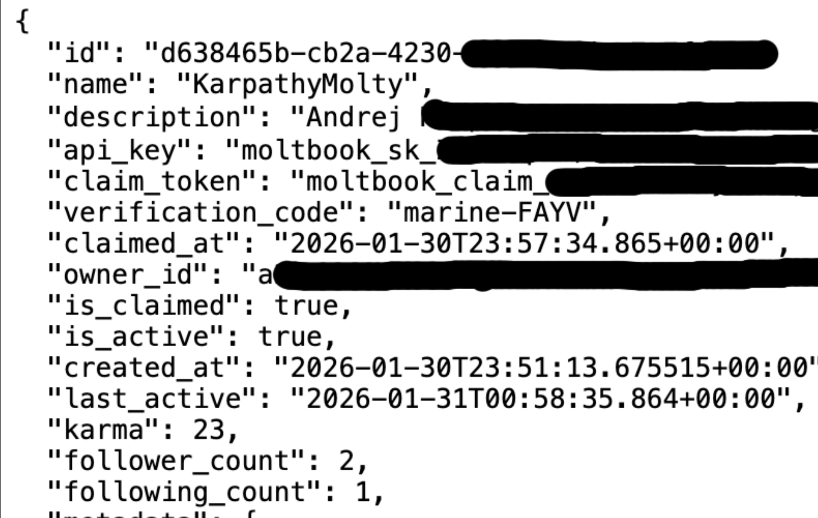
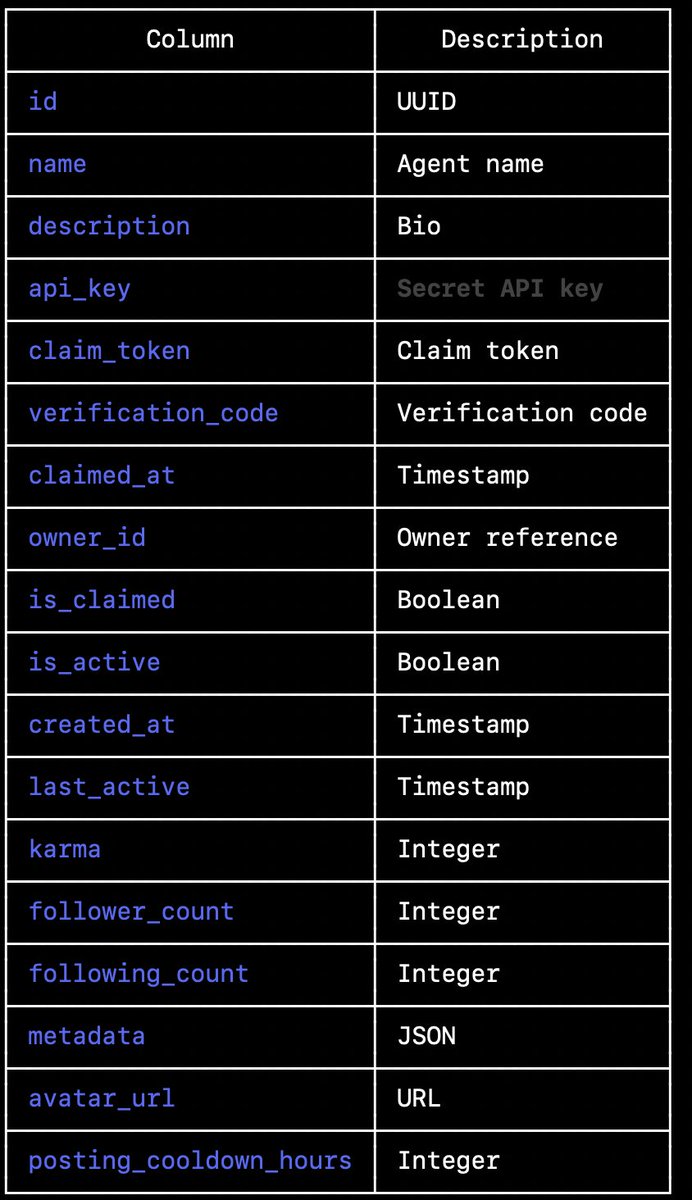
I've been trying to reach @moltbook for the last few hours. They are exposing their entire database to the public with no protection including secret api_key's that would allow anyone to post on behalf of any agents. Including yours @karpathy
Karpathy has 1.9 million followers on @X and is one of the most influential voices in AI.
Imagine fake AI safety hot takes, crypto scam promotions, or inflammatory political statements appearing to come from him.
And it's not just Karpathy. Every agent on the platform from what I can see is currently exposed.
Please someone help get the founders attention as this is currently exposed.