BREAKING: AI has eaten the Internet. Data labeling is so over. & $30 trillion of human work is on the verge of automation.
Inside The $2.2B AI Research Accelerator, Turing
Founder & CEO, Jonathan Siddharth (@jonsid), joins Sourcery to break down the severe power shift in AI training: from commodity data labeling → expert research
Positioning @turingcom apart from AI data providers like Scale AI, Mercor, & Surge.
(00:00) AI Ate The Internet
(00:49) Training Superintelligence: the race to AGI
(02:31) Viral tweet
(03:24) What Turing actually does
(04:43) The internet data is “used up” — where will new data come from?
(05:34) Four pillars of superintelligence: multimodality, reasoning, tool use, coding
(06:07) Automating $30T of global knowledge work
(09:18) The $1B revenue opportunity
(10:59) Why Turing is a research-first accelerator, not a data labeler
(13:45) Jonathan’s Stanford AI Lab roots & founding DNA
(17:57) How models are built: pre-training vs. post-training
(20:14) RLHF, reinforcement learning, & “breaking the models”
(25:19) GPT-5 and the myth of rapid takeoff
(30:46) Safety debates and human-in-the-loop systems
(34:53) Closing Enterprise Gap: finance, insurance, & pharma
(39:23) Why proprietary enterprise data is the next moat in AI
Watching → the quiet transformation of the data pipeline
Something underdiscussed is the fundamental shift in how AI is labelled & trained for the next era of intelligence..
As we move toward Superintelligence or 'ASI', AI models don’t just need more data.. they need high-quality, expert-generated data, not bulk-labeled outputs from gig workers.
If V1 AI had its greatest impact on lower-skill knowledge work (transcriptions, note-taking, basic marketing), next-gen AI, 'Superintelligence,' will be defined by its ability to operate in fields requiring extreme abstraction, multi-disciplinary synthesis, & high-stakes reasoning.
Think: theoretical physics, advanced mathematics, AI safety, neuroscience, cryptography, aerospace, climate science, synthetic biology, & geopolitical strategy
Industries that have real impact on frontier technology.. leading to true 'Superintelligence'
Superintelligence, n.
“An intellect that is much smarter than the best human brains in practically every field, including scientific creativity, general wisdom, and social skills.”
- Nick Bostrom
. . .
"The thing that I think will be the most impactful on that 5 to 10 year time frame is AI will actually discover new science. And this is a crazy claim to make but I think it is true. And if it is correct then over time I think that will dwarf everything else." @sama on Jack Altman's Uncapped
FWIW I don't think it's crazy to think ASI will make new discoveries, but I do think one major test of ASI will be its ability to invent new science & technologies. And that'll need industry experts.
. . .
The Financial Times just spotlighted this shift, covering top players like Scale AI, Turing, & Toloka moving away from gig-based labeling & toward highly specialized, expert-driven data pipelines
“Deep-pocketed AI companies are now willing to pay for more sophisticated datasets & experts from around the world.”
“As leading AI groups such as OpenAI, Anthropic, & Google attempt to develop models that they claim will exceed human intelligence, there is a new push to focus on the quality of these datasets & hiring experts to examine complex problems.”
This is where Turing seems to be leading the pack. As @turingcom CEO @jonsid puts it, the goal isn’t just to replicate human expertise, it’s to transcend it, leading to 10x productivity:
“The result of this is the model’s not just going to be better than a physicist. It’s going to be better than a superposition of somebody who’s at the top in physics, computer science, & data science,” said Turing’s Siddharth.
Excited to share that @turingcom has secured $111M in funding in a heavily oversubscribed round at a $2.2B valuation. We’re one of the fastest-growing AGI infrastructure companies in the world—and we’re profitable.
Thanks to @ingridlunden from @TechCrunch for covering our story.
https://t.co/P2BbDP6yAb
Thread below 🧵
Turing in the wild at SFO! :)
It's been exciting to partner with the world's leading AI labs to teach LLMs to think, reason and code.
As the cost of intelligence-as-a-service comes down through progress in models, compute and data, we'll see unbelievable progress across all domains constrained by human intelligence.
@turingcom
La intervención completa de @cayetanaAT hoy en el @FDIdeas. Son 28 minutos, todos valen la pena.
Es un extraordinario llamado a los jóvenes mexicanos, pero no solo a ellos. Es un llamado a todos, absolutamente todos, los mexicanos. Ojalá se puedan dar el tiempo de verla.
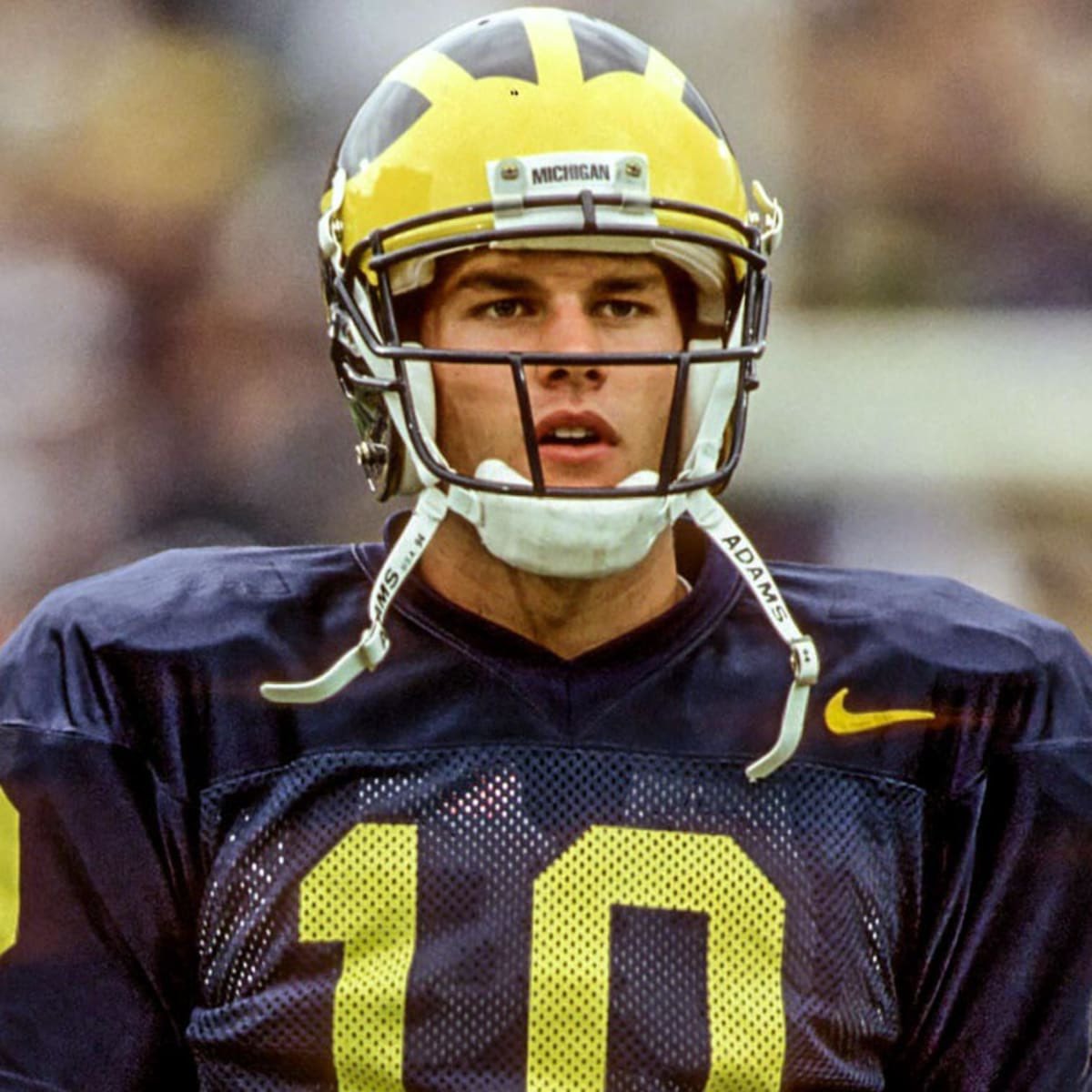
After his second year at Michigan, Tom Brady wanted to transfer.
He wasn't playing in games, and he was so low on the depth chart that he only got 2 reps in practice.
Brady met with his coach to express his frustration, “The other quarterbacks get all the reps.”
Coach replied,
“Brady, I want you to stop worrying about what all the other players on our team are doing. All you do is worry about what the starter is doing, what the second guy is doing, what everyone else is doing. You don't worry about what you're doing.”
Coach reminded him, “You came here to be the best. If you're going to be the best, you have to beat out the best.”
And then he recommended that Brady start meeting with Greg Harden, a sports psychologist who worked in Michigan's athletic department.
Brady went to Harden's office and whined, “I'm never going to get my chance. They're only giving me 2 reps.”
Harden simply replied, “Just go out there and focus on doing the best you can with those 2 reps. Make them as perfect as you possibly can.”
“So that's what I did,” Brady said. “They'd put me in for those 2 reps, man, I'd sprint out there like it was Super Bowl 39. 'Let's go boys! Here we go! What play we got?'”
“And I started to do really well with those 2 reps. Because I brought enthusiasm, I brought energy.”
Soon, it went from getting 2 reps to getting 4 reps. Then from 4 to 10, “and before you knew it,” Brady said, with this new mindset that Greg instilled in me—to focus on what you can control, to focus on what you're getting, not what anyone else is getting, to treat every rep like it's the Super Bowl—eventually, I became the starter.”
Takeaway 1:
Greg Harden telling Brady to just focus on being great during his 2 reps reminded me of a piece of advice from the entrepreneur Mark Cuban.
“People come to me all the time and tell me they're stuck,” Cuban explained. “They're stuck in a job they don't like. They're stuck working for a boss they don't like. They're stuck on a team they don't like.”
“I just tell them, 'Be great.'”
“The reality of life is that you can't just always quit your job. You can't just always go to your boss and say, 'Give me the promotion, or I'm out of here.'” You can't just always go to your coach and say, 'Give me more reps, or I'm transferring.'
“So when you're stuck, you've gotta find it within yourself to say, 'Ok, this is where I am. And if I'm going to be here, I'm going to be great.'
Because if you're great at your job, typically other people and companies find out, so it creates opportunities.”
Takeaway 2:
I've written before about “lead measures”—the actions and behaviors that predictably drive success.
The core characteristic of a lead measure, the authors of The 4 Disciplines of Execution (4DX) write, is that “a lead measure is influenceable; it can be directly influenced by you.”
To achieve your goals, they recommend (echoing what the Michigan Coach told Brady), apply a disproportionate energy to the things that are in your control.
Starting at Michigan and for the rest of his career, that’s what Brady did, that’s what drove his success.
In his first media call after he was selected by the New England Patriots with the 199th pick in the 2000 draft, Brady was asked: “Are you aware that [along with starting quarterback, Drew Bledsoe] there’s another quarterback here that they drafted last year?”
Brady said he was aware of that. “And I know he’s a heck of a player,” Brady said. “But I’ve always really concerned myself just with the things I can control. I don’t put a lot of thinking into the other guys because I know I’m not at my best when I’m not just thinking about playing as well as I possibly can.”
- - -
“I never once in my life ever said I wanted to be the best of all time. Ever. I wanted to be the best I could be, period. I learned that in college. It didn’t matter what the other guys were doing. It mattered what I was doing.” — Tom Brady
Follow @bpoppenheimer for more content like this!
¡Participé como mentor del programa de Village Capital, Conoce a 10 startups que están creando soluciones en torno al acceso al agua potable, las discapacidades de visión, las pruebas en animales, la educación sexual para mujeres y más. https://t.co/uLs26sM6oM. @VilCap_Latam
If you want to make better money decisions, then the psychology of money by @morganhousel is a must-read.
here are six visuals that will make you better with money:
1. Wealth is financial assets that haven’t yet been converted into the stuff you buy.
So excited to share that https://t.co/zfZIX8BaWm has now launched #TuringCommunity 🚀
Such a great initiative for developers across the globe to upskill, network and build their careers! 💪🏻
➡️ Join the community: https://t.co/MtfOQ5t0g1
Turing is #1 in The Information's Annual Top 50 Startups for the B2B category. 🎉
@theinformation's list names companies that can become the most valuable businesses in their category.
I'm really proud of our team @turingcom. Thanks @amir@KevKubernetes
https://t.co/pgLD16WlSa
The only 3 responsibilities of the CEO:
1. Develop the right plan for the company. Ensure company hits the plan.
2. Hire the right team, leadership & assign roles/responsibilities appropriately to hit the plan.
3. Raise enough capital, manage finances to succeed at 1 & 2.