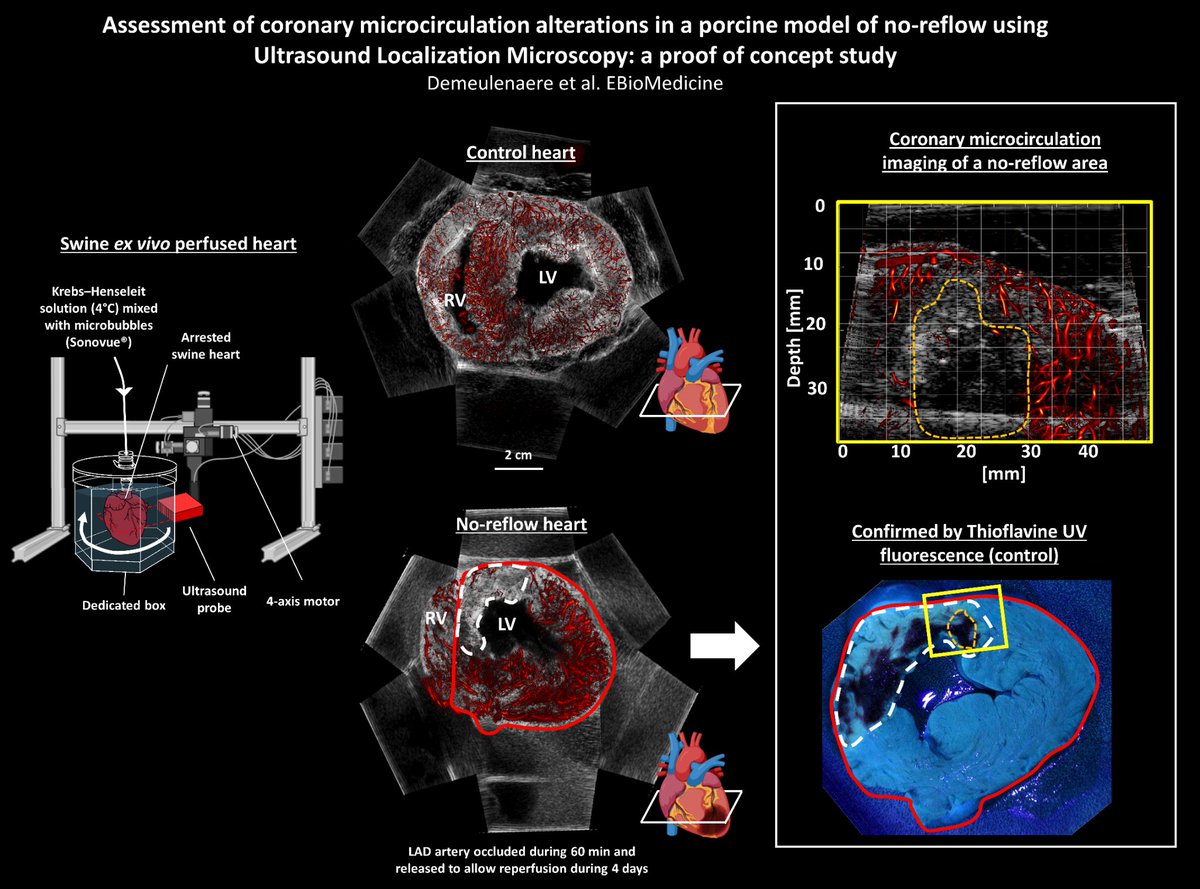
Excited to share our latest work in @natBME : Seeing deep blood flow in humans with sound and laser light. We developed this technology as 'photoacoustic vector tomography,' Check out the link: https://t.co/V6IBqGd0fn. Grateful to Joshua, Anjul @khadriaa and Prof. Wang @Caltech.
I have been dying to share our news and it’s finally here:
@ForestNeurotech and @ButterflyNetInc are teaming up to build the next generation of neurotechnology!
https://t.co/51c7UgHQ4p
Excited to share that our work on closed-loop neuromodulation has been published in @natBME, with me as a co-first author. Huge thanks to #Wei Ouyang for leading this project and my advisor #JohnRogers for continuous support. @SQInstitute @NorthwesternEng https://t.co/oIqqy9tNiB
Artificial intelligence vs. human brain - a love-hate relationship
As AI models (neural networks) have become more performant they have surpassed the human brain at multiple tasks
Neural networks are fundamentally modeled on the human brains.
Here is how they are similar
Neurons vs. Nodes -
Biological neurons - The brain receive signals from other neurons through dendrites, processes them, and then passes them on through axons.
Artificial neurons - Nodes in the network receive inputs, add some mathematical transformation and produce an output. So the fundamental workflow is the same.
Learning mechanisms are similar -
Brain Learning: When we learn, the strengths of the neuron connections (synapses) change. For example, if you touch a flame and get burned, your brain strengthens the "fire = hot & painful" connection.
Network Learning: Neural networks adjust their weights (connections) based on errors in prediction
Layered architecture -
Brain's Hierarchical Processing: The human brain processes information in a hierarchical manner. Different parts of the brain are responsible for different functions.
Layers in Neural Networks: Neural networks, especially deep networks, also employ a hierarchical structure. The initial layers often capture low-level features (like edges in images), and deeper layers capture high-level abstract features.
But while they share these basic concepts, this is where the similarity ends!
AI models excel at
Specific tasks - on narrow defined tasks, AI models can easily outpace the human brain. For example, AI can search the entire web and recollect information from the web way better than the brain
Games - AI models have outplayed humans in some games like Chess and Go
Processing Speed: AI models can crunch numbers and process data much faster than the human brain
However, they are still very behind the human brain in these key abilities
Learning and Generalization - The human brain needs very few examples to learn and can easily apply the learning from one context to another. AI needs thousands of examples to learn and can't easily generalize the learning
Energy Consumption - AI models consume way more energy than the human brain. Your brain only uses about 20 watts, which is like a dim light bulb. Yet, you still get bright ideas!
The Super Cool Stuff - No, GPT-4 is not secretly in love with you! AI models don't have feelings, dreams, consciousness or intuition. This is what makes us human, AI models have none of this!
In summary, the human brain is versatile, creative and adaptable while AI models are brilliant at specialized tasks.
Lately, there has been a lot of hate, fear and loathing of AI models, with some people claiming that AI threatens our very existence
In reality, the human brain is far more sophisticated and complex than AI and we should embrace and love AI models whose creation have been inspired by our brains. They can be great tools that can transform our lives for the better and unlock the mysteries of the universe
Open-3DSIM – the open-source, high-fidelity solution to all kinds of 3D-SIM systems! 3 types of platforms: ImageJ (for experts), Matlab (for engineers), and Exe (for new users). With polarization SIM, it encompasses 6 dimensions (XYZλθT) super-resolution. https://t.co/bpcWkJHCG9
Thrilled to share our work in @ScienceMagazine today. We report a flexible probe that is delivered into the brain through blood vessels without open skull surgery, for neural recording across the vessel wall. @StanfordEng@HarvardCCB @MGH_RI @StanfordMed https://t.co/iT7AFaXPdL
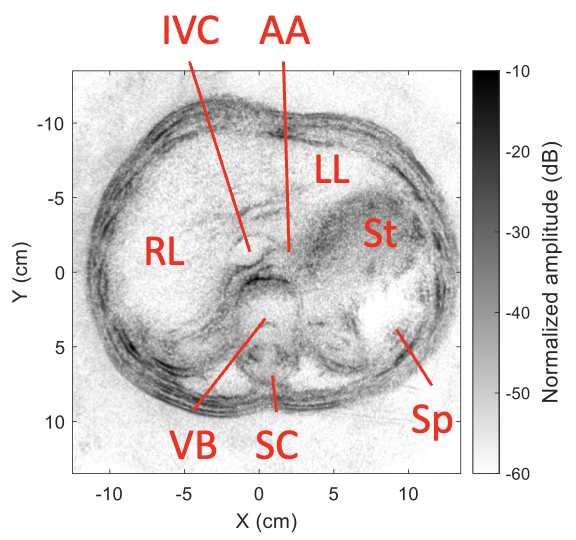
Here's a sneak peek of our work on whole-body ultrasound imaging. Safe and fast cross-sections of the entire human abdomen! With the talented Jinhua Xu @JXHToad
https://t.co/5IP1u3d4e1
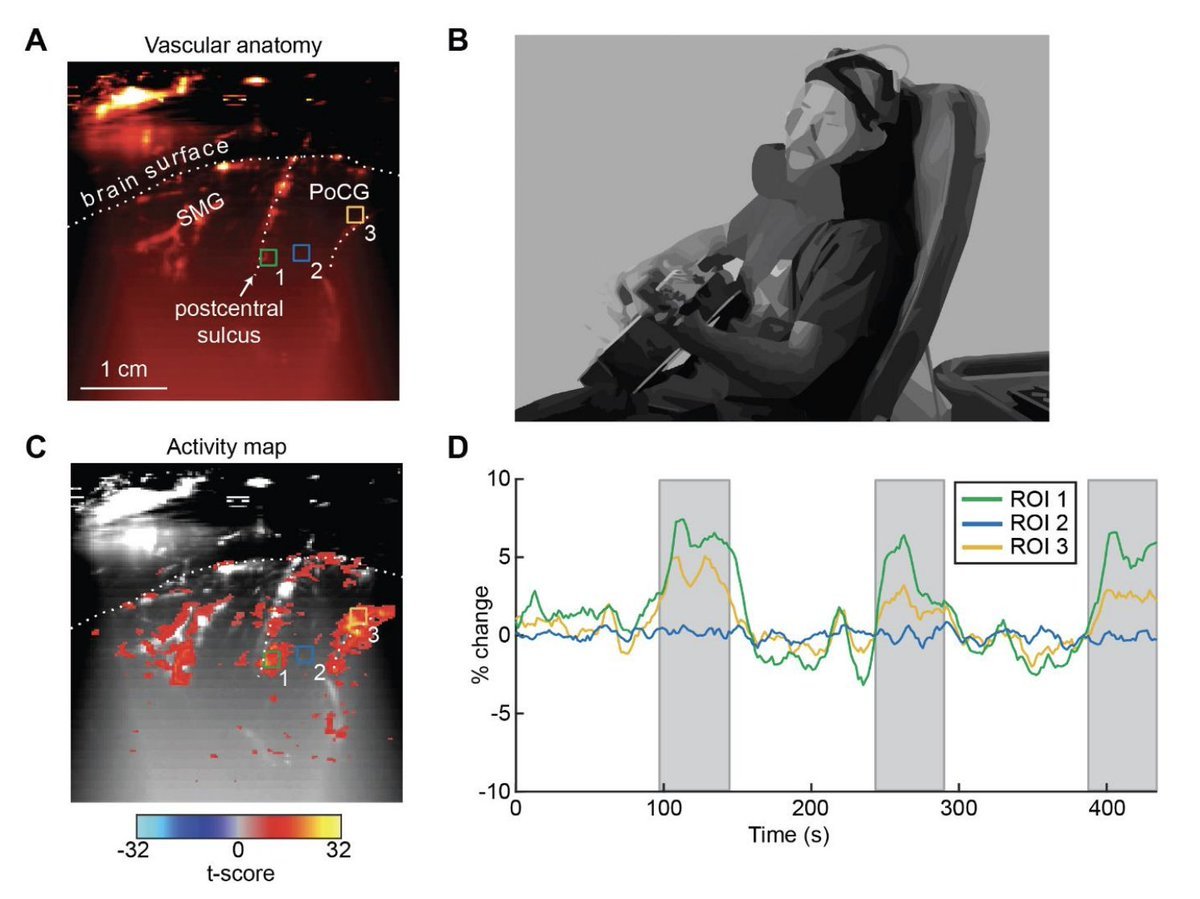
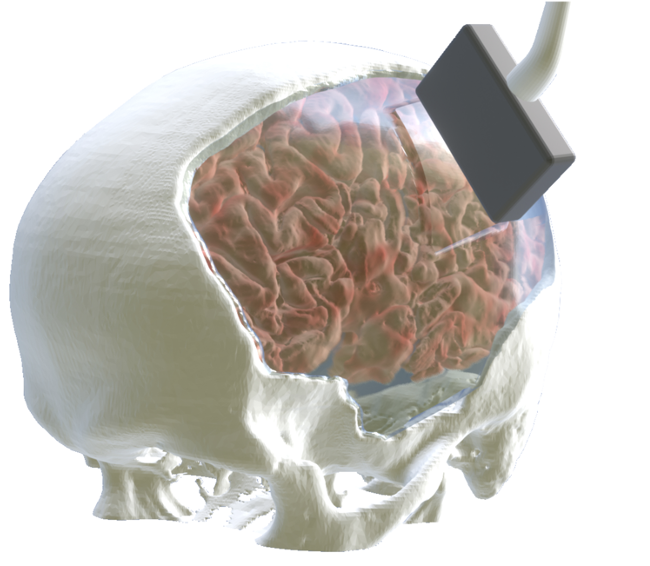
Can we image and decode brain activity with ultrasound noninvasively in adult humans? Yes, by installing a permanent customized acoustic window.
Congrats to Claire Rabut, @SumnerLN, @WhitneySGriggs and collaborators on this advance.
https://t.co/zz4Pj7I7OP
This is a truly multidisciplinary collaborative effort! I'm thrilled to be working alongside my incredibly talented postdoc, Yaoheng (Mack) Yang, who is leading the way. Grateful for the guidance of my outstanding collaborators @BrestoffLab@mbruchas @LexKravitz, and Jianmin Cui.