🐟 Nothobranchius furzeri ⏳ The African turquoise killifish lives fast and develops faster! Its embryos can enter diapause, making it a powerful model to study developmental arrest, environmental adaptation and aging 🧬✨ 📸 Image by Alexander Schier lab. #ModelMonday#DevBio
⭐️ A stony coral, Montipora capitata, primary polyps, one month of age. Autofluorescence of symbiotic algae (magenta) and GFP (green). 🔬
📸 Credit: Emma Rangel-Huerta from Stowers Institute for Medical Research
#FluorescenceFriday#devbio#cnidarians 🪸
**Preprint Alert**: How do we measure resolution when biomolecules won't sit still? 🔬
Estimating it for a static cryo-EM reconstruction is standard. But what about a conformational ensemble?https://t.co/yGOVr2O0pk with the amazing @HenryHMattingly and
@lukeevanshandle#cryoEM
The biophysicist Mazi Jalaal finds math and physics problems inside plant cells. “There are so many physics problems that these organisms have to solve during the course of evolution,” Jalaal said. https://t.co/d4HDOi3xS9
Congratulations to @DeepaHRajan for this masterpiece of creative science - identifying key molecular players in single-cell learning in Stentor! This comes on top of her other three papers on Stentor habituation, which I also recommend reading!
We just preprinted one of my favorite studies @FlatironInst. I was lucky to be part of an amazing team studying the effects of rapid cooling to preserve samples in cryoEM. Read on to learn about the limits of cryoEM for biophysics and how to overcome them https://t.co/nYXsIs88Hf
Each tubule of fungal root systems is about one-tenth the width of a human hair. New technology has allowed scientists to glimpse nutrients flowing through them for the first time. It’s revolutionizing the field.
https://t.co/Gbro2R2d32
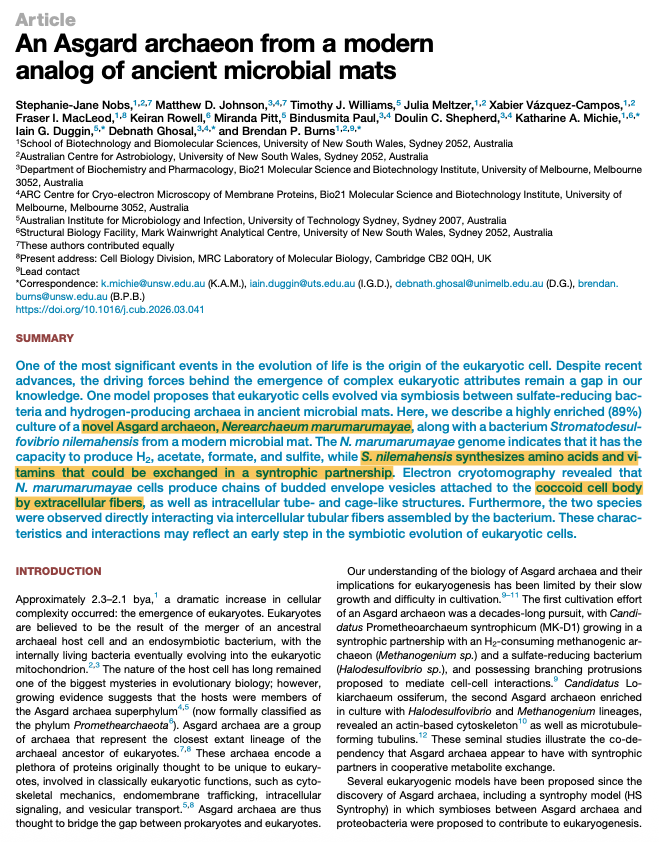
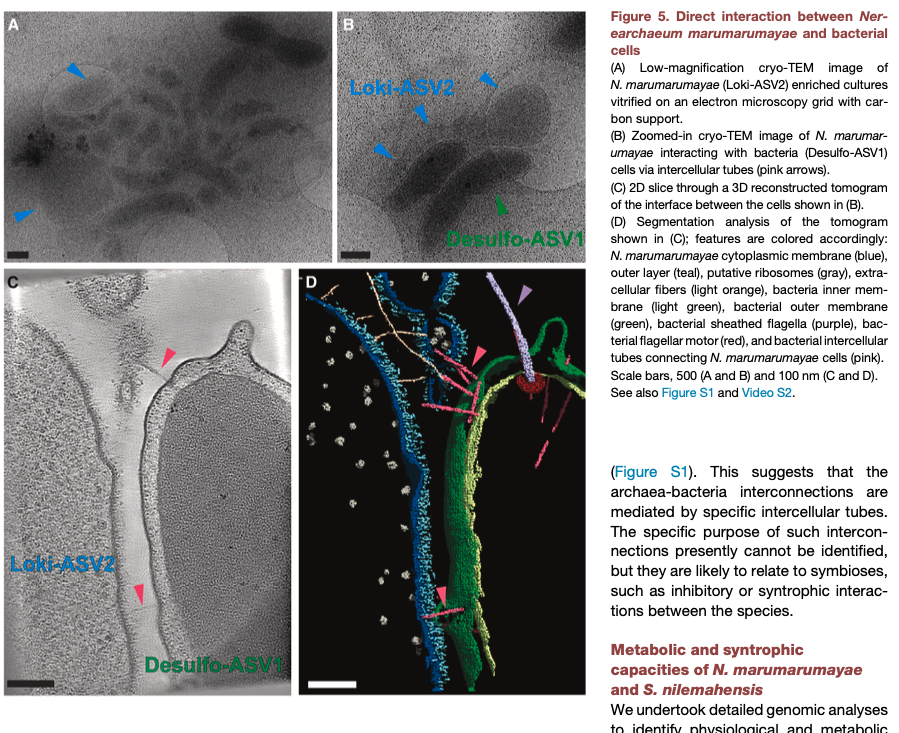
New Asgard paper dropped yesterday. This is only the third Asgard archaeon to be cultured in the laboratory (the first took 10+ years of work.)
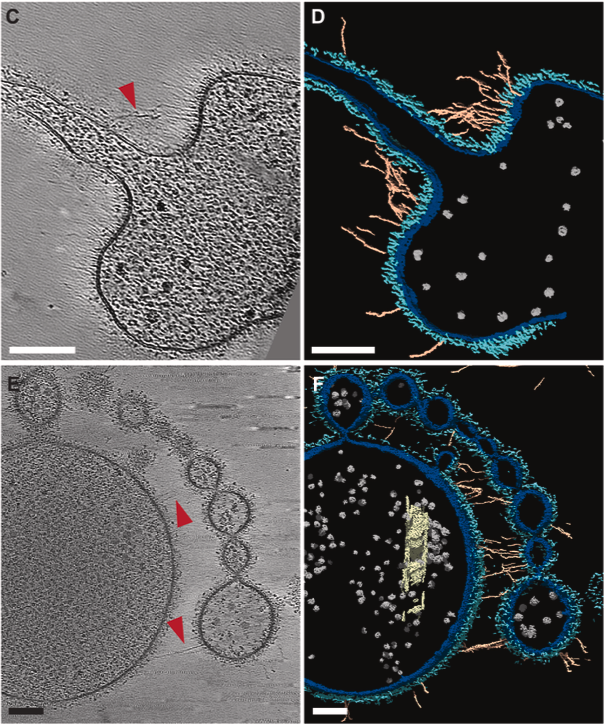
Many microbiologists think that the Asgard archaea are the closest living relatives of the ancestor that gave rise to eukaryotic cells. They have cellular features that "bridge" bacterial and eukaryotic cells. And this new Asgard species, found off the coast of Western Australia, is interesting for a couple reasons:
1. The Asgard buds off extracellular vesicles, like many other organisms. But these vesicles remain "tethered" to the main cell via a thin fiber. You can see this clearly in the cryotomography images below. I've never seen other examples of this (but maybe microbiologists on Twitter have.)
2. Asgards cannot be cultured on their own. All of the species cultured thus far can only be grown in the presence of a syntroph. This Asgard can only be cultured with a microbe, called S. nilemahensis. The Asgard makes acetate, formate, and lactate for the bacterium; the bacterium, in exchange, makes amino acids and vitamins for the Asgard. (The archaeon seems to entirely lack metabolic pathways for arginine, proline, phenylalanine, and tryptophan.) These nutrients are exchanged via hollow tubes that physically context the Asgard --> bacterium. (See the images below.)
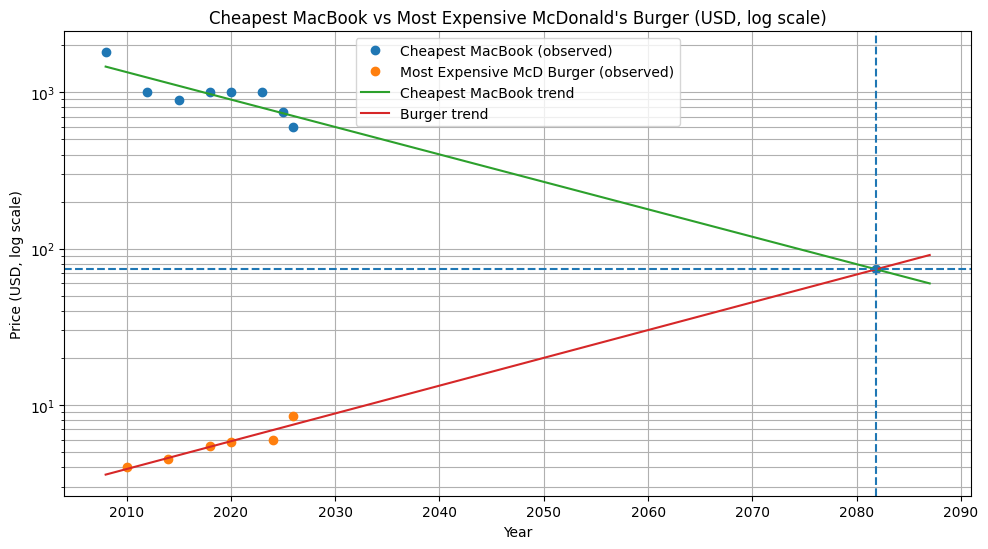
I've plotted the most expensive McDonald's burger and the least expensive MacBook over time. This analysis projects that the most expensive burger will be more expensive than the cheapest laptop as soon as 2081
Mechanisms to overcome instability in early embryo cell division differ in zebrafish & fruit flies: species-specific mechanisms orchestrated by cytoskeletal microtubules in both
📹 Melissa Rinaldin et al, TU Dresden in @Nature
➡️ https://t.co/9ovNuwQAZE
Our work on studying the organization of the human metaphase spindle is now published in PNAS 🎉🎉 https://t.co/hzzuK99ZmK
Joint work with @colmpkelleher under the #CCBx initiative @FlatironInst
🧵1/6