We’re sharing a solution to the Navier-Stokes Millennium Prize Problem, one of the deepest problems at the frontier of mathematics.
The proof was produced by a group of agents, using an OpenAI next-generation model significantly more capable than GPT-6 Astra.
The problem concerns whether the description of smooth three-dimensional fluid motion modeled by the Navier-Stokes equations can break down. It has remained unresolved for roughly 90 years.
Today we're showing Helix 02 that can tidy a living room fully autonomously
Figure is designed so when you leave the house, your home resets exactly how you like it
It’s an honor of my life that my beloved alma mater @Princeton University has selected my book “The Worlds I See” as this years’s freshman Pre-Read! This book is about my journey of finding the Northstars in AI. And I wish every single incoming college students, Princetonians or not, will have the passion, curiosity, courage and perseverance to find your own Northstar! 🤩
National Lab (LBNL) results support LK-99 as a room-temperature ambient-pressure superconductor.
Simulations published 1 hour ago on arxiv support LK-99 as the holy grail of modern material science and applied physics.
(https://t.co/UOOtDlx3eE)
Here's the plain-english explanation:
- The simulations modeled what the original Korean authors proposed was happening to their material - where copper atoms were percolating into a crystal structure and replacing lead atoms, causing the crystal to strain slightly and contract by 0.5%. This unique structure was proposed to allow this amazing property.
- @sineatrix from Lawrence Berkeley National Lab simulated this using heavy-duty compute power from the Department of Energy, and looked to see what would happen to the 'electronic structure' of this material, meaning, what are the available conduction pathways in the material.
- It turns out that there are conduction pathways for electrons that are in just the right conditions and places that would enable them to 'superconduct'. More specifically, they were close to the 'Fermi Surface' which is like the sea-level of electrical energy, as in '0 ft above sea-level.' It's believed currently that the more conduction pathways close to the Fermi surface, the higher the temperature you can superconduct at (An analogy might be how its easier for planes to fly close to the surface of the ocean due to the 'ground effect' that gives them more lift.)
This plot in particular shows the 'bands', or electron pathways, crossing above and below the Fermi surface.
- Lastly, these interesting conduction pathways only form when the copper atom percolates into the less likely location in the crystal lattice, or the 'higher energy' binding site. This means the material would be difficult to synthesize since only a small fraction of crystal gets its copper in just the right location.
This is insanely bullish for humanity.
The ultimate purpose of education is to change an empty mind into an open one.
If you wanna be a good teacher, teach open-mindedness, teach enthusiasm, inquisitiveness, heuristics, and values. 🧠
The Chinese internet has more than 900 million users - larger than the populations of the US, Russia, the UK and more combined.
Get SCMP Research's free China Internet Report 2020 for insights into tech trailblazers and important trends: https://t.co/CufWmzs5Rr
A non-linearity that works much better than ReLUs. The work described in this video might also be relevant to understanding grid cells.
https://t.co/YlV9j79fgi
US digitization has improved rapidly during the pandemic (e.g., food delivery, online meetings, online education), which is good for AI applications. On the other hand, Chinese research in AI has also improved significantly.
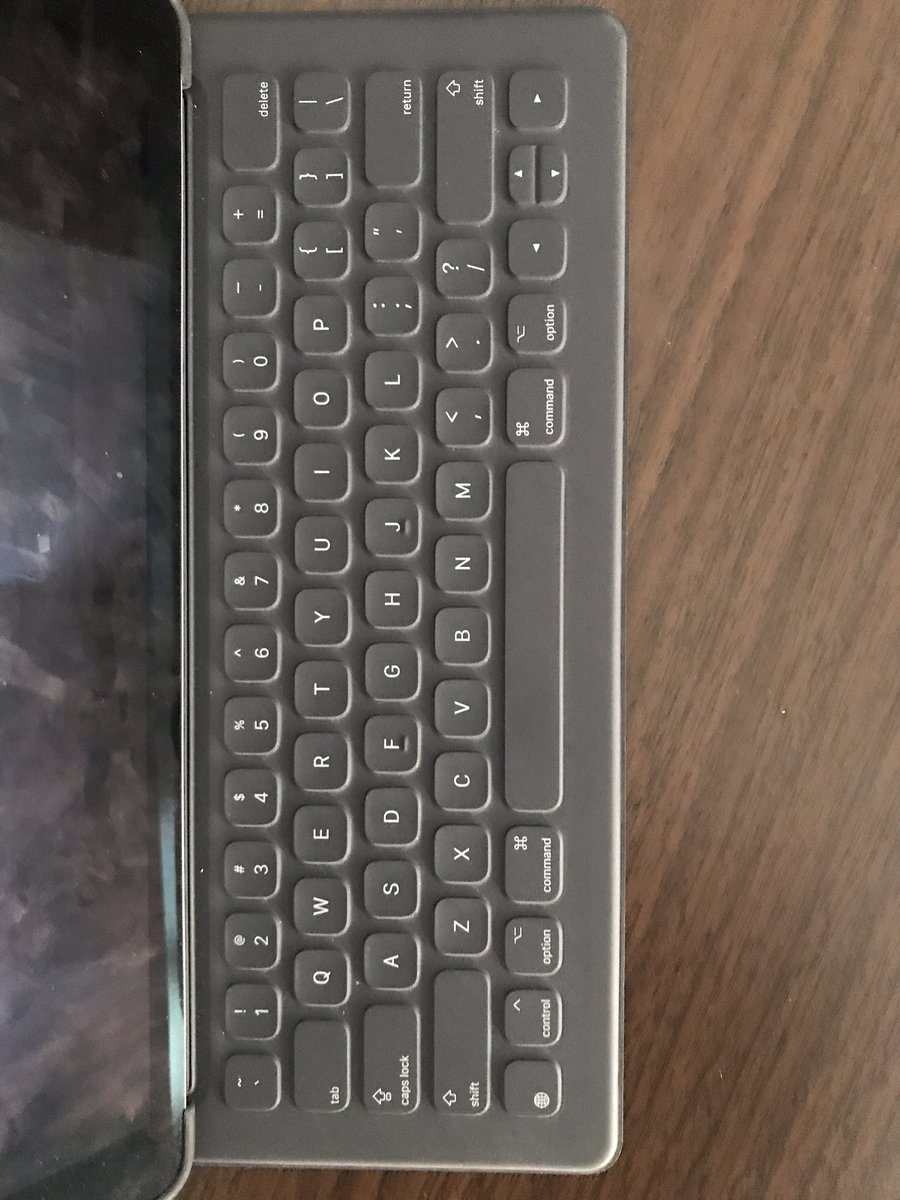
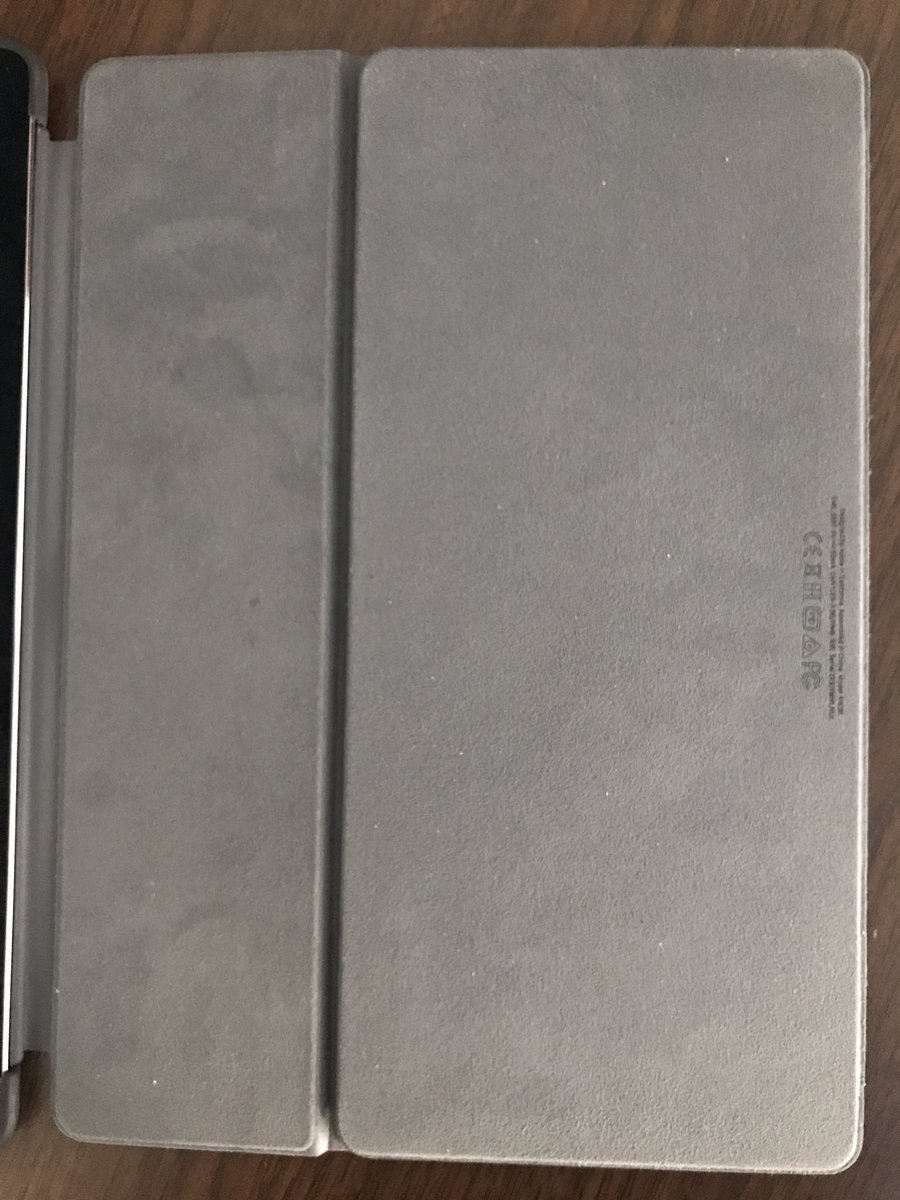
Dear Mr Tim @tim_cook , the smart keyboard that I bought in 2018 recently have difficulty to connect to my Ipad pro. It always says "this accessory is not supported by this device. " I checked online. A lot of people are also suffered from this problem. 😟