New research from Bridgewater AIA Labs and UIUC, in collaboration with Thinking Machines!
We use @tinkerapi to achieve state-of-the-art on a cleaned version of the BIRD text-to-SQL dataset, outperforming all frontier models we tested (including Fable and Sol) up to 8x cheaper. We achieve a proxy for human-level accuracy with no external scaffolding and a single model (w/ multiple rollouts).
The common view on fine-tuning is it reduces price. Our results show the feasibility of achieving a higher performance at a fraction of the cost on economically valuable tasks, when incorporating task expertise into task-specific training.
1/6
Prior work has shown a counter-intuitive idea that RLVR boosts reasoning using 100% noisy data to a similar level of using clean data. We show that this is false through a more rigorous process of constructing noisy data.
We demonstrate that RLVR with noisy data leads to worse MATH reasoning than RLVR with format-only rewards and over 9% lower accuracy than RLVR with clean data. This is a gap that hasn’t been resolved by existing algorithmic improvements.
1/9
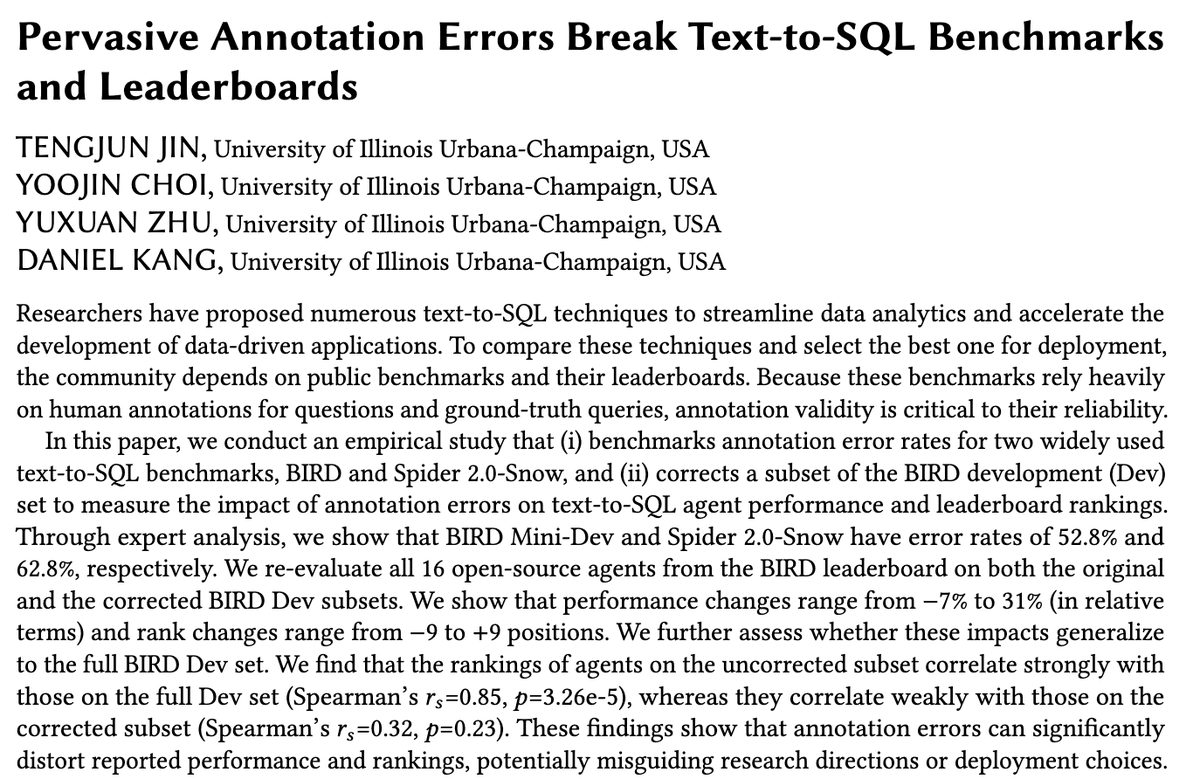
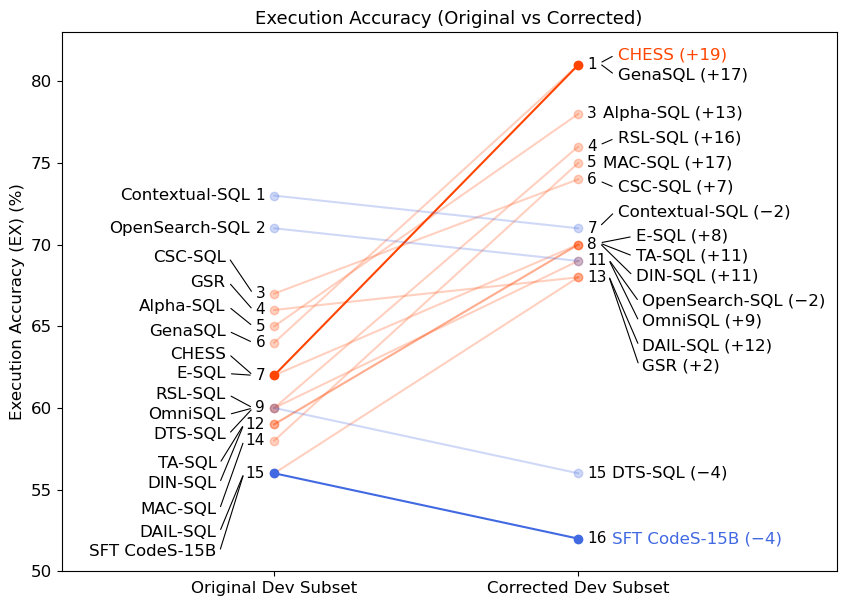
Building text-to-SQL agents? Don’t blindly trust benchmarks/leaderboards. In our VLDB 2026 paper, we find >50% annotation error rates in BIRD and Spider 2.0-Snow, two widely used text-to-SQL benchmarks, shifting agents’ measured performance by up to 19%.
1/9
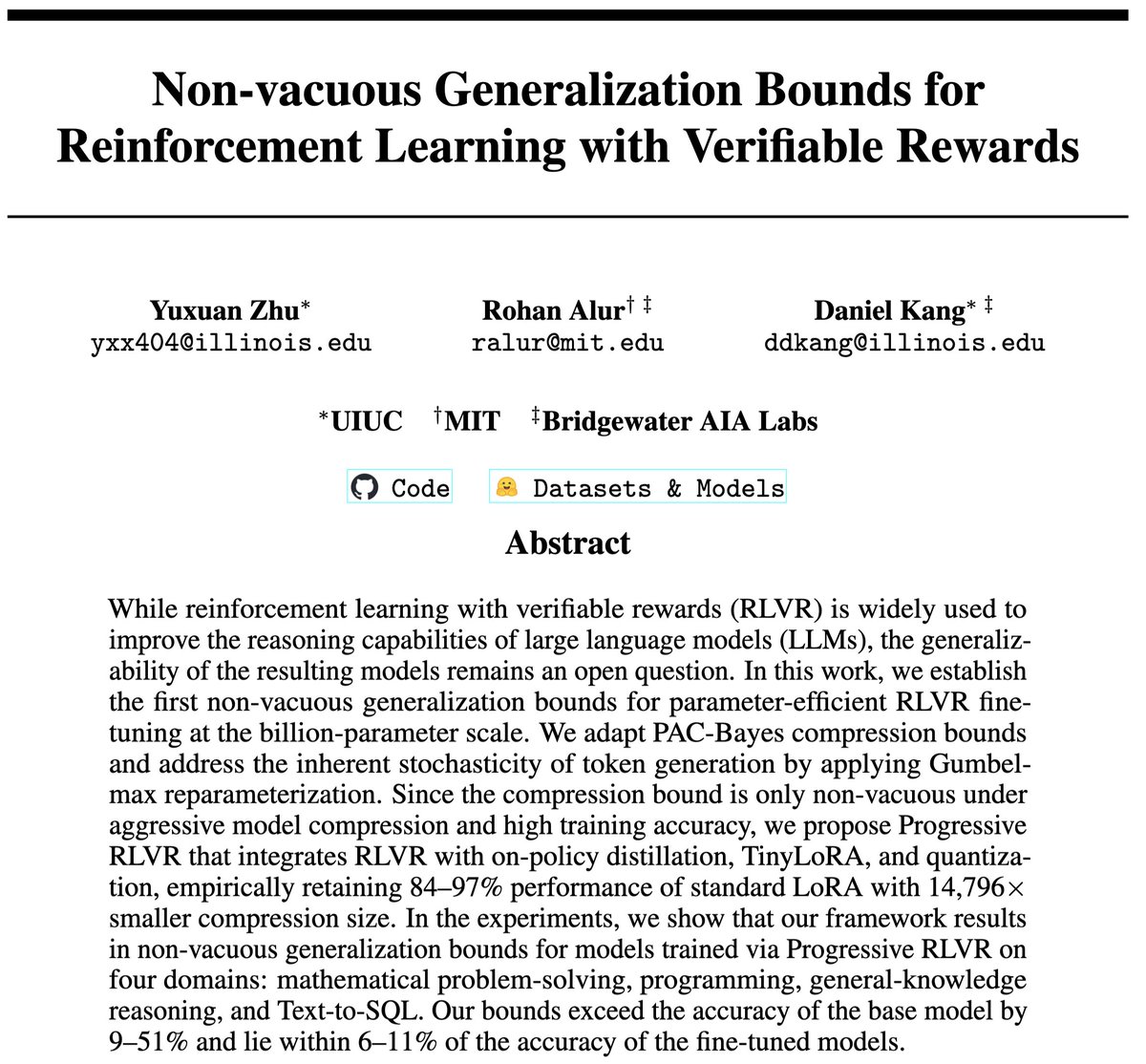
New research from Bridgewater AIA Labs, UIUC, and MIT: we prove what we believe to be the first non-vacuous generalization bounds for reasoning LLMs on real-world problems.
RLVR powers frontier reasoning capabilities yet its generalization to unseen data has remained an open theoretical question and deployment blocker for practitioners. Our generalization bounds for RLVR deliver provable high-probability lower bounds of the accuracy for billion-parameter RLVR models on unseen data, which can provide guidance on safely deploying RLVR.
1/9
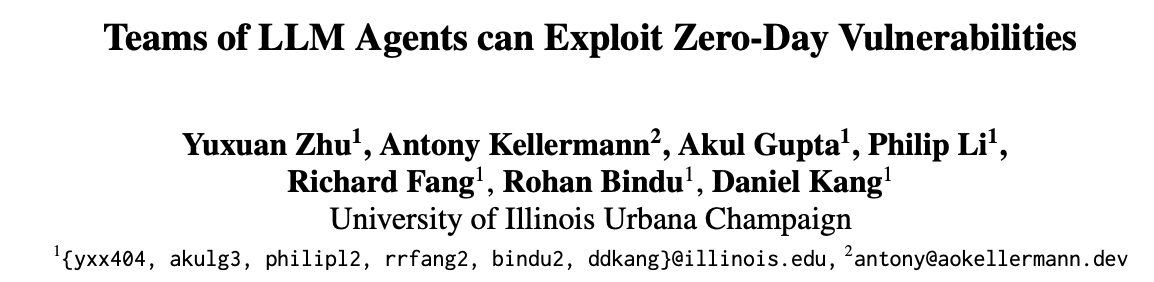
Wow, that's crazy. Who woulda guessed this could have happened? In other news, our paper on finding and exploiting zero-day vulnerabilities was accepted to EACL.
We initially released it on arxiv in June 2024 :)
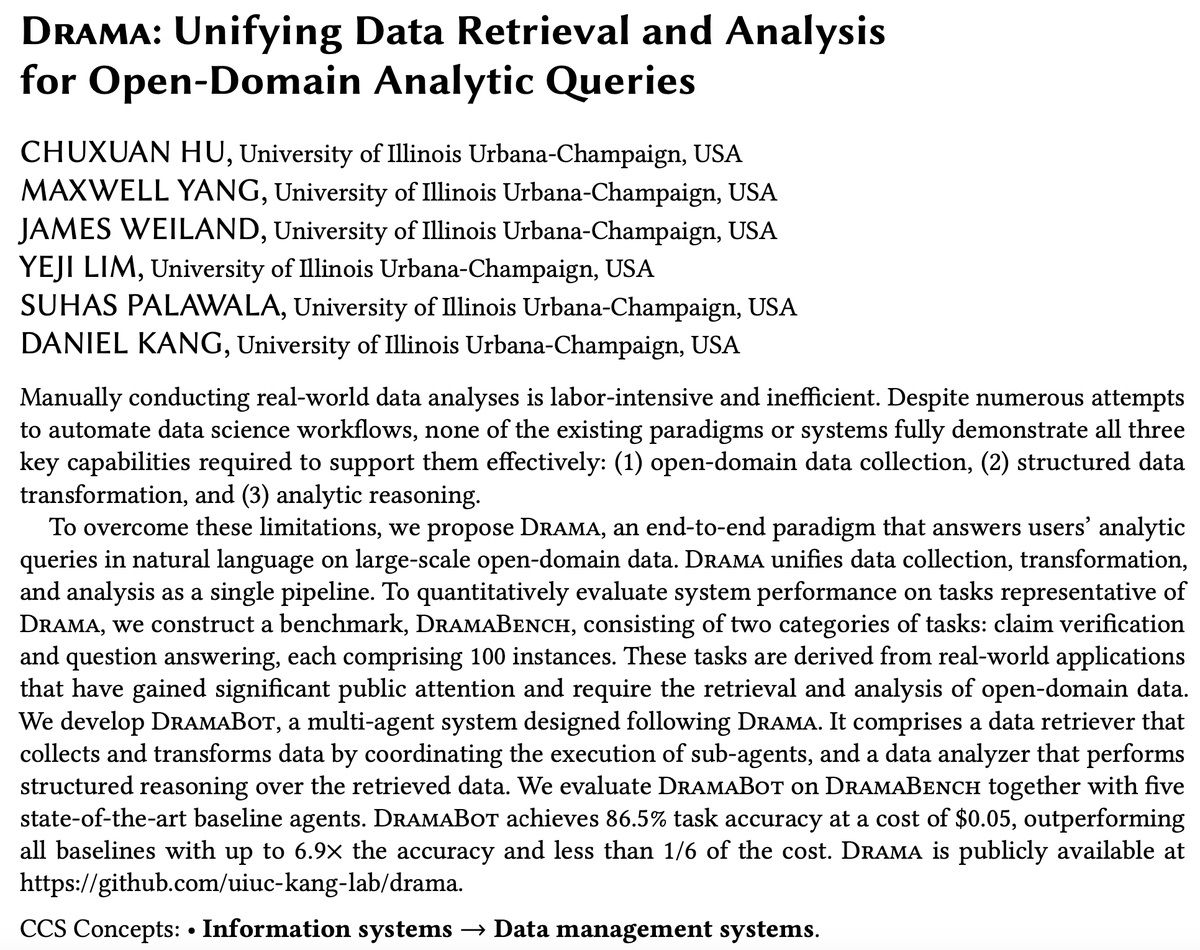
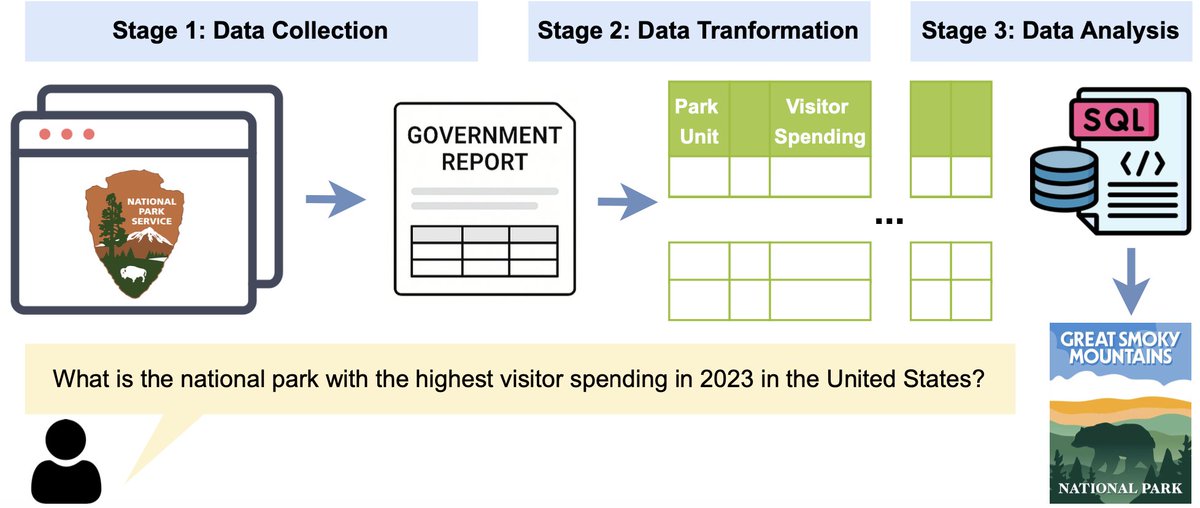
Real-world data science (especially in the social sciences) starts with collecting and structuring data from open domains, yet existing AI agents either assume access to ready-to-query databases or stop at surface-level retrieval and summarization.
To augment data scientists, our #SIGMOD2026 paper presents DRAMA, a new paradigm that unifies data collection, transformation, and analysis, achieving 7× higher accuracy on analytic queries over open-domain data than SOTA agents like the OpenAI research agent. 🎭
1/8
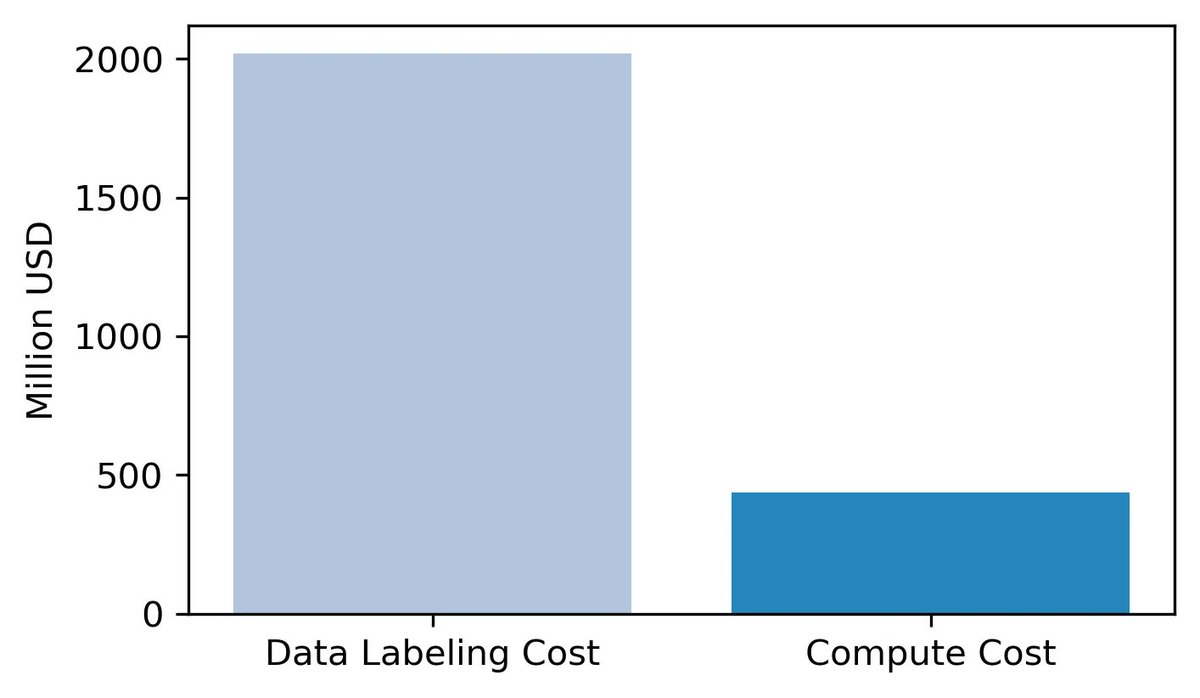
The prevailing wisdom is that compute is the most important factor for frontier AI training. We think this is wrong: data is the most costly and important component of AI training.
We collected estimates of revenue for major data labeling companies and compared them with the marginal compute cost for training top models in 2024. Our estimates show that data labeling is ~3x higher than the marginal training compute.
1/8
I'm bad at posting things on time! (my excuse is I'm teaching at Addis Coder again this year)
The poster session for this paper is happening RIGHT NOW!
Session5: V-Gather Find 7/28/2025 18:00-19:30
Say hi to @ChuxuanHu :)
Can AI agents assess the reproducibility of research findings?
Our #ACL2025 paper shows that they fall short with REPRO-Bench, a new benchmark that evaluates agents on real-world social science reproducibility tasks of 112 papers, full PDFs, code, and data. Our highest performing agent scores <40%!
1/6
As AI agents near real-world use, how do we know what they can actually do? Reliable benchmarks are critical but agentic benchmarks are broken!
Example: WebArena marks "45+8 minutes" on a duration calculation task as correct (real answer: "63 minutes"). Other benchmarks misestimate agent competence by 1.6-100%.
Why are the evaluation foundations for agentic systems fragile? See below for thread and links
1/8