$RGR Shareholders: The "Strategic Cooperation" with Beretta is not a smoke screen for management stagnation.
I’ve issued a formal demand for accountability.
Read my full letter here: https://t.co/qnYENkcJu2
$RGR #ActivistInvesting#ShareholderRights
$RGR Shareholders: The "Strategic Cooperation" with Beretta is not a smoke screen for management stagnation.
I’ve issued a formal demand for accountability.
Read my full letter here: https://t.co/qnYENkcJu2
$RGR #ActivistInvesting#ShareholderRights
@JoshYoung Investors haven't felt pain in almost 20 years and now they've been lulled into thinking that pain doesn't exist in markets anymore. Meanwhile the biggest black swan in history has already happened and they refuse to look. They deserve to lose everything.
@compound248 $KHC Taste enhancement will be needed with all the good food (beef, et al) getting too expensive.
$CALM Cheap high-quality protein is valued by the American eater.
$MTN Hard to replicate the great ski runs of the American and Canadian west.
$FUN in the real world still sought.
@compound248 $TAP "Reports of the American beer drinker's death have been greatly exaggerated."
$WY $RYN You can't print more American woodlands.
$CRON Nearly 100% of its market cap in cash, no debt, in a growing, nascent industry where brand (Spinach is theirs) currently means nothing.
🔎Do we have a bubble in premium brick-and-mortar?
Their stocks are soaring. But it's primarily multiple expansion, not positive business inflection. Some of them are extremely well managed. But they are also riding a macro wave that will end.
- Since July 1, 2023, $COST is up 93%. $WMT is up 150%. $ROST is up 103%. $TJX is up 98%. $CASY is up 207%. These companies run very simple, actually dull business models. They own physical locations where consumers can get their staples. Yet they have handily outperformed the S&P 500 which advanced ‘just’ 50% during that period. And they didn’t start this run from distressed valuations. Most of them had performed very well for years before.
- This is not normal. Some of these stocks have charts like Biotech companies that found cancer cures. For the most part, their businesses haven’t even inflected positively. Many of them haven’t grown faster recently than before the pandemic. Margins haven’t expanded either. The majority of their share price performance is multiple expansion.
- The change is mostly in value perception. The post-pandemic bull market has coincided with a dramatic value shift among B2C businesses. Successful brick-and-mortar retailers have captured value previously owned by large consumer brands. Value is not assigned anymore to those who give products their identity. It goes to those who actually deliver them to paying customers.
- Well-managed brick-and-mortar retailers get that value because they are perceived as more defensive than other B2C businesses. They have also rerated due to their suitability as inflation hedges. They have great customer bargaining power, fast inventory turnover and their private labels win when consumers are hit by an unexpected inflation surge. Some of them have also demonstrated strong cash management with falling inventories in relation to their revenues which releases cash and boosts profits.
- We are living in a K-shaped economy where many B2C businesses struggle to find willing and financially able customers. They need help from distributors. That’s why the ad businesses of $META and $GOOG work so well in the digital world. Retailers are doing well in the physical world for the same reason.
- There is no bear case for Walmart and Costco. Everyone loves them. And that is in my opinion the bear case. There are tons of possible reasons why either their operating performance might disappoint in the future or why one shouldn’t pay more than 40x for their earnings. I have discussed five of those reasons in this article.
Link to full article in bio and below.
BREAKING: Traders placed a series of bets worth $430 million on a drop in crude prices just 15 minutes before U.S. President Donald Trump said he would extend a ceasefire with Iran.
It is the third time this month, and the fourth in total, that large, well-timed directional bets on the oil price have been made shortly before major announcements on the Iran war.
The traders gained millions.
Unusual.
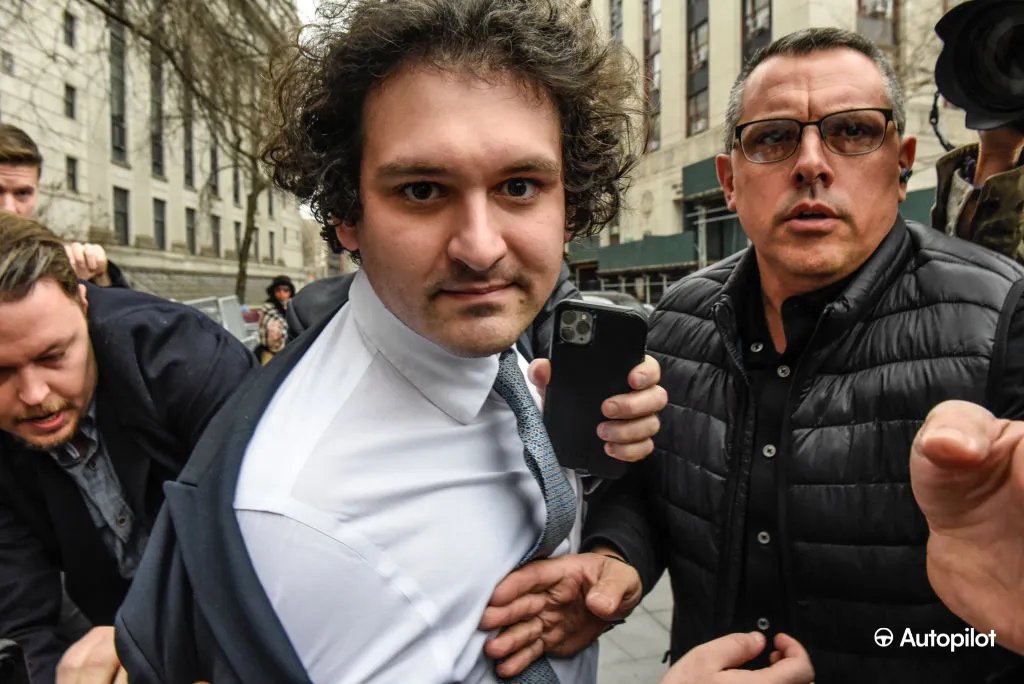
If Sam Bankman-Fried did nothing illegal, he might have been the best VC in history
What SBF bought vs. what it's worth today:
• Cursor: ~$200K → ~$3B (+1,499,900%)
• Anthropic: ~$499M → $82.3B (+16,400%)
• SpaceX: ~$200M → ~$15B (+7,400%)
• Solana: ~$189M → $5.1B (+2,600%)
• Robinhood: $612.5M → $4.9B (+700%)
• Genesis Digital: $1.17B → $3.5B (+200%)
Had he done nothing wrong, he'd have an estimated worth of $114,000,000,000 today
Instead he's tweeting from Federal Correctional Institution
🚨 THIS IS INSANE.
Commerce Secretary Howard Lutnick's sons could be making 3 to 5x returns on every dollar they spent buying tariff refund rights.
Cantor Fitzgerald, now run by Lutnick's sons Brandon and Kyle, was buying tariff refund claims from companies at 20 to 30 cents on the dollar.
The firm told clients it had "capacity to trade up to several hundred million" in these claims.
They confirmed at least one $10 million trade was already executed as of July 2025. They said they expected that number to "balloon in the coming weeks." That was 9 months ago.
Today those claims are worth 100 cents on the dollar. The refund portal is live, $166 billion in refunds are being processed.
If Cantor bought $100 million in refund rights at 25 cents on the dollar, they spent $25 million.
They now collect $100 million from the government. That is a $75 million profit. A 300% return.
If they scaled to "several hundred million" as they told clients they could, the profits run into the hundreds of millions.
Howard Lutnick was the architect of the tariff policy.
He pushed Trump to impose them. He fought against officials who wanted to limit them. Then he left Cantor Fitzgerald to his sons and transferred his equity into a trust benefiting them.
Tax free under government ethics rules. He received $360 million from the buyout.
His sons positioned the firm to profit from the exact policy their father built.
Their father publicly championed tariffs he knew could be struck down while his sons were buying refund claims betting they would be.