Prediction: within 12 months, top three models will be open source.
Economic winners will be the American clouds that serve them:
Nebius
Iren
Baseten
Together
Fireworks
Market loves to throw narratives at $IREN but @danroberts0101 has held firm and those who have stuck with him are happier about the company's trajectory than they have ever been:
Market: "Sell Sweetwater."
Dan: "No."
Result: Sweetwater might be the most valuable uncontracted datacenter capacity on the planet right now.
Market: "Do colo."
Dan: "No."
Result: IREN has shorter payback periods on fully loaded capex and unencumbered datacenter assets it owns freely and can re-contract 4-5x before the initial colo deals even expire.
Market: "Do wen deal."
Dan: "No."
Result: IREN can now contract closer to commissioning at pricing that is nearing $SPCX pricing levels.
Market: "Do only hypers."
Dan: "No."
Result: IREN has a significantly diversified client base that now includes not just $MSFT (Satya), but $NVDA (Jensen), Prometheus (Bezos), FigureAI (another robotics play), a number of AI natives, and a large leading frontier lab that mgmt. has confirmed is 1 of 2 (i.e., Anthropic or OpenAI). And direct to enterprise is the real growth opportunity and it's coming.
Some of these narratives even I have wanted Dan to cave to at times and I've been wrong. Where I've been right (at least for my own personal situation) is staying invested and trusting the team.
The last narrative that gets thrown at IREN mgmt. is their comp plans, specifically the lack of performance hurdles. Every day that passes I'm more ok with the structure. The biggest risk to the equity is overlevering and many performance hurdles incentivize excess leverage to speed up outcomes. Long dated vesting actually serves to mitigate this risk of overlevering. Would I still have preferred hurdles? Yes, but I'm also ok being wrong about that if they continue to prove the market narratives wrong and execute.
The next 12-18 months are execution season for IREN and I'm excited for it. NFA / DYOR.
Congratulations to @IREN_Ltd on achieving NVIDIA Exemplar Cloud status for its NVIDIA GB300 NVL72 deployment.
This validation reflects close engineering collaboration and gives enterprises confidence that demanding AI workloads can perform reliably at scale on IREN’s AI Cloud.
Learn more ⤵️
Horizon 1: delivered.
IREN has delivered Horizon 1 to Microsoft and achieved NVIDIA Exemplar Cloud status on NVIDIA GB300 NVL72.
Read more: https://t.co/ItVXSXK1V7
No really.
THIS IS IT!
It could not get more obvious.
$500B of third-party capital for the buildout of "AI Infrastructure" over time.
IREN is at the epicenter of NVIDIA's plans to accelerate the deployment of AI infrastructure.
NVIDIA (NASDAQ: NVDA) and IREN Limited (NASDAQ: IREN) (“IREN”) today announced a strategic partnership to accelerate deployment of next-generation AI infrastructure.
NVIDIA and IREN will collaborate on deployment of NVIDIA accelerated compute in DSX AI factories to expand access to AI-native, startup and enterprise customers.
Today's announcement:
“NVIDIA has reached an important milestone. We began by building chips; today, we are helping create a new class of productive, investable infrastructure: AI factories,” said Jensen Huang
“As our strategic partner, NVIDIA is enabling us to scale AI factories. We are excited about further collaboration to build and fund the backbone of AI globally,” said Bruce Flatt, CEO of Brookfield
“The AI buildout will require unprecedented investment and a skilled workforce to turn that investment into the infrastructure that will help power future growth,” said Larry Fink, Chairman and CEO of BlackRock
We continue to be enormous investors globally across the NVIDIA ecosystem, and this announcement further underscores our confidence in their platform and the future of AI infrastructure.” Jon Gray, President and COO of Blackstone
THIS. IS. MASSIVE. FOR. $IREN.
My increasingly strong opinion is that compute is the biggest moat in AI.
Scientific breakthroughs don’t stay secret for long. Papers get published, researchers move, ideas leak, open source catches up. Give it enough time and almost everyone has access to roughly the same algorithms.
What doesn’t diffuse nearly as fast is the ability to run 10x bigger training runs, collect 10x more RL experience, serve billions of inference tokens, and iterate faster because you can afford thousands of experiments in parallel.
Scaling compute is brutally hard. It’s GPUs, power, substations, networking, cooling, land, permits, supply chains… and hundreds of billions of dollars. You can’t just decide to build that overnight.
The more I look at the industry, the more it feels like the frontier is less about having one genius idea and more about who can compound compute the fastest. Scaling laws reward whoever can keep scaling. That’s a very hard moat to replicate imo!
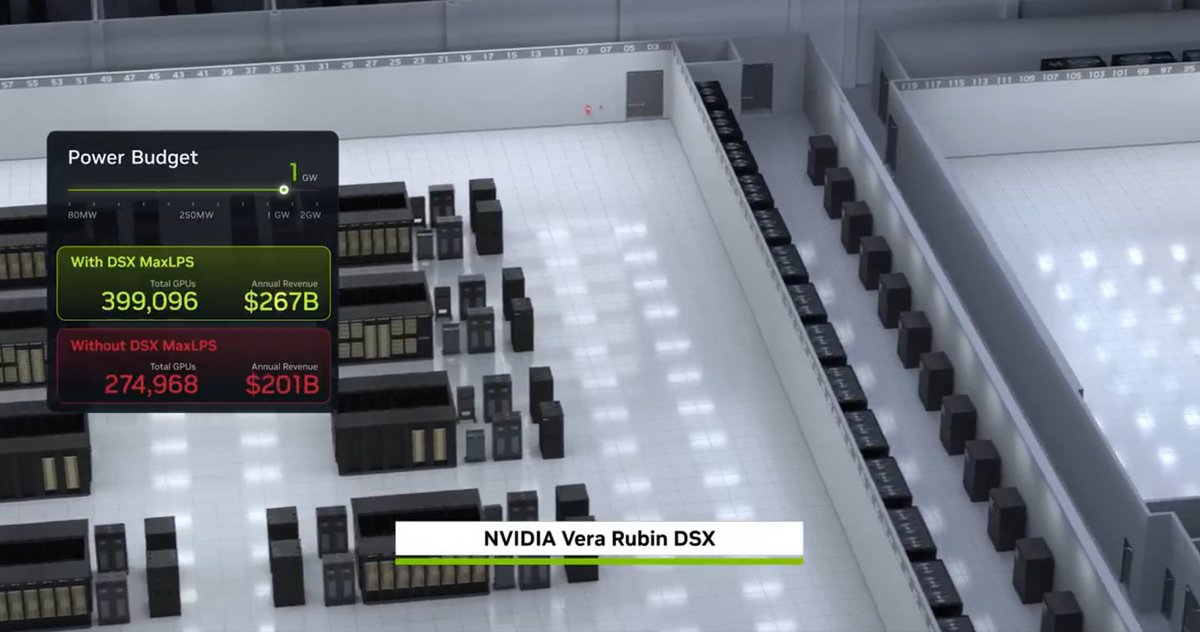
The #NVIDIAVeraRubin platform consists of five rack-scale systems for AI agents with a supply chain spanning over 350 factory sites across 30 countries with millions square feet of factory floor space.
Vera Rubin is in full production, co-designed with NVIDIA DSX and DSX MaxLPS to deliver the lowest token cost and maximum tokens per watt.
Congratulations to our partners who have their engineering racks up and running: @CoreWeave, @DellTech, @Microsoft, and @OracleCloud.
IREN has achieved @nvidia Exemplar Cloud status on NVIDIA HGX B300 for training workloads.
This status confirms that IREN's infrastructure performs within NVIDIA's reference performance targets across its full suite of benchmarking recipes, validated against NVIDIA reference architecture.
"IREN's achievement of NVIDIA Exemplar Cloud status reflects deep engineering collaboration between our teams and the quality of infrastructure behind IREN's AI Cloud, giving enterprises confidence to run their most demanding training workloads at scale." — Warren Barkley, VP Product Management, NVIDIA
Read full blog: https://t.co/GbdlTB3v79
NVIDIA DSX System: IREN's Commercial Potential Under the DSX AI Factory Model (Part 3)
Before discussing this topic, I want to first analyze IREN's position within the DSX ecosystem.
According to NVIDIA's own description, under the DSX framework, it is collaborating with eight AI infrastructure companies. Besides IREN, the other seven are CoreWeave, Crusoe, Nscale, Lambda, Nebius, Firmus, and Yotta.
After reviewing the publicly available information regarding each partnership, the collaboration details can be summarized as follows:
CoreWeave — Uses NVIDIA DSX Air to build and test AI Factory digital twins in the cloud, allowing operational simulations before physical equipment is delivered and shortening validation cycles. It is also one of the cloud partners deploying DSX platform components, including DSX Sim, MaxLPS, and DSX OS.
Crusoe — Since March 2026, it has expanded its full-stack collaboration with NVIDIA, adopting the Vera Rubin DSX reference design and Omniverse DSX Blueprint to plan and operate gigawatt-scale AI factories. The partnership covers digital twins, AI-driven power and cooling optimization, and mechanical and electrical engineering design. Based on current information, Crusoe is the only company besides IREN that has a dedicated public announcement regarding gigawatt-scale physical engineering collaboration. However, NVIDIA has not designated Crusoe as a "flagship" partner.
Nscale — Not only is it one of the co-developers of the Vera Rubin DSX reference design itself, alongside engineering and simulation companies such as Cadence, Eaton, Jacobs, Schneider Electric, Siemens, and Vertiv, but it is also one of the eight cloud partners deploying DSX software platform components. Therefore, Nscale appears to have a certain level of involvement on the engineering design side.
Firmus, Lambda, Nebius, and Yotta Data Services — Public information on these four companies largely remains limited to a common press release description: as NVIDIA cloud partners, they deploy the core DSX platform components, including DSX Sim, DSX MaxLPS, and DSX OS, to reduce risk, improve GPU utilization, and accelerate infrastructure deployment. No dedicated announcements have been found indicating deeper physical engineering collaboration.
Among these seven companies, only Crusoe appears to have engineering-related cooperation. The rest are primarily involved in specific software-layer integrations, deployments, or operational applications.
By comparison, NVIDIA's collaboration with IREN demonstrates several unique characteristics in both depth and breadth.
First, logical inference suggests that IREN was likely involved during the initial planning and design stages.
The engineering component represents the overwhelming majority of the DSX system. A design framework of this scale must be built around a real, physically deployable site. Without a concrete location, it is impossible to create a truly executable project plan. Engineers must repeatedly validate boundary conditions such as power capacity, land availability, and cooling requirements against an actual site. This is basic common sense in complex systems engineering.
In November 2024, equipment procurement had already begun for IREN's 1.4GW Sweetwater campus in Texas.
A system design project as large as DSX spans multiple engineering disciplines and requires extensive feasibility verification against real-world infrastructure. Such a reference architecture would likely require at least one to one-and-a-half years of preparation.
By the time DSX was officially announced in March 2026, the overall framework was already largely complete, and the project had reached the stage where a flagship AI factory was ready for deployment.
Working backward from that date, the timeline aligns closely.
As the only known gigawatt-scale site in the United States over the past two years with a confirmed power energization schedule, Sweetwater has never publicly announced a specific monetization plan. To this day, no customer has been formally attached to the site. The only disclosed information is that it will serve as the flagship deployment site for the DSX AI Factory system.
The other company involved in DSX engineering collaboration, Crusoe, appears to have a significantly different relationship with NVIDIA.
While Crusoe also controls gigawatt-scale infrastructure, its sites already have clearly defined end users. The 1.2GW Abilene campus is leased to Oracle and OpenAI. Crusoe's business model with these customers is itself an innovative undertaking.
Because these facilities already have committed users and contractual obligations, it seems unlikely that they would have been available from the outset as dedicated engineering testbeds for NVIDIA's DSX development efforts.
As a result, NVIDIA's engineering collaboration with Crusoe is more likely focused on specific project phases or selected engineering disciplines.
Another important distinction is that Crusoe is a leading representative of the Behind-the-Meter (BTM) power generation model. Different power architectures create different engineering requirements. Therefore, the NVIDIA-Crusoe collaboration may be more focused on BTM-specific technologies.
BTM data center infrastructure remains a relatively new industry segment. Significant challenges still exist regarding reliability and regulatory compliance. Crusoe's history of project delays and cancellations reflects some of these realities.
Second, IREN's $3.4 billion services agreement with NVIDIA is unique.
Based on currently available information, no other DSX cloud partner has been disclosed as having a similar direct paid customer relationship with NVIDIA.
NVIDIA is effectively outsourcing part of its internal AI research workloads to an external operator. This arrangement appears to be unique within the DSX partner ecosystem.
This also indirectly demonstrates both the depth and duration of the relationship.
The deployment location for this agreement is IREN's Childress campus.
Childress combines high-capacity fiber connectivity, liquid cooling infrastructure, high-density rack deployments, and both air-cooled and liquid-cooled environments. Across virtually every infrastructure category, it represents a best-in-class configuration.
It is also arguably the most complete single-site environment for designing and validating the supporting components required by the DSX AI Factory architecture.
Again, this appears to be unique to IREN.
Putting all these factors together, Sweetwater's long-standing strategic ambiguity, combined with the recent announcement identifying it as the flagship DSX AI Factory site, suggests that cooperation between NVIDIA and IREN likely began at the earliest design stages.
NVIDIA's direct paid customer relationship with IREN is unique among all eight partners.
The flagship AI Factory under the DSX framework is being co-developed with IREN.
A flagship designation fundamentally implies uniqueness, exclusivity, and top priority.
Its deeper significance is that IREN gains earlier access to NVIDIA's core DSX architectural concepts and technical standards.
This has major implications for planning the future development of IREN's 5.8GW pipeline of secured power capacity.
It also reinforces an important lesson in this industry:
Being first is not what matters most.
Getting it right is.
Patience can create enormous value.
So what ultimately defines success for the DSX system?
In my view, it can be summarized in one sentence:
Lowest cost, highest output.
Jensen Huang has repeatedly expressed a similar objective:
"Maximize token performance per megawatt at the lowest token cost."
Anyone familiar with my long-term analysis of IREN will immediately recognize a striking alignment.
$IREN's operational philosophy has always been:
Lowest cost, highest output.
For NVIDIA, $IREN may represent the ideal partner for achieving this objective.
This helps explain why IREN alone has received flagship partner status.
From a broader commercial perspective, NVIDIA will certainly not limit itself to working exclusively with $IREN.
The DSX system will likely expand commercially across all seven remaining partners.
However, the amount of value ultimately created by each partner will depend on its own business model and execution capabilities.
NVIDIA undoubtedly hopes all partners succeed.
Yet there remains only one ultimate metric:
Lowest cost, highest output.
Whether it is called an AI Factory or a Token Factory is largely irrelevant.
If you achieve the lowest cost and highest output, you become the industry's dominant leader.
Naturally, NVIDIA's DSX resources will gravitate toward the highest-performing operators.
This is inevitable because it reinforces NVIDIA's leadership position across the broader AI ecosystem.
Once the lowest-cost, highest-output model is achieved, IREN's commercial opportunity could change dramatically.
Today, much of the market still evaluates AI infrastructure through an internet-era lens, assuming that software stacks are the primary value anchor of AI cloud businesses.
In reality, software moats are gradually weakening.
The future benchmark for AI cloud infrastructure may ultimately become:
The lowest token cost per watt and the highest output per watt.
To approach that standard, operators may adopt DSX.
To reach the highest levels of performance, IREN could become the reference model.
Achieving this, however, depends on an extremely difficult-to-replicate integrated system.
Within that system, the decisive factor is not software alone.
It is not power alone.
It is not HBM memory.
It is not optical networking.
It is not any individual bottleneck currently receiving market attention.
Rather, it is the combination of all these capabilities.
The bottlenecks people focus on today are simply challenges that must be solved while building a much larger integrated capability.
Many IREN investors still believe that the company's competitive advantage comes primarily from controlling scarce resources such as power and land.
Some worry that if power shortages disappear after 2030, IREN's moat will disappear as well.
In my view, that interpretation significantly underestimates the company.
That is not what is happening.
To achieve the goal of the lowest token cost per watt and the highest output per watt, IREN has already built a three-layer system consisting of:
The energy layer
The chip layer
The infrastructure and software management layer
Its deep collaboration with NVIDIA may eventually allow participation across the broader AI stack.
Over time, IREN could gradually extend its influence toward the model layer and application layer.
Direct participation appears less likely in the near term.
However, strategic partnerships could provide indirect exposure and additional leverage opportunities.
As a result, value creation could become much larger than currently appreciated.
The market may eventually stop viewing IREN as simply an AI cloud company.
Instead, it could be redefined as:
The most important infrastructure platform company of the NVIDIA AI Factory era.
If that happens, its commercial opportunity set could expand dramatically.
First, IREN could provide DSX-standard technology licensing, facility engineering consulting, and managed operations services, generating high-margin fees and recurring operating profits.
Rather than selling compute alone, it would sell complete AI Factory templates, standards, and operating frameworks.
This could position IREN as a key partner in global Sovereign AI initiatives and place it at the center of the emerging AI infrastructure supply chain.
Second, following IREN's acquisition of Mirantis, and with the support of DSX Flex, the company could connect directly to NVIDIA's DSX Exchange communications backbone.
This would create seamless integration between the physical and software worlds.
From substation switching and microgrid dispatching at the lowest infrastructure layer, all the way up to enterprise Kubernetes deployments at the application layer, a unified control chain could emerge spanning power systems, networking, GPUs, containers, and applications.
Through extreme optimization, every watt of electricity could be converted into the maximum possible density of AI tokens.
This is infrastructure-level software optimization rather than traditional application software.
It represents a unique advantage for IREN.
Under the same electricity cost structure, IREN could produce more AI tokens than competitors.
This, in turn, could enable a unique toll-road-style economic model with substantially higher returns than peers.
Third, flexible power arbitrage.
This is already an area where IREN has extensive experience.
Once DSX Flex becomes operational, IREN's advantages as a large-scale owner and controller of power infrastructure could be maximized.
Fourth, becoming a key enabler of compute financialization and an important anchor asset within that ecosystem.
This topic deserves a separate dedicated analysis in the future.
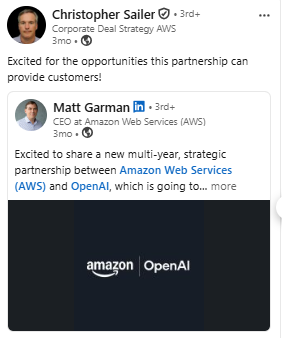
$IREN Hires Former AWS Executive Christopher Sailer
In his previous role in corporate deal strategy at AWS, he delivered on high-profile transactions such as the @awscloud x @AnthropicAI partnership, and a multi-year partnership with @OpenAI.
Welcome aboard @IREN_Ltd 🔥👏