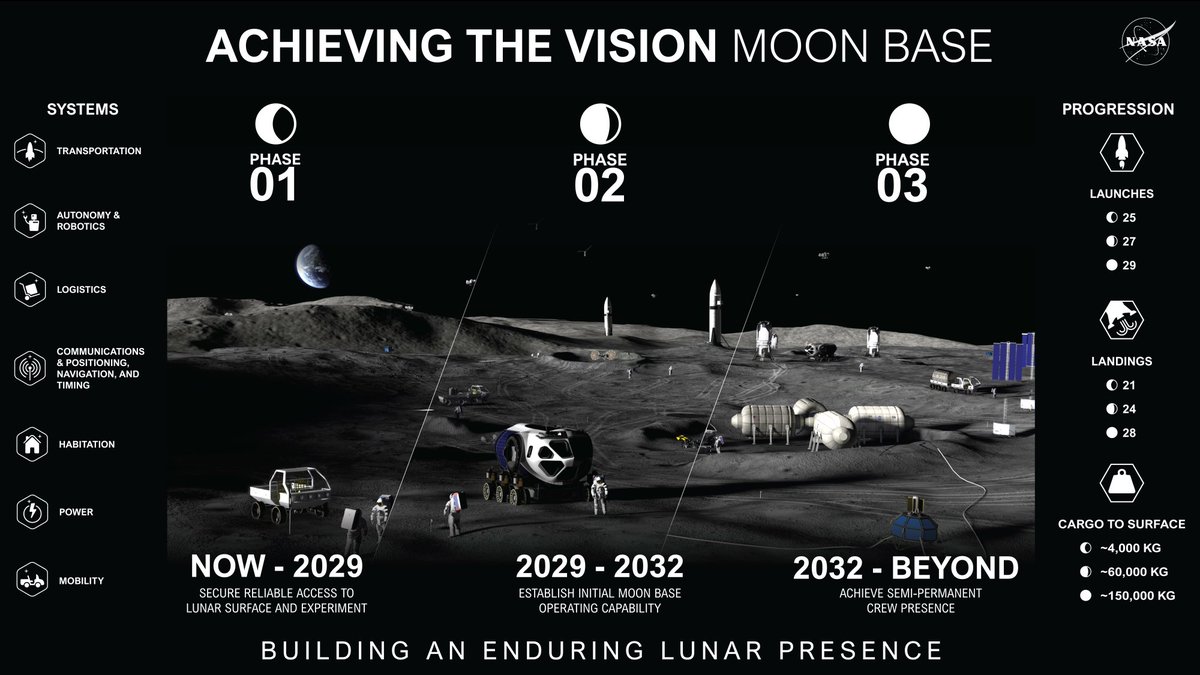
NASA just officially unveiled their master plan for a permanent Moon Base at the lunar South Pole
This is not just about flags and footprints. NASA is moving to establish an enduring, sustained human presence, and they are heavily relying on commercial innovators to build it
The roadmap is highly aggressive:
• Phase 1: Heavy robotic missions and commercial payload deliveries
• Phase 2: Semi-permanent infrastructure, including fission surface power and lunar drones
• Phase 3: A sustained, permanent human outpost
The most important takeaway is NASA explicitly stated this base is the ultimate proving ground to prepare humanity for missions to Mars
While legacy aerospace companies are still struggling to reliably get a small capsule to the ISS, NASA is setting the stage for massive lunar infrastructure....which is exactly the kind of heavy-lift planetary deployment SpaceX’s Starship was designed for
The multi-planetary economy is officially kicking off
To those considering moving to Japan, let me be honest with you.
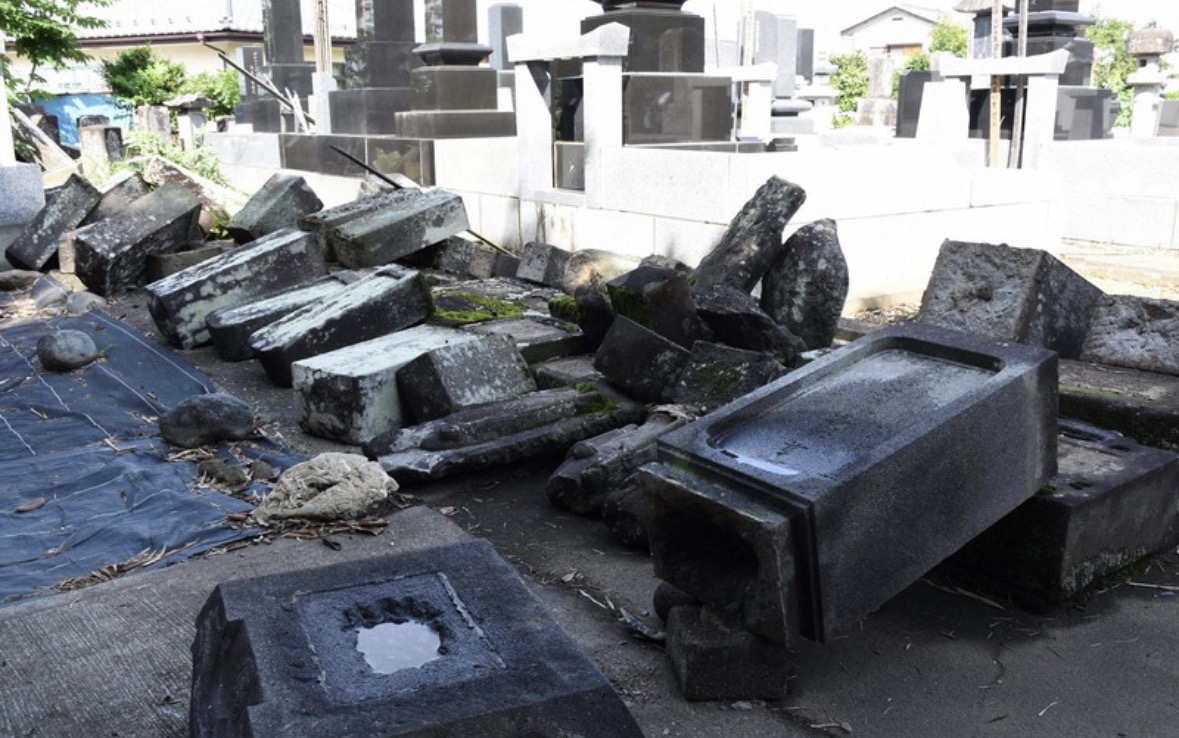
Last week, a 300-year-old shrine in Niigata burned down.
It wasn't the first. Shrines, pig farms, graveyards, set on fire and desecrated.
Things we've quietly protected for centuries are disappearing, one after another.
If you cannot honor our gods, please don't come.
If you cannot eat pork, please don't come.
If you cannot accept cremation, please don't come.
This is a sincere request from us.
If you come to Japan, you will be unhappy, and so will we.
Dennis Ritchie created C in the early 1970s without Google, Stack Overflow, GitHub, or any AI ( Claude, Cursor, Codex) assistant.
- No VC funding.
- No viral launch.
- No TED talk.
- Just two engineers at Bell Labs. A terminal. And a problem to solve.
He built a language that fit in kilobytes.
50 years later, it runs everything.
Linux kernel. Windows. macOS.
Every iPhone. Every Android.
NASA’s deep space probes.
The International Space Station.
> Python borrowed from it.
> Java borrowed from it.
> JavaScript borrowed from it.
If you have ever written a single line of code in any language, you did it in Dennis Ritchie’s shadow.
He died in 2011.
The same week as Steve Jobs.
Jobs got the front pages.
Ritchie got silence.
This Legend deserves to be celebrated.
Orion’s Belt shines with three massive blue supergiants: Alnitak, Alnilam, and Mintaka. The brightest of them, Alnilam, outshines the Sun by 18,000 times and weighs in at 20 times its mass.
Although they appear close together in the sky, Alnilam is actually about 1,000 light-years away, while Alnitak is a bit closer at 800 light-years.
By comparison, Proxima Centauri, our nearest stellar neighbor, is just 4.25 light-years from the Sun.
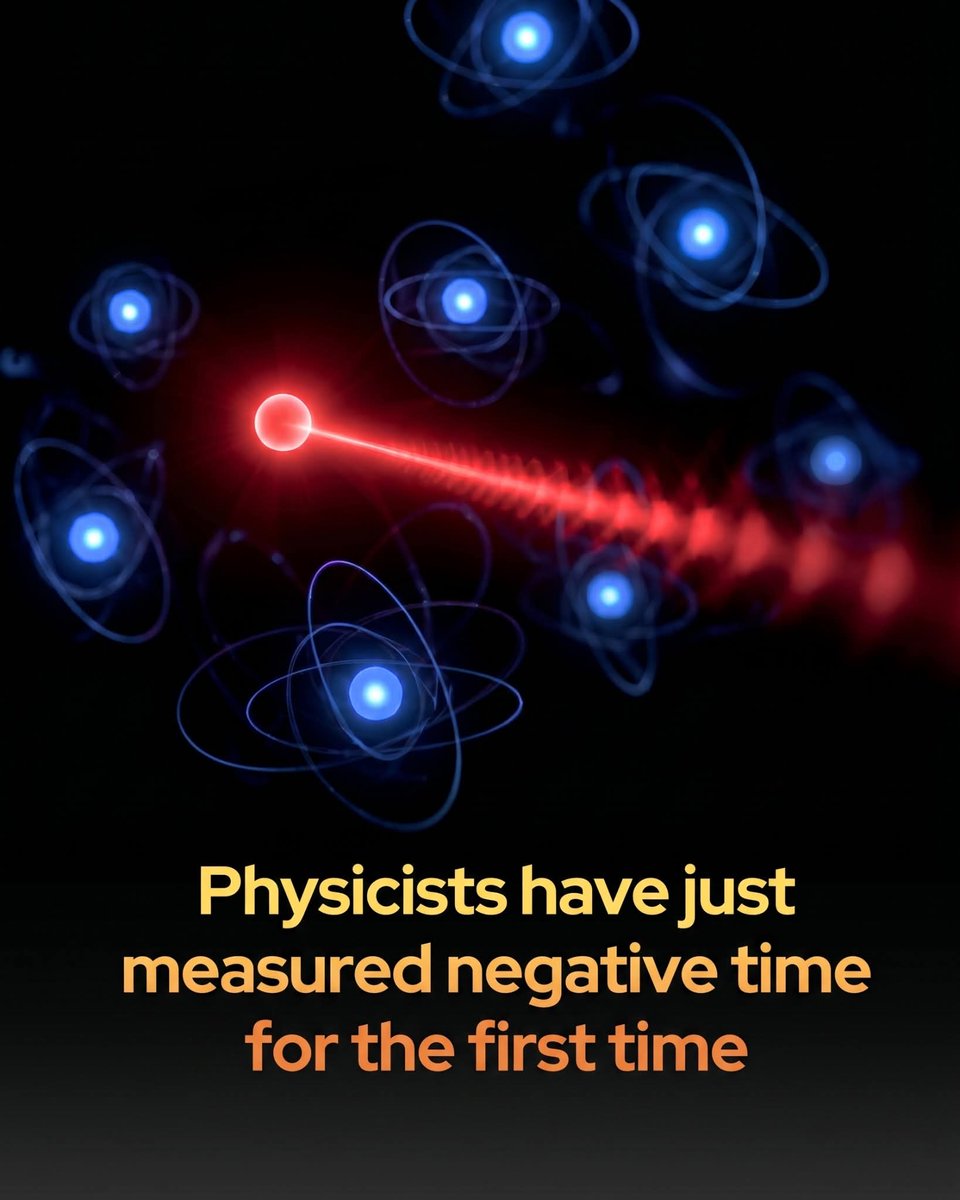
🚨 Negative time officially exists.
Quantum physicists have officially measured "negative time," observing light particles exiting a material before they even entered.
In a mind-bending experiment at the University of Toronto, researchers fired photons through a dense cloud of ultra-cold rubidium atoms. While light usually experiences a slight delay when passing through matter, the team discovered a rare phenomenon where photons appeared to spend less than zero time inside the cloud. By using a "weak measurement" technique to observe the particles without disrupting their quantum state, the scientists confirmed that the light pulses effectively exited the atomic cloud before they had even finished entering it.
This "negative time" effect doesn't mean we have discovered a path to time travel, but it does expose the strange, non-linear nature of reality at the subatomic scale. According to the laws of quantum mechanics, events do not always follow a strict chronological order of cause and effect. This discovery challenges our fundamental perception of how time flows, proving that at the smallest levels of the universe, the boundaries between "before" and "after" can become remarkably blurred.
source: Sinclair, J. Physicists have measured ‘negative time’ in the lab. The Conversation.
Confirmed: Oxygen can be produced without photosynthesis
For centuries, it was believed that oxygen on Earth was produced exclusively by living organisms through photosynthesis, a process dependent on sunlight. New research shows this is not the only pathway.
At depths of around 4,000 metres (13,000 feet) in the Pacific Ocean, far beyond the reach of sunlight - researchers observed oxygen being produced in complete darkness.
The discovery was made by a team led by the Scottish Association for Marine Science while studying the Clarion–Clipperton Zone, a vast abyssal plain between Hawaii and Mexico. Sensors placed on the seafloor recorded rising oxygen concentrations, contradicting expectations based on known biological processes.
Further investigation identified the source as polymetallic nodules, rock concretions rich in manganese, nickel, cobalt, and other metals. The researchers found that these nodules can generate electrical potentials when clustered together on the seabed.
Under certain conditions, this electrical charge appears sufficient to drive seawater electrolysis, a chemical reaction that splits water molecules (H₂O) into hydrogen and oxygen, without the involvement of light or living organisms.
The findings have important implications.
They suggest that oxygen production can occur through geological and electrochemical processes, which may influence how scientists think about the early evolution of oxygen-using life on Earth. They also raise concerns about deep-sea mining on ecosystems we don’t understand
Study:
Evidence of dark oxygen production at the abyssal seafloor
Nature Geoscience, 2024
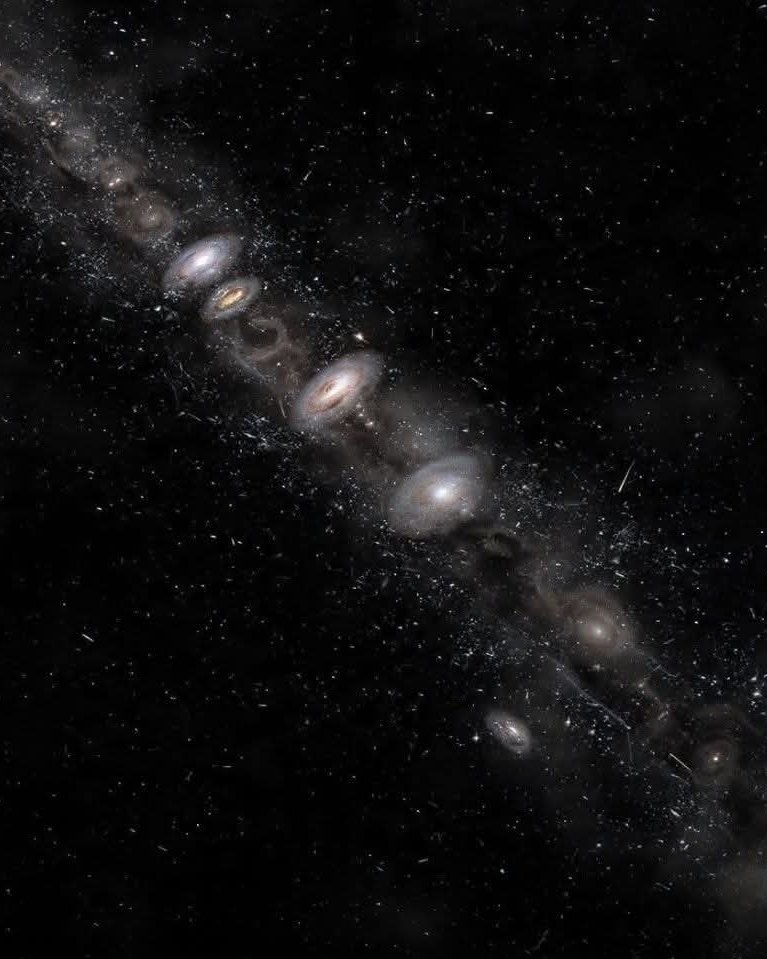
James Webb Just Found a Giant Cosmic Highway of 20 Galaxies Stretching 13 Million Light-Years Across the Infant Universe!
In one of its deepest infrared stares, the James Webb Space Telescope has uncovered something extraordinary: a massive, perfectly aligned chain of roughly 20 galaxies spanning nearly 13 million light-years — a colossal structure that existed when the universe was less than 1 billion years old.This isn’t just a random grouping. Scientists believe they’re looking at a cosmic filament — a thread-like superhighway where gravity, guided by invisible dark matter scaffolding, pulled these young galaxies into a long, connected chain. Individual galaxies in this structure are separated by hundreds of thousands of light-years, yet they all move together as part of the same enormous cosmic web.Webb’s powerful infrared vision pierced through the haze that once hid these ancient systems from Hubble, revealing how the very first large structures in the universe took shape. Instead of being scattered randomly, early galaxies preferred to form along these massive, invisible threads — dark matter acting like cosmic blueprint lines directing where stars and galaxies would be born.The light we’re seeing today left those galaxies over 13 billion years ago and has been racing toward us ever since. What you’re witnessing is a living fossil of the early cosmos, when the universe was still weaving the grand architecture we see today.A breathtaking reminder that the universe wasn’t born chaotic — it was organizing itself into vast, beautiful patterns from the very beginning. How mind-blowing is it that we can now see the cosmic “skeleton” that built everything?
【速報】今からおよそ15時間前(4/18 17:38 UT)、木星に細長い暗い構造が見えたとの報告がありました。木星に100m級以上の天体が衝突した可能性もあります。
日本時間の本日22:30以降、この領域が再び地球側に向いてきます。観測可能な方はぜひ確認をお願いします。
Image credit: Alexander Frantzis, Marc Delcroix
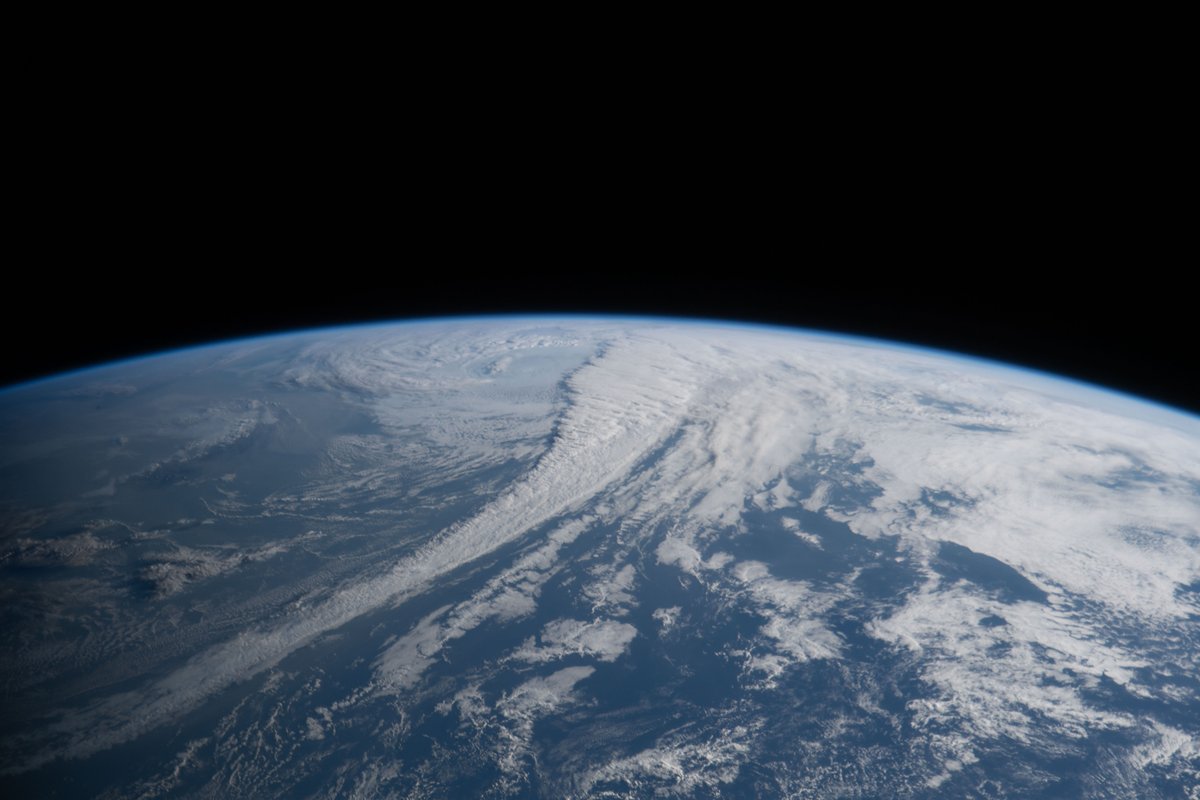
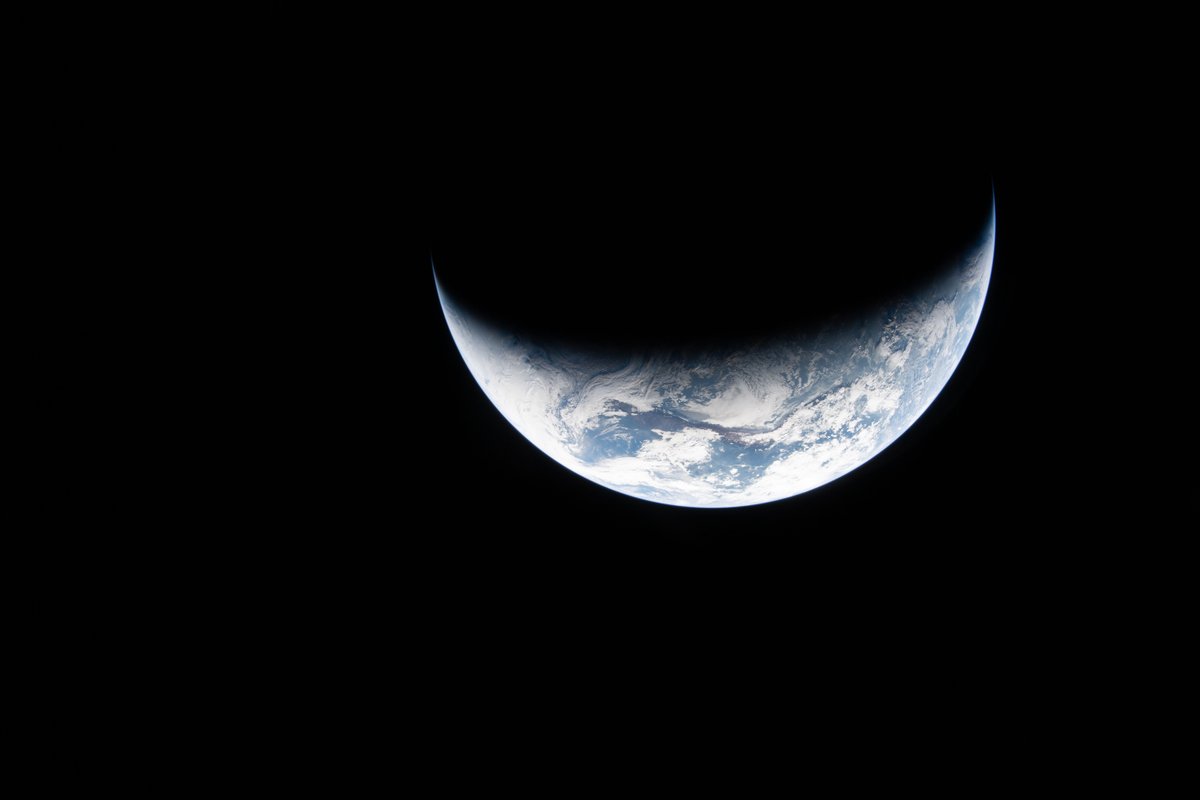
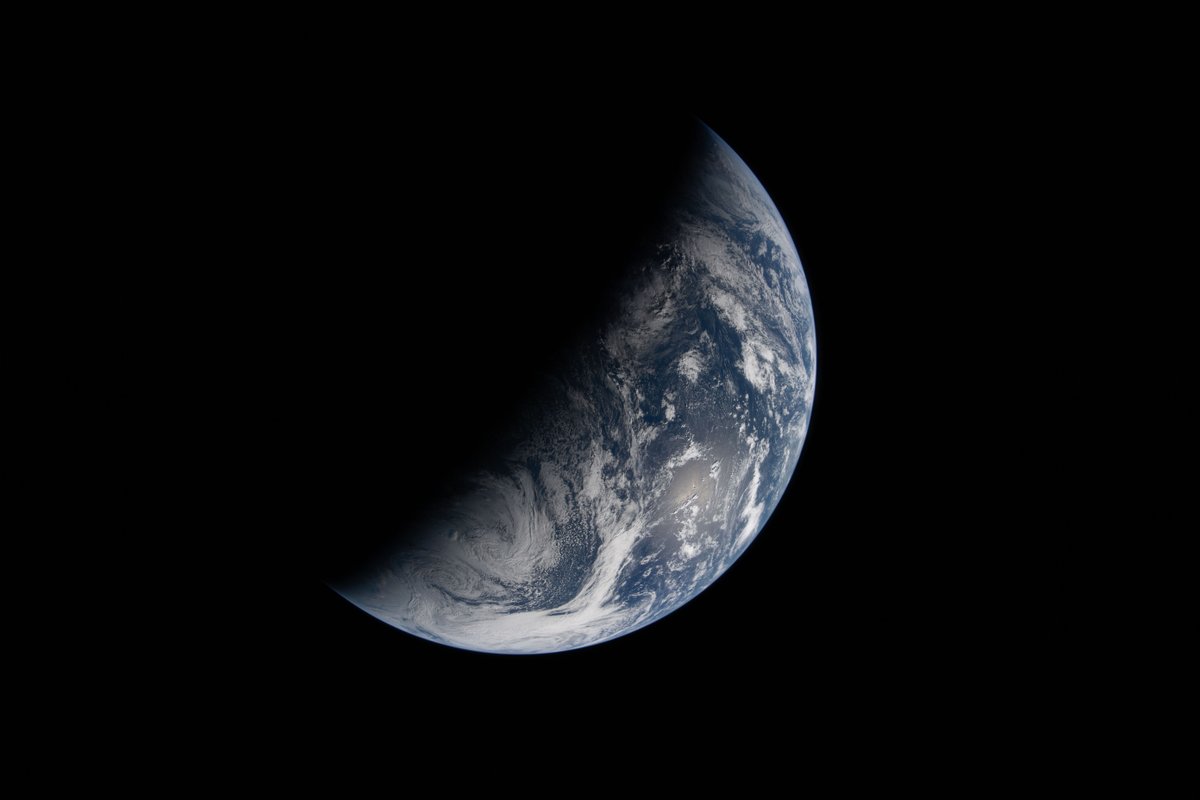
We're going farther than ever before 🚀
Today, the Artemis II crew will break the record for how far humans have traveled from Earth as they fly around the far side of the Moon.
Coverage begins at 1 p.m. EDT (1700 UTC). Watch Artemis II make history: https://t.co/G7LpghURjg




















![YTmocaStaff's tweet photo. み みしまゆきお【三島由紀夫】[名]
横尾さんは音楽、文学、演劇、映画など様々なジャンルの表現者たちとコラボレーションしました。なかでも重要なのが小説家の三島由紀夫です。この作品は、画家に転向した横尾さんが三島を題材としたなかでも、最も早い時期のものです。
#横尾忠則現代美術館 https://t.co/0ekOoGVBH5](https://pbs.twimg.com/media/HETJHX-bYAEpIOb.jpg)