Dem senator's hiring announcement sparks GOP eruption over who is encouraged to apply: 'Blatantly illegal' https://t.co/v0Shm4050a White men are the most employed and powerful group in America. Yet they continue to whine about being discriminated against. Foolishness!
I didn’t spend 26 years in the Army to be disrespected by Pete Hegseth https://t.co/rVVHsFdh7X I will be so glad when Pete Hegseth is out of office. Maybe women and people of color will be treated the same as White males. Merit seems to mean White males only.
Q: On the checks, we have $40 trillion in debt. If your economic policies are working, why do you need an incentive for people to turn out to vote?
TRUMP: I'm doing it as a reward for people having to put up for five years and four years of a horrible situation caused by Biden
Q: You also offered tariff refund checks--
TRUMP: Not you. Not you
Q: And that didn't happen
TRUMP: Not you. You're the worst
ICE agent shoots and wounds man in Austin, Texas https://t.co/Lu1G3cuaAu via @@YahooNews I'm sorry, this shouldn't have happened. ICE shouldn't be able to investigate. They lie just like the president.
On March 5, 1959, a devastating fire broke out at the Negro Boys Industrial School in Wrightsville, Arkansas, a state-run institution where young Black boys were sent by the state. That night, 69 boys were inside a dormitory when a fire suddenly broke out, turning what should have been a place of care and rehabilitation into a scene of tragedy.
As the fire spread through the building, the boys struggled to escape. Reports later revealed that the dormitory doors had been secured, making it difficult for the boys to get out as smoke and flames filled the building. By the time the fire was over, 21 boys had died. Another 48 managed to escape.
The tragedy brought national attention to the conditions inside the institution. Accounts of the dormitory described severely overcrowded living conditions, with the boys sleeping extremely close together and having little space to move. Their bathroom facilities were also reportedly inadequate, with a bucket used for human waste in the corner of the sleeping area. These conditions raised serious questions about how the boys were being treated and the level of care provided by the state.
The fire also prompted questions about the building itself, safety procedures, supervision and why the boys were unable to escape quickly. For many observers, the tragedy reflected wider problems within segregated institutions across the United States during the mid-20th century, where Black children and adults were frequently subjected to inferior facilities and unequal treatment.
What makes the history even more striking is what happened to the site afterward. The land where the Negro Boys Industrial School once stood is now part of the Arkansas Department of Correction's Wrightsville Unit. For decades, there was little public recognition of the boys who died there. It was not until 2019, sixty years after the fire, that a historical plaque was finally placed at the site to acknowledge the tragedy.
The 21 boys who died were more than a number in a historical account. They were children whose lives ended in circumstances that raised profound questions about institutional responsibility, safety and the treatment of Black youth. Remembering Wrightsville means remembering not only the fire itself, but also the conditions that existed before it and the questions about accountability that followed.
The Wrightsville fire remains one of the lesser-known tragedies in Black American history, but it is a story worth remembering because history is not only about famous figures and major political events. Sometimes it is also about the young lives lost in places that society failed to protect.
If you love our content and would like to support the page, you can buy us a coffee here: https://t.co/K1AhtZuOFs (I also post blogs there and have a book club)—
1950s music icon and longtime Donald Trump ally makes surprisingly blunt plea to president https://t.co/cauirMaC2I A fool doesn't listen to sound advice. He lacks Godly wisdom.
68 years ago today, Martin Luther King Jr. was stabbed with a letter opener while signing copies of his first book, “Stride Toward Freedom,” at a Harlem department store. The blade came so close to his aorta that doctors said a single sneeze could have killed him.
He survived. His commitment to nonviolence wasn’t conditional — not even that day. He came out the other side still choosing peace over revenge.
Nonviolence wasn’t just something he preached. It was a discipline he practiced, tested in the most direct way possible — and he held to it anyway.
We stand on that same front line today, defending lives and pushing for accountability, because that work never stopped.
🎥: @berniceking
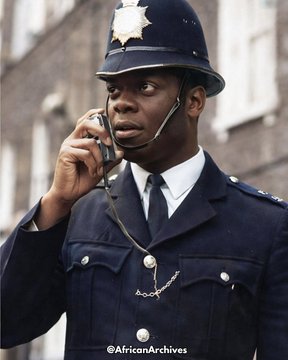
Britain’s first black police officer, PC Norwell Roberts, on point duty near Charing Cross Station, 1968.
He would face many challenges throughout his esteemed career and he was subjected to racism and prejudice both in & outside of work.
Lucy Higgs Nichols was born into slavery in Tennessee around 1838, but during the Civil War she escaped and eventually found her way to the Union Army’s 23rd Indiana Infantry Regiment. Rather than simply seeking safety behind Union lines, Lucy remained with the regiment and served as a nurse, caring for sick and wounded soldiers as the unit moved through the war.
Her service took her alongside the 23rd Indiana through several major campaigns, including the siege of Vicksburg. Nursing during the Civil War was difficult and dangerous work. Medical facilities were often overwhelmed, disease killed enormous numbers of soldiers, and nurses worked with limited supplies under conditions that would be almost unimaginable today. Lucy earned the affection of the soldiers, who came to know her as “Aunt Lucy.”
After the war, she moved to New Albany, Indiana, where many veterans of the regiment lived. Years later, when Lucy sought a federal pension for her wartime nursing service, she encountered a problem familiar to many women and formerly enslaved people whose contributions were poorly documented. The government had no official record proving that she had served as a nurse.
The men of the 23rd Indiana had not forgotten her. Dozens of veterans supported her claim and petitioned Congress on her behalf, testifying to the work they had personally watched her perform during the war. Their efforts eventually succeeded, and in 1898 Congress granted Lucy a special pension of $12 per month.
This photograph from an 1898 reunion of the 23rd Indiana is especially powerful because Lucy stands among the veterans whose lives she had shared decades earlier. She was welcomed at their reunions and became closely associated with the Grand Army of the Republic, the influential organization of Union veterans.
Lucy died in New Albany in 1915 and was buried with military honors. Her story reminds us that Black participation in the Civil War extended far beyond the famous Black regiments. Formerly enslaved people served the Union cause as nurses, cooks, laborers, scouts and soldiers, sometimes without the official records that would later prove what they had done. Lucy Higgs Nichols was fortunate in one respect: the soldiers she cared for lived long enough to make sure her service was not forgotten.
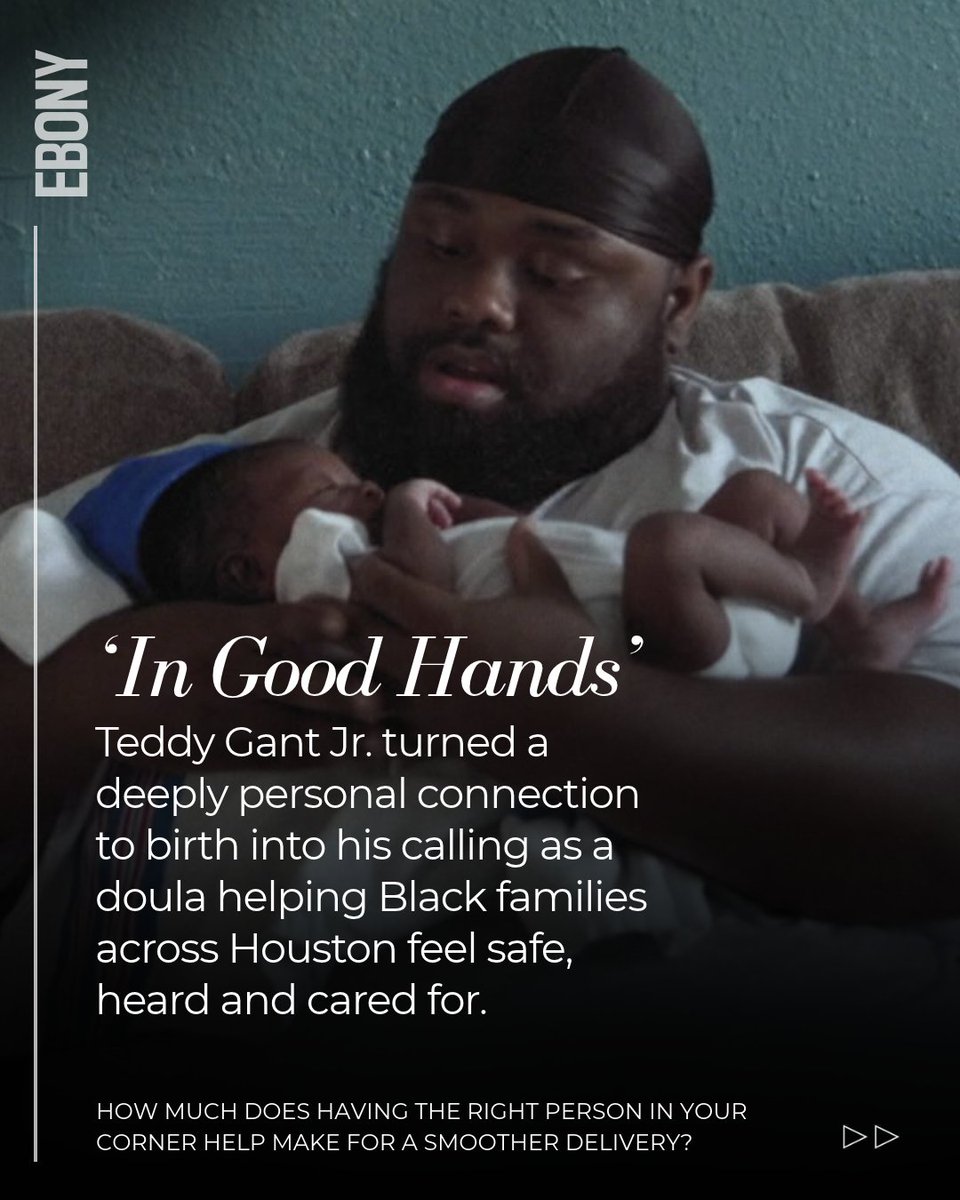
At 12, Teddy Gant Jr. learned complications during his own birth nearly cost him his life. Years later, after working security, he trained as a full-spectrum doula and now helps Black families feel informed, heard and supported through pregnancy and delivery. 🖤
On this day in 1970, rock guitarist Jimi Hendrix died at 27 years old.
James Marshall “Jimi” Hendrix was a Black American guitarist, singer and songwriter whose mainstream career lasted only about four years, yet he completely changed what musicians believed could be done with an electric guitar. Born in Seattle, Washington, in 1942, Hendrix began playing guitar as a teenager and largely taught himself. After serving briefly in the U.S. Army, he entered the professional music world through the Chitlin’ Circuit, the network of venues where Black performers could work during segregation.
Before becoming a star himself, Hendrix spent years playing behind other Black artists. He toured with the Isley Brothers, worked with Little Richard and performed with Curtis Knight and the Squires. Those years exposed him to blues, R&B, soul and rock and roll while allowing him to develop a style that was becoming increasingly unlike anyone else's. His career changed dramatically after former Animals bassist Chas Chandler saw him perform in New York and persuaded him to move to London in 1966.
In Britain, Hendrix formed the Jimi Hendrix Experience with Noel Redding and Mitch Mitchell. Success came quickly with songs such as “Hey Joe,” “Purple Haze” and “The Wind Cries Mary.” His 1967 debut album, Are You Experienced, introduced audiences to a guitarist who seemed to treat the instrument as something entirely new. His performance at the Monterey Pop Festival that year helped make him a major star in the United States, and Electric Ladyland reached number one on the American album chart in 1968.
Hendrix's influence went far beyond his ability to play fast or perform spectacular solos. He experimented with distortion, feedback, the wah-wah pedal, recording effects and extremely loud amplification, turning sounds that had once been considered unwanted noise into deliberate parts of his music. His playing drew heavily from Black blues musicians while pushing the electric guitar into psychedelic rock and new forms of studio experimentation. Generations of rock, blues, funk, metal and alternative guitarists would later build upon techniques Hendrix helped popularize.
One of his most famous appearances came at Woodstock in 1969, where his interpretation of “The Star-Spangled Banner” used distortion and feedback to transform the familiar national anthem into one of the defining musical moments of the era. Hendrix remained one of the world's biggest performers until his death in London on September 18, 1970, at only 27 years old.
Hendrix left behind just three completed studio albums with the Jimi Hendrix Experience during his lifetime, but his influence has lasted for more than half a century. He was inducted into the Rock and Roll Hall of Fame with the Experience in 1992 and continues to appear near the top of rankings of history's greatest guitarists. His career was remarkably short, but the vocabulary he created for the electric guitar permanently changed popular music.
Trump targets more news outlets, saying he will ban CNN, MS NOW and Politico from the White House https://t.co/ad7xtl4HjO via @@YahooNews Trump doesn't want John Q Public to be informed of his ignorance, stupidity, greed, lies, wasteful spending of taxpayer money and corruption.
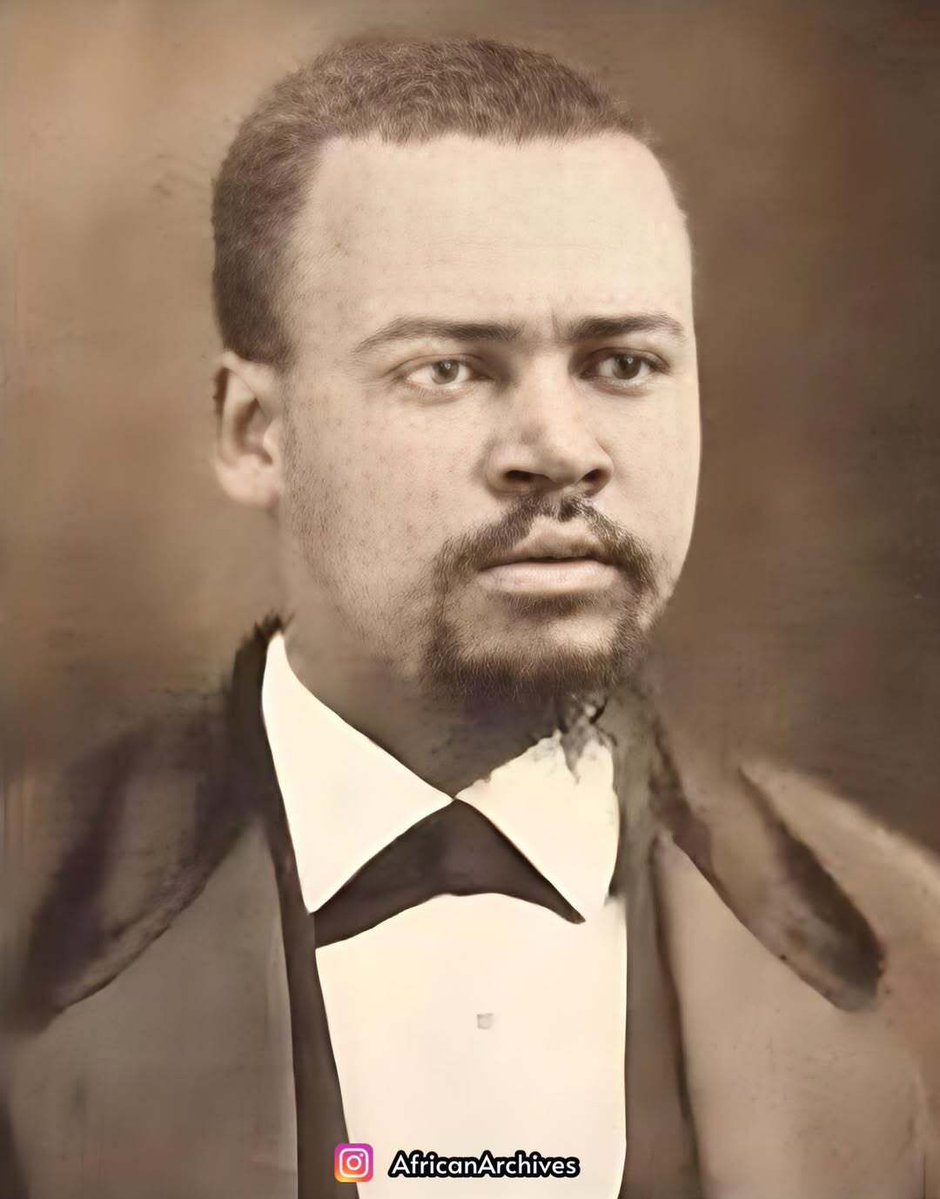
Imagine being born into slavery, separated from your family after trying to teach yourself to read, and repeatedly punished because you refused to stop learning. That was the early life of John Adams Hyman, a man who survived slavery and, within a decade of emancipation, became the first Black person to represent North Carolina in the United States Congress.
Born enslaved in Warren County, North Carolina, in 1840, Hyman developed a desire for education despite living under a system that deliberately restricted literacy among enslaved people. According to accounts of his life, after he was discovered trying to read a spelling book given to him by a sympathetic white man, he was sold away from his family. Hyman later recalled being sold repeatedly as he continued attempting to educate himself, with enslavers fearing that his determination to learn might influence others.
The end of the Civil War transformed his life. With slavery abolished in 1865, Hyman returned to North Carolina, reunited with family and attended school. He became a farmer, merchant and landowner before entering politics during Reconstruction, a remarkable period when formerly enslaved Black Americans began exercising political rights that had been denied to them for generations.
In 1868, Hyman participated in North Carolina's constitutional convention, helping create a new state constitution that expanded public education and recognized Black men's political rights. He was then elected to the North Carolina Senate, where he served for several years despite the violence and intimidation Black political leaders faced from white supremacist organizations including the Ku Klux Klan.
His biggest political breakthrough came in 1874 when voters in North Carolina's Second Congressional District elected him to the U.S. House of Representatives. When Hyman took his seat in 1875, he became North Carolina's first Black member of Congress. While serving in Washington, he advocated for people in his district and supported efforts to reimburse depositors who had lost money following the collapse of the Freedman's Savings Bank, an institution that had held the savings of thousands of formerly enslaved people and their families.
Hyman's later career was more complicated. He lost subsequent congressional campaigns, faced political and personal controversies, and eventually returned to Washington, D.C., where he held several government positions before dying in 1891 at just 51 years old. His story, like the stories of many Reconstruction leaders, should be remembered in its entirety rather than turned into a perfect hero narrative.
Still, the transformation of his life remains extraordinary. A man who had once been punished and sold for seeking an education lived to help write a state constitution, serve in the legislature and walk into the United States Capitol as an elected representative. John Adams Hyman's life shows just how dramatically emancipation briefly changed the possibilities available to formerly enslaved Americans during Reconstruction, and why education and political power became such fiercely contested parts of Black freedom.
If you love our content and would like to support the page, you can buy us a coffee here: https://t.co/K1AhtZuOFs (I also post blogs there and have a book club)—