This is my attempt to Stabilize and Enhance (4K) the @Nasa video of the the final 5 1/2 minutes of images leading up to the #DART spacecraft’s intentional collision with #asteroid#Dimorphos
This movie is 10x faster than reality, except for the last 12 images (2.5x)
#DARTMission
Alpha Herculis, also known as Rasalgethi, is a beautiful triple star system in the constellation Hercules.
To the naked eye it shines as a single bright star of magnitude 3.1, but a small telescope instantly reveals its magic.The primary is a massive, pulsating red super giant (spectral type M5) glowing deep orange-red. Its diameter is roughly the size of Earth’s orbit around the Sun!
Just 4.6 arc seconds away lies its striking companion, which appears greenish-blue or turquoise in contrast - one of the finest color contrasts in the sky. This companion is itself a close spectroscopic binary: a yellow giant and a yellow-white dwarf orbiting each other every 52 days.
The wider pair takes roughly 3,600 years to complete one orbit. Located about 360 light-years away, Rasalgethi (“head of the kneeler”) is a favorite double star target for amateur astronomers.
The start of a new survey of the Universe? That deserves a new view of the cosmos 🌌
Meet the Ocean of Stars, NSF–DOE Rubin Observatory's newest wide-field image.
🔗: https://t.co/4dGdSww0zT
Right now, one of the largest sunspot groups in recent history is crossing the Sun. Active Region 4478 is not only big -- it's violent, showing tangled magnetic fields capable of throwing off huge clouds of particles into the Solar System. Some of these CMEs might impact the Earth. At the extreme, these solar storms could cause some Earth-orbiting satellites to malfunction, the Earth's atmosphere to slightly distort, and electrical power grids to surge. When impacting Earth's upper atmosphere, these particles can produce beautiful auroras. Pictured here, AR 4478 and its dark sunspots were captured in visible light a few days ago from Barcelona, Spain. Almost as large as AR 3664 was in 2024, the AR 4478 sunspot group is so big that it is visible just with glasses specially designed to view solar eclipses. This week, skygazing enthusiasts all over the globe will not only be tracking AR 4478 during the day -- but keenly watching night skies for its corresponding bright auroras.
Image Credit & Copyright: Alfredo Vidal Pérez
No less than 60 million stars in one image.
It's possible thanks to the @ESA_Euclid mission.
For just one day, Euclid turned its gaze to the crowded heart of the Milky Way and captured the largest, most detailed photo ever taken of our galaxy's centre in visible light.
Let's dive deeper 👇
1/8
Saturn this morning from the backyard - What a beauty!
Captured under tremendously good conditions from south UK, with Tethys and Enceladus in transit across the northern hemisphere.
24" Dobsonian & IMX585 camera(s) at 9000mm focal length. South-up view.
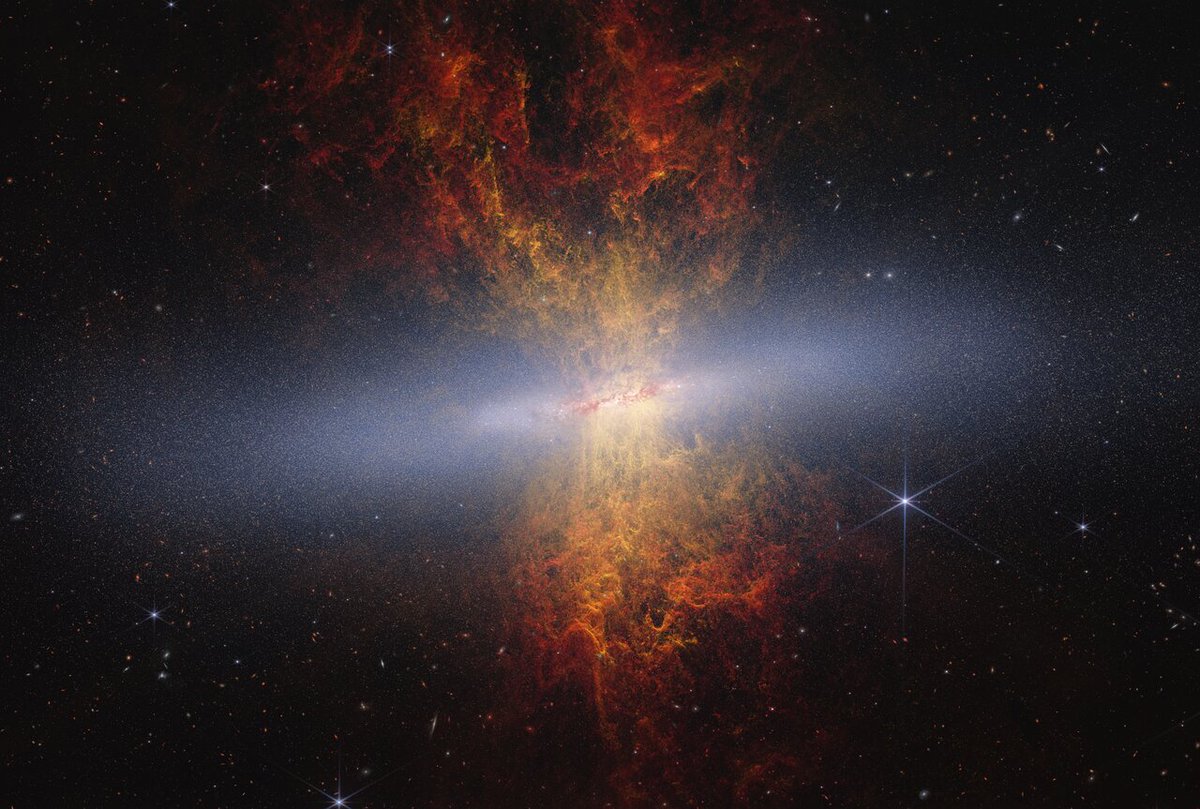
🆕 Webb has pinpointed millions of stars in the Cigar Galaxy!
The edge-on spiral galaxy Messier 82 (M82), also known as the Cigar Galaxy is a unique sight. It is undergoing tremendous star formation (thought to be the result of a galaxy merger) for a galaxy of its size and location. 1/3
🆕 Webb has found clues to the ancient origins of 3I/ATLAS!
As the interstellar comet 3I/ATLAS began moving away from the Sun in December 2025 ☄️ astronomers took the opportunity to study its chemical makeup with the #NIRSpec instrument on Webb. This allowed them to understand the environment in which the comet formed. 1/3
Saturn this morning through the 24in scope. Some ring spokes and the encke division are clearly seen in this view, with Rhea just 'above' the north pole.
My first view of Saturn since last year, crude video taken at the eyepiece @ 900x. Rings are opening up again which is a welcome sight.
Relatively stable conditions this morning given the low elevation above the horizon.
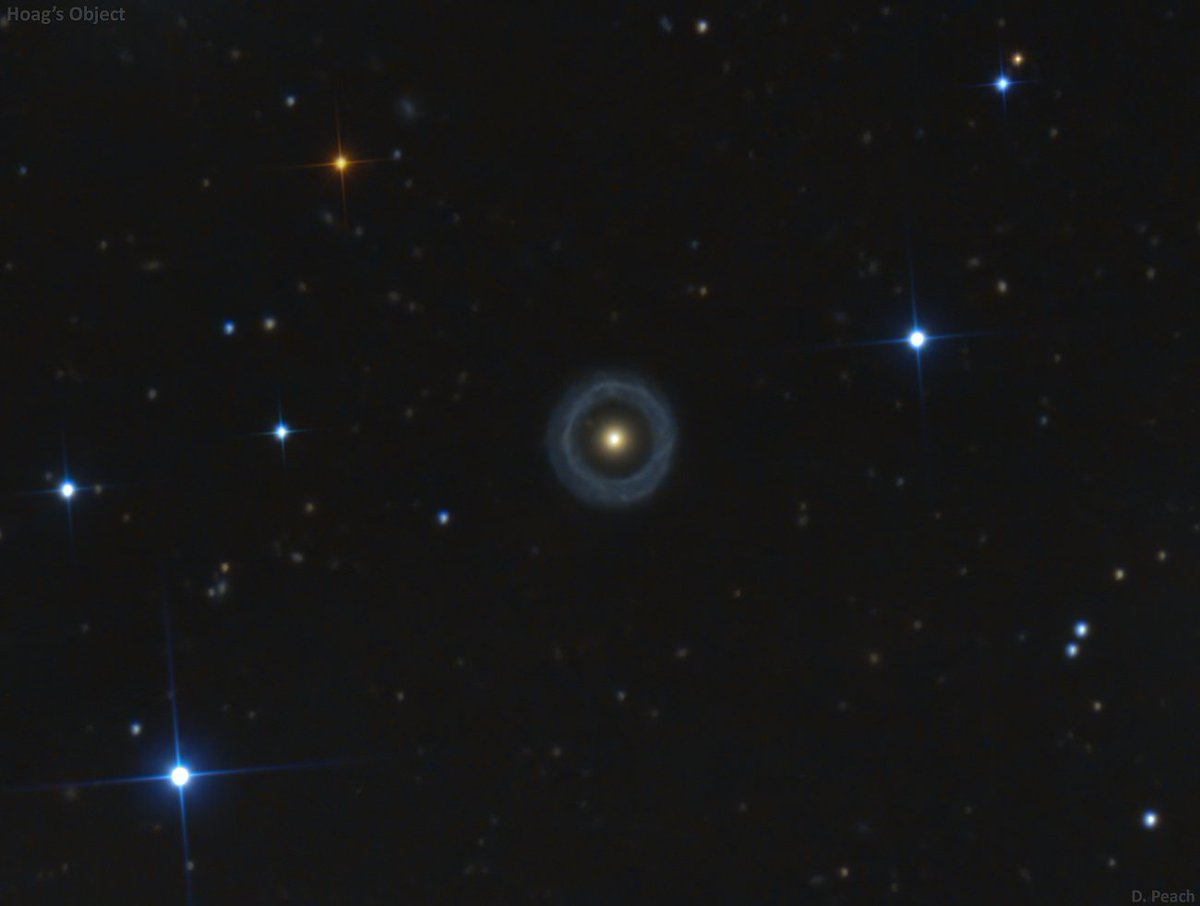
Here is a view of one of my favourite galaxies, and one of the most peculiar looking in the entire sky - Hoag's Object.
Located about 600 million light-years away in the constellation Serpens, it is a rare ring galaxy with a bright, yellowish core surrounded by a nearly perfect blue ring of young, hot stars. Between the two lies a dark gap, making the galaxy look almost artificial, like a cosmic eye floating in deep space.
Discovered by astronomer Arthur Hoag in 1950, this object puzzled scientists for decades. Its unusual shape may have formed after a collision or gravitational interaction, though no obvious companion galaxy remains nearby to explain it. The central core contains older stars, while the outer ring is rich in star formation.
Hoag’s Object reminds us that galaxies are not all neat spirals or ellipticals. Some are cosmic oddities, shaped by events we are still trying to understand.
This view combined data from two imaging systems totaling around 22hrs total time.
Webb teamed up with @NASAHubble to examine a relic from our galaxy’s formation. This object might look like a globular cluster of stars, but is actually something much odder and rarer - a “bulge fossil fragment.” https://t.co/5isHyQ92aV
Barnard's Star racing through space over a seven year period
Barnard's Star is a faint red dwarf located just 6 light-years away in Ophiuchus. It holds the record for the highest proper motion of any known star, racing across the sky at over 10.3 arc seconds per year, first measured by E.E. Barnard in 1916. This rapid apparent motion makes it shift noticeably against the far more distant background stars.
In 2024–2025, astronomers confirmed four tiny sub-Earth-mass planets orbiting it (Barnard’s Star b, c, d, and e). With masses between 0.19 and 0.34 Earth masses, these rocky worlds orbit very close to their star on periods of just 3–7 days.
Detected via precise radial velocity data from ESPRESSO and MAROON-X, they are far too hot for life but represent an exciting breakthrough in finding planets around one of our nearest stellar neighbors. A true cosmic speedster with its own planetary system!
Nine years ago today my colleagues and i shot what likely remains the highest resolution ground based image of Saturn ever taken.
We used the 1m F/17 Cassegrain telescope at Pic du Midi Observatory nestled almost 10,000ft altitude in the French Pyrenees.
Many rarely seen details were captured, such as the multiple fine ringlets within the C-ring. The narrow Encke division was captured around the entire ring system. This division is only 200 miles wide spanning less than 0.1 arc seconds in angular width.
Atop the globe of the planet the famous hexagon shaped feature is clearly seen - a fast moving jet stream that encircles the polar region.
Saturn's rings will not appear this open again until 2031 - perhaps by which time an even better ground based image will have been taken!
🆕 This is the strongest evidence yet for ‘black hole stars’!
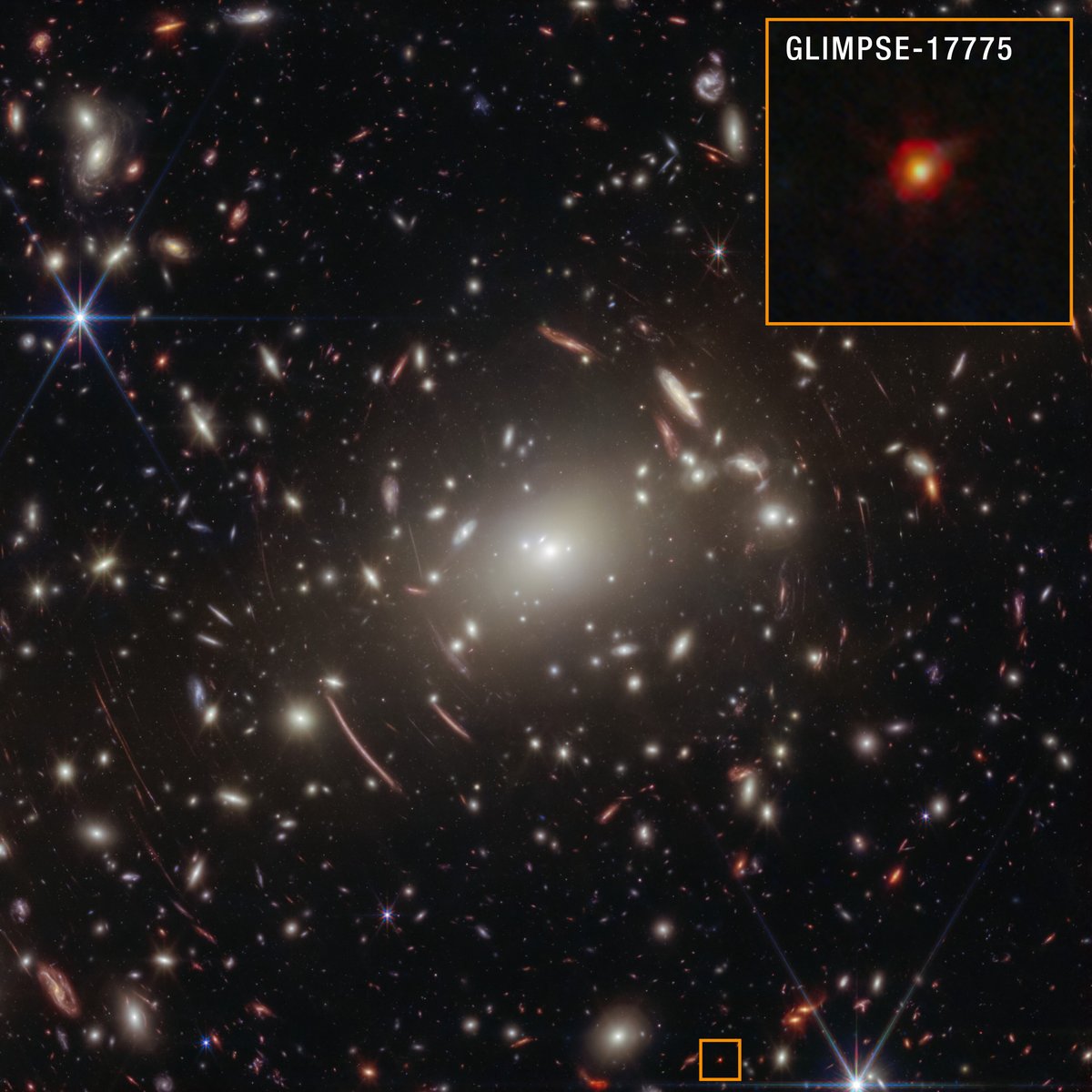
Soon after Webb began its observations, it discovered a mysterious type of object in the early Universe known as little red dots (LRDs). What could they be? 🤔 1/3
Captured by Anduril's network of 400 telescopes deployed around the globe:
The second stage of the Falcon Heavy launch of ViaSat 3-F3 performing a routine thrust event. This produced a spiraled-shaped plume effect, a nominal part of operations for a successful launch of Viasat's latest satellite.