Anthropic is on a historic run of hugely useful upgrades. Seems like there’s something new every day.
Big fan of these iterative launches, focused on one thing, rather than bundling 50 new things into a single launch.
Introducing Claude Design by Anthropic Labs: make prototypes, slides, and one-pagers by talking to Claude.
Powered by Claude Opus 4.7, our most capable vision model. Available in research preview on the Pro, Max, Team, and Enterprise plans, rolling out throughout the day.
A bobby pin costs two cents. The labor to find it in a garment, bag it, write a bilingual note, and deliver it to your room costs maybe $4-5 in staff time.
That math looks insane until you zoom out.
Japan's hospitality philosophy has a name: omotenashi. It originates from the tea ceremony tradition of Sen no Rikyū in the 1500s. The core idea is anticipating a guest's needs without any expectation of return. No tipping culture. No service charge. The bobby pin gets returned because returning it is the standard, and the standard exists because every interaction is treated as a once-in-a-lifetime encounter.
The Japanese phrase is ichigo ichie: one time, one meeting. You will never serve this exact guest in this exact moment again. So the bobby pin matters.
Here's what that philosophy produces at national scale. Japan hit 42.7 million international visitors in 2025, up from 31.9 million pre-pandemic. Tourism spending reached $60 billion. The country ranked 3rd globally in travel competitiveness, highest in Asia. Repeat visit rates are so high that many travelers return within 1-3 years.
No marketing budget generates that kind of loyalty. A country where a hotel laundry worker bags a two-cent hair pin and writes you a thank-you note in two languages does.
Western hospitality optimizes for service metrics, tip incentives, and loyalty point programs. Japanese hospitality optimizes for the feeling you can't quite articulate when you get home, the one that makes you book the return flight six months later.
The bobby pin is the product.
Open AI could talk all day about context windows, and other factoids. But that doesn’t help the average user grasp what’s possible for THEM.
Instead, a simple story about a farmer tells you everything you need to know about how to succeed with the product.
When you see one use case, you can imagine hundreds more for yourself.
Compare that to an ad that says “NEW: context window of 1 million…”
TELL MORE STORIES
Over 300M people use ChatGPT to learn how to do something every week.
More than half of US ChatGPT users say it enables them to achieve things that previously felt impossible.
These are just a few stories of what they are building.
When everyone has an advantage, it is no longer an advantage.
When everyone can learn and create anything at the click of a button, your advantage comes from slowing down, focusing on your craft, doing the right things manually, and acquiring knowledge that is so specific to you that nobody can generate it with AI.
Nine years ago, I launched Founders (@FoundersPodcast).
Today, I'm launching a new podcast called David Senra.
The first episode goes live this Sunday. Subscribe wherever you watch or listen to podcasts.
Founders will still come out every week.
@scicomm // @hubermanlab
BIG one today. Introducing:
- AI Meeting Notes (never take notes again)
- Enterprise Search (find answers across all your tools)
- Research Mode (auto-draft polished docs)
- Model picker (chat with GPT-4.1 & Claude 3.7 directly)
- All-in-one pricing (AI now included on Biz plan)
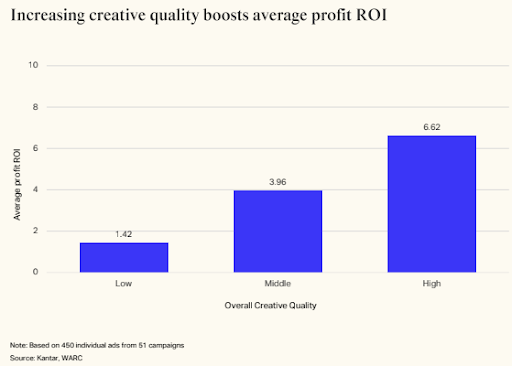
"High-quality creative drives more than four times as much profit as low-quality creative"
Research from 450 ads across 51 campaigns.
"The research shows that both short-term and long-term metrics of creative quality drive ROI, but the long-term component correlates more strongly with profit ROI. This reinforces the need for both long-term and short-term elements across ads within a campaign, regardless of immediate objectives."
(Source: Kantar, WARC)