One of my favorite investing videos out there!
Seth Klarman rarely does interviews. Fortunately, he did this one.
It's only 14 minutes. Watch it before you go to bed tonight. It's worth it:
This is Stan Druckenmiller.
His hedge fund generated 30% returns for 30 straight years.
He called Nvidia, he called the housing crisis, and he nearly broke the Bank of England.
Here's 6 pieces of advice he gives investors:
Paul Graham on how to make yourself a big target for luck:
“When you read biographies of people who've done great work, it's remarkable how much luck is involved.
They discover what to work on as a result of a chance meeting, or by reading a book they happen to pick up.
So you need to make yourself a big target for luck, and the way to do that is to be curious.
Try lots of things, meet lots of people, read lots of books, ask lots of questions.”
Charlie Munger & John Collison podcast.
It's bittersweet listening to one of Charlie's final interviews.
His words of wisdom were always simple and straightforward.
Here're my 15 takeaways:
My notes from the NEW Poor Charlie's Almanack: The Wit and Wisdom of Charlie Munger turned into maxims:
1. Find a simple idea and take it seriously.
2. Good ideas are rare. When you find one bet heavily.
3. Humans have been writing down their best ideas for 5,000 years. Read them.
4. Avoiding stupid mistakes is more important than being smart.
5. Don’t work with anyone you don’t admire.
6. Don’t sell anything you wouldn’t buy.
7. Avoiding a bad habit is easier than breaking a bad habit.
8. Work on your best idea. Don't diversify
9. Incentives rule everything around you.
10. Never, ever, think about something else when you should be thinking about the power of incentives.
11. The most important rule in management is: Get the incentives right.
12. The storyteller is the most powerful person in the world.
13. Education is the process whereby the ability to lead a good life is acquired.
14. Be dependable for your tribe.
15. Trust is one of the greatest economic forces on Earth.
16. Don’t over optimize for growth at the expense of durability.
17. Great businesses are built by going ridiculously far in maximizing or minimizing one or a few things. Think Costco.
18. The combination of scale and fanaticism is *very* powerful. Think Sam Walton.
19. Do the unpleasant task first.
20. Don’t multitask.
21. Learning is changing behavior.
22. Avoiding stupidity for a long time *is* genius.
23. Many hard problems are solved best when approached backwards.
24. Think of ideas as tools. When a better tool comes along use it.
25. Clip your business and personal expenses. Small leaks sink big ships.
26. Make friends with smart dead people. Adam Smith, Darwin, Cicero, Ben Franklin —whoever interests you. Read their writing. Steal their ideas. They don’t need them anymore.
27. Only focus on great businesses and great businesses have moats.
28. Dominating a niche can produce profit margins that make you salivate.
29. Telling people WHY increases compliance.
30. Stay in the game long enough to get lucky.
31. Stack cash to survive unexpected problems and seize unexpected opportunities.
32. Don't confuse intelligence with invincibility.
33. Panic spreads and compounds quickly.
34. If you’re not winning —scale down and intensify.
35. Appeal to interest, not to reason.
36. Understanding opportunity cost is a superpower.
37. Don’t confuse the map for the territory.
38. People often interpret price as a signal for quality.
39. All human systems are gamed.
40. Beating back bureaucracy is a never ending battle.
41. The acquisition of knowledge is a moral duty.
42. Learning from history is a form of leverage.
43. Make sure your best players get the most playing time.
44. It is inevitable that bad things will happen to you. When they do get up, keep going, and remember the next maxim:
45. Self pity has no utility.
46. Find out what you are best at. Then pound away at it. Forever.
47. Envy is weakness.
48. The behavior of peer companies will be mindlessly imitated.
49. Emotion blurs judgement.
50. Only play games where you have an edge.
51. Avoid mob rule. Avoid demagogues. Avoid dogma. Avoid bureaucracy.
52. Optimize for independence.
53. Use money to buy freedom.
54. Aim for durability.
55. Keep the people who don’t matter from interfering with the work of the people who do.
56. What do you have an *intense* interest in? Do that for your living.
57. Self improvement has no end.
MUST READ 🙏
Remembering my teacher Charlie Munger - By Li Lu
Thursday, November 30, 2023
I was on a business trip in Asia on Tuesday when I got the call from the Munger family informing me that Charlie was in his final hours. I hopped onto the next flight I could find to California, and before departure, was able to talk to Charlie through the help of his daughter. Charlie had largely lost consciousness, but still I could clearly hear him trying to make a sound to acknowledge he had heard me. Upon landing, I learned that Charlie had left us a few hours earlier.
I arrived at his Santa Barbara home and had the opportunity to spend cherished time with family members, reminiscing about all things Charlie. Charlie was engaging, humorous and full of wit even at Thanksgiving dinner just a few days ago, family members told me. I visited his home library again. In that very room, exactly 20 years ago, also on a post-Thanksgiving weekend afternoon, following the introduction by our mutual friend Ron Olson, Charlie and I first struck up a deep conversation which ran for several hours. It began an investment partnership that has now endured two decades. Charlie became my mentor, partner, dear friend and above all, life-long role model.
I was so deeply grateful that the Munger family made a special arrangement the next day for me to say a proper and private goodbye to Charlie.
There, lying quietly with eyes closed, Charlie looked the same as ever, peaceful and sincere with a subtle smile on his face. There was a serenity about him. For a moment, I was reminded of the Living Buddhas I once saw in the Buddhist temples of Thailand. In the Buddhist tradition, the bodies of truly enlightened monks, through life-long self-cultivation, can remain incorrupt, without any traces of mummification after death. In that moment, it is what I saw in Charlie, an enlightened sage with an incorruptible body, surrounded by a glimmer of eternal light.
Charlie was not a Buddhist. That vision can never be tested. But it is incontrovertible that his legacy and impact will live on for generations to come.
In our capitalist society, where do virtue, moral responsibility, truth-seeking and public service fit in? Charlie Munger answered these questions through his long exemplary life. He insisted on making money in the most morally sound way, entering transactions only when, if positions were reversed, he would comfortably take the other side. He sought worldly wisdom through life-long learning. He guided life with rationality devoid of mental deficiencies such as envy, resentment and self-pity. He faced and persevered through countless adversities with stoicism and equanimity. As he gained in wealth and stature, he showed little appetite for the trappings of that success, and instead spent his wealth on worthy causes and tirelessly spread his worldly wisdom to those who would listen, often with humor. He remained deeply engaged with family, friends, partners and the broader world with loving assiduousness through his last days.
In his later decades, Charlie Munger’s ideas began to spread across the world, particularly in the most populous countries of China and India. In China, the Mandarin language version of “Poor Charlie’s Almanack,” an anthology by and about Charlie Munger, sold over 1.2 million copies over the last 10 years. There, the educated class increasingly came to view Charlie as the embodiment of the modern-day Confucianism, maintaining a virtuous and enlightened life while embracing the market forces of capitalism. In time, that vision of modern Confucianism will be crucial for Chinese modernization and how China interacts with the rest of the world.
Charlie’s teachings will continue to spread, inspire and impact the world even more profoundly. That will be his eternal legacy.
Please retweet
Charlie Munger said:
Show me the incentive and I will show you the outcome.
Judge management by how they're incentivized.
And proxy statements reveal management incentives.
How to analyze the proxy statement in under 10 minutes:
96% people fail to get the most out of ChatGPT.
Hence, I have created the only ChatGPT Prompt Framework you need to learn.
Here is the breakdown for you:
(🔖Bookmark for later)
Let's start with a Use case:
Assuming that you are a Yoga teacher and want ChatGPT to build a social media Strategy for your business.
The whole prompt could be divided into multiple sections, where each section represent a different requirement.
Let's start with the first three parts:
➡️Context
➡️Target Audience
➡️Platform Selection
Context -
Context refers to the background information, circumstances, or details that surround a particular situation, event, or topic.
Target Audience -
- Who are the people you want to connect with through your yoga classes? Describe them.
- What are they interested in?
- How old are they?
- What do they like?
Platform Selection -
- Which social media websites should you use?
- Think about where your audience spends the most time.
Next up we have got,
➡️ Context Strategy
➡️ Posting schedule
➡️ Engagement and interaction
➡️ Metrics and tracking
Content Strategy -
- What should you post on social media?
- Think about what kind of pictures, videos, and topics your audience would like
Posting schedule -
- How often should you share things on social media? - Decide how many times a week or month you should post so you can stay in touch with your audience
Engagement and interaction -
- How should you talk to people who comment on your posts or send you messages?
- Think about how to make them feel welcome and part of your community
Metrics and tracking -
- What numbers should you pay attention to? Look at things like how many followers you gain, how many people like your posts, and how many people see what you post.
- Use this information to do better
Last four factors are equally important -
➡️Branding and aesthetics
➡️Budget considerations
➡️Competitor analysis
➡️Long-term goals
Branding and aesthetics:
- How should your social media pages look? Choose colors, pictures, and styles that match your yoga business and make everything look consistent
Budget considerations -
- If you want to advertise on social media, how much money can you spend?
Think about your budget for promoting your posts or ads.
Competitor analysis-
- How can you learn from other yoga teachers on social media?
- Look at what they do well and try to do similar things or find ways to stand out
Long-term goals -
- What do you want to achieve with your social media in the long run?
- Set goals for what you want to accomplish over time
Tone - Make sure your responses sound professional and helpful, like you're giving advice to a business owner
Length - You've asked for detailed answers with explanations and examples, so the responses should give you a lot of information to help you understand what to do.
Here is the ChatGPT Prompt for the above use case -
I am a yoga teacher looking to establish a strong presence on social media platforms to connect with my audience and promote my yoga classes and services. I need guidance on creating an effective social media strategy.
Please help me identify and describe my ideal audience for yoga classes. What are their interests, demographics, and preferences?
Based on my target audience, suggest which social media platforms (e.g., Instagram, Facebook, TikTok) would be most effective for me to focus on, and why?
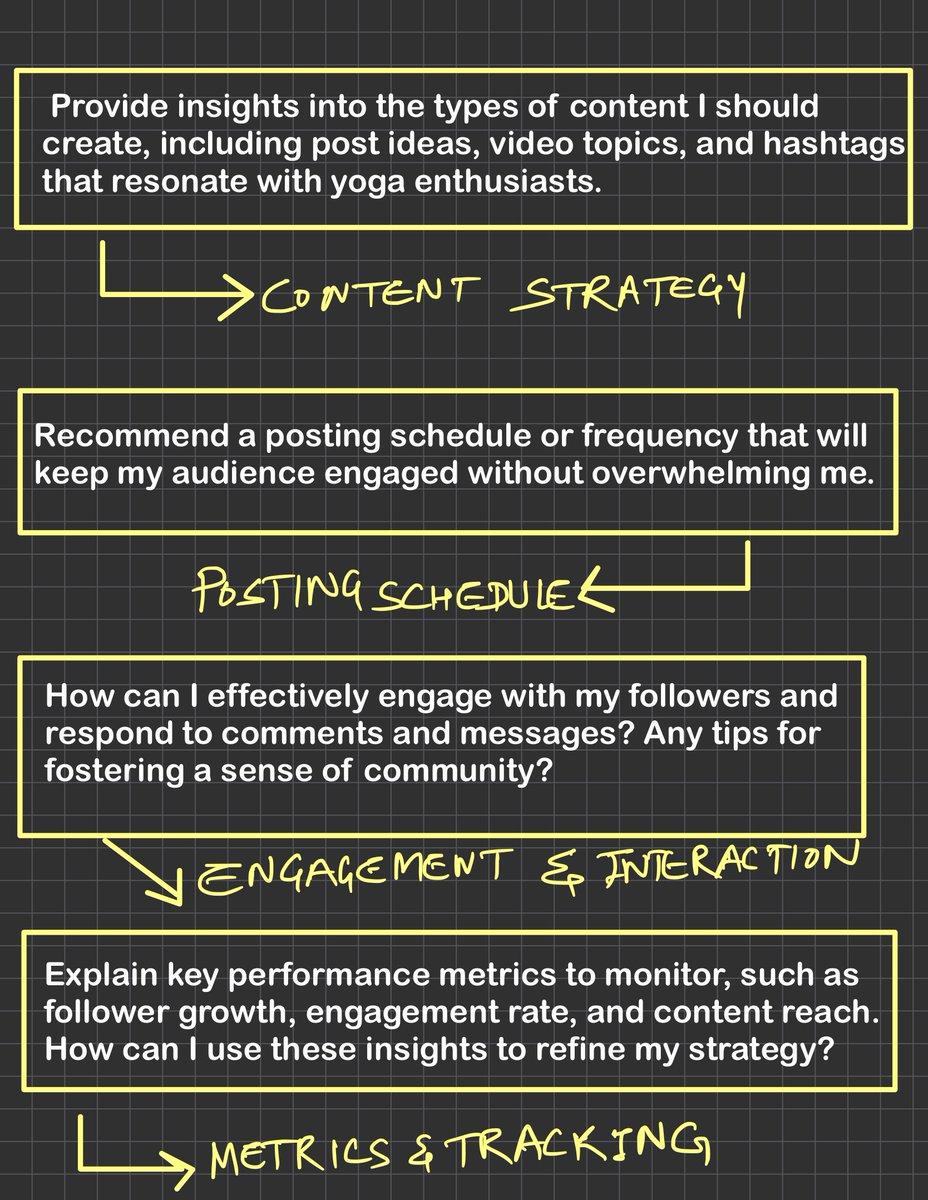
Provide insights into the types of content I should create, including post ideas, video topics, and hashtags that resonate with yoga enthusiasts. Recommend a posting schedule or frequency that will keep my audience engaged without overwhelming me.
How can I effectively engage with my followers and respond to comments and messages? Any tips for fostering a sense of community?
Explain key performance metrics to monitor, such as follower growth, engagement rate, and content reach. How can I use these insights to refine my strategy?
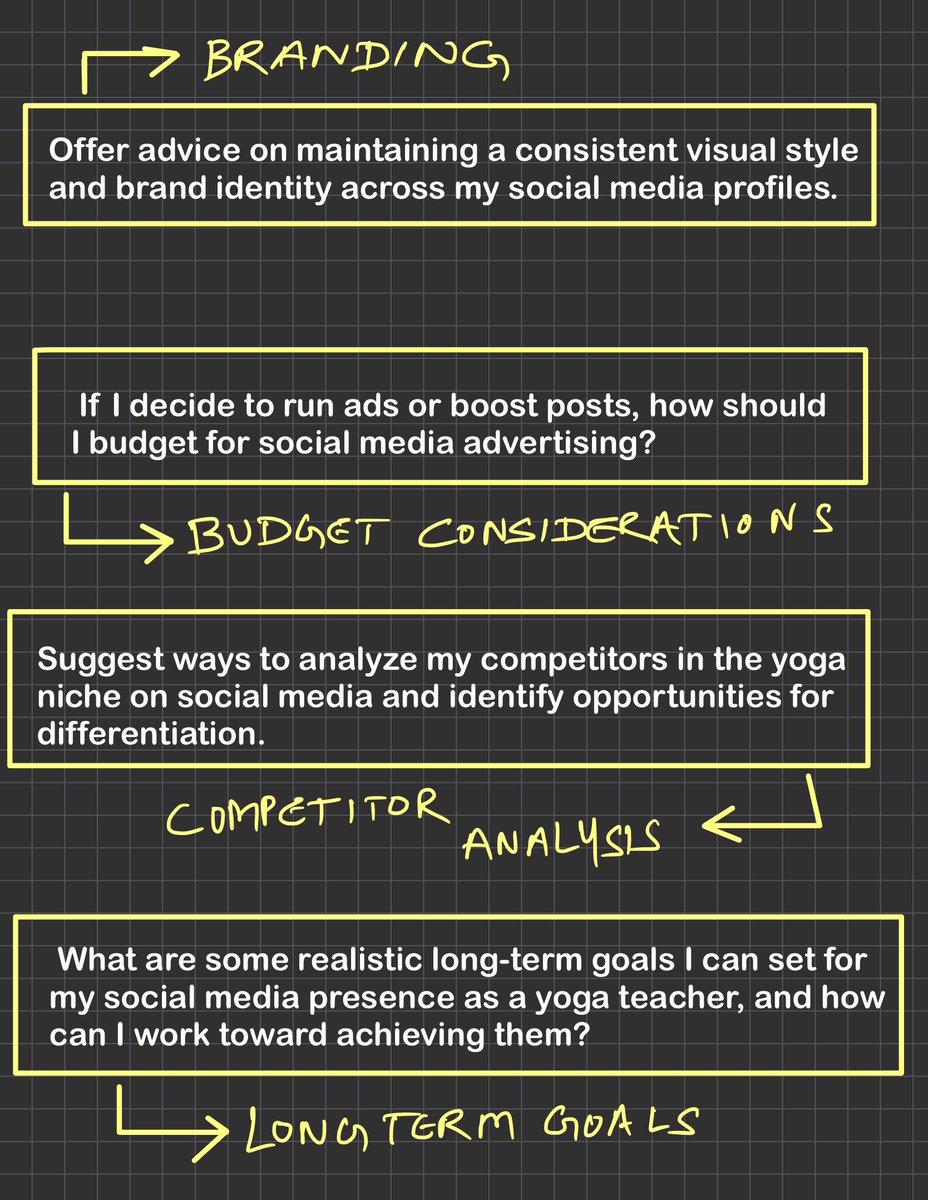
Offer advice on maintaining a consistent visual style and brand identity across my social media profiles.
If I decide to run ads or boost posts, how should I budget for social media advertising?
Suggest ways to analyze my competitors in the yoga niche on social media and identify opportunities for differentiation. What are some realistic long-term goals I can set for my social media presence as a yoga teacher, and how can I work toward achieving them?
Please provide professional and practical guidance for building a successful social media strategy tailored to my yoga teaching business.
Feel free to provide detailed explanations and examples to help me understand and implement the strategy effectively.
------------------------------------------------------------
That's a wrap!
1. Follow me @KanikaBK on X for more such content
2. Repost and share with your audience, if you find this information valuable
3. Schedule a 1:1 Personalised call with me, to get started with your passive income journey. I would be happy to help you.
The net worth of Jim Simons founder of Renaissance Technologies:
$30.7 billion.
His quant trading firm generated $100 BILLION in profits for investors.
He's returned 66%, per year, for 30 years.
The story of the CIA math genius who won the market:
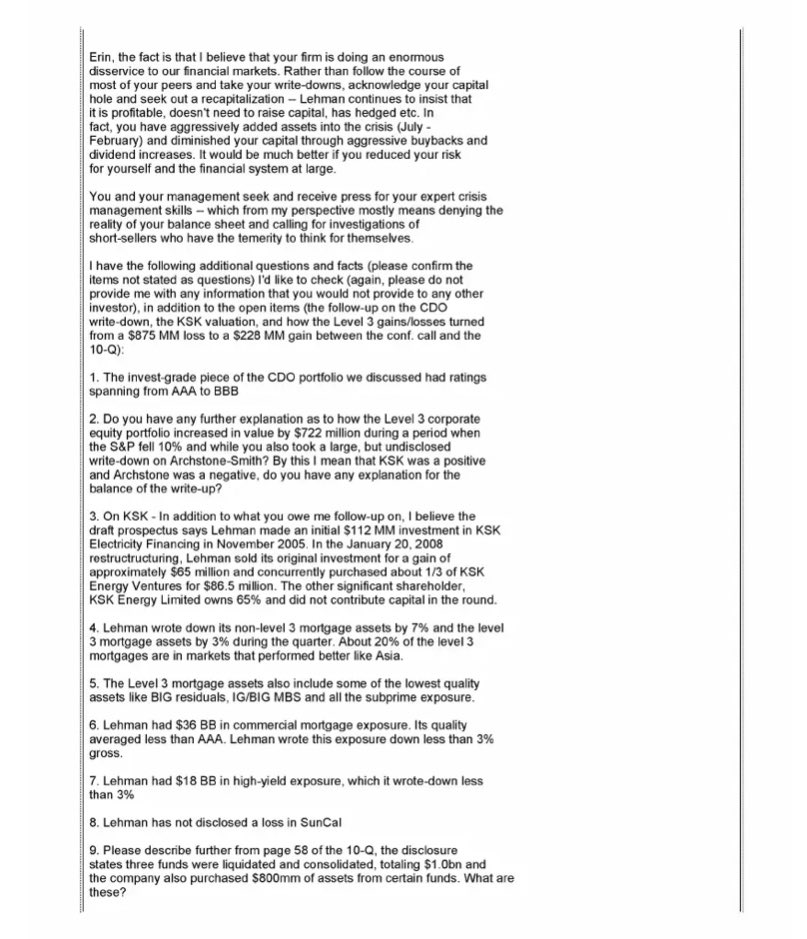
In 2007 , David Einhorn announced Lehman as a short at the Value Investors Conference
Here is his communication with Erin Callan , the then CFO at Lehman.
There are 4 basic competencies a good investor must constantly improve:
(1) Understand competitive dynamics
(2) Read through Accounting reports & develop a sense of co. culture
(3) Understand the people who run the co.
(4) A habit of constant learning
Li Lu, 2012
Berkshire’s Good Luck Hiring
“If Charlie and I and Ajit are ever in a sinking boat — and you can only save one of us," Warren Buffett once said, "swim to Ajit.
The Story of Ajit Jain
Berkshire’s Vice Chairman of Insurance Operations
My notes from Anna Wintour’s biography turned into maxims:
1. Hire talented people as found, not as needed.
2. Taste is as rare as a unicorn.
3.Your employees should describe you as “easy to understand.”
4.Pretend to be completely in control and people will assume that you are.
5.Have a sharp eye for the weaknesses of others.
6.Combine ruthless efficiency with hyper competence.
7.If you’re not early, you’re late.
8.Get to the point.
9.Emails don’t need a subject line.
10. A blueprint for building power in media: Ads, Advice, Relationships, Money
https://t.co/dp8vtuMASH decisive.
12.Powerful people associate with valuable brands.
13.Control all the ingredients.
14. Meticulously make friends with people who are the best in their field.
15. Nobody should know your niche as well as you.
16. Keep a strict professional schedule.
17.Recruit hungry young people.
18. Make decisions quickly.
19. Master the terse memo.
20. Read voraciously.
21. Always act in service of your mission.
22. Founders want information. They don’t want to be told what to do.
23. Passion, purpose, and discipline are universally admired.
24. Killing products is necessary to teach your team your standards.
25. Create an environment where excellence is expected.
26. People judge you by your performance so focus on the outcome.
27. Be the first to leave.
28. Be frank about your ambition. People can’t help if they don’t know what you want.
29. Quality over feelings.
30. The founder’s job is to make sure it’s done right.
31. Have no qualms about being completely focused.
32. Talent routinely makes the mistake of being self-absorbed instead of being of service.
33. Stay close to the money.
34. Money comes naturally as a result of service.
35. Media can invent celebrity.
36. The only predictable thing about you should be your passion for your product.
37. Self-confidence is contagious. Self-doubt is too.
38. You get two minutes, the second is a courtesy.
39. Control the guest list.
40. Resist any cheapening of the brand, however popular and lucrative it might be in the short term.
41. Relationships last longer than money.
42. Build up your entire industry and you rise automatically.
43. Repetition is the foundation of clarity of thought.
44. Don’t try to handle stress. Learn to enjoy it.
45. The story of the father is embedded in the daughter.
Here are 15 Books and Resources for aspiring Investors:
5 Books:
- "One Up On Wall Street" by Peter Lynch
- "Margin of Safety" by Seth A. Klarman
- "The Intelligent Investor" by Benjamin Graham
- "You Can Be a Stock Market Genius" by Joel Greenblatt
- "Value Investing: From Graham to Buffett and Beyond" by Bruce Greenwald
5 Ressources:
- Joel Greenblatt Investing Letters
- Warren Buffett Shareholder Letters
- Bruce Greenwald Class Notes
- Compilation of Charlie Munger Speeches
- Gannon Compilation
5 X Accounts:
- @BrianFeroldi
- @StockMarketNerd
- @ideahive
- @borrowed_ideas
- @iancassel
An easy way to grow socials is by "newsjacking" which is adding your thoughts and opinions to breaking news stories
Most don't have time for it (unless its your job to be on Twitter all day)
Here's some tips to keep you in the loop:
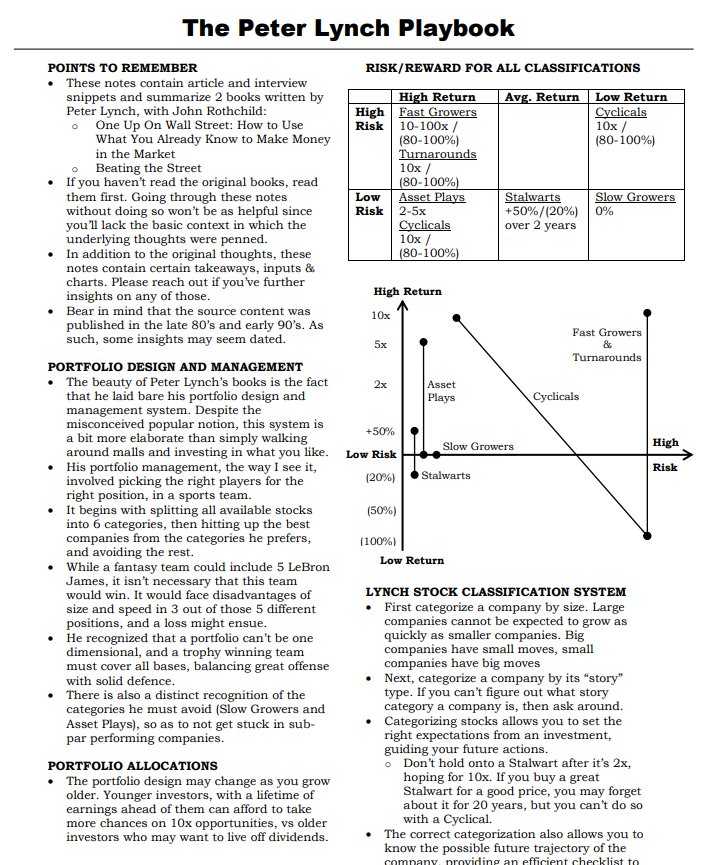
Peter Lynch once said:
«Never invest in a company without understanding its finances. The biggest losses in stocks come from companies with poor balance sheets.»
Here is a simple breakdown of how to analyze a balance sheet:
A monthly ritual that changed my life.
The Think Day
(bookmark this and try it later)
In the 1980s, Bill Gates began an annual tradition he called the Think Week.
Gates would seclude himself in a remote location, shut off communication, and spend a week dedicated to reading and thinking.
The radical approach became essential to his process:
"Think Week is a time when I can be creative and push my own thinking. It's a time to step outside the day-to-day demands of my job and really focus on the big picture." - Bill Gates
I first read about the Think Week a few years ago and knew I wanted to give it a shot.
I didn't have an entire week to dedicate to it (early career demands, family priorities, etc.), but figured I could adapt something with a similar core vision.
The Think Day was my creation:
Pick one day each month to step back from all of your day-to-day professional demands:
• Seclude yourself (mentally or physically).
• Shut off all of your devices.
• Put up an out-of-office response.
The goal: Spend the entire day reading, learning, journaling, and THINKING.
By doing this, you create the free time to zoom out, open your mind, and think creatively about the bigger picture.
My essential tools for Think Day:
• Journal and pen.
• Books/articles I've been wanting to read.
• Secluded location (at home, rental, or outside).
• Thinking prompts to spark my mind.
Six thinking prompts I've found particularly useful:
1. Are you hunting antelope (big important problems) or field mice (small urgent problems)?
2. How can you do less, but better?
3. What are your strongest beliefs? What would it take for you to change your mind on them?
4. What are a few things that you know now that you wish you knew 5 years ago?
5. What actions were you engaged in 5 years ago that you cringe at today? What actions are you engaged in today that you will cringe at in 5 years?
6. What would your 80-year-old self say about your decisions today?
I aim for an 8-hour window split into 60-minute focus blocks with walks in between.
You have to slow down to speed up.
In a speed-obsessed world, the benefits of slowing down are extensive:
• Restore energy
• Notice things you missed
• Be more deliberate with actions
• Focus on the highest leverage opportunities
• Move slow to move fast.
The Think Day can help. Give it a shot and let me know what you think.
***
If you enjoyed this or learned something, share this with others and follow me @SahilBloom for more in future!