Short 🧵for those interested in trauma on the mathematics of nonoperative management (NOM) of splenic injury -
And specifically: an argument explaining why you cannot have even ONE death from bleeding in a patient undergoing NOM in your *entire career*.
(1/ )
🧵regarding Lord of the Rings - related traumatic injuries, and whether access to modern Level 1 trauma centers could have decreased morbidity and mortality within the Fellowship.
Here we will take a more evidence-based approach to some of the injuries in Middle Earth
(1/ )
This essay from @lee_c_zhao is exceptional—especially coming from a surgeon who routinely takes on complex cases few others would touch. It reframes surgical complications as a wicked learning environment, and shows how treating them as pain rather than guilt fuels growth. I wish I had read this when I first became an attending.
https://t.co/FYSCTeGYtW
New in @JAMAInternalMed: Bressman et al. argue clinical AI should be regulated like clinicians, not like devices. This is spot on. AI is not a pacemaker; it doesn't fit the "Software as a Medical Device" mold. It's not static, not narrow, and not a one-time review. It practices medicine.
What the authors propose is licensure: prelicensure validation, supervised clinical pilots, defined scope of practice, continuing competency, discipline boards, malpractice accountability.
I agree with this 100%. And it correctly reframes the entire regulatory conversation. The question isn't "is this a safe device?", it's "is this a competent practitioner?"
https://t.co/rgmtQJoTay
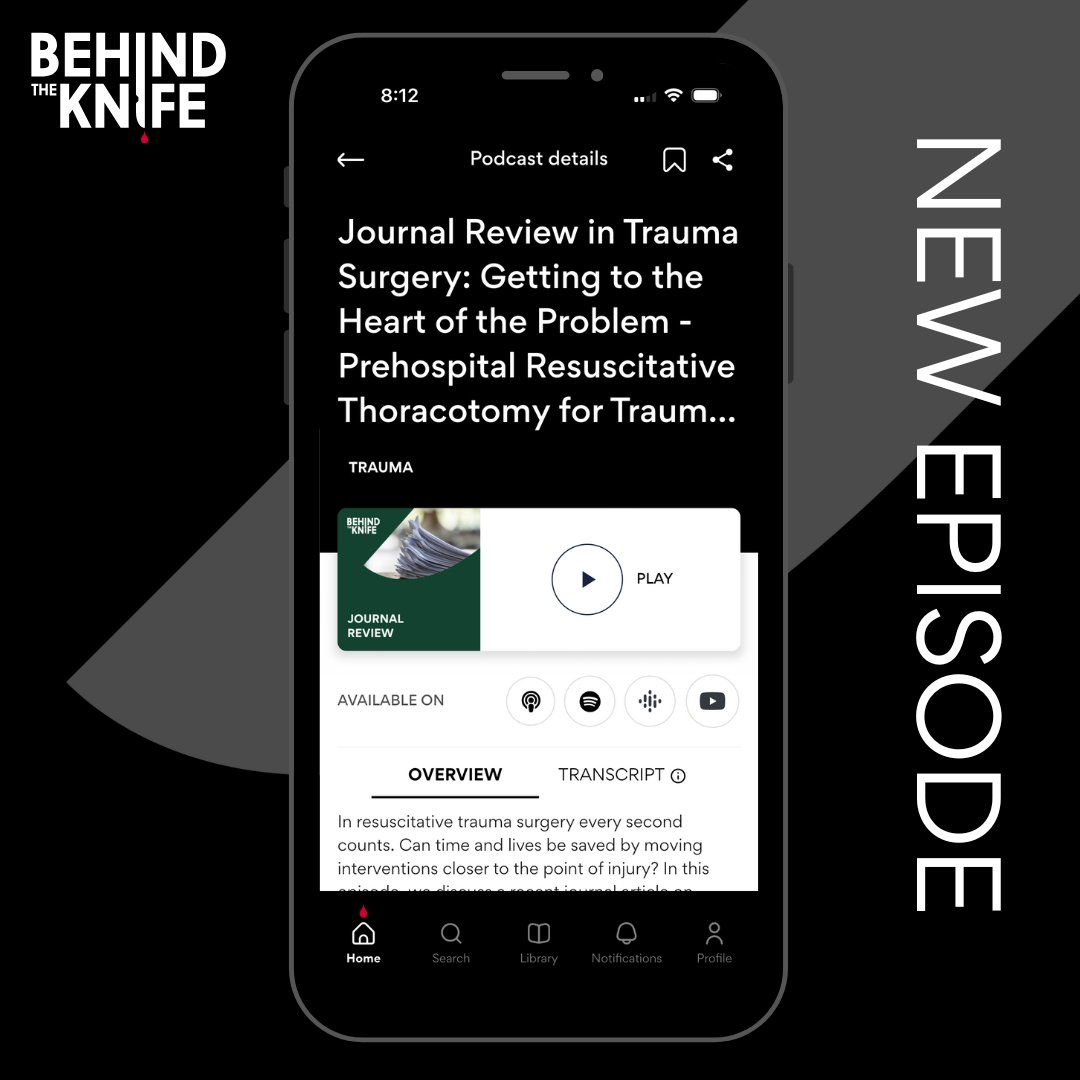
What a great pod 🎧 today! When you do 601 pre-hospital resuscitative thoracotomies, there is a lot to discuss ❤️🩹
Journal Review in Trauma Surgery: Getting to the Heart of the Problem - Prehospital Resuscitative Thoracotomy for Traumatic Cardiac Arrest
🔊🔊 https://t.co/5t2QvjRLo1
🌍 @MaxMarsden83 @cjaylwin @LonTraumaSchool@ZBPerkins
Our overview of and guidance for performance measures to evaluate medical AI is finally out!
- Stop bashing AUROC
- Calibration + clinical utility are key
- Plot risk distributions
- Classification measures are improper
https://t.co/m3xrAHDzdg
I am unreasonably excited about self-driving. It will be the first technology in many decades to visibly terraform outdoor physical spaces and way of life. Less parked cars. Less parking lots. Much greater safety for people in and out of cars. Less noise pollution. More space reclaimed for humans. Human brain cycles and attention capital freed up from “lane following” to other pursuits. Cheaper, faster, programmable delivery of physical items and goods. It won’t happen overnight but there will be the era before and the era after.
I took delivery of a beautiful new shiny HW4 Tesla Model X today, so I immediately took it out for an FSD test drive, a bit like I used to do almost daily for 5 years. Basically... I'm amazed - it drives really, really well, smooth, confident, noticeably better than what I'm used to on HW3 (my previous car) and eons ahead of the version I remember driving up highway 280 on my first day at Tesla ~9 years ago, where I had to intervene every time the road mildly curved or sloped. (note this is v13, my car hasn't been offered the latest v14 yet)
On the highway, I felt like a passenger in some super high tech Maglev train pod - the car is locked in the center of the lane while I'm looking out from Model X's higher vantage point and its panoramic front window, listening to the (incredible) sound system, or chatting with Grok. On city streets, the car casually handled a number of tricky scenarios that I remember losing sleep over just a few years ago. It negotiated incoming cars in tight lanes, it gracefully went around construction and temporarily in-lane stationary cars, it correctly timed tricky left turns with incoming traffic from both sides, it gracefully gave way to the car that went out of order in the 4-way stop sign, it found a way to squeeze into a bumper to bumper traffic to make its turn, it overtook the bus that was loading passengers but still stopped for the stop sign that was blocked by the bus, and at the end of the route it circled around a parking lot, found a spot and... parked. Basically a flawless drive.
For context, I'm used to going out for a brief test drive around the neighborhood to return with 20 clips of things that could be improved. It's new for me to do just that and exactly like I used to, but come back with nothing. Perfect drive, no notes. I expect there's still more work for the team in the long march of 9s, but it's just so cool to see that we're beyond finding issues on any individual ~1 hour drive around the neighborhood, you actually have to go to the fleet and mine them. Back then, I processed the incredible promise of vehicle autonomy at scale (in the fully scaleable, vision only, end-to-end Tesla way) only intellectually, but now it is possible to feel it intuitively too if you just go out for a drive. Wait, of course surround video stream at 60Hz processed by a fully dedicated "driving brain" neural net will work, and it will be so much better and safer than a human driver. Did anyone else think otherwise?
I also watched @aelluswamy 's new ICCV25 talk last week (https://t.co/RdaM23kvez) that hints at some of the recent under the hood technical components driving this progress. Sensor streams (videos, maps, kinematics, audio, ...) over long contexts (e.g. ~30 seconds) go into a big neural net, steering/acceleration comes out, optionally with visualization auxiliary data. This is the dream of the complete Software 1.0 -> Software 2.0 re-write that scales fully with data streaming from millions of cars in the fleet and the compute capacity of your chip, not some engineer's clever new DoubleParkedCarHandler C++ abstraction with undefined test-time characteristics of memory and runtime. There's a lot more hints in the video on where things are going with the emerging "robotics+AI at scale stack". World reconstructors, world simulators "dreaming" dynamics, RL, all of these components general, foundational, neural net based, how the car is really just one kind of robot... are people getting this yet?
Huge congrats to the team - you're building magic objects of the future, you rock! And I love my car <3.
It's 4:00 AM and a patient comes in with a stab wound to the heart.
Repair it by 4:02 and the patient will walk out in a few days.
Wait until 4:05, and he'll be wheeled out in a bag.
🧵regarding a few surgical pointers on repair of traumatic cardiac injuries.
(1/ )
Presented at #LIVES2025:
In the EVERDAC trial involving patients with shock, results for death at day 28 indicated that management without early arterial catheter insertion was noninferior to early catheter insertion. Full trial results: https://t.co/jgmThogrgL
Editorial: A Less Invasive Approach to Intensive Care https://t.co/o52QhF75l7
Exciting opportunity to join Major Trauma Service at the Royal London @NHSBartsHealth . 6/12 senior clinical fellow role for a surgeon with General Surgery or Vascular experience. Join the team to care for poly trauma patients at a world renowned centre. https://t.co/1hS7LxSfKk
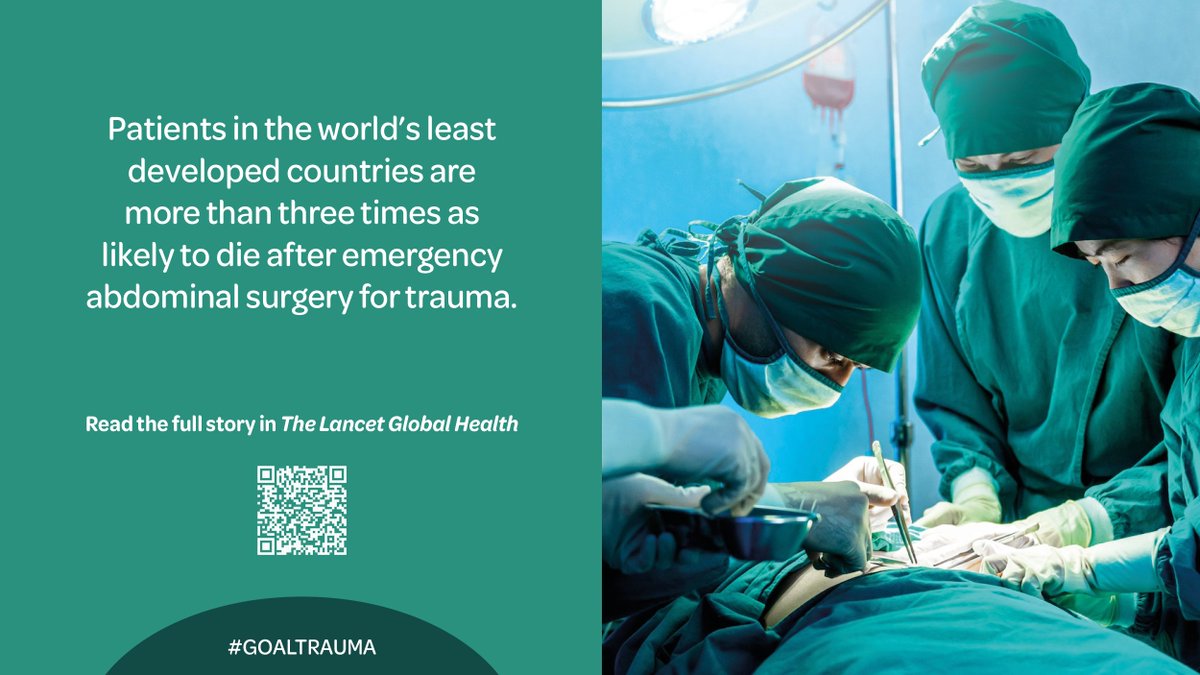
🆕 Our new publication in @LancetGH shows stark global inequalities in trauma care
Patients in the world’s least developed countries are 3x more likely to die after abdominal trauma surgery
Read here: 🔗 https://t.co/Gk3VHNS3lf
@ihsgcam@estesonline@PTCfoundation@RCSnews
As a neurosurgeon I care a lot about road safety.
By now you’ve probably seen @Waymo’s stunning safety results (like 91% fewer serious crashes). But they didn’t just publish data headlines. They released the raw CSV files and data dictionaries.
I did a much deeper analysis. A fascinating story emerges when you analyze how they’re achieving this.
This isn’t incremental improvement - it’s categorical. We’re looking at the potential elimination of traffic deaths as a leading cause of mortality.
The intersection breakthrough: Waymo has essentially solved intersection crashes, with 95% fewer injury incidents than human drivers in the same locations. That’s transforming the deadliest driving scenario.
The national math: If every US vehicle performed like Waymo, we’d prevent 33,000-39,000 deaths annually and save $0.9-1.25 trillion in societal costs. Even partial adoption at 27% would save ~10,000 lives per year. In terms of magnitude, this would be the equivalent of eliminating every pedestrian death nationally in a year.
The physics signature: Here’s what fascinates me: 47% of Waymo’s contacts involve less than 1 mph delta-V. They’re not just avoiding crashes; they’re converting unavoidable incidents into gentle bumps. It’s like having physics itself on your side.
We’re not talking about marginal safety gains. The data represents a fundamental shift from harm reduction to harm prevention.
The methodology matters: I used their dynamic geographic benchmarks (comparing like-for-like road conditions) and verified the findings hold across San Francisco, Phoenix, LA, and Austin. The safety advantage actually increases in more complex urban environments.
Link to raw data below….
Notes on my approach:
Analysis based on 96 million miles of Waymo Rider-Only (RO) data through June 2025, utilizing Waymo's dynamic geographic benchmarks to compare Waymo Driver performance against human drivers under similar road conditions and operational design domains.
The projections for national impact (deaths prevented, societal costs) involve several assumptions. Given Waymo's zero reported fatalities, the direct serious injury reductions were mapped to national fatality statistics using established NHTSA-derived ratios that correlate serious injury crash rates with fatality rates. This extrapolation assumes that Waymo's observed serious injury prevention capability would translate proportionally to fatality prevention. Societal cost savings are estimated by applying average per-fatality and per-injury economic costs (e.g., medical, lost productivity, quality of life) as published by NHTSA, scaling these national averages to the projected number of avoided fatalities and injuries based on Waymo's safety performance. These figures represent the potential annual impact if the Waymo Driver's safety profile were widely integrated into the national fleet.
@ethanteicher
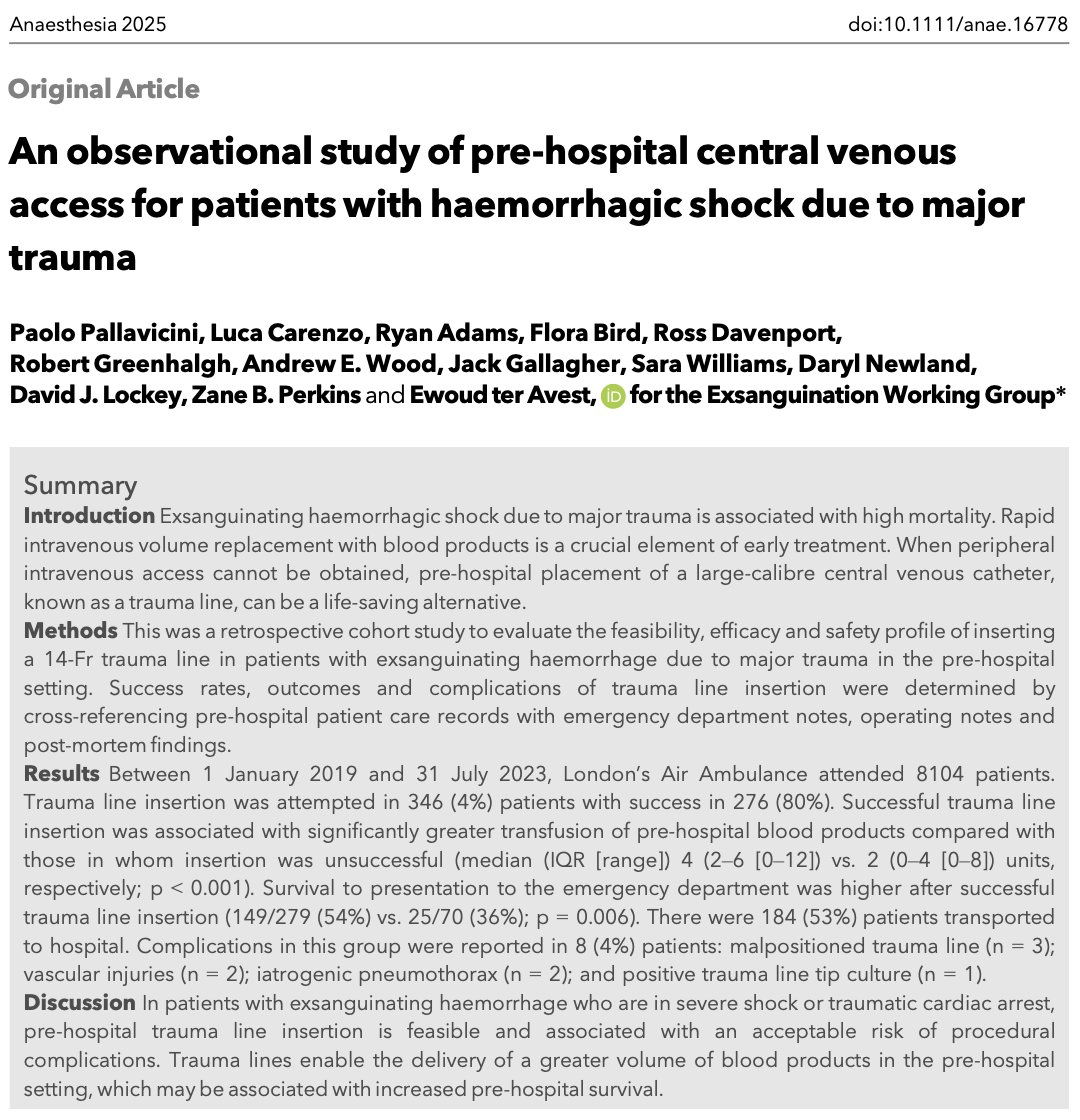
1/ 🚑 Excited to share our latest publication in @Anaes_Journal!
In prehospital major trauma patients with severe haemorrhagic shock, when peripheral IV access fails, a large-bore trauma line can be life-saving. 🚁
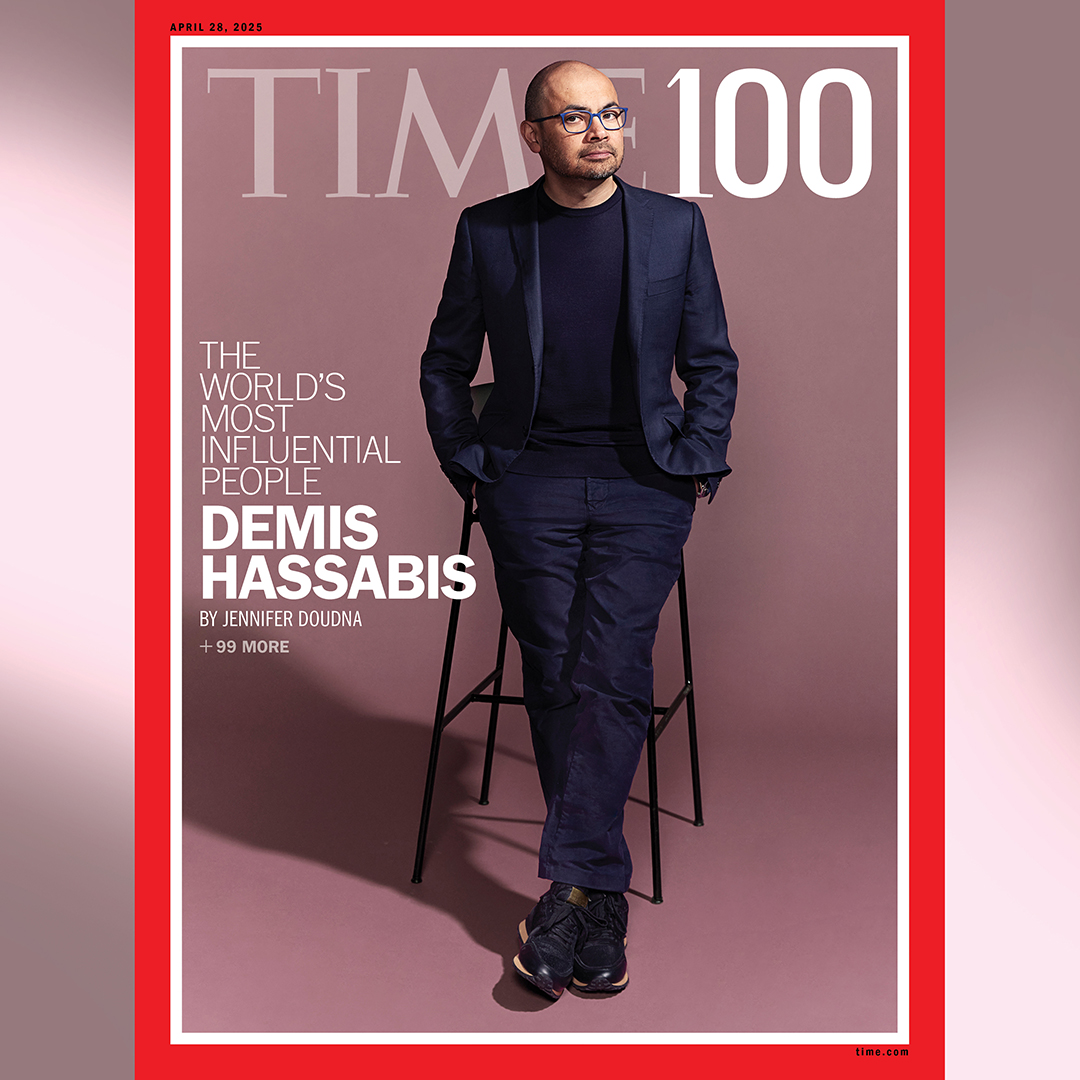
This is Demis Hassabis.
He’s Google's DeepMind CEO, who’s studied AI for 30+ years.
In his new interview with 60 Minutes, he revealed mind-blowing facts about health & AI that 99% of people wouldn’t know.
Here are my top 8 takeaways: 🧵
(No. 6 will shock you)