What ZelionTech builds:
ZEV is a validation node at the inverter or meter. It signs every solar and battery reading at the source and anchors the proof on BNB Chain.
Registries, buyers and lenders can verify the energy was real.
https://t.co/p11LYom7Gl
@DIMO_Network When Claude says 'you drove 412 miles', whose number is that: the car's odometer via the OEM, or GPS distance summed by the DIMO device? Matters the day someone bills or insures on it.
@GEODNET Grids lean on the same satellites with far less pressure: at 50 Hz, 1 µs of clock error is 0.018° of phase, which a synchrophasor barely notices. To a rover it's 300 m.
@gate_ventures GPUs age out years before the power contract behind them does. When compute gets financed onchain, which is the collateral: the hardware, or the PPA?
@arkreen_network Flagging is the easy half. What happens to the record after a flag: does the fix overwrite the old value, or sit beside it with a reason and a timestamp?
@starpowerworld 261 kWh shared by up to 32 GPUs: is the battery sized to ride through outages, or to shift solar into the compute load? And is compute draw metered apart from storage throughput?
@Gwenole_M Does either track take hardware-backed projects, say a device that signs meter readings and anchors the hashes on BNB Chain? Or is it software only, built on site in the three days?
@ModoEnergy Zero headroom on transmission, 32 groups on Energa's 110 kV, none on Tauron's. Does 'fits in both directions' assume firm import and export, or would flexible connection terms change the count?
@BNBCHAIN@ZIGFinance@LaserDigital_ A pooled credit token is only as good as its loan tape. Who attests repayments and defaults for the SME pool, the originator or an independent servicer, and how often is it refreshed?
Start with a real site.
Not a slide. A building, a plant or a renewable asset with its own meters and its own quirks.
Talk to ZelionTech about pilots and integrations. https://t.co/p11LYolzQN
A correction should leave a trail.
Mistakes happen. A sensor drifts, a meter is swapped, a value is revised.
Keep the revised dataset connected to the original. A correction you can follow is a correction you can trust.
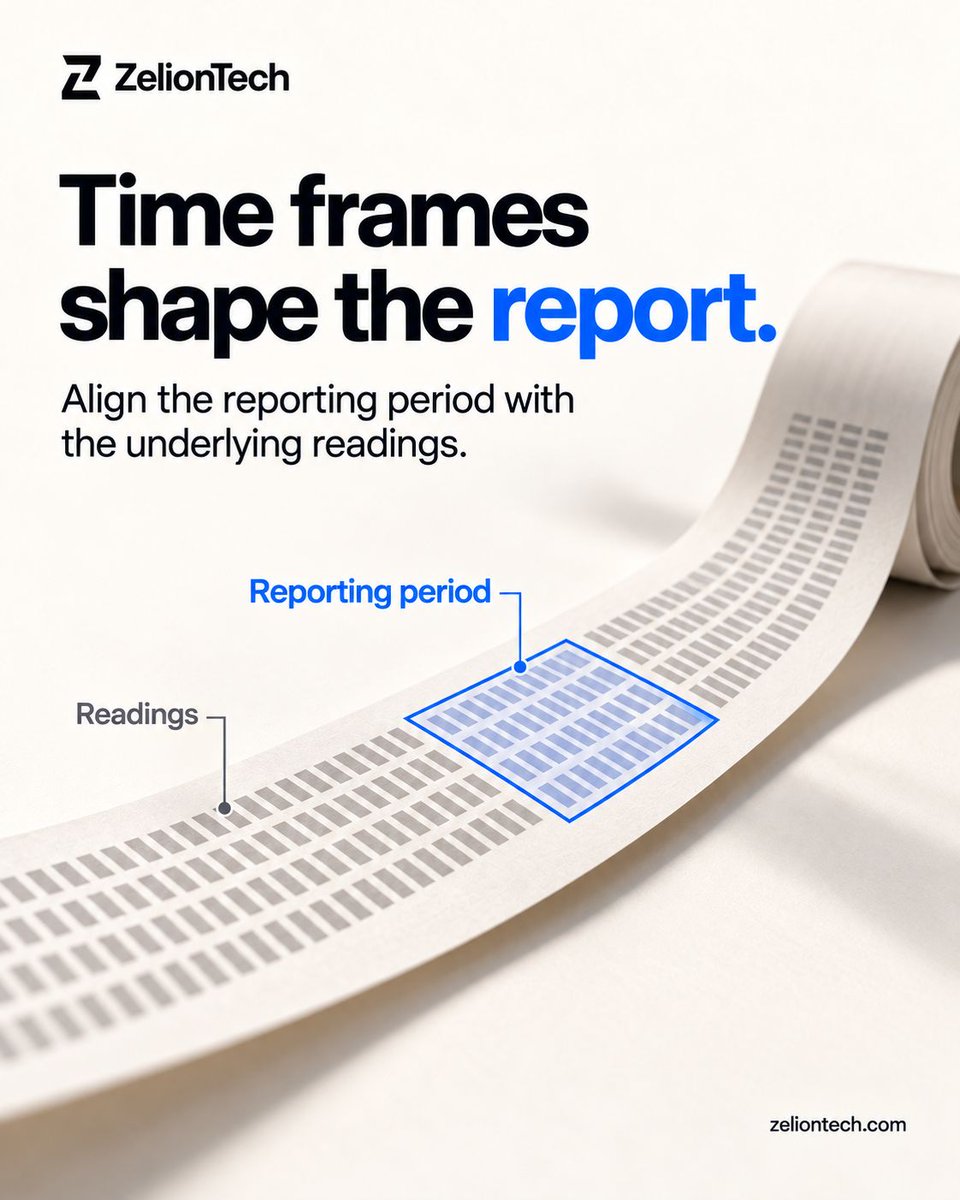
Time frames shape the report.
A month of readings cut at the wrong day, or a quarter that starts mid week, quietly changes the result.
Align the reporting period with the underlying readings.
Rated capacity is only the beginning.
The nameplate says what a turbine can do. Wind speed, temperature, curtailment and downtime decide what it did.
Operating conditions shape renewable output. Measured output is the number that matters.
@GEODNET Solar has a fifth: one tracker pile driven off its survey point, and the torque tube won't line up with the rest of the row. Are pile crews on network RTK yet, or still a base on site?
The work behind MRV.
Measurement: readings you can trace. Reporting: a format others can check. Verification: an independent look.
Three jobs. The first one is where ZEV is designed to help.
@ForumEIectrical Where the meter sits changes the headline number. Round-trip efficiency measured at the DC racks and at the grid connection can differ by several points once PCS, transformer and HVAC losses land.
@0xKiter@TapeOutWorld@XLayerOfficial First thing I'd check: the binding. If the tag is a sticker, a clean history can be peeled onto a mined card, so read the same ID off the running GPU. Second: anything before enrollment is hearsay.
Data has more than one reader.
Operators want live detail. Reporting systems want clean totals. Partners want a defined slice, nothing more.
Enterprise APIs are part of the ZEV Pro design.
Know which ZLN you are viewing.
Tokens with similar names exist on every network. The ZLN contract address is published on https://t.co/p11LYolzQN.
Verify the network and the contract before you trust a listing.
Not financial advice.
@LocaleNet A 20 ppm crystal drifts about 1.7 seconds a day, close to a minute a month. Survivable on 15-minute meter intervals, fatal for proofs that need the second, Clock sync belongs in the BOM
@Pai3Ai Hardware gets faked all the time: emulated nodes, spoofed GPS, replayed logs. Harder to fake: a key sealed in the device signing each reading, and physics checking the numbers.