Judging by the comment section it appears that many don’t really understand the currency debasement trade.
You can now legally long BTC spot WITHOUT counterparty risk (Swiss law keeps crypto off of balance sheet - hence bankruptcy remote) while shorting FIAT at the (arguably) most convenient moment in history.
You can now borrow fiat against your BTC at a regulated bank and still keep a private key on your BTC.
Fiat banking now moving towards BTC’s native protocol.
Massive unlock for institutional and TradFi flows if they nail options right.
Considering the team’s track record, pretty dumb that markets aren’t pricing it already.
🇸🇬 DAS: Hyperliquid founder @chameleon_jeff says at @blockworksDAS that options are the obvious next piece for the platform, so traders can hedge them against spot and perps on the same order books.
@longsuncapital@shaundadevens Well, It would depend on many other factors too, but being a swiss resident does simplify a part of the equation. Btw, I do work at Sygnum, so happy to take any feedback on the peculiar situations you encountered (you can DM me).
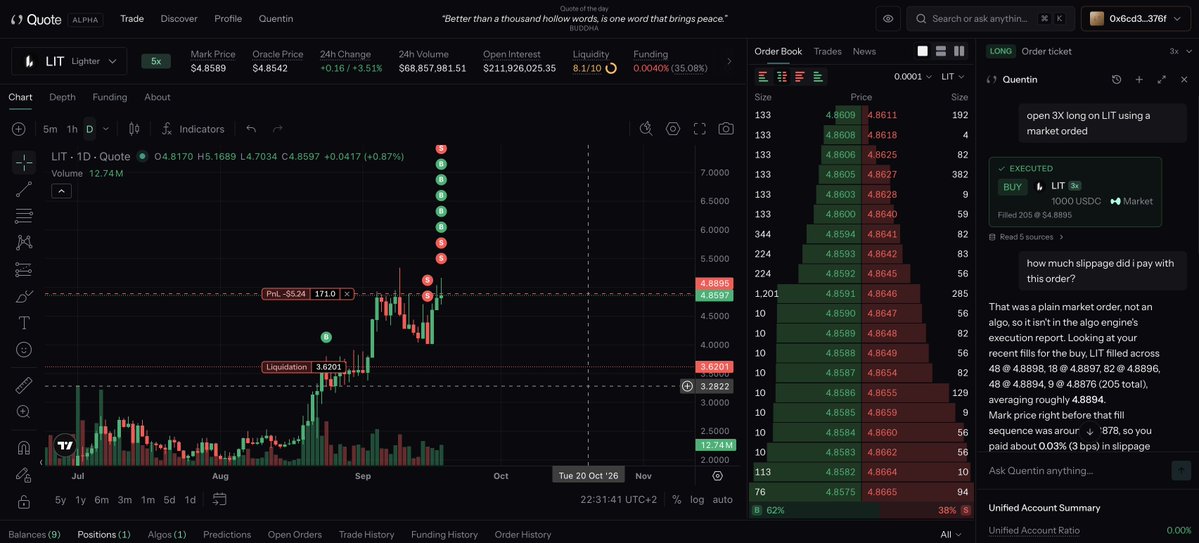
Discovery is now live on Quote.
Earnings calendar, liquidity flows, fear & greed index, and much more - all on one page.
Users with alpha access can now access Discover in their terminals.
Bring your trading to ultra-performance on Quote.
15 years ago, if you did the responsible thing & bought $10,000 of 'risk-free' long-term Treasuries, you'd have $11,072 today.
If instead you spent $9,995 on drugs & $5 on bitcoin, you'd have $42,778 today.
normies always hate on X and say you shouldnt get your political, econ or investment news from here
but where else in the world can you get a peer review of dozens of people arguing for or against your argument?
Again, incorrect. You are describing price impact due to settletment dynamics, not hedging.
Of course one can also buy spot to hedge its derivative position, but this would have the opposite effect in the price. The mechanism you defined is the underlying being sold to settle the option as the calls sellers get called.
“Los impuestos son un robo a gran escala, porque atentan contra el derecho de propiedad y su finalidad es mantener a una casta de parásitos que viven a costa de los gobernados.”
Murray Rothbard
“Algunos izquierdistas creen que el mundo comunista funcionaría bien si la «gente buena» estuviera a cargo de él. No se dan cuenta de que, por definición, la gente buena no quiere controlar la vida de los demás.”
Ludwig von Mises
@Route2FI@quotemarkets fixed this for HL. On the flip side, I share the same issue on adverse selection for Variational orders, where I only get filled of the trade is going against me.
Normies will read this and think you nailed it. You can only grow so much with failure for each set. Complete disregard for longevity and injury prevention? 5-20 is as vague as it gets? Most of the literature clearly states that consistent progressive overload is the key and you do not need to destroy your body anyways.
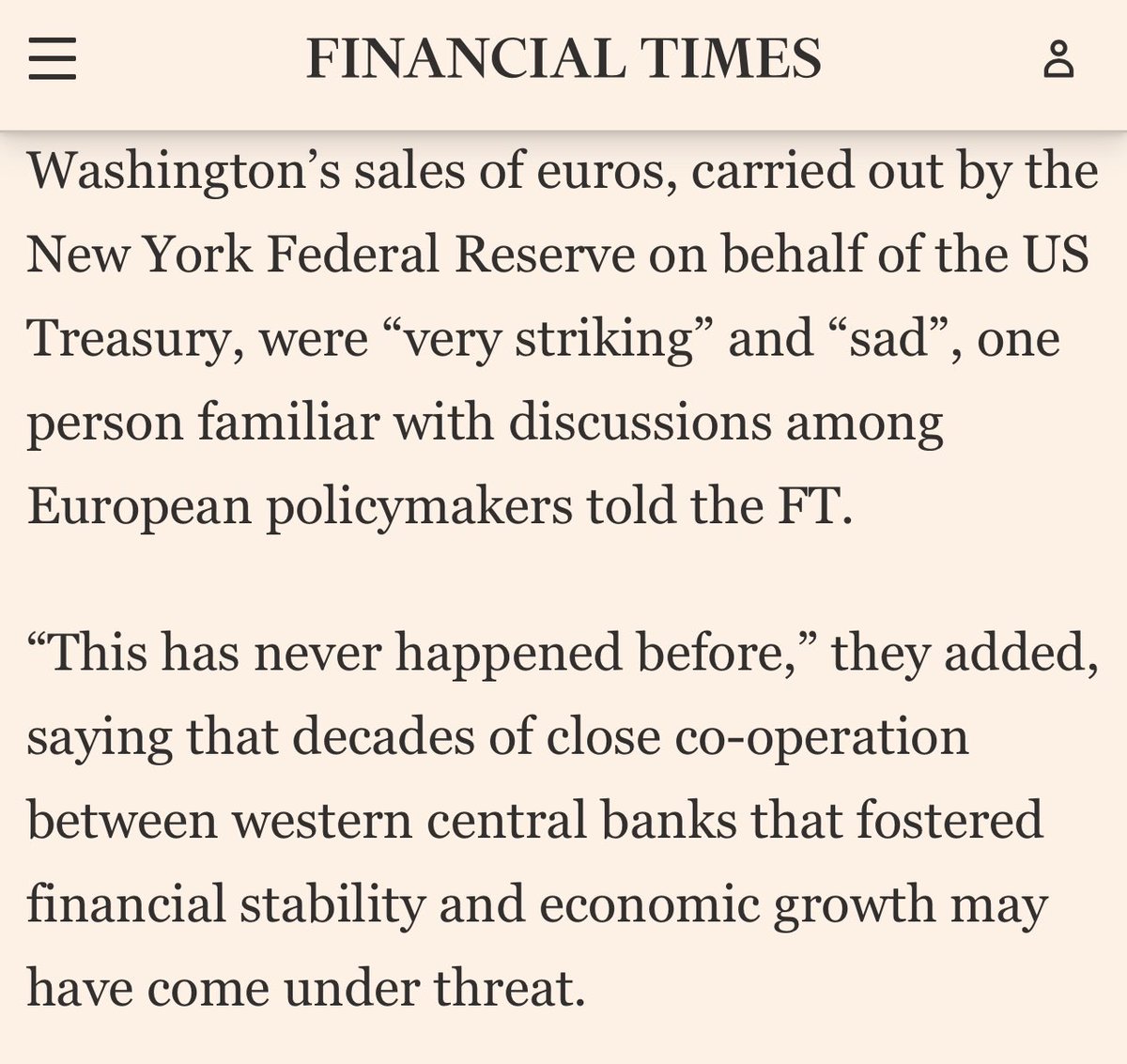
The United States sold euros to buy yen without telling the ECB until after the trade was done. Senior ECB officials called it “an unprecedented breach of longstanding conventions.” One said: “This has never happened before.”
Selling dollars to defend the yen would have contradicted Bessent’s strong-dollar policy. Selling euros avoided that problem. But selling a European asset to defend an Asian currency to protect an American bond market, without consulting the institution whose asset was sold, is not a currency intervention. It is the reserve architecture consuming the alliance architecture.
The reason Washington intervened at all is the part nobody wants to say plainly. Japan is the largest foreign holder of US Treasuries. The yen was at its weakest since 1986. If the yen falls far enough, Japanese institutions sell their most liquid foreign asset to raise cash. That asset is Treasuries. The selling pushes American yields higher at the exact moment the thirty-year just touched 5.28 percent. Washington did not intervene to help Japan. Washington intervened to prevent the Treasury market from absorbing a forced seller at a nineteen-year high in yields.
The convention that was broken to execute this trade is the same kind of convention the reserve confiscation broke in 2022. That one taught central banks their dollar reserves were not safe from seizure. This one taught the ECB that dollar-system cooperation is not safe from unilateral action by its architect. Both lessons point the same direction: build the alternatives faster.
The fix is eating the architecture it was built to preserve.