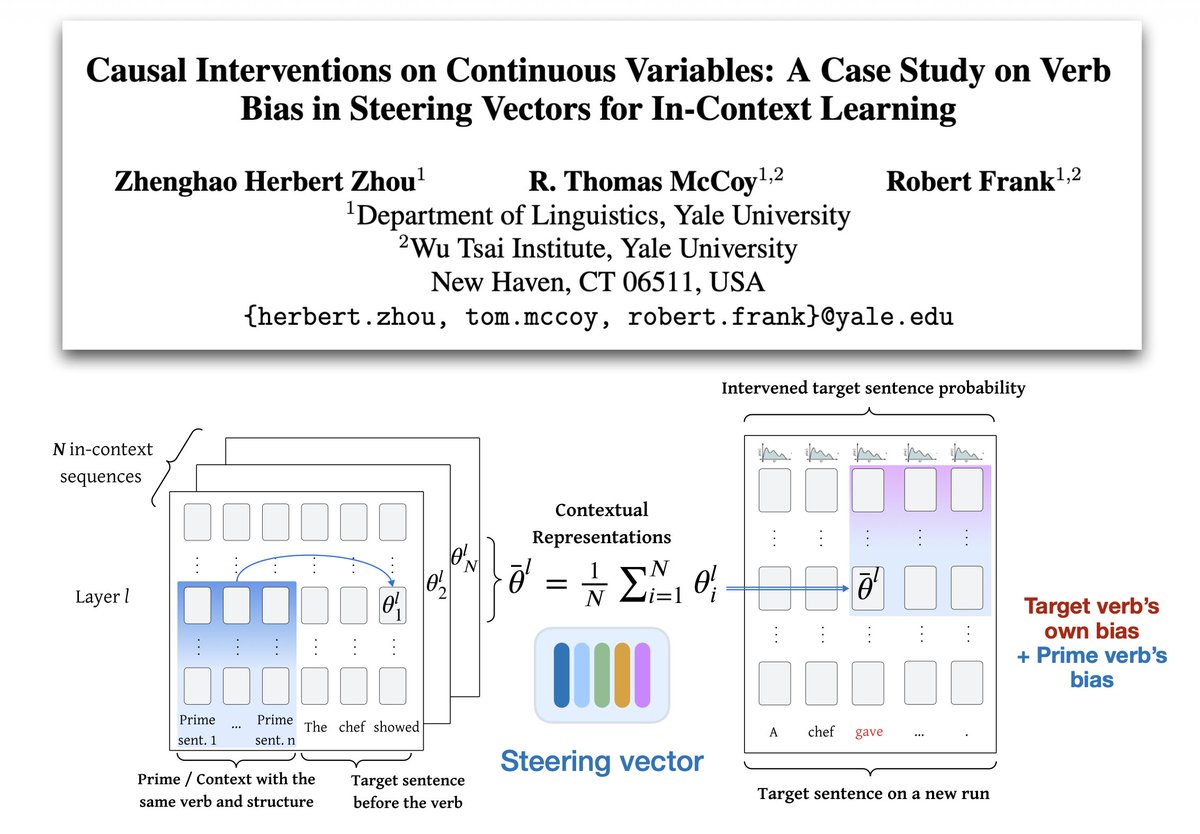
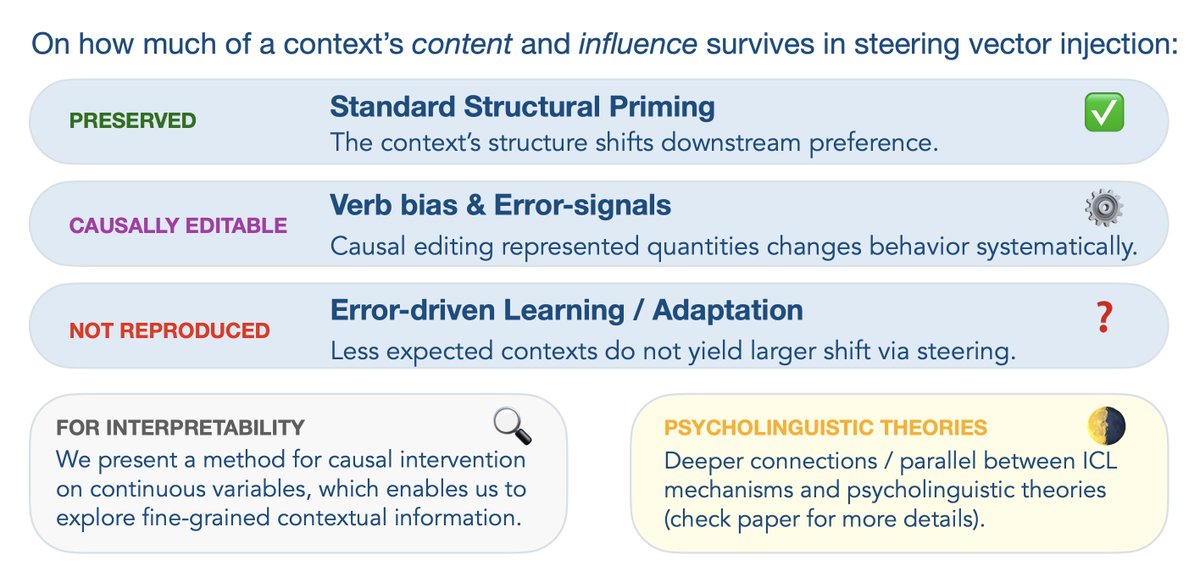
What survives when we compress context into a steering vector ?
At #EMNLP2026, I'll present a way to causally edit continuous variables inside these vectors ⚙️, with a case study in linguistic knowledge.
Oral presentation @ Oct 25 11:00am F8 Interp — starting in 12h✨ A preview
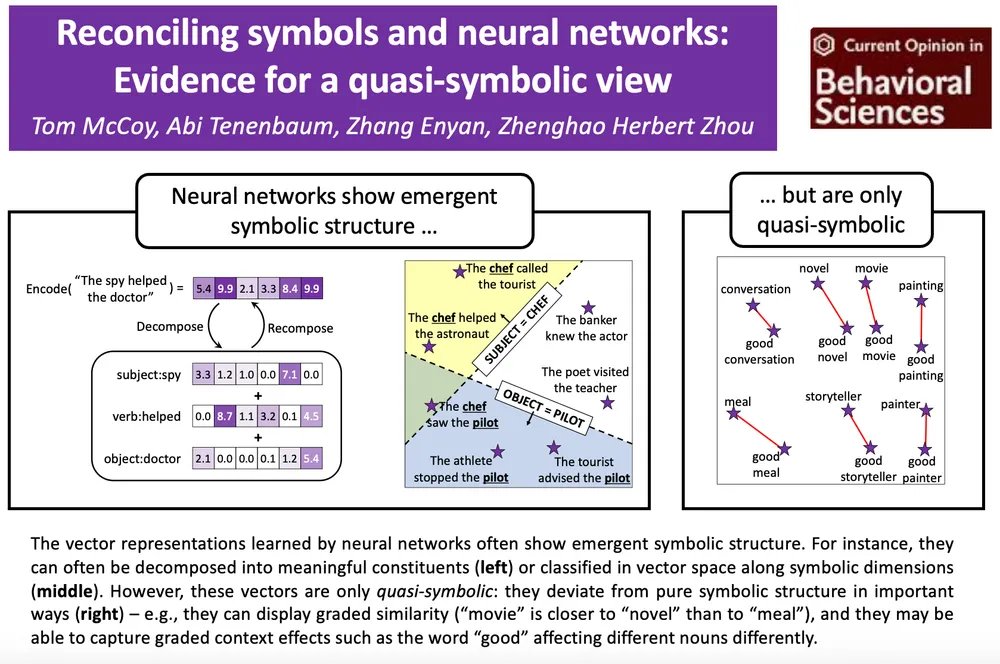
And I am very excited to discuss our recent opinion piece with @RTomMcCoy, Abi Tenenbaum, and @EnyanZhang — on how neural networks go beyond mere implementations of symbolic systems and deviate in important ways — the collective properties of being “quasi-symbolic”💡
🤖🧠NEW PAPER🧠🤖
What is the relationship between neural networks & symbolic systems?
Based on evidence from mechanistic interpretability, we argue for a quasi-symbolic view of cognition: Neural nets implement symbols but only approximately
Link: https://t.co/j8B3IOIMpe
1/n
@RTomMcCoy@bob_frank 10/10
See the full paper here:
Paper: https://t.co/2C6w76hLOb
Code: https://t.co/NcXryL6fMb
(Extra) Poster: https://t.co/96caOyFCzq
p.s. If you also care about psycholinguistic theories and how they could map to LM theories, come to the talk!
What survives when we compress context into a steering vector ?
At #EMNLP2026, I'll present a way to causally edit continuous variables inside these vectors ⚙️, with a case study in linguistic knowledge.
Oral presentation @ Oct 25 11:00am F8 Interp — starting in 12h✨ A preview
9/🧵 Come chat about continuous-variable interventions, steering, and what priming theories can teach us about in-context learning!
Joint work with @RTomMcCoy and @bob_frank
A very nice writeup from Mike Cummings at Yale News on our work finding symbolic structure inside LLM representations!
Read it if you want to learn how the vectors inside LLMs are like pointillist paintings!
https://t.co/R0XrIlHlSu
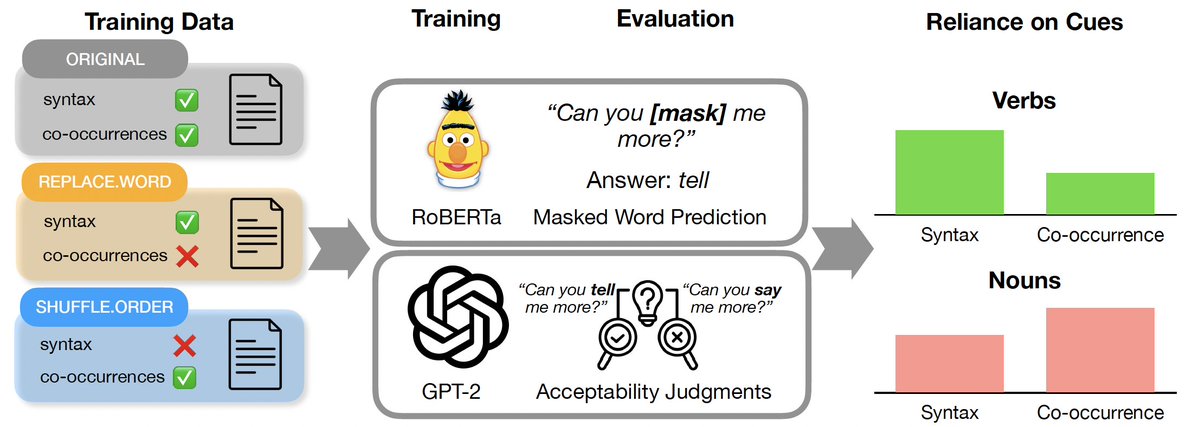
🤖🥾New paper: The Structural Sources of Verb Meanings Revisited: Large Language Models Display Syntactic Bootstrapping🥾🤖 now on Open Mind
We investigated the importance of syntactic vs. co-occurrence cues on verb learning with LLMs
w/ @RTomMcCoy@bob_frank 🧵
🚨🧵 New paper!
Mech interp has developed many ways to probe and intervene on model internals. It's natural to ask: is there a unifying picture?
In this work, we derive 4 popular interp methods from a single representational hypothesis: Tensor Product Representations (TPRs)
1/n
🤖🧠NEW PAPER🧠🤖
(The result of an 8-year project!)
LLMs seem very different from symbolic systems. Yet LLMs excel in symbolic domains (e.g., language/code/math). How do they do it?
Our finding: LLM representations have implicit symbolic structure!
Link in thread ⬇️
1/n
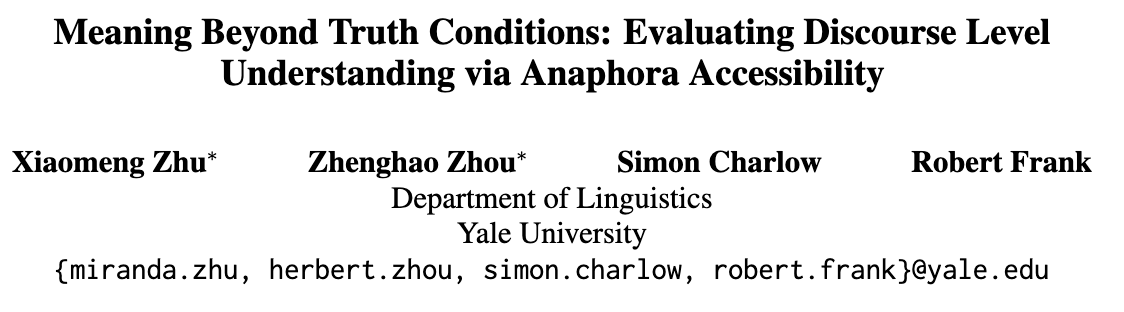
🌟🌟🌟Come to our in-person presentation at SCiL 2025 today (July 20) and virtual ACL presentation (July 29) and learn about dynamic-semantics-motivated LLM evaluation on anaphor accessibility !😆
🤖New paper w/ @zh_herbert_zhou@SimonCharlow@bob_frank in ACL2025 & SCiL
💡We use core ideas from Dynamic Semantics to evaluate LLMs and found that they show human-like judgments on anaphora accessibility but rely on specific lexical cues under more careful scrutiny. 🧵1/6
🙇♂️NEW PAPER @ NAACL2025🔆
What type of learning is in-context learning? Is ICL a kind of gradient descent?
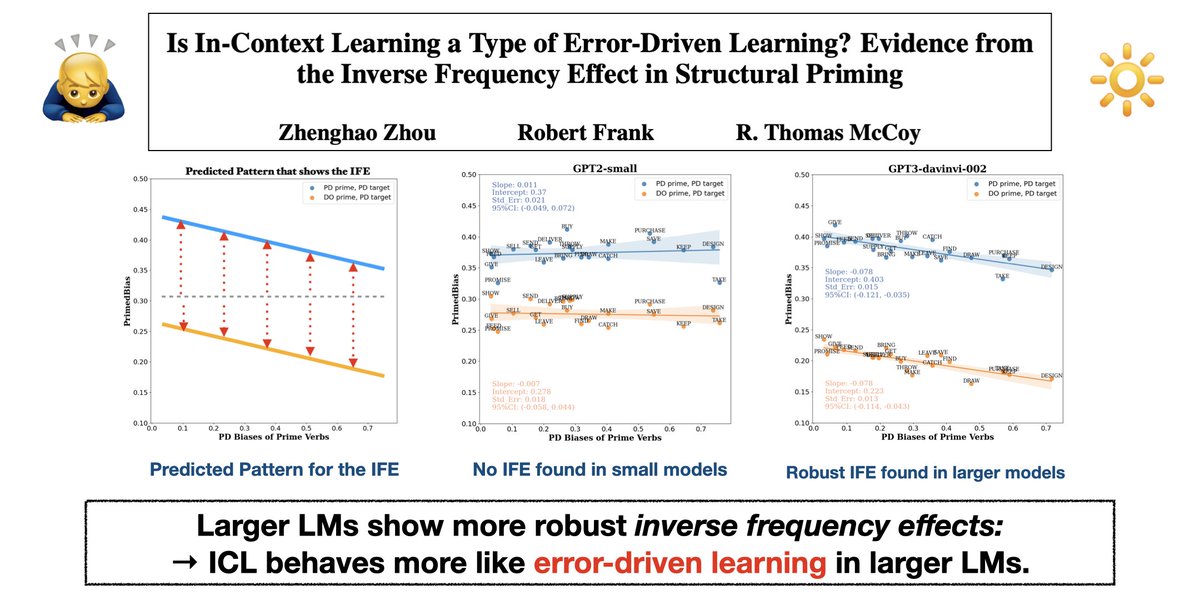
Answer: the phenomenon of syntactic priming from psycholinguistics tells us that ICL behaves like error-driven learning!
Paper: https://t.co/ckgnttSkMa
🧵1/n
🙇♂️NEW PAPER @ NAACL2025🔆
What type of learning is in-context learning? Is ICL a kind of gradient descent?
Answer: the phenomenon of syntactic priming from psycholinguistics tells us that ICL behaves like error-driven learning!
Paper: https://t.co/ckgnttSkMa
🧵1/n
To sum up: we proposed the IFE as a diagnosis for whether ICL functionally performs error-driven learning. We showed that at least for structural priming, ICL is a type of error-driven learning.
Coauthors: @bob_frank@RTomMcCoy
Paper: https://t.co/ckgnttSkMa
🧵7/n