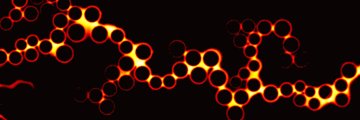
🚀 New in InterPore Journal: Transfer learning enables fast & accurate predictions of effective thermal conductivity (ETC) in digital porous media.
Less data. Lower cost. High fidelity. 🔮
👉 Read the study: https://t.co/5rsg85DSPQ
Our new paper describes a synthetic "cell" that moves over superhydrophobic surfaces. It consists of an H2O2 drop and a chemical garden tube that spins like a propeller or orbits around a large O2 bubble; bursting causes repeating cm motion. #SoftMatter https://t.co/iqSPALUQTQ
Excited to release our latest work, led by PhD student Emily Chen: https://t.co/mAXtI6Dv2N!
Here, we uncover how the unique rheological properties of wormlike micelles (WLM) influences their flow behavior in tortuous serpentine channels. 🪱💧🌪️
Tweetorial follows... [1/7]
In Science, researchers report a #physics-informed #DeepLearning model that can predict the deformation behavior of Antarctic ice shelves, revealing complexities of the process that extend beyond the traditional understanding.
📄: https://t.co/5FGzfDyzbl
#SciencePerspective: https://t.co/24TWOy39s6
Finally published @ScienceMagazine:
Can AI help yield new insights from vast amounts of Earth data?
We use large-scale data and neural nets to find the constitutive laws of glacial ice, which differ from commonly assumed forms in conventional models.
https://t.co/X9wSMRkmEX
📢 PRFluids Editors' suggestion: Stafford & @MatarLab from @ImperialChemEng explore the regimes of thin liquid films on rapidly spinning disks. Through experiments and simulations, they reveal the transition from 2D spirals to complex 3D waves. More @ https://t.co/lc7pAiEQIU
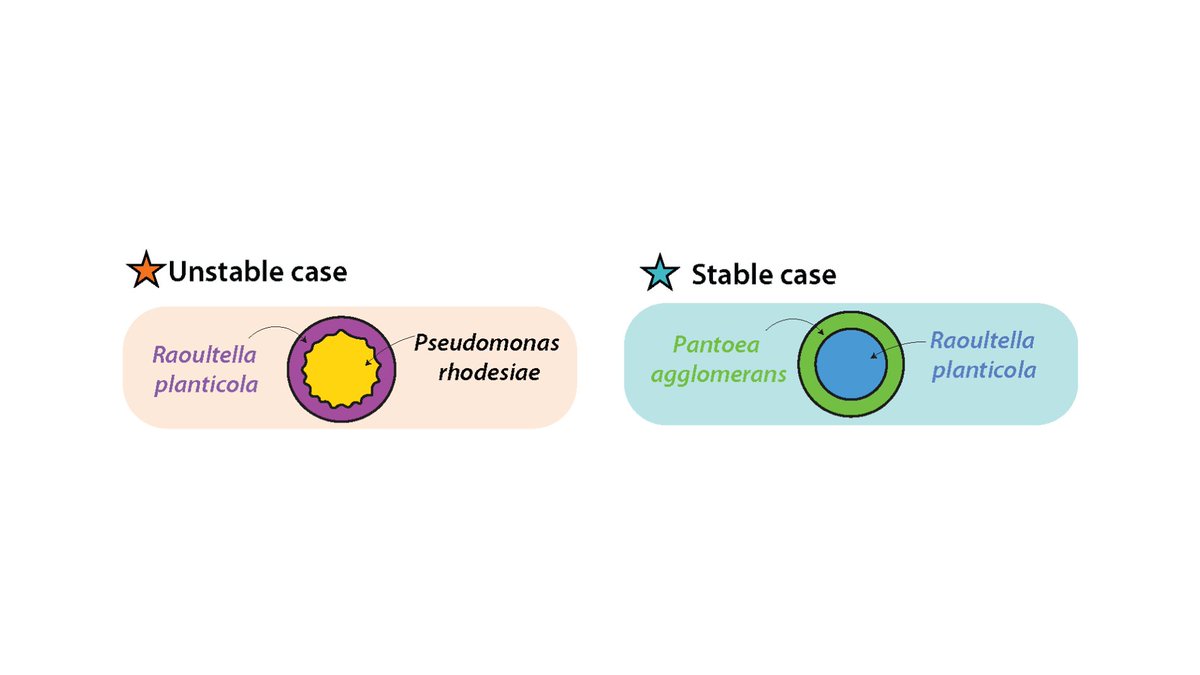
A new modeling approach describes why the interface between spatially-structured multi-species microbial communities transitions between stable smoothness and unstable finger-like protrusions.
Read the paper: https://t.co/z0EQ033mbq
Thrilled to see this paper published @PhysRevX:
Check it out at https://t.co/StIFymvHPm!
In it, we describe how growing mixed bacterial colonies can be thought of as multi-component "active fluids" that exhibit interfacial instabilities.
Summary in the tweetorial below ⬇️
Long standing idea in the group that finally goes out! 😁We have now unraveled the mechanisms that control fluid-fluid reactions in two-phase flow in porous media. Congrats @XueYi_Zhang404@EawagResearch@ETH_en | Environmental Science & Technology https://t.co/q2eMZKWelk
Congratulations to CEE and @eapsMIT Prof. Ruben Juanes, who has been named a 2024 fellow of the American Physical Society for his significant contributions in understanding how fluids move through porous materials. https://t.co/MOLXa8roMH
Shih-Yuan's awesome work on soft actuators (AKA ferromarbles) is on the arXIv!. These crazy guys can rock, roll, and hop - check it out here: https://t.co/m05cLB3ZOl
I am happy to share that our paper on evaluating gigaton scale geological CO2 storage in the Alberta oil sands has been short-listed for the first ever annual paper award for the International Journal of Greenhouse Gas Control. https://t.co/sW9Z1jExtz
I recently learned that Canada joined Horizon Europe as an associate country under Pillar 2. I am looking forward to submitting joint proposals and working on cool projects together with my European colleagues 😎
https://t.co/i5NhecUiN6
This work is led by former MASc student Dan Yu Hao Zhao, with support from current PhD students Nima Shakourifar and Negar Shahsavar. The paper is available open-access. Check it out!
Our new paper on evaluating gigaton scale geological CO2 storage in the Alberta oil sands is published in the International Journal of Greenhouse Gas Control. https://t.co/Rc5qDiyIUs
We introduce a comprehensive framework for designing a large-scale CCS system, which considers the availability of emission sources, efficiency of pipeline route, storage capacity and injectivity, CO2 migration and trapping, cost, as well as policy and financial incentives.