https://t.co/RuWiKqs7o1 can now view synaptic connections and synapse sizes in 3D. Just click on the neuron name. Currently, only the adult dataset and chemical synapse are included. Please let us know if/how to make it more useful.
At the more depolarized membrane potential range, this neuron initiates reversal; at less depolarized potentials, it sustains forward movement. Locomotion continues during directional transitions.
A long journey by @JunMeng_elegans, @_mlechha and Wesley; a pleasure with the Shangbang and Thomas' groups; gratitude to the helpful inputs and warm support from Quan and Aravi https://t.co/zQWiQ2Emlt
One-sentence summary: spontaneous forward and backward locomotion are not separately controlled by two circuits, but determined by the membrane potential of a narrowly tuned, tonically active premotor interneuron, previously thought to simply activate the reversal circuit.
Asymmetry in motor output - forward over reversal; A reversed asymmetry in the property of underlying circuit - neurons of the reversal circuit have higher activity. This study reveals and solves this puzzle.
Generating a complete multimodal cell census and atlas of the mouse brain through collaborative data collection, tool development and analysis. https://t.co/evqpp2cT65
We made a fun tool for visualizing gene expression in the C. elegans nervous system.
You can visually explore expression patterns of any gene via a spatial heatmap, and ask: Which neurons express my gene of interest? Which neurons express it at high or low levels?
“Ten years ago I was kicked out and forced to retire.”
Our new medicine laureate Katalin Karikó (@kkariko) told us how much it means to be awarded the Nobel Prize after a scientific career that has been full of challenges.
Ten years ago, Karikó was still doing all her experiments by hand but today she has been awarded the medicine prize for her research on mRNA, which led to the development of COVID-19 vaccines.
Listen now:
Are you an early-career researcher with ideas that will change the world? 🌏
The CIFAR Azrieli #GlobalScholars program is now accepting applications! Apply by Oct 30 for mentorship, career and research support.
https://t.co/qwuqGr7mzO
Lily Jan of @UCSF and Eve Marder (@MarderLab) of @BrandeisU have been selected as this year's recipients of the Pearl Meister @GreengardPrize for their fundamental contributions to neurobiology. Congratulations! #WomeninScience
https://t.co/EiyFAWq4KE
A major obstacle to modeling the nervous system of the worm has been the unknown weights of the connections. Which are excitatory or inhibitory and how strong? Well, the lab of @AndrewLeifer has put out a Neural Signal propagation atlas to address this critical gap (1/4)
Next up, Philipp's 4K high resolution rendering of all ~127,000 neurons in the FlyWire #drosophila#connectome divided into 9 superclasses: a bird's eye view of the whole fly brain https://t.co/eDTfsixVRm @FlyWireNews@flyconnectome
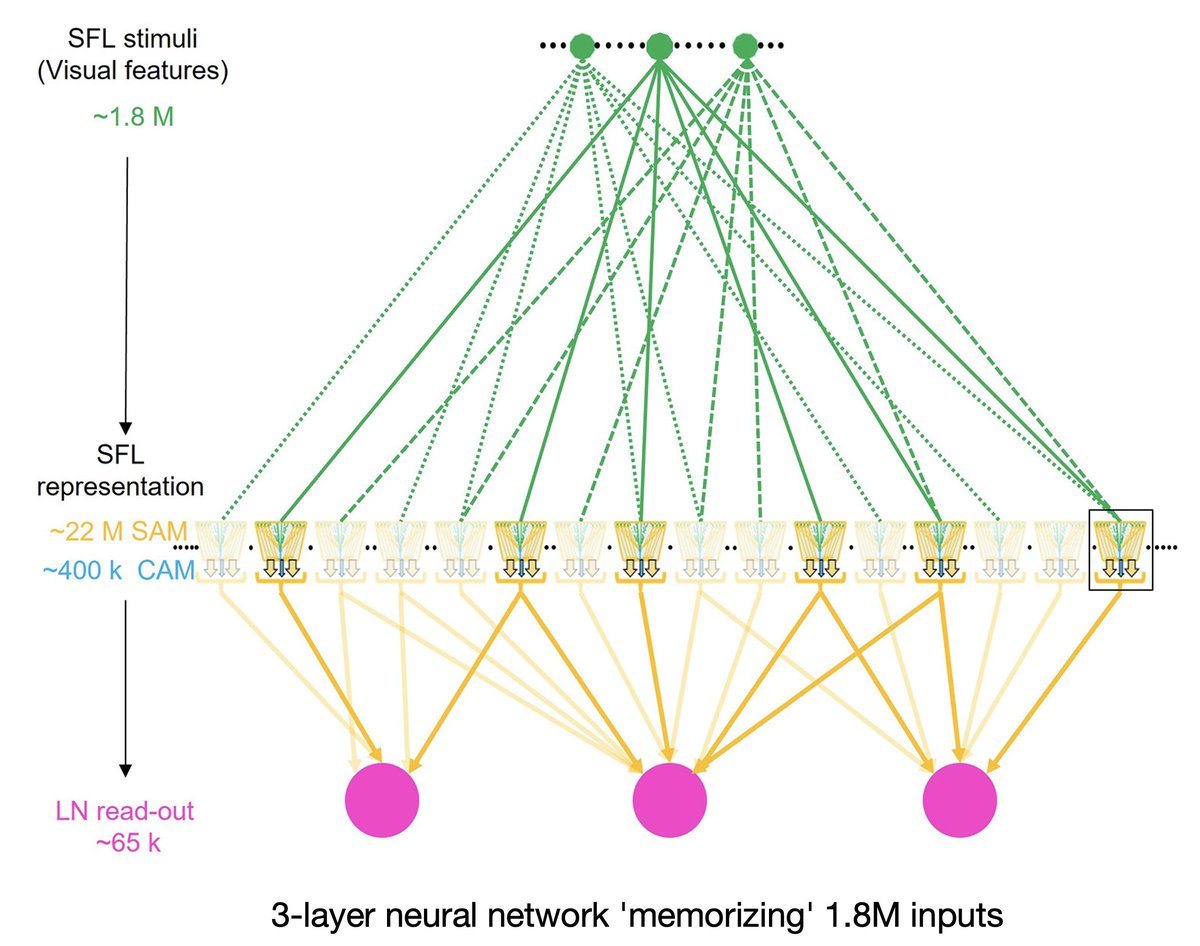
The octopus brain, diverged from human ancestors 500M years ago, rivals dogs & cats in neuron count! Its memory circuit boasts 25M+ neurons, over 1000x a fruit fly's MB. The revealed circuit displays a 3-layer neural network, 'memorizing' 1.8M inputs.👇