The INSANE Story of the GREATEST TRADER of ALL TIME | Jim Simons https://t.co/pzof4znMvE przez @YouTube
https://t.co/GcYplfV08M
https://t.co/8V6E9dYOAR
https://t.co/u9vXmOgn9n
https://t.co/xxixtV7a8x
https://t.co/UPfVoIUKbp
https://t.co/t0mpU2ZNx8
https://t.co/XolcMIX8VT
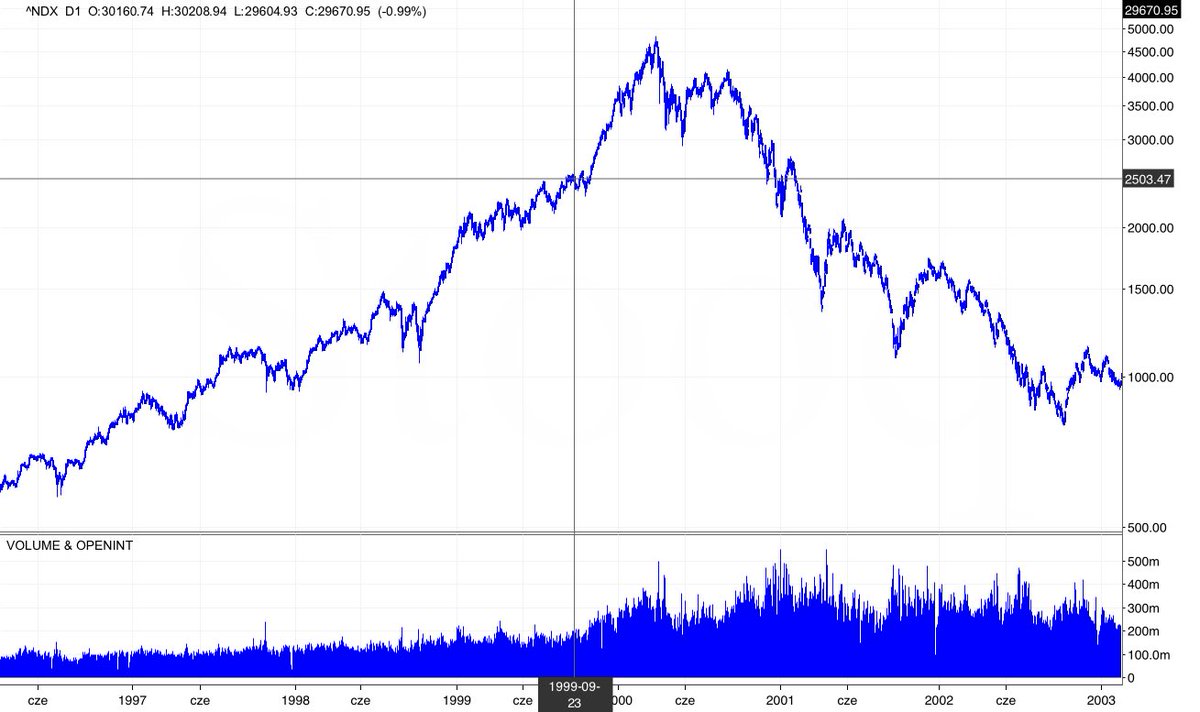
@DaveHcontrarian@AndrewHarriga11@RobertJosan@GordonBaisley@MoranSantangelo Hi, could market behavior after Sept 16, 2026, resemble that of the period after June 30, 1999? Nasdaq melt-up fits your scenario, but another ~100 bps on 10-year yields likely doesn't, nor does the behavior of silver, which climbed in the subsequent months only ca.15% those days
This is one of the most reliable sell signals in history.
Just look at TIME's latest issue.
I've been doing this since 1981, and when I see a cover like that, I don't get excited.
Because history has a brutal sense of humor about moments exactly like this one:
In 1979, BusinessWeek ran the most infamous cover in the history of financial journalism: "The Death of Equities."
The argument was that inflation had broken the stock market for good and that stocks were finished as a serious place to put your money, perhaps permanently.
The country agreed and everybody gave up.
But what came next was the single GREATEST bull market in American history.
Stocks returned roughly 18% a year for the next two decades. Off the 1982 low, with dividends reinvested, the S&P went on to gain nearly 7,000%. The cover that buried equities turned out to be the starting gun.
Now look at the second cover.
In 2019. Bloomberg Businessweek puts a dead, deflated dinosaur on the front and asks "Is Inflation Dead?" The consensus was unanimous - inflation was extinct, a relic, never coming back.
3 years later we printed the WORST inflation in four decades, with prices peaking at 9.1% in June of 2022. That was the exact opposite of what the cover declared, and it happened all over again.
This is the oldest pattern there is.
By the time a story is so obvious, so universally accepted, so completely understood that the editors of a mainstream magazine slap it on the cover, every single person who was ever going to believe it already does.
So the trade is crowded, the buyers are exhausted, and there is nobody left to come in behind you and push the price higher.
The cover doesn't predict the future the editors think they're describing - it marks the exact moment a belief became unanimous. And unanimous belief is the textbook definition of a top.
But here's what makes the AI cover even MORE dangerous than the two that came before it:
"Death of Equities" and "Is Inflation Dead" were business magazines, read by people already in the markets. TIME is a general-interest newsweekly read by over 100 million people who don't trade stocks for a living.
When the AI build-out has saturated the public mind so thoroughly that it becomes the cover of TIME, the message is that there's almost nobody left who hasn't already heard the story and bought in.
And the fundamentals are screaming the same thing the cover is whispering:
The largest tech companies are set to spend north of $600 billion on AI infrastructure in 2026, up from roughly $388 billion just last year. Tech investment is now running near 4.4% of GDP, approaching the peak of the dot-com bubble.
These founders are literally saying that they'd rather go bankrupt than lose this race. Hundreds of billions of dollars and mountains of debt are all resting on a single untested premise - that the profits eventually show up to justify the spending. But so far they haven't.
Now let me be honest with you, because that's the only way I know how to do this.
I'm not telling you AI is worthless or that the whole thing collapses tomorrow. The 1979 cover was about three years early, and the real bottom didn't arrive until 1982. The 2019 cover took two years to be proven right.
Covers mark the mood, not the exact day, so I'm not calling the top to the week.
What I am telling you is that the EASY money has already been made, the consensus is now total, and the risk and the reward have flipped upside down. When everyone you know already owns the story, the story stops being an opportunity and becomes a liability.
Mr. Market hands out a scorecard every single day, and that scorecard doesn't care what TIME magazine believes. It only cares about valuation.
And right now the things nobody would ever put on a cover - gold, silver, energy, real assets, the unloved corners of this market - are exactly where the next decade of returns is hiding.
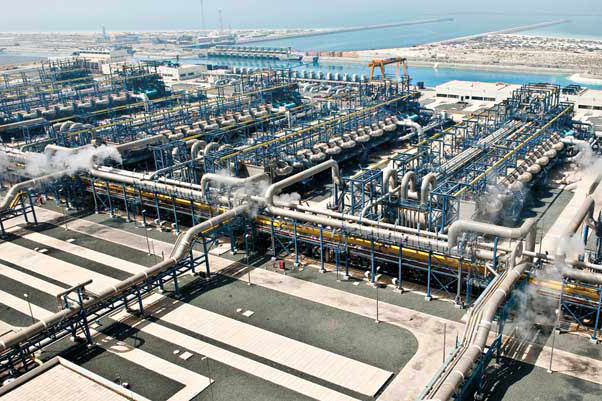
Two days ago I wrote that the most dangerous signal in this war was not what Iran was hitting but what it was not hitting. Desalination plants. Eight of the ten largest on earth sit on the Arabian Peninsula. One hundred million people drink what they produce. Iran had the coordinates and the capability. It was choosing restraint. The restraint was the weapon. And the hand that held the leash was dead.
The leash just snapped.
Iran’s Foreign Minister Araghchi posted on X on March 7 that the United States struck a freshwater desalination plant on Qeshm Island with missiles launched from its base in Bahrain. He said water supply to 30 villages was cut. His exact words: “The U.S. set this precedent, not Iran.”
That sentence is the most dangerous statement issued by any government official since this war began.
No independent verification exists. No satellite imagery. No Pentagon confirmation or denial. CNN, BBC, and Reuters report it as an Iranian accusation. The claim is unverified. That does not make it less dangerous. What matters is not whether the strike happened. What matters is that Iran has publicly framed a desalination attack as an American precedent.
Precedent is permission. Iran struck a US base in Bahrain within hours, framed as retaliation for the desalination hit. Whether the original strike was real or fabricated, the rhetorical architecture for targeting Gulf water plants is now constructed. The thirty one autonomous IRGC commands possess a publicly articulated rationale for striking desalination facilities anywhere in the Gulf.
Kuwait gets 90 percent of its drinking water from desalination. Oman 86 percent. Saudi Arabia 70 percent. The UAE 42 percent. These are not countries with backup rivers. These are not populations with alternative wells. The entire human habitability of the Arabian Peninsula depends on machines that convert seawater into freshwater, running continuously, at massive scale, connected to power grids and intake pipes that are among the softest targets in any military theater.
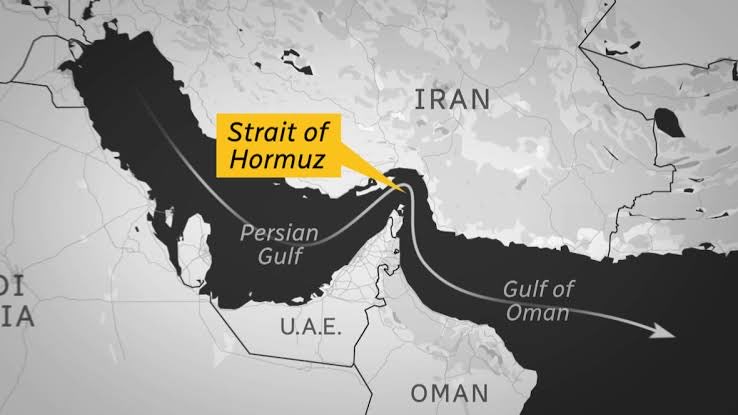
In 1991 Iraq pumped crude oil into Kuwait’s desalination intakes. Recovery took years. The Gulf in 2026 is orders of magnitude more dependent, and the Strait of Hormuz is closed. Emergency tanker imports face the same insurance withdrawal that stopped oil tankers. The redundancy that was supposed to protect water supply depends on shipping lanes that no longer function.
Gulf states deployed Patriot batteries around major plants after the accusation. Intake pipes have underwater sensors. Cyber defenses are air gapped. But the defense faces the same arithmetic: 93 percent success across a thousand drones still means 70 impacts. One impact on a military base is absorbable. One impact on a desalination intake shuts down water supply to millions.
The restraint is over. The precedent, real or fabricated, is set. And the hundred million people whose survival depends on desalination plants within range of Iranian missiles are now living inside the targeting envelope of a doctrine that just lost its last constraint.
https://t.co/ULBgEzZ3A8
Oil is up 34.5 percent in a week. Gold is up 2.3 percent. That divergence is the single most important signal in global markets right now and almost nobody is reading it correctly.
The consensus explanation is that dollar strength from oil driven inflation is capping gold. Energy costs denominated in dollars increase global dollar demand. Higher inflation delays Fed rate cuts. Gold rises on the war premium but falls on the rate repricing. Net result: modest gain while oil screams higher.
Mechanically correct. Strategically incomplete.
In every major oil shock driven by Middle Eastern conflict since 1973, gold’s response has followed a two phase pattern. Phase one: gold underperforms oil because the dollar strengthens on the same inflation that drives the oil surge. The correlation between oil and gold compresses from its crisis average of 0.6 to something lower. In the current war the correlation has run at roughly 0.4 since February 28.
Phase two arrives when the market realizes the disruption is structural rather than transient. When the forward curve shifts from pricing a spike to pricing a plateau. When inflation is no longer a fear but a fact embedded in input costs and food prices. When central banks run out of room to hold rates steady against a supply shock they cannot fix with monetary tools. The dollar ceases to be a haven. The correlation snaps back. Gold reprices to match the structural reality that oil already priced.
In 1973, oil quadrupled between October and March. Gold rose six percent during the embargo itself. Then gold rose 73 percent over the following twelve months as the structural inflation embedded.
In 1990, oil doubled during the Kuwait invasion. Gold rose six percent during the crisis. Then gold held its gains while oil collapsed when the war ended in weeks.
The difference between 1973 and 1990 is duration. The embargo lasted months. The Gulf War lasted weeks. Gold’s phase two only detonates when the market accepts that the disruption is not transient.
Now apply the mechanism test. Hormuz is closed not by Iranian gunboats but by the withdrawal of commercial reinsurance. Reinsurance returns on actuarial timelines, not political ones. The DFC backstop covers six percent of the exposure gap. The ships have not moved. Futures are pricing 30 to 60 day resolution. The mechanism says months.
If the mechanism is right and the market is wrong about duration, gold is currently in phase one of a 1973 pattern, not a 1990 pattern. The 2.3 percent gain is not gold failing as a hedge. It is gold waiting for the market to catch up to the mechanism.
Goldman Sachs has a year end target of $6,300 set before the war. If the Hormuz closure persists beyond 90 days, that target is conservative.
The oil chart says the supply shock is real. The gold chart says the market believes it is temporary. One of them is wrong. The reinsurance mechanism says it is gold that has not yet priced reality.
The lag is the trade.
https://t.co/ULBgEzZ3A8
JUST IN: The most powerful military in human history just admitted that aircraft carriers cannot reopen the Strait of Hormuz.
An insurance policy can.
And the insurance policy is $332 billion short.
The Trump Administration announced a $20 billion reinsurance program through the Development Finance Corporation to cover war risk losses for vessels transiting the Persian Gulf. The DFC will coordinate with the Treasury Department and CENTCOM. Priority goes to oil, gasoline, LNG, jet fuel, and fertilizer. The stated goal is to physically get tankers moving again through the strait that carries twenty percent of the world’s petroleum.
Read those numbers again. Twenty billion in coverage. JPMorgan estimates the aggregate war risk exposure for all Gulf maritime commerce at $352 billion. The program covers less than six percent of the total insured value at risk in those waters. A single very large crude carrier can carry $300 million in insured cargo. Sixty six ships and the entire program is exhausted.
This is not a criticism. This is the single most important admission in the entire war.
For eighty years the United States Navy has guaranteed freedom of navigation through the world’s critical waterways by projecting military force. Two carrier strike groups sit in the theater right now. More firepower concentrated in one body of water than most nations possess in their entire military.
And none of it can make a tanker move.
Because the tanker’s problem is not Iranian missiles. The tanker’s problem is that seven Protection and Indemnity clubs cancelled war risk coverage effective March 5. Without that coverage the ship cannot satisfy insurance covenants in its financing agreement, cannot meet coverage requirements of the destination port, cannot fulfill liability terms of its charter contract. A ship without P&I coverage is legally excluded from global maritime commerce regardless of how many warships surround it.
The DFC program is the United States government saying out loud, through the structure of the solution it chose, that this is a financial problem dressed in military clothing. The aircraft carriers provide the security perimeter. The reinsurance provides the permission to sail. Without both, nothing moves. The Navy can sink every Iranian vessel afloat and the tankers still will not transit until someone in an office in London or Bermuda or Connecticut underwrites the voyage.
Seven letters from seven insurance clubs closed Hormuz. The United States just responded with an eighth letter. The question every oil trader should be asking is whether $20 billion in rolling coverage is sufficient to convince a shipowner to send a $300 million asset through waters where Iranian drones struck the Skylight on March 1, where GPS jamming affected 1,100 vessels in a single day, and where the reinsurance market that normally prices this risk has formally and contractually withdrawn.
The programme exists. The ships have not moved.
The gap between the announcement and the first insured transit is where the real price discovery happens.
https://t.co/ULBgEzZ3A8
JUST IN: The United States produces 96 THAAD interceptors per year. Eight per month. Two per week.
Iran launched over 500 ballistic missiles in the first week of this war.
That arithmetic is the most important classified secret that is not actually classified. It is sitting in Lockheed Martin’s January 29 press release, in the MDA’s budget justification documents, and in the CSIS depletion analysis published in December. Nobody connected the numbers until the war made the connection impossible to ignore.
The US Army operates seven active THAAD batteries worldwide. Each carries 48 interceptors across six launchers. Standard doctrine fires two interceptors per incoming ballistic missile. One full battery is exhausted after defending against 24 missiles. Iran launched over 500 in a week. The June 2025 twelve day war consumed approximately 150 THAAD interceptors, roughly 25 to 28 percent of the entire global stockpile, in under two weeks.
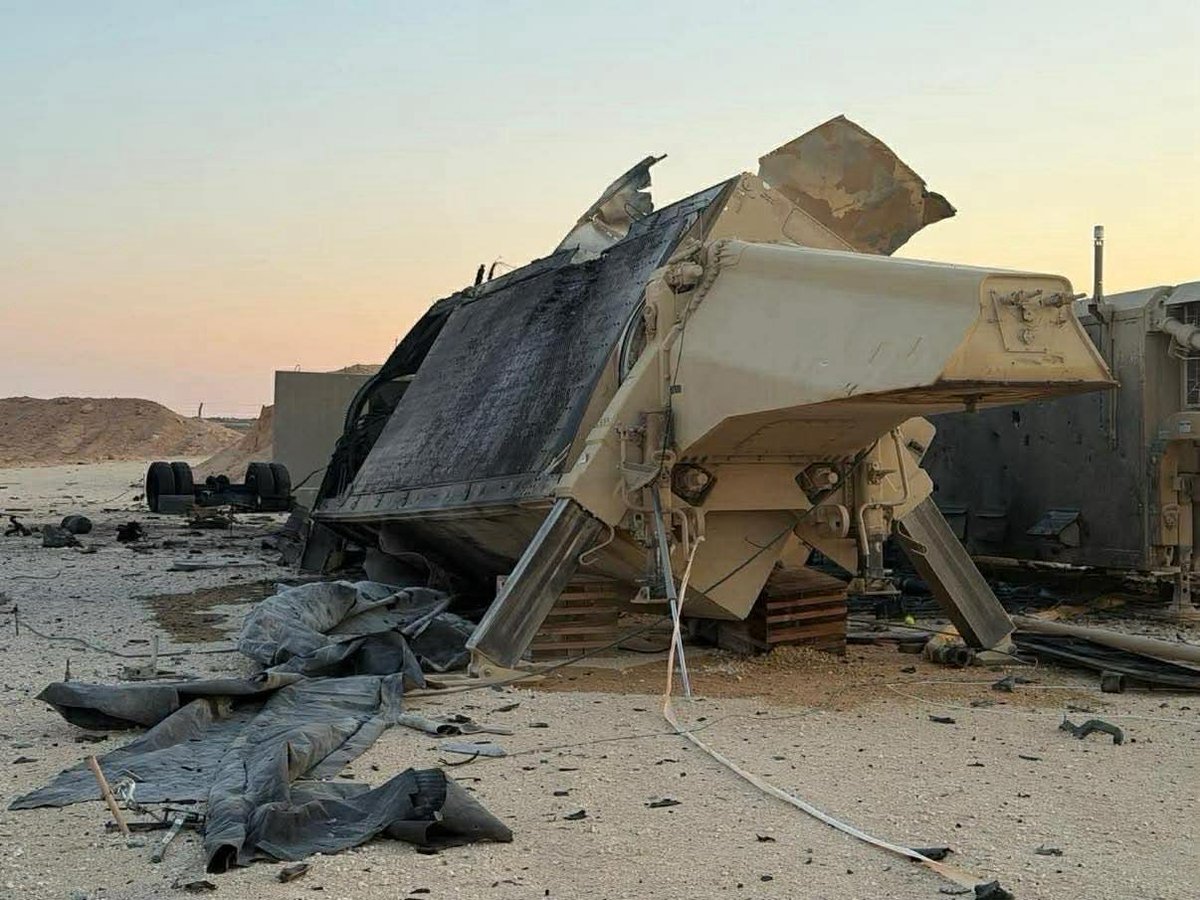
Two AN/TPY-2 radars have been confirmed damaged or destroyed. The radar at Muwaffaq Salti Air Base in Jordan was struck in the opening days, confirmed by CNN satellite imagery. The radar at Al Ruwais in the UAE was claimed destroyed by Iranian forces. Each AN/TPY-2 costs approximately $500 million and requires years of production lead time. A radar loss does not proportionally reduce coverage. It creates geometric gaps in the overlapping defense zones that remaining batteries cannot compensate for. Subsequent attacks route through those gaps.
Total confirmed US equipment damage in the first five days exceeds $1.9 billion, including a $1.1 billion early warning radar in Qatar, the THAAD radars, and aircraft.
On January 29, Lockheed Martin signed a framework agreement with the Department of Defense to quadruple THAAD interceptor production from 96 to 400 per year. The timeline to reach full production rate is seven years. The year 2033.
The bottleneck is not funding. It is physics. THAAD interceptors require specialized solid rocket motors shared across PAC-3, SM-3, and PrSM programs. Seeker heads are manufactured at an estimated maximum of 500 per year. Component lead times run 12 to 24 months. A THAAD interceptor ordered today arrives around 2030.
The war is consuming interceptors in weeks. The production system replaces them in years. That gap is not a logistics problem. It is a structural vulnerability in the architecture of American military power that every adversary on earth can now quantify.
China is watching. The batteries defending Guam and South Korea are the same finite inventory being depleted in the Gulf. Every interceptor fired at an Iranian missile tonight is unavailable for a Chinese missile tomorrow. The Pacific and the Gulf share a single ammunition supply. They cannot both be defended at current production rates against simultaneous threats.
The @AFpost claim that half the global THAAD systems are lost is not verified. What is verified is worse. The radars are being destroyed at $500 million each. The interceptors are consumed at rates the production line cannot match for seven years. And the solution arrives in 2033.
The war is eight days old. The production ramp is 2,555 days long. Price the gap.
https://t.co/ULBgEzZ3A8
@TavexPL Czy sytuacja na srebrze ze względu na szerszy makroekonomiczny i czasowy (ok. 6 lat wzrostów) kontekst nie przypomina bardziej marca 2008 niż marca 2020 ?
@itrelak1969@Dan_Kostecki Na certyfikatach na akcje spółek amerykańskich są większe możliwości - od kwietnia prawie ćwierć miliona % vs wzrost akcji micron ok 600% w tym czasie a to pewnie jeszcze nie koniec