We're excited to announce that applications are now open for MLSS 2027 Okinawa!
📅 March 1–12, 2027
🌴 Okinawa, Japan
🔗 Website: https://t.co/KTjZrcNhvr
📝 Apply: https://t.co/bzjkPMUU9Y
🎥 See highlights from MLSS 2024 Okinawa:
https://t.co/iC0fN8X9sh
If you're interested in machine learning, we'd love to receive your application. Please also share this with friends or colleagues who may be interested!
#MLSS #MachineLearning #AI #Okinawa
Po 20 latach małżeństwa muszę w końcu powiedzieć to głośno...
Z moją żoną nie łączy mnie już nic.
Poznaliśmy się na egzaminie na filozofię ponad 20 lat temu. Byliśmy młodzi i głupi, nie słuchając rozsądnych opinii szybko wzięliśmy ślub.
A potem życie zrobiło swoje i dziś żyjemy w dwóch różnych światach.
Ona: dzieci, szkoła, dydaktyka, nauka, góry, natura, koty, dramaty.
Ja: firmy, fundusze, inwestycje, biznes, miasto, beton, psy, komedie.
Ona: kreatywna, empatyczna, marzycielska.
Ja: analityczny, rzeczowy, osadzony w faktach.
Zero wspólnych pasji.
Zero wspólnych zainteresowań.
Nie śmieszą nas te same rolki na Instagramie.
Każdy terapeuta ze śniadaniowej telewizji wystawiłby naszemu małżeństwu akt zgonu. Znajomi pewnie się zastanawiają, kiedy ogłoszę rozwód.
No to ogłaszam...
Kocham tę kobietę bardziej niż 20 lat temu!
I kiedy wieczorem opowiada mi o rzeczach, które kompletnie mnie nie interesują, słucham jej z przyjemnością, której nie tłumaczy żaden poradnik.
Bo przez te 20 lat zrozumiałem coś, co przeczy wszystkiemu, co wciskają nam media.
Wspólne pasje to nie budulec związku. To dekoracja. Ludzie po latach idą różnymi drogami, w różnym tempie i to nie jest awaria. Tak wygląda życie.
Prawdziwy budulec jest inny. Chcesz dla drugiej osoby lepiej niż dla siebie. Jej potrzeby stawiasz nad swoje. Wolisz dawać, niż brać. Jeśli tego nie ma, nie uratują was nawet identyczne playlisty.
Więc jeśli twoja druga połówka to twoje przeciwieństwo, przestań to naprawiać. Może właśnie tam mieszka wasz sekret.
Nie musicie kochać tych samych rzeczy.
Wystarczą te same wartości, ten sam kierunek, szacunek do różnic i troska o drugą połowę większa niż o siebie.
I na koniec coś, co zrozumiałem dopiero niedawno...
Przez 20 lat moja żona każdego dnia miała powody, żeby wybrać inaczej. Innego człowieka, inne życie, inny świat; bliższy jej gór niż mojego betonu.
Mimo to każdego dnia wybierała to samo... mnie.
Miłość to nie jest coś, co się czuje. To coś, co się codziennie wybiera.
Od 21 lat jestem czyimś wyborem i jestem z tego naprawdę dumny...
I had the honor of giving a keynote at the International Conference on Machine Learning in Seoul last week titled “What will be left for us to work on?” I addressed the widespread anxiety about how we should adapt as AI capabilities increase. I was thrilled by the talk’s reception, so I have made my slides available, annotated with a lightly edited transcript: https://t.co/vNgRJCL57B
I made three arguments. First, the "AI as Normal Technology" framework is a correct and useful as a way to think about AI’s impacts, unless and until there is some future discontinuity such as through recursive self-improvement. Second, even though we should take recursive self-improvement seriously, there is no milestone that companies might achieve in the lab that will suddenly put us all out of work. Third and finally, jobs of the future will be radically different, and a lot of adaptation will be needed. I shared my thinking about what this might look like and ended with a vision of human/AI “co-superintelligence”.
@myamada0 Your lab and vision are an example to follow! It’s inspiring to see a place where learning, mentorship, and fun all come together so naturally :))
1/6 🏆 Thrilled our paper, "MirrorCheck: Efficient Adversarial Defense for Vision-Language Models," won the Distinguished Paper Award at AdvML@CV CVPR 2026!
🌐 Project: https://t.co/JqGDhsNtvo
w/ @Samar_M_Fares@ziu_klea@tolusophy@TakacMartin@FuaPv 👇
Mirror Mirror on the Wall: The Serendipitous Journey Behind MirrorCheck 🧩✨
Every research paper has a polished, sanitized version that ends up on arXiv. It presents a seamless narrative of hypothesis, experimentation, and triumph. But behind our recent Distinguished Paper Award at the 6th AdvML@CV Workshop (CVPR 2026) lies a real and funny story—one involving a touch of the divine, a healthy dose of academic skepticism, and a classic fairytale metaphor.
Here is how MirrorCheck actually came to life.
Act I: Into the VLM Wilderness 🌲
It all started during the second semester of my first year as a PhD student. I was taking a course on Vision-Language Models (VLMs) taught by Prof. Ivan Laptev. The final requirement was simple yet daunting: execute a successful project within the scope of VLMs.
I teamed up with @Samar_M_Fares and @ziu_klea . Right from day one, we knew we wanted to attack a massive vulnerability in the space: adversarial defense for VLMs. The catch? At the time, no dedicated detection method existed specifically for VLMs. We were staring at a blank canvas and had absolutely no idea where to start.
We engineered a mountain of approaches. We failed, iterated, and failed again. Eventually, we stumbled upon a chaotic technique that actually seemed to work. Frankly, we didn't know why it worked...at the time, it felt like a direct touch of God.
Our chaotic first approach looked like this:
Input Image ➡️ VLM ➡️ Caption ➡️ T2I Generator ➡️ Overlay Image on Input (High Strength) ➡️ Relook at Caption
Given an input image (clean or adversarial), we’d feed it into a victim VLM and extract the output text caption. We then took that text, generated a brand-new image from it, and overlayed this new synthetic image directly on top of the original using a calibrated strength parameter. We fed this heavily overlayed image back into the VLM, extracted a new caption, and compared it to the original. A massive semantic distance meant the original image was an adversarial manipulation.
It worked! Not perfectly, but well enough to give us hope.
Act II: "This Just Doesn't Make Sense" 😂
Armed with our suspicious preliminary findings, we quietly took our results to Prof. Ivan. While he was genuinely impressed by the numbers, I will never forget his hilariously candid remark:
"While I'm a huge fan of simple tricks to solve a mystery, this just doesn't seem to make sense." 😂😂😂
He wasn’t wrong. Our underlying intuition was inspired by an earlier study showing that adding random noise to an image can neutralize or "purify" adversarial features. However, adaptive attackers easily bypass that by designing adversarial features that anticipate random noise. We had thought: What if instead of random noise, we used fine-grained semantic noise—the regenerated images?
The problem was, it only worked when the calibrated strength of the overlay was cranked up high. Visually, the resulting image looked absolutely disgusting. It worked, but we desperately needed a rigorous, logical explanation for it.
Act III: The Pivot to "Replaying" 🔁
Recognizing the potential, Prof. Ivan introduced us to @nikitadurasov, a student of his colleague Prof. Pascal Fua. Nikita specialized in uncertainty estimation, and there were fascinating conceptual crossovers between our approach and his paper, Zigzag. We jumped into intense brainstorming sessions with Nikita, initially trying to explicitly adapt his Zigzag framework to our problem. It flat-out didn't work.
But breakthroughs happen when you least expect them. During one of our sessions, Nikita proposed adding noise to selected layers inside the victim model and "replaying" the original image to estimate the model’s internal prediction uncertainty.
That word—replaying—stuck in my brain. Right there in the middle of the meeting, a lightning bolt struck (for dramatic effect). I thought of a variation of our original, "not-so-sensemaking" approach. Instead of overlaying the disgusting synthetic image back onto the original, why not just compare the two generated images directly?
We ran it. It worked beautifully. I blurted it out right there in the meeting: "At least this one makes so much sense!"
Act IV: The Psychology of a Horse and Snow White 🐴🍎
The logic mimics human psychology. Humans know something is fishy based on prior experiences. If I own a brown horse with small white spots, and one day I walk into the stable and see a similar horse but with noticeably larger white spots, I instinctively know something is wrong. By comparing the VLM's visual interpretation directly against the source, we were capturing that exact cognitive discrepancy.
As we scaled our experiments and had more frequent general meetings with our Professors, things rapidly fell into place, and the framework began to solidify.
One morning, we woke up to a brilliant title proposed by Nikita: MirrorCheck. It was inspired by the iconic scene in Snow White where the Evil Queen demands, "Mirror, mirror on the wall, who is the fairest of all?"—only to see Snow White’s face staring back at her instead of her own. An adversarial image demands a specific malicious output from the VLM, but when passed through our defense, the mirror reflects the true, underlying reality. It was perfect.
Act V: From Rejection to the Big Stage 🏆
Getting the work accepted was its own grueling mountain to climb, but the journey has been nothing short of surreal.
The First Iteration: Focused heavily on defending against general attacks and utilizing a unique One-Time-Use (OTU) noise mechanism to completely shatter the optimization space for adaptive attackers.
The Current Iteration: The framework that secured the Distinguished Paper Award focuses on amplifying model uncertainty through strategic, stochastic model selection and layer perturbations.
Today, MirrorCheck has come a long way from a "simple trick that doesn't make sense" to an award-winning framework cited as crucial prior work in the broader domain of Trustworthy Machine Learning (yes, our work has been adapted to other domains too😉).
Pen drop. 🖋️
#CVPR2026 #AISafety #ResponsibleAI #MBZUAI #EPFL #AdversarialRobustness #TrustworthyAI
I’d like to thank the entire @mbzuai community for your overwhelming composure, confidence, ownership, and loyalty to our institution, as demonstrated in an online town hall meeting held today with over 600 members in attendance. Contrary to what many outside of the UAE might imagine for an international institution under the shadow of regional uncertainty, the MBZUAI community and campus is calm and safe with active teaching, research, and office operations. UAE is a country with strong institutions, clear protocols, resolve, and preparedness for safeguarding their people. At MBZUAI, the safety and security of our community is our top and foremost priority. I am truly proud to have the privilege of working with colleagues of such outstanding professionalism, strength, and passion, and I have no doubt we will emerge from this period stronger than before.
🚀 Machine Learning Summer School Okinawa 2027
We will organize MLSS Okinawa in March 2027 at OIST!
Registration will open August 2026 via OpenReview.
Top lecturers, beautiful Okinawa, and cutting-edge ML discussions.
📅 Please mark your calendar!
https://t.co/KTjZrcNhvr
#MachineLearning #MLSS #AI #DeepLearning
30% of ICLR submissions in my AC batch had hallucinated references. These papers have been desk rejected by PCs now, but shows how grave the situation is!
I actually don’t get how this would happen.
Would people really just ask an LLM for citations and then paste them into their overleaf without looking at the paper at all? Or am I missing something?
Congratulations to Nicolás Cuadrado, Klea Ziu and Roberto Alejandro G. from MBZUAI for winning the first prize at the hackathon we organized together with Coders HQ, a community for UAE coders under the National Program for Coders.
🌺 Machine Learning Summer School 2027 @ Okinawa will take place March 1-12, 2027!
Details are now available 👉 https://t.co/XIWc4pIsrt
Check out this amazing overview video from MLSS 2024 Okinawa 🎥✨
🎬 https://t.co/qeua163tdt
#MLSS#MachineLearning#Okinawa#AI#MLSS2027
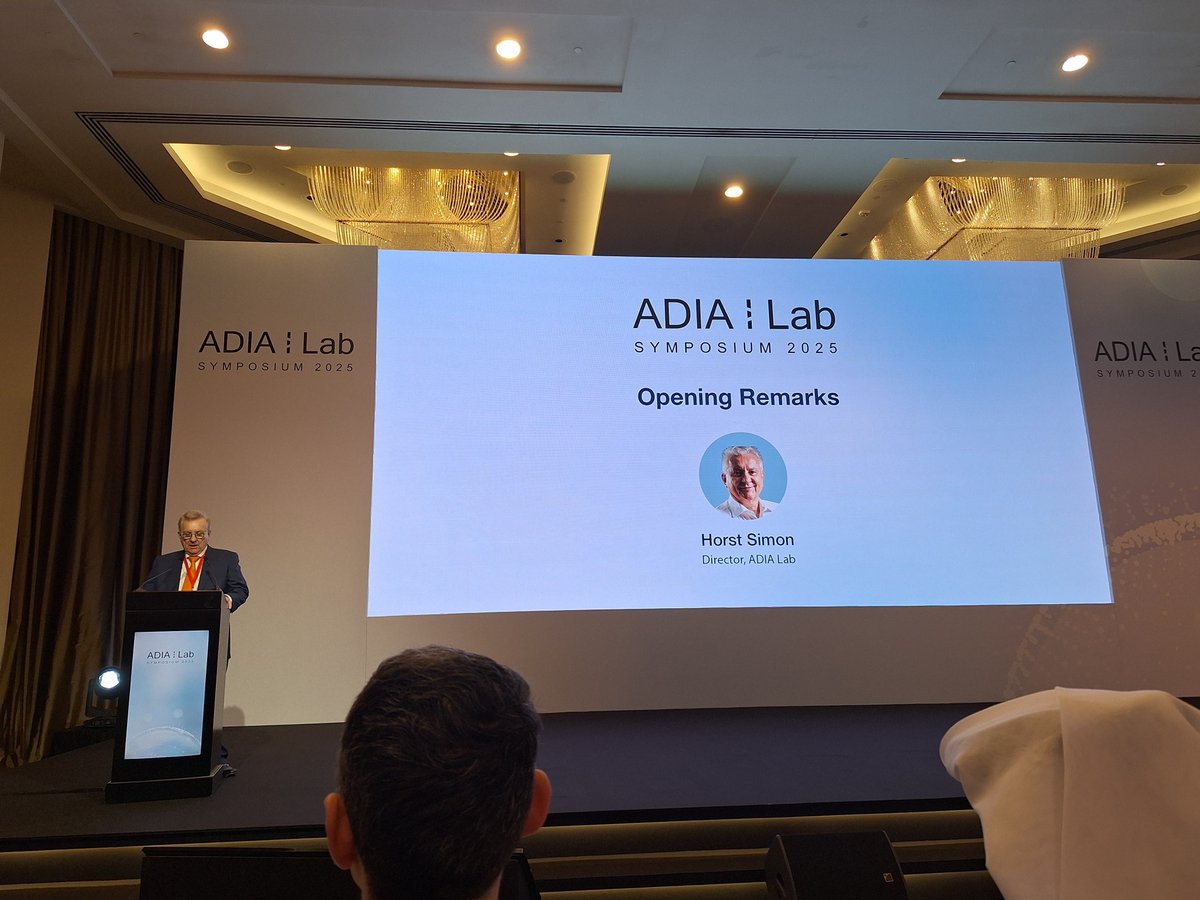
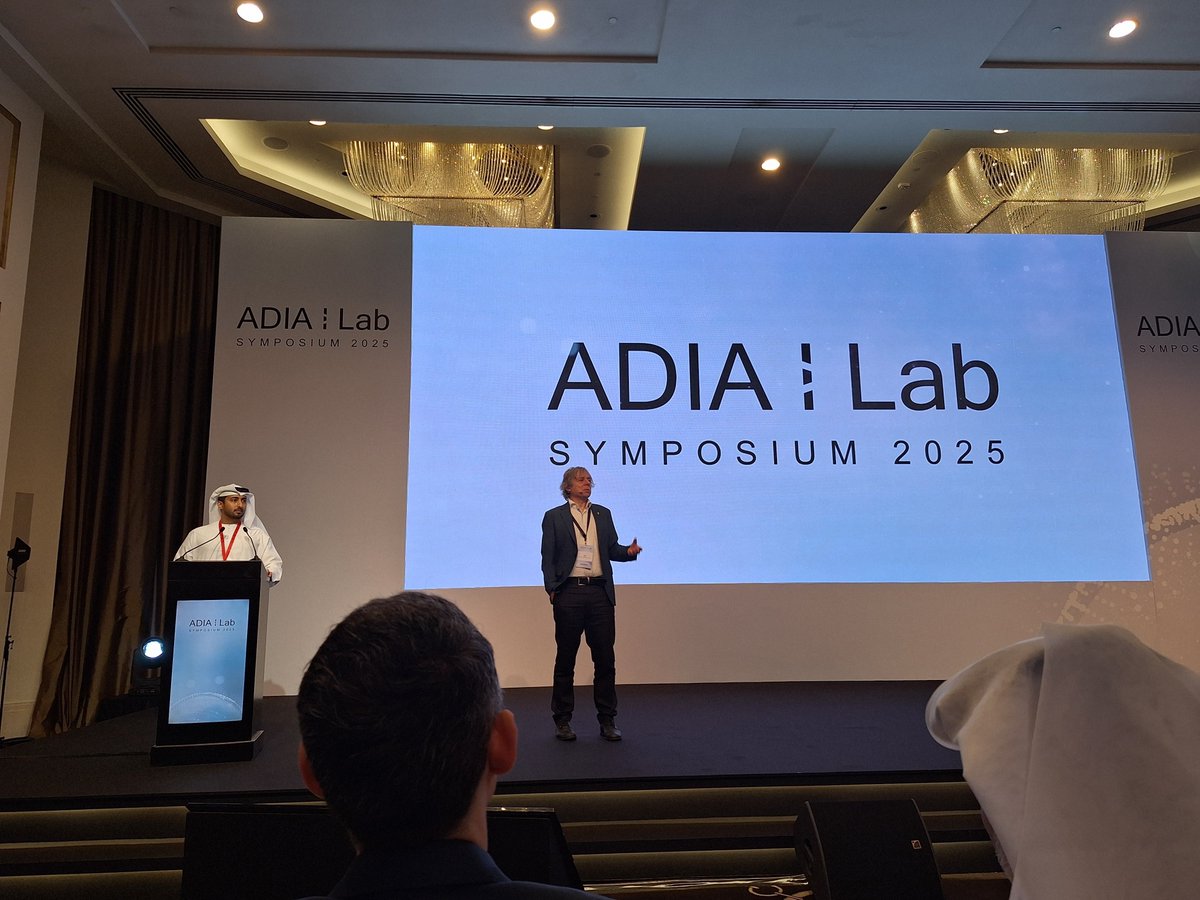
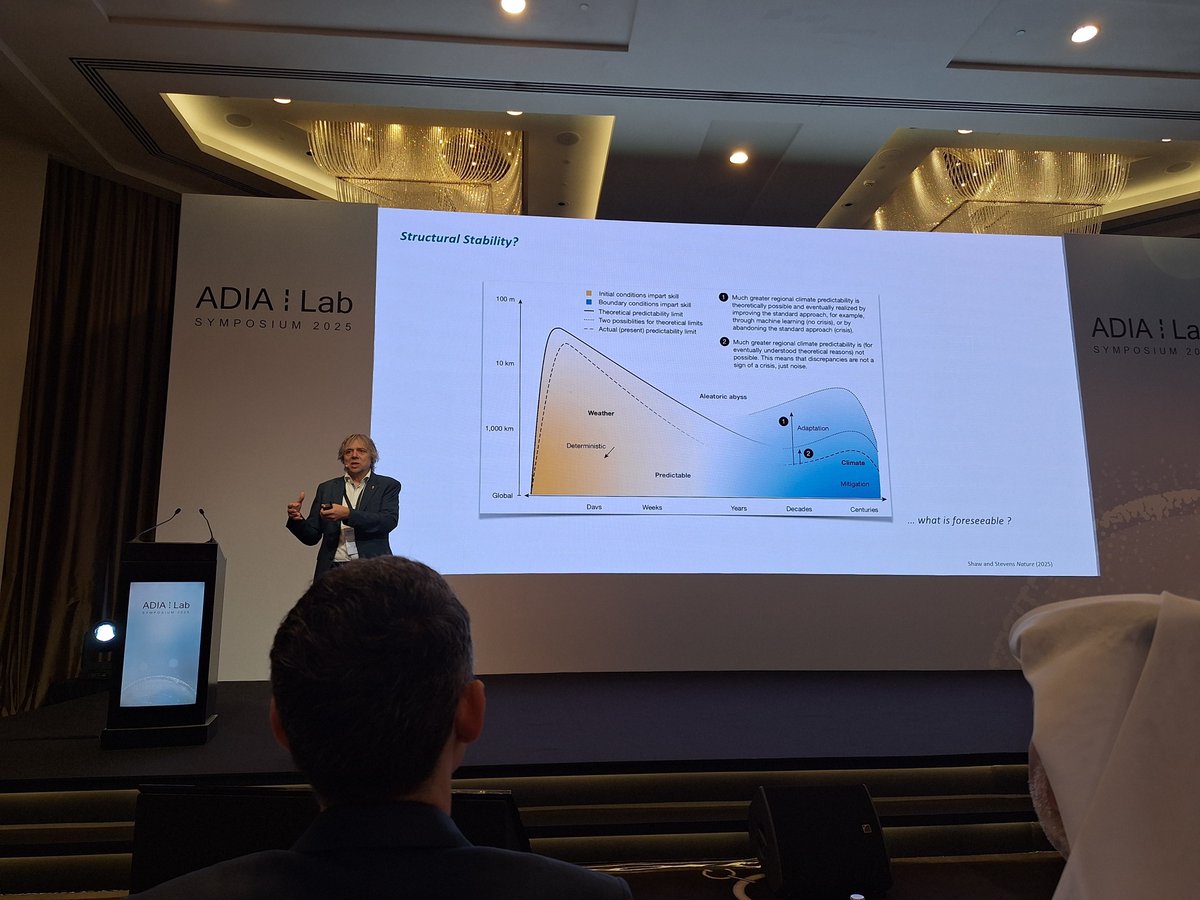
Just arrived at the ADIA Lab symposium in Abu Dhabi to listen to Horst Simon's introduction and Bjorn Stevens' keynote on how to compute the future climate! Featuring our Gordon Bell finalists 🌍🚀
Looking forward to speculating about how to create an #AI climate scientist 😀.