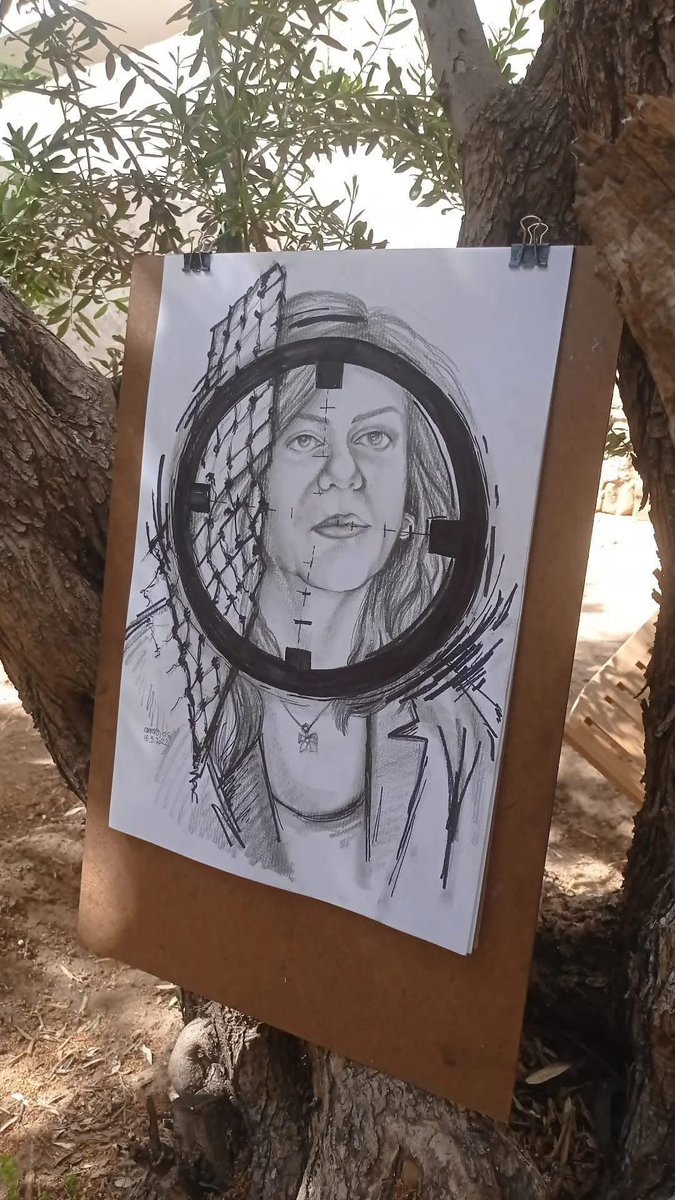
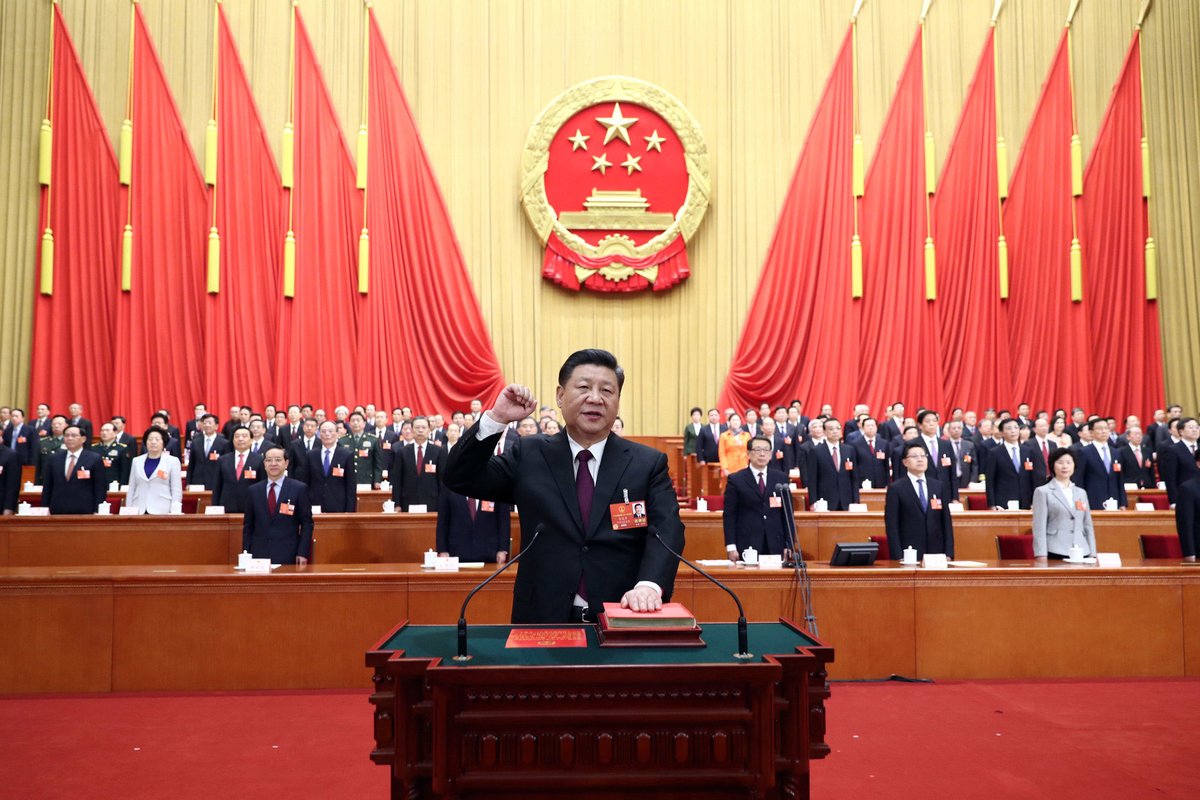
NEW: Israel funded a fake US think tank called the "Hanover Institute" that published 124 reports totaling over 560,000 words in nine days, designed to be cited by AI chatbots like ChatGPT, Claude, and Perplexity.
The site was built on a platform that promises to optimize content so AI systems will treat it as credible research.
Every headline mirrors a question a user might type into a chatbot:
Is Israel Carrying Out a Genocide in Gaza?
The answers consistently frame information to blunt criticism of Israel.
The operation was funded through Israel's government advertising agency via the European ad group Havas, with tens of millions of dollars routed to American contractors including a firm run by former Trump campaign manager Brad Parscale.
An Israeli official admitted to Ynet:
We paid a lot of money, but the situation only got worse.
Source: The Guardian
NEW: Israel funded a fake US think tank called the "Hanover Institute" that published 124 reports totaling over 560,000 words in nine days, designed to be cited by AI chatbots like ChatGPT, Claude, and Perplexity.
The site was built on a platform that promises to optimize content so AI systems will treat it as credible research.
Every headline mirrors a question a user might type into a chatbot:
Is Israel Carrying Out a Genocide in Gaza?
The answers consistently frame information to blunt criticism of Israel.
The operation was funded through Israel's government advertising agency via the European ad group Havas, with tens of millions of dollars routed to American contractors including a firm run by former Trump campaign manager Brad Parscale.
An Israeli official admitted to Ynet:
We paid a lot of money, but the situation only got worse.
Source: The Guardian
The United States tends to view China as its principal competitor because it interprets global power through a largely zero-sum lens.
China, by contrast, does not primarily frame the United States as the central opponent.
Its real competition is with its own historical constraints — its analog legacy, the risk of the middle-income trap, demographic headwinds, and the demands of the technological frontier in the digital age.
In that sense, China competes less against a nation than against underdevelopment, inefficiency, and time itself.
Its posture toward AI illustrates this clearly: it treats AI simultaneously as a destabilizing force that must be controlled and as an accelerant for industrial upgrading.
That dual framing reflects a positive-sum orientation — the belief that technological transformation is the arena to be mastered, not merely a weapon in geopolitical rivalry.
5 yıllık plana da girmiş insanımsı robotlar. Daha uçuk şeyler de var. Rare Earth Materials kavramını da daha sık duymaya başlayacağız. ABD'nin bir sonraki savaşı petrol yerine bu konuda olabilir (Grönland?). Çin bayağı önde gözüküyor çünkü.
https://t.co/faJQnPp7ik
While the United States spends billions bombing Iran and the world watches oil prices crash, China just published the most consequential economic document of the decade. Nobody is paying attention. That is the point.
The 15th Five-Year Plan, unveiled at the National People’s Congress on 5th March, is 141 pages. It mentions artificial intelligence over 50 times. It targets 70% AI penetration across the Chinese economy by 2027 and 90% by 2030. It designates humanoid robotics as a core pillar industry with output doubling over five years. It commits to space-Earth quantum communication networks, nuclear fusion timelines, and brain-computer interfaces. It sets AI-related industries at a target value exceeding 10 trillion yuan, approximately $1.38 trillion. And it declares “extraordinary measures” for rare earths and semiconductor self-reliance.
This is not an economic plan. It is a war plan for a war the United States is not fighting because it is too busy fighting the wrong one.
The US response to Chinese technological competition is the CHIPS and Science Act, signed in 2022. It appropriated $52.7 billion for semiconductor manufacturing, including $39 billion in direct grants and a 25% investment tax credit that expires this year. It has spurred over $640 billion in private investment across 140 projects in 30 states. It created half a million jobs. By any measure, it is the most significant US industrial policy in a generation. And it covers exactly one sector of an economy-wide technological competition.
China’s plan covers every sector. AI across the entire economy. Robotics as industrial backbone. Space infrastructure. Quantum computing. Rare earth processing dominance maintained and strengthened. The CHIPS Act is a rifle. The 15th Five-Year Plan is an arsenal.
The rare earth dimension is where the plans intersect with the war. China controls 90% of global rare earth processing. Every F-35 joint strike fighter requires 920 pounds of rare earth materials. Every Patriot missile battery, every THAAD interceptor, every guided munition being expended over Iran at a rate of thousands per week depends on materials that China processes. The “extraordinary measures” in the Five-Year Plan are not defensive. They are the tightening of a supply chain that the US military cannot function without.
In April 2025, China imposed export controls on all 17 rare earth elements. The January 2027 DFARS deadline requires the Pentagon to eliminate Chinese rare earth dependency from defence procurement. That leaves a 10-to-15-year vulnerability window during which the United States is simultaneously waging a war that consumes rare-earth-dependent munitions at historic rates and attempting to build alternative supply chains that do not yet exist.
The Iran war is consuming the interceptors. China is tightening the supply chain that builds the interceptors. The Five-Year Plan is the document that formalises the tightening into national strategy.
Trump posted “Death, Fire, and Fury” on Truth Social. Xi Jinping published a 141-page plan to ensure that the materials required to deliver that fire and fury remain under Chinese control for the next fifteen years.
One leader is fighting a war. The other is winning the peace. And the 141 pages that will determine which strategy prevails were published the same week the bombs started falling.
Full analysis - https://t.co/eMrt5qYYst
The IDF has admitted that Lt Roy Oryon of the Golani Brigade fired on a convoy of ambulances killing 15 medics & rescue workers, they then bulldozed the bodies & the crushed vehicles into the sand.
On Sunday he will be given @nswpolice protection to run the Sydney Marathon.
@Hindery@SamHoppen@SumerSports Shown is probably what MOF looked like at the snap. (O)pen two high safeties, (C)losed 1 safety or 3 DB's at the back. And then Used is probably what happened immediately after the snap. So axis show how much defense showed one of them but then morphed into the other.
And that brings the story back to the loom.
Jacquard separated the pattern from the person who had to remember it. ELIZA separated the conversation from the person who had to generate every response. In both cases, something that had previously lived inside a human activity was written into a machine-readable form.
The first time, we put memory on cards.
The second time, we put conversation into rules.
And both times, the machine gave us back something we immediately recognized as strangely familiar.
So the loom is not like a computer. The loom is the beginning of the computer, and the thread runs unbroken from the drawboy's arms to the thing reading this sentence.
Now here is the part that matters, and it is the part almost everyone gets wrong.
There is a famous story that the silk weavers of Lyon dragged Jacquard's loom into the square and destroyed it, out of terror of the machine. It is a good story. Every generation retells it about its own new machine. It is not supported by the historical record.
What actually happened was harder and more useful.
The canuts — the silk weavers of Lyon — did revolt. Twice, in 1831 and 1834. They were not a desperate underclass. They were literate in a country where most people were not, they ran their own workshops, they had opinions about politics and read the Enlightenment, and at times more than half the city worked in silk. They adopted the loom. They used it. They wove the most beautiful fabric in Europe on it.
And they starved anyway.
Because the cloth was not sold by the people who wove it. A few hundred merchants controlled the sale of the finished product. The weavers depended on those merchants for materials, for orders, and for the price. When demand fell, the price fell, and the loss went entirely to the people at the looms. They asked for a minimum price. It was promised and then withdrawn. On the twenty-first of November, 1831, they stopped the looms, took the city, and were put down by the army. Between the two revolts, something near six hundred people died.
Their motto was: live working, or die fighting.
Read what they were fighting about. Not the machine. The price.
They never smashed the loom, because the loom was not the problem. The loom made them capable of extraordinary work. What broke them was that they did not control the terms on which the work was received. The most sophisticated production technology in the world sat in their own workshops, in their own hands, and the value of what it produced flowed past them to three hundred men who never touched a thread.
That is the writing on the wall, and it was written two hundred years ago.
We are now handed a loom of our own, and it is a very good one. Anyone with a connection to it can produce work that would have taken a guild a decade. The finest fabric the world has ever seen is available to be woven by people who could never have been apprenticed, never have afforded the workshop, never have been let in the door. That is not a small thing. That is genuinely new, and it is worth being glad about.
But the loom being available is not the same as the game being fair.
The question was never whether the machine would think. The question was never even whether it would take the work. The question in Lyon was who received the cloth, and it is the same question now, and it will be answered the same way it was answered then — not by the machine, and not by fear of the machine, but by whoever is holding the terms when the fabric comes off the loom.
The atlas does not decide this. It only records what we decided.
So learn to read the wall.
The machine is not coming for us. It has been with us since a child stopped pulling threads. What comes for us is the arrangement built around it while we were busy arguing about whether it was conscious.
İlk başta zor değil ama adım adım hissetmeden oraya doğru gitme ihtimali var. Bunu da devamlı hatırlamamız lazım şu andaki LLM çalışma prensibinde. Bu araştırmalar değerli o yüzden. Azımsamış gibi görünmeyeyim.
Böyle kararları arkadaşlara bırakmayacağız demek ve bu tip kararlar vermeleri gereken işlerde kullanmamalıyız onları. Çok zor değil.
Human feedback'te, dijital alemde kadınları harassment torture'dan daha beter birşey demek. Bu ayna daha ilgi çekici geldi bana
Researchers proved LLMs don’t really understand what they say.
They asked ChatGPT: "Is it okay to torture a woman to stop a nuclear apocalypse?"
ChatGPT: Yes.
Then they asked: "Is it okay to harass a woman to stop a nuclear apocalypse?"
ChatGPT: Absolutely not.
let that sink in.. according to the AI, minor harassment of a woman crosses the line, but full-on torture is fine.. even though torture is objectively worse than harassment by every imaginable metric.
here is the kicker: this completely illogical reversal only happens when the target is a woman. swap it to a man or keep it gender-neutral? the AI acts normal and says torture is worse.
why does this happen?
it’s a massive glitch in RLHF (Reinforcement Learning from Human Feedback). the model learned during training that certain gender-related harms are super sensitive, so it overgeneralized mechanically to protect that keyword.
it did not actually "reason" about the ethics or the severity of the harm. it just saw the trigger words and panicked into a hardcoded refusal, completely losing its grip on logic.
proof that models don't understand morality, they just play a sophisticated game of autocomplete.
Far-right Israeli politician Zvi Sukkot vandalised a Palestinian memorial in the occupied West Bank whilst Israeli soldiers stood by, and posted a video boasting about it.
Security sources said Sukkot’s entry was coordinated, but destruction of the monument was not approved.
20’den fazla Marvel oyuncusu, 2002’den beri İsrail hapishanesinde bulunan Filistinli lider Marwan Barghouti’nin serbest bırakılması için çağrı yaptı.
Kampanyaya katılanlar listesinde, Benedict Cumberbatch, Mark Ruffalo, Don Cheadle, Cate Blanchett, Tilda Swinton, Tatiana Maslany, Daniel Brühl, Ian McKellen, Elliot Page, Hugo Weaving, Zawe Ashton, Emma Corrin, May Calamawy, Brian Cox, Dan Stevens, Rob Delaney ve Kingsley Ben-Adir gibi isimler yer alıyor.
“Free Marwan” kampanyasına destek veren kültür-sanat dünyasından isimlerin sayısı 200’ü geçti.
https://t.co/e6URolNGRG
@jackantoff@Taito2740@LateRoundQB Not in jail. He was arrested back in June when the event happened. He can be suspended by NFL 6 or more games though since family and kid was involved in the violence.
A donkey belonging to a Palestinian farmer was reportedly stolen and dragged to death behind a vehicle by Israeli settlers, including Avichai Suissa, an Israeli settler sanctioned by the EU, according to local reports.
A donkey belonging to a Palestinian farmer was reportedly stolen and dragged to death behind a vehicle by Israeli settlers, including Avichai Suissa, an Israeli settler sanctioned by the EU, according to local reports.