Exciting things are happening in reading at @CoopManchester! From new initiatives to staff training and whole-school strategy, see how we’re continuing to build a culture of reading across the academy.
Read more: https://t.co/NJJYXClOQZ
On #WorldBookDay2025, students enjoyed a different Aesop’s Fable each lesson, read by six fantastic staff - including the Head! Their favorite? The Fox and the Grapes, brought to life by Mr Tatananni, whose passion made the fable’s moral truly resonate. @CoopManchester
Delivered an assembly on the Power of Reading to all year groups at @CoopManchester last week - great to share research into reading with students #reading
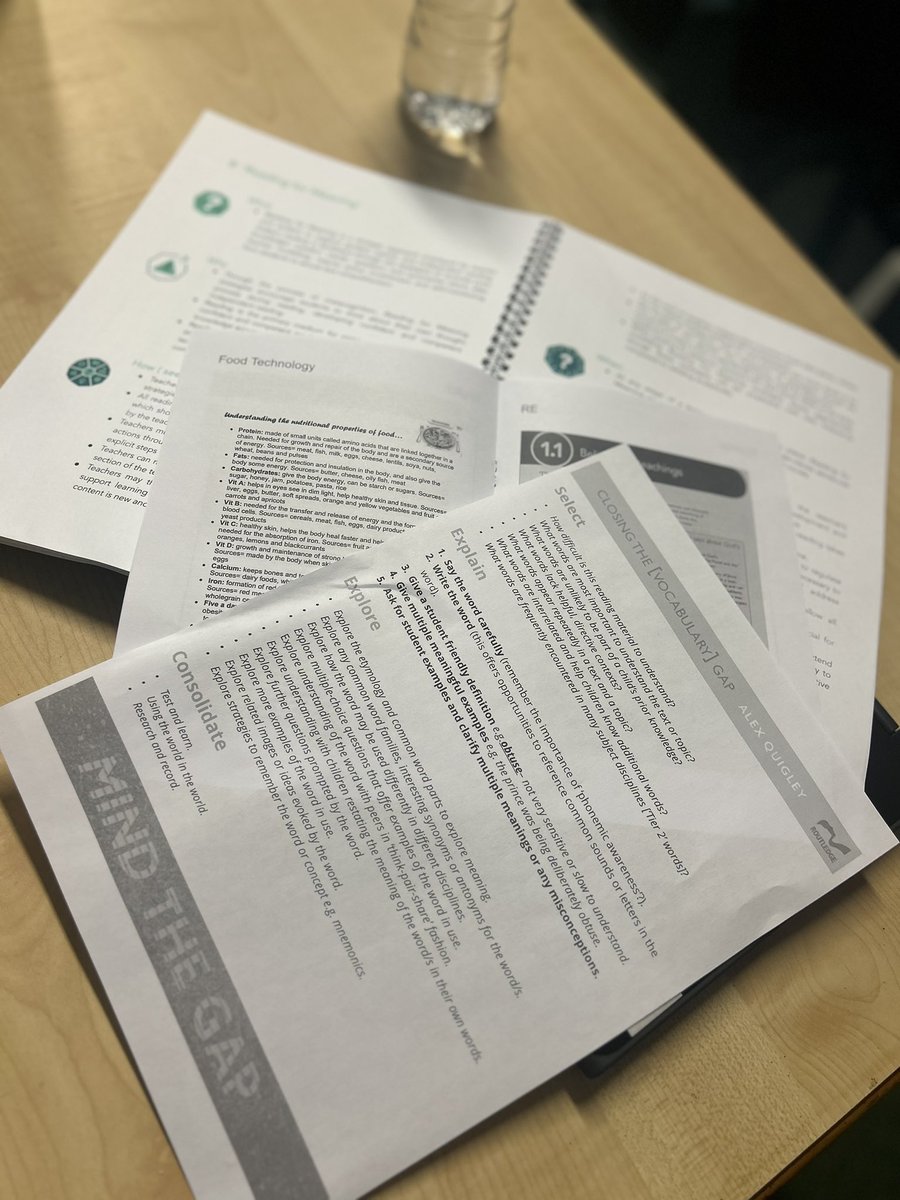
Loved delivering one of our key teaching techniques whole-school. Adapting reading strategies to confidently address the unique reading demands of all subjects is vital #disciplinaryliteracy#CPD
GREAT twilight CPD session developing expert teachers through the use of our Teaching Playbook. Well done to @MichellePeavoy and our Teaching Working Party for leading the training. @CoopManchester #ExpertTeachers
Not the prettiest sight since our library is moving across the school and storage is up in the air, but books are finally ready for year groups to start their new morning Tutor Reading novel in September📚
See this so often and I know when I’m guilty of it. Too many students at KS3 are burdened with the ‘how’ of a task instead of communicating everything they know
When we design a task for students we should be careful to ensure that the mechanics of the task we have designed don't become the thing that occupies a student's mental focus to the detriment of the thing we're seeking to teach.
Revealing science around intrinsic motivation and how so many of our students have not learned to navigate the ‘initial agitation’ when tackling challenging skills and concepts without aversion. Is explicit teaching of learning processes what students need? #teaching#education
I think about this twice a day.
Every morning when I sit down to read & then when I sit down to write, I say to myself,
"Accept the initial agitation."
When you try to focus, Andrew Huberman explains, "the brain circuits that turn on first are of the stress system."
Meaning:
"The agitation and stress that you feel at the beginning of something—when you're trying to lean into it and you can't focus—is just a recognized gate.
You have to pass through that gate to get to the focus component."
There's a common misconception, Huberman continues,
"The misunderstanding around how certain brain circuits work has led to this idea that there's some secret entry point—maybe marked 'flow' on the door—and there's a trampoline up to that door, and you just open that door, and you're immediately in [a deep state of focus].
And nothing could be further from the truth."
The truth is:
"There is a gate of entry. You have to wade through some sewage before you can swim in clear water. That's the way I always think about it."
I once told Andrew that I say to myself, "accept the initial agitation," every time I sit down to read or write, and he said, "the agitation is indeed the doorway to the whole process."
- - -
The clip below is from Andrew's 2020 interview on Rich Roll's podcast (https://t.co/HqdLeNLrmU)
@MissYouEngs I’d love any resources you have on MWBs. Recently started using and I’m testing out different ways of applying them. I like testing knowledge but I’m interested in taking it further! Your handout looks great
Friday word of the week: WHIST
To hush, become silent or be stilled.
Dr Johnson: ‘it is certainly a verb; and was formerly common… It is probably from huish, whence hust in Chaucer’
‘The wild waves whist’
in Shakespeare’s The Tempest
The English bursary for training to teach for the Academic Year of 2020/21 was £12k. It was cut for 2021/22 to £0 (the year I trained). For 2022/23 it has risen to £15k. How is that justified? It honestly feels like a cruel joke. #traintoteach#traineeteacher@NASUWT