Dear fellow Nigerians, I understand that the only thing most of us like to watch is just funny skits and catching cruise online while the nation is crumbling to pieces. Please we need to pause and start looking into serious Matters otherwise we will one day wake up to an unrecoverable Nigeria.
A very Serious health concerns have been raised regarding workers in an Indian 🇮🇳company operating here in Nigeria 🇳🇬. The company is said to be in Ogun State Ogijo community to be precise.
According to the Reports & record it is mentioned that there have been over 45 deaths linked to health complications as a result of working for this particular company called ARAP and many are asking questions.
This is a matter that requires urgent attention and proper investigation. We urge the government to step and ensure transparency, and prioritize the safety of workers. Compassion and responsibility including assistance with this man’s treatment are essential at this time.
This needs to be to go viral as a matter of urgency please let’s all tag appropriate authorities and government of Ogun State. 🙏🥹
@TheSerahIbrahim@ruffydfire@NewsCentralTV@DeleFarotimi@trigottista@kristkrest@Kasieobi_1@ifesalakooffice@tudobams@EmirSirdam
WAIT… HOLD ON. HOLD ON. (drinks water)
₦2 BILLION WORTH OF SHARES??? In Nigeria? Not possible.
Nah. Not in Nigeria!
I’m honestly gobsmacked.
What you’re about to read next is not normal.
This will utterly shock you.
So just a few days ago, I made a post about how Alhaji Abdul Samad Rabiu gave out ₦30 BILLION to his employees.
And I truly thought that was the peak.
Then something interesting happened. One of his employees (I guess) sent me a DM and casually said,
“Oga, he has been doing this for years.”
He mentioned 2021, that Alhaji Abdul Samad Rabiu had given out shares.
I was impressed.
I really was.
But my schedule over the week didn’t give me room to properly dig in.
So this morning, I deliberately took that journey, to verify, understand, and get context.
And BOOM 💥
There it was.
The grand story.
Waiting like a bo*mb ready to explode.
₦2 BILLION worth of shares.
Let me say that again.
₦2 BILLION worth of shares given to employees.
Not company shares.
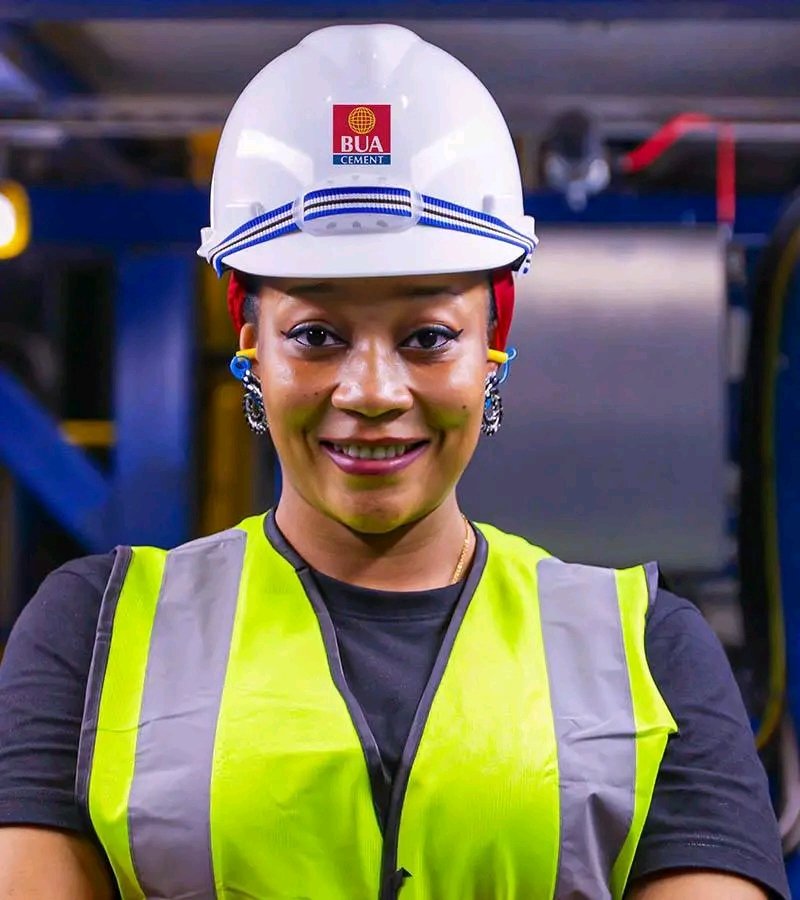
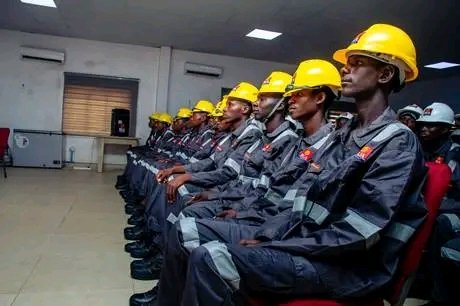
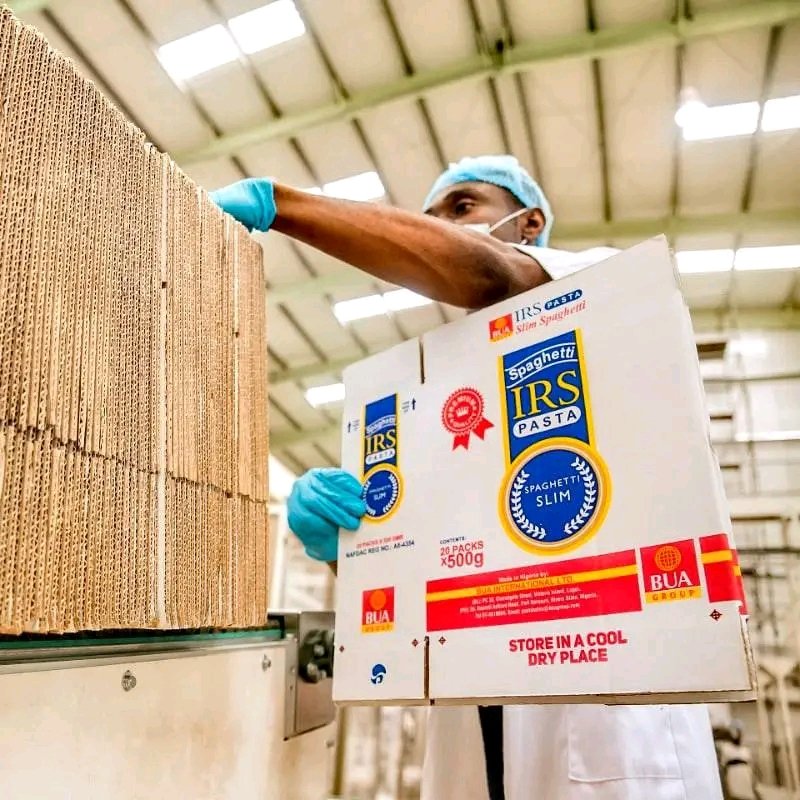
But from his personal shareholding, given to long-standing employees of BUA.
ARE. YOU. KIDDING. ME?
What?!
In Nigeria??
In a country where many employees are treated as expendable.
Where loyalty is often repaid with silence.
Where some CEOs delay salaries or say, “manage till next quarter.”
How did a story like this not go mainstream?
I mean, how do stories like this not dominate our public conversations?
This was four years ago.
We were all active on social media.
How did this news not trend?
How did we miss such grace-filled, human, deeply intentional leadership examples?
How?
Now let me give you context, because this one ehn… e sweet die.
A timeline of what this man has done in the last 4–5 years:
2021
₦2 BILLION.
Not profit sharing.
Not promises.
Actual share bonus given to BUA Cement employees, from his personal shareholding, to say “thank you” for standing strong through COVID.
This is phenomenal.
February 2024
In the middle of inflation, naira wahala, and cost-of-living pressure… BOOM! 50% salary increase across the entire BUA Group, permanent and contract staff included.
Who does that in this economy?
December 2025
At the BUA Night of Excellence and Long Service Awards, this man said, “Let’s go bigger.”
₦30BG
Sorry ₦30 BILLION CASH shared among 1,768 long-serving employees.
Some people went home with up to ₦1 BILLION EACH.
Billion o.
Not million.
Nah… this is PHEEENOOOMEEENALLLL.
This is wild, intentional, and deeply human leadership.
This is not CSR.
This is not branding.
This is not “let’s trend on social media.”
This is leadership with conscience, memory, and gratitude.
Honestly, I really love this.
This is our own Business and Leadership Stories.
At a time I’m championing the need for us to tell our own African/Nigerian Business and Leadership stories of those building African industrialisation, these stories are showing up.
For those of us raising the next generation of Nigerian entrepreneurs, this matters.
Because nations are not built only by policies, they are built by examples.
This is another story a generation needs to hear.
And this is my purpose.
I'll officially launch our podcast / media brand in 2026.
Stories like this must be documented, told, and preserved, not just scandals, outrage, and noise.
These are the stories that shape culture.
Between Investment Protection and Workers’ Rights: The Untold Struggles at the Dangote Refinery 2.
After listening to more information, I am directing this second piece to the Nigerian Content Development and Monitoring Board @OfficialNCDMB , the Federal Ministry of Labour and Employment, and the Government of the Federal Republic of Nigeria,
The recent mass termination of Nigerian engineers at the Dangote Petroleum Refinery has been explained away by management as a response to sabotage. However, testimonies from staff members paint a very different picture; one that points to years of poor working conditions, unfair labour practices, and pay disparities that undermine Nigeria’s local content aspirations.
Staff recruited across various batches, revealed that a level 9 step 3 engineer earns as little as ₦383,000 monthly. Even with shift allowances, total pay rarely exceeds ₦500K. In an industry where safety is paramount, personal protective equipment (PPEs) were reportedly issued only once, forcing workers to buy replacements from their pockets when worn out. Such alleged neglect of welfare and hazard protection stands far below the acceptable minimum standard for oil and gas operations.
In fact, the unannounced resignation of the refinery’s Chief Operating Officer, David Bird, further highlights these concerns. Known for promoting Nigerians within the refinery, it is elleged that he left due to the worsening staff welfare situation. Yet, despite his efforts, Nigerian engineers continue to earn a fraction of their expatriate colleagues’ salaries. While local staff struggle with ₦383,000, their Indian counterparts reportedly earn no less than $2,000 (around ₦3,000,000) monthly, even though a lot of them are Diploma holders. This fosters resentment and erode morale.
The situation came to a head when staff sought to exercise their right to unionize by joining the Petroleum and Natural Gas Senior Staff Association of Nigeria (PENGASSAN). Management, however, threatened them, insisting that because they operated within a Free Trade Zone, they could not join any trade union. PENGASSAN nevertheless registered hundreds of staff and formally wrote to the refinery. The response was punitive: workers were forced to declare whether or not they had registered, shift buses were withdrawn, and many were denied access to the refinery before their official termination letters were released.
This raises troubling questions. If sabotage truly occurred, can the management of Dangote Refinery explain what it was and who was culpable? Why were Dangote Fertiliser staff, who also joined PENGASSAN, not sacked? Is it because the fertiliser plant depends on locals for over 90% of its operations, while the refinery, being largely run by expatriates, can afford to dispense with Nigerian engineers? The selective application of punitive measures suggests that this is less about sabotage and more about silencing Nigerian workers who dared to seek fair treatment.
Now, a new management directive signed by Manas, a senior official of the refinery, has been released in response to the “manning crisis” caused by Nigerian staff not reporting to work. It reads:
•“All leaves of expats are cancelled until further notice. Anyone needing leave on genuine emergency will have to talk to me.”
•“Six (6) days work (12 hours) plus one day off to be followed in every unit until normalisation.”
This order confirms the depth of the crisis. With Nigerian engineers disengaged or locked out, expatriates are being overstretched to fill the gap. Rather than solving the crisis, such directives create unsustainable pressure on expatriates, deepen the divide between local and foreign staff, and expose the refinery’s overdependence on foreign labour. It further reveals that the termination of Nigerians was not a matter of discipline alone but a miscalculation with serious operational consequences.
@AskMichaelTaiwo@MtScholarships Why i need the GRE Voucher
I really want to apply for the GRE voucher because it will help me take the exam without worrying about the cost. I graduated with second class upper in computer science and growing up without access to technology inspired me to want to create a