Out now in @PNASNews! 🌊
Our new paper explores how Neanderthals adapted to coastal environments and scheduled their annual subsistence strategies.
Thanks to everyone who has supported this study over the years! 🫂
🔗https://t.co/e3b30T8ImX
The story of tea is older than our memories, and its origins are shrouded in mystery. Travel to the border areas between India and China, and you will find truly ancient tea trees, some up to 1,700 years old.
One legend from around 5,000 years ago describes how the Father of Chinese Medicine, Emperor Shen Nung, took an afternoon nap. Upon waking, he saw that a few tea leaves had drifted into his cup of boiling water. He tasted the infusion and immediately decreed that all his subjects should regularly drink it for their health.
Another story set around 2,500 years ago tells of the famous Buddhist monk Bodhidharma. After meditating continuously for nine long years, Bodhidharma became drowsy and fell asleep. He was so angry that he cut off his eyelids, and where the eyelids landed, the first tea plants began to grow.
Tea drinking is first mentioned in texts dating back to the 3rd century BC, such as the Erya, the first Chinese dictionary, and the Shijing, ‘the Book of Songs’. Both suggest that by this time, tea (called tu) had already been used for cooking and medicines for well over a thousand years.
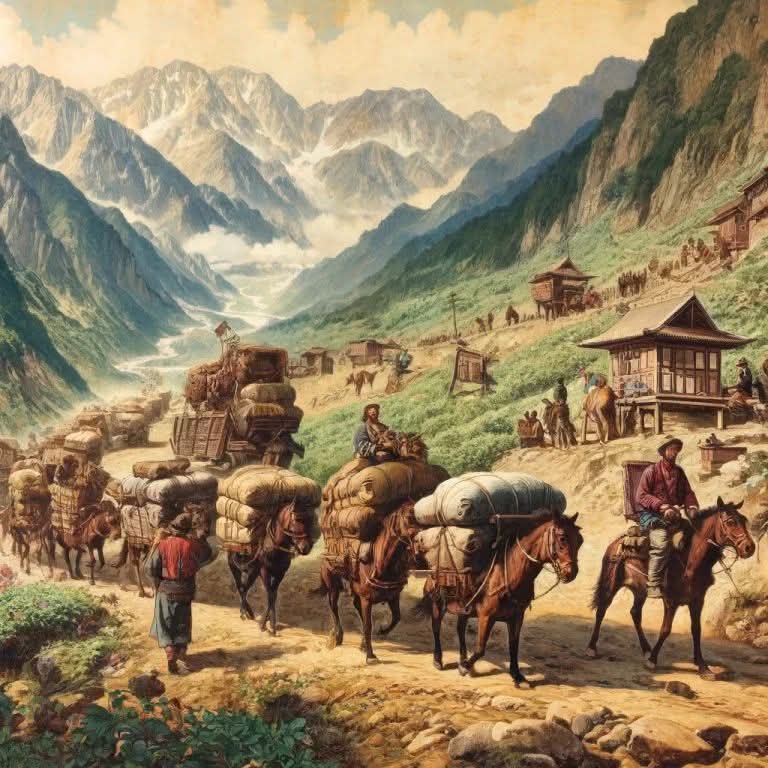
In time, tea became closely associated with Buddhism as a useful tonic for staying awake whilst spending long hours meditating, and even as an 'elixir' of life and immortality. Later, tea in China began increasingly to be used as currency, traded for horses with Tibet, Mongolia and Siberia. The tea leaves were compressed into ‘cakes’ or ‘bricks’ for easy transportation across the Himalayas, on what would become known as the Tea Horse Road.
By the Tang dynasty (618-907 AD) ‘brick tea’ was part of cultured life in China and every distinguished family employed a Tea Master to prepare their leaves. The era’s flourishing tea culture was uniquely captured in Lu Yu’s book, The Classic of Tea, covering everything from growing to the rituals of preparation. Lu Yu’s influence continued into the Song dynasty (960-1279 AD), by which time tea drinking was widely recognised as a highly sophisticated pastime associated with poetry, art, and music. The Song period also saw the flourishing of tea houses and the enjoyment of tea in everyday public life.
The Mongol invasion in the mid-13th century briefly halted these tea traditions. But with the rise of the Ming dynasty, celebrated for its famous blue and white porcelain tea ware, tea culture was revived.
Interest in tea first spread to Japan in the 7th century, but it is the 12th century Buddhist priest Myōan Eisai who is credited as the founder of the Japanese tea tradition and the famous Japanese Tea Ceremony (chanoyu). In Europe, tea only arrived in the 1600s, introduced by Portuguese traders. Much of this tea was green, but soon Chinese tea-makers and traders began to favour oxidised leaves for export – black tea travelled better and appealed more to the western palate.
Advertised as an ‘excellent beverage, recommended by all Chinese doctors’, tea went on sale for the first time to the English public at Garraway’s Coffee House in London in 1657. It soon also caught on in wider aristocratic circles, thanks to Catherine of Braganza, the tea-loving Portuguese bride of King Charles II said to have invented ‘British’ afternoon tea.
In the 1680s, the British East India Company was granted trading rights in China. As local demand boomed, the humble leaf found its way into the economics and politics of the nation. When Cromwell enforced a heavy tea tax in the 1750s, a vast black market for smuggled tea took hold. And when new world colonists opposed tea taxes during the so-called Boston Tea Party of 1773, it triggered the fight for American independence.
#archaeohistories
New Chronological Evidence of Early Human Activities 8000 Years Ago in the Coastal Region of Fujian, Southern China https://t.co/v5BQD2lHie #mdpiquaternary 来自 @Quaternary_MDPI
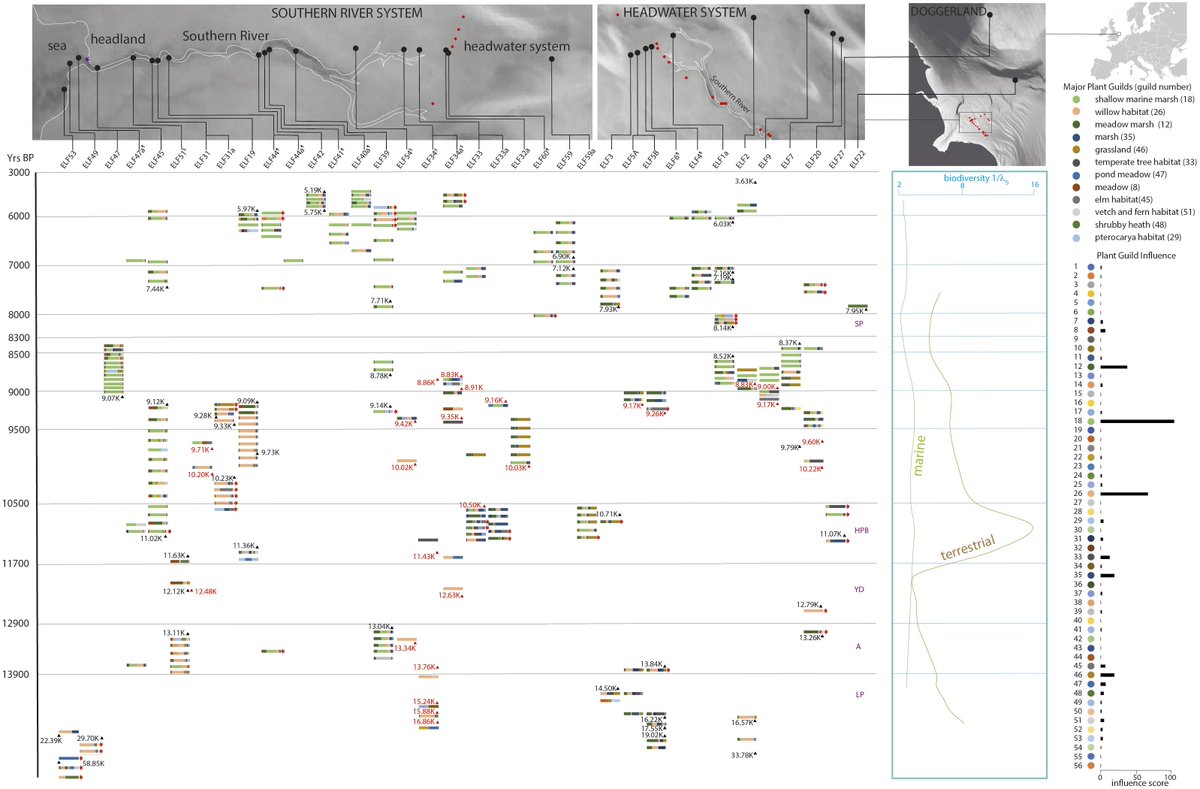
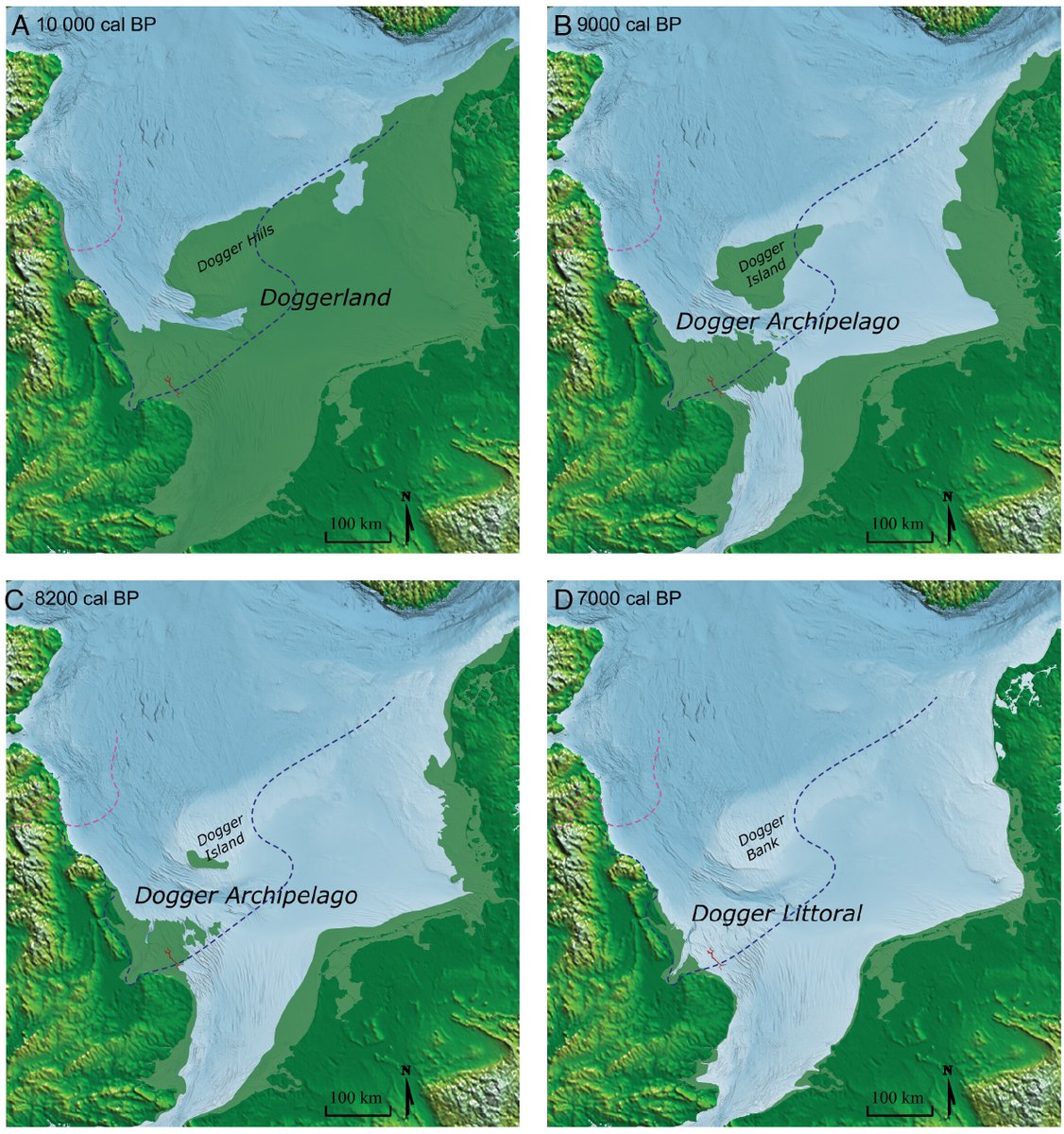
🚨 NEW STUDY (PNAS): A lost world confirmed beneath the North Sea.
Doggerland was thriving thousands of years earlier than believed.
🔹Billions of DNA sequences
🔹252 samples. 41 marine cores
🔹Dry land until 7,000 years ago
🔹Oak, elm, hazel at 16,000 years
🔹Forests 5,000 yrs before Britain
A peer reviewed study just mapped 20,000 years of ecological history beneath the North Sea.
An entire landmass connecting Britain to Europe. Forests. Rivers. Possibly people. Swallowed by the sea over thousands of years.
They even found a tree species at 7 separate locations that was supposedly extinct from the region for 400,000 years. It was still growing there.
And we're still told nothing significant was lost at the end of the Ice Age?
Ancient mushrooms were pivotal in allowing our ancestors to light fires and brew alcohol. Archeologists are tracing how these once-hidden fungi shaped human civilisation.
https://t.co/XS5nDw3SSE
9,000‑year‑old Neolithic Community Run by Women
Research published in 24' by Science, authored by Eren Yüncü et al, shows the Neolithic society from Çatalhöyük, Türkiye was built on female continuity, not male descent
Using 131 genomes from 7100–5950 BCE, researchers found no evidence of patrilocality, but persistent maternal networks inside houses.
Subadults buried together were linked far more often through mothers than fathers, and female children received richer grave goods.
Across a thousand years, female roles stayed central in one of the world’s earliest large farming communities.
Micro-CT reveals a delayed trajectory of rice domestication in the south China coast: Evidence of pottery impressions from Hengyu site - Liting Chen, Yong Ge, Hui Dai, Rulong Liang, Xinxin Zuo , 2026 https://t.co/WATEAcv43v
Thousands of years before the invention of compasses or sails, prehistoric peoples crossed oceans to reach remote lands like Malta and Australia. Doing so meant striking out in unknowable conditions. What do such crossings tell us about ancient minds? https://t.co/GFzscBddDF
A kingdom with blackened teeth 2,000 years ago: tracing the practice of tooth blackening in ancient Vietnam https://t.co/KqedAzofws this study offers the first archaeological insight into blackened dental traits in relation to the modern Vietnamese practice, thereby extending the ethnohistorical record by approximately 2000 years
The ‘10 New Insights in Climate Science 2025’ report reveals: 2023-24 saw the warmest sea surface temperatures in satellite records🌡️
The report summarises influential, novel, and policy-relevant climate research published in the last 18 months, highlighting the growing strain on our climate system.
@HebdenSophie and Christopher J. Merchant contributed as co-authors, bringing Earth observation expertise and satellite data from ESA's Climate Change Initiative to this landmark synthesis.
My new published paper on plant and soil , were phytolith can be used to distiguish upland rice from lowland rice? Please see the link below. @phytoltih.
https://t.co/B3l6OsMjPn
@upland rice
https://t.co/NPG04l9e3X
Could there be a connection between a squashed million-year-old skull and the Denisovans? I look at whether a provocative new study can be squared with what we already know from ancient genomes. I think there's a way.
https://t.co/CBbAmj78Ml