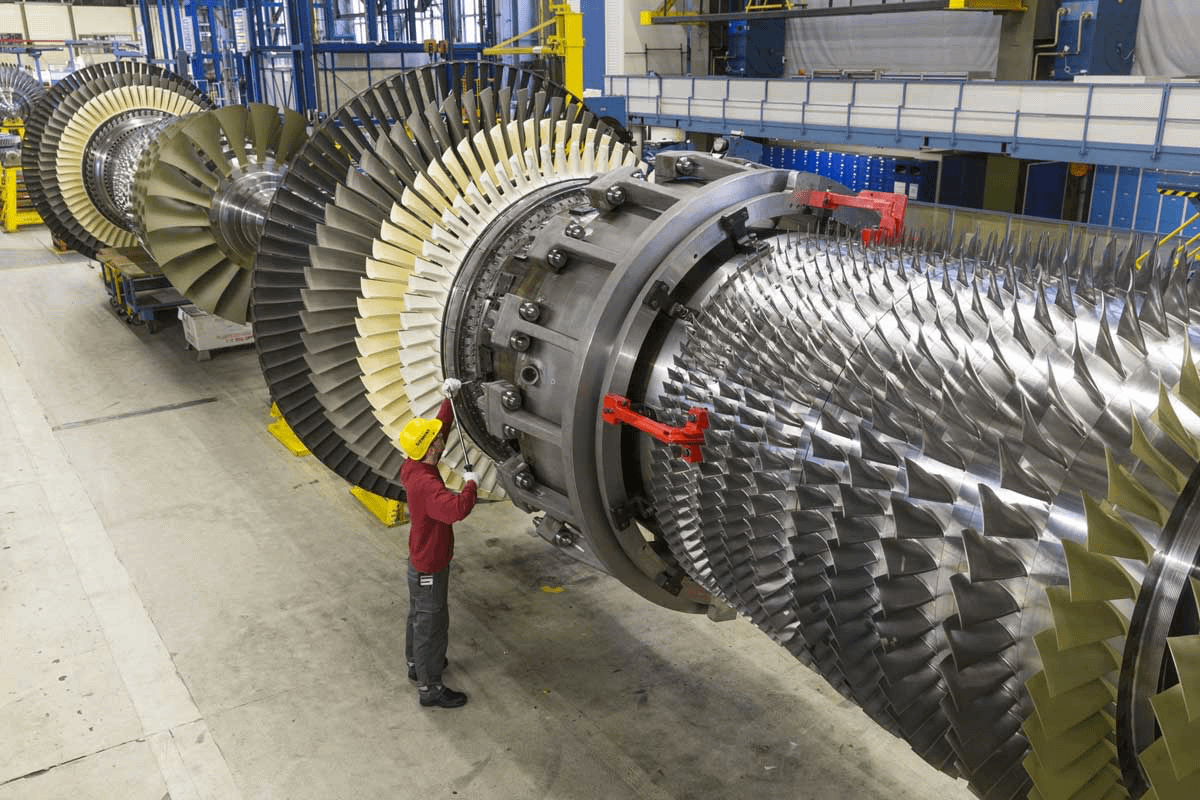
You cannot buy a new gas turbine until 2030. Order books at GE, Siemens, and Mitsubishi stretch to 2029. Turbine prices have nearly tripled since 2019. Every AI data center needs power and every gas plant needs a turbine. And every turbine has one part that bottlenecks the entire industry: The blade. It has to survive in gas 500°C above the melting point of the metal it's made from and spin at up to 20,000 RPM under 10,000 g of centrifugal force. Each blade is grown as a single crystal of nickel superalloy, pulled through a vacuum furnace at 3 mm per minute. A set of blades costs $600,000 and takes 90 weeks to grow. The same metallurgy powers modern jet engines. Only 3 companies on Earth can build one. China spent $42 billion trying to catch up. They bought a Russian fighter engine, took it apart, and copied every part. Their copy ran 30 hours between overhauls versus 400 for the original. Modern Western engines run 4,000. You can reverse engineer the shape of a turbine blade. You cannot reverse engineer 60 years of metallurgy.
Key takeaways from the dismal February jobs report:
1) US firms aren't hiring with all this uncertainty
2) The US has LOST jobs since May 2025.
3) We're back to 4.4% unemployment rate, one of the highest rates since 2021.
4) Healthcare had been the only bright spot, but even that was -28,000 in February (due to strikes)
5) Young workers and workers of color are struggling the most.
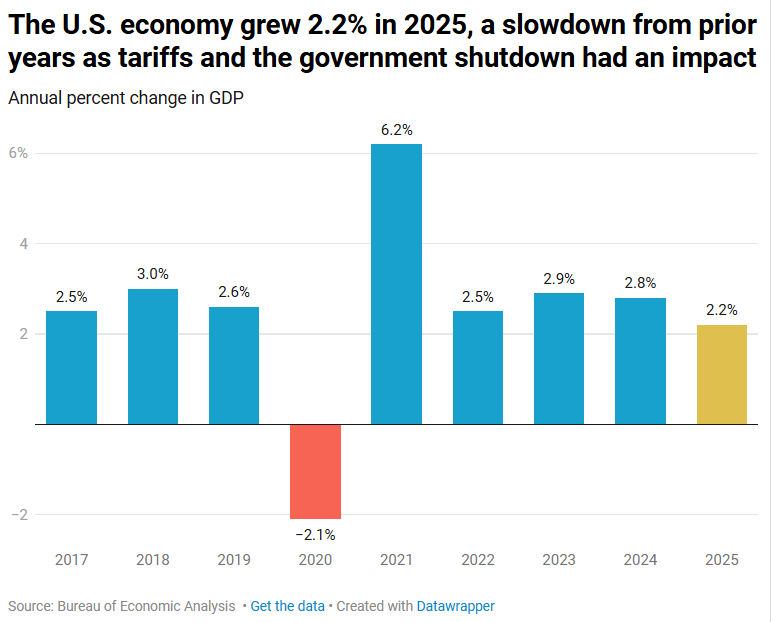
Just In: The US economy grew 2.2% in 2025. That's a slowdown from recent years. Tariffs, the government shutdown and lower immigration did have an impact.
2025 was also a year of "jobless growth" with anemic hiring despite solid consumption and the AI boom. Tariffs and anemic hiring left many Americans frustrated and uneasy about the economy.
Bottom line: 2025 was a decent year for GDP and the stock market. But there was a lot of uncertainty on Main Street.
New Fed research shows tariffs may be quietly costing the U.S. thousands of jobs every month — with slower hiring and a weaker labor market to show for it.
Taxes on trade are still taxes…and at the end of the day that impacts the economy. Businesses are trying to hold back on raising prices. But the tax has to be paid from somewhere.
"AFFORDABILITY ANGST"
I wrote this week's @TheEconomist cover story, on affordability in America
Politically, "affordability" is a potent slogan. But on the economics, the issue is mostly a mirage—real wages have risen handsomely. That mismatch spells trouble
Thread and link ⬇️
The US is losing blue-collar jobs for the first time since the pandemic—year-on-year job losses have hit 65k as manufacturing, transportation, & mining industries lose jobs at a rapid pace while growth in construction has nearly zeroed out
Underrated part of the PA budget deal: fiscal code de-couples state corporate tax from new federal expensing/deductions. State would've lost $1.1 billion in revenue due to OBBB without this.
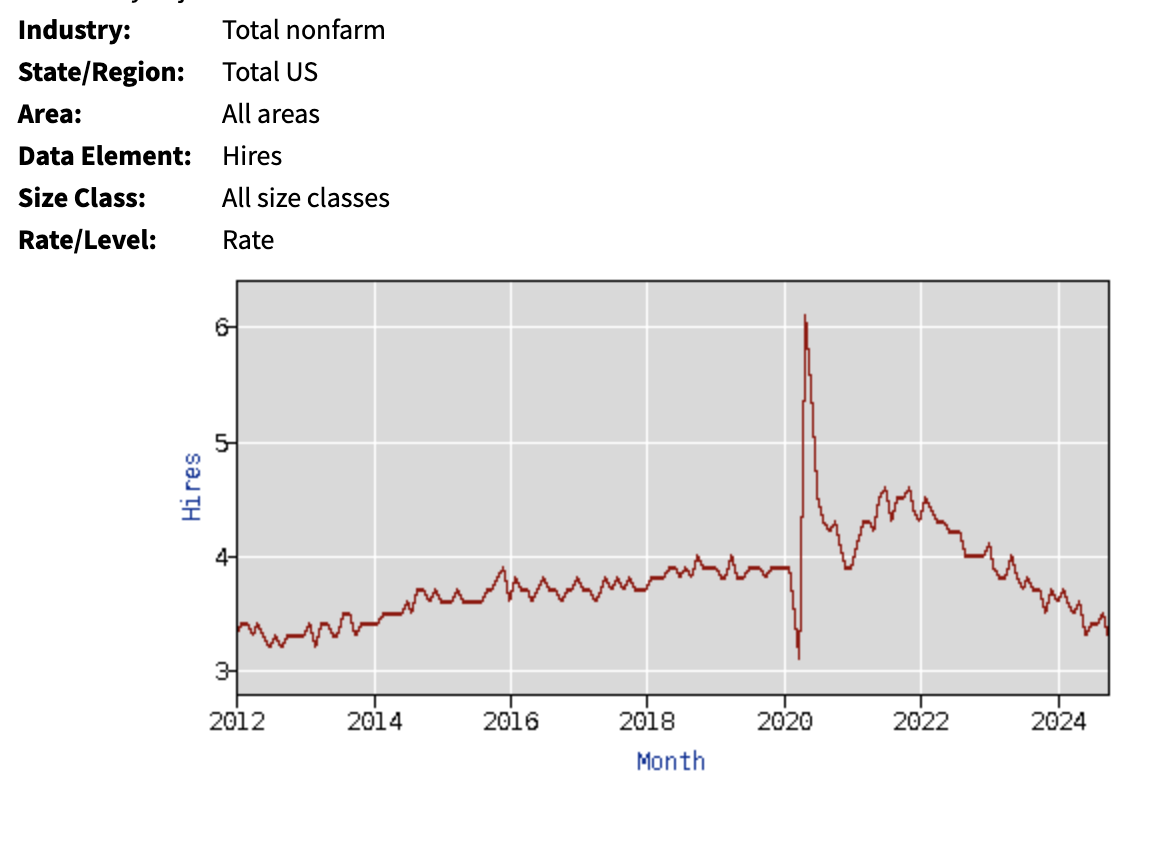
Not good: The hiring rate in October fell back to 3.3% -->the lowest since 2013.
Anecdotally, I heard many stories of hiring freezes ahead of the election. But we really need the hiring rate to pick up again.
Pesky facts: "There’s no quick-fix for replacing these workers. The current US prime-age labor force participation rate is 83.5 percent, and the rate for prime-age men (who dominate many of these occupations) is 89.5 percent." https://t.co/NiJJ1Z20jO
@seancrampsie@nick_field90 Looked to me like Harris was doing pretty well given that Cumberland mail ballots were almost evenly split between D and R. But I could be crunching those numbers wrong.
Something interesting in Dauphin County:
32.91% of returned mail ballots were from Republicans, Trump got 32.16% of mail vote. 54.57% were from Dems, Harris got 66.55% of the vote. Independents breaking heavily for Dems or GOP defecting at top of ticket.
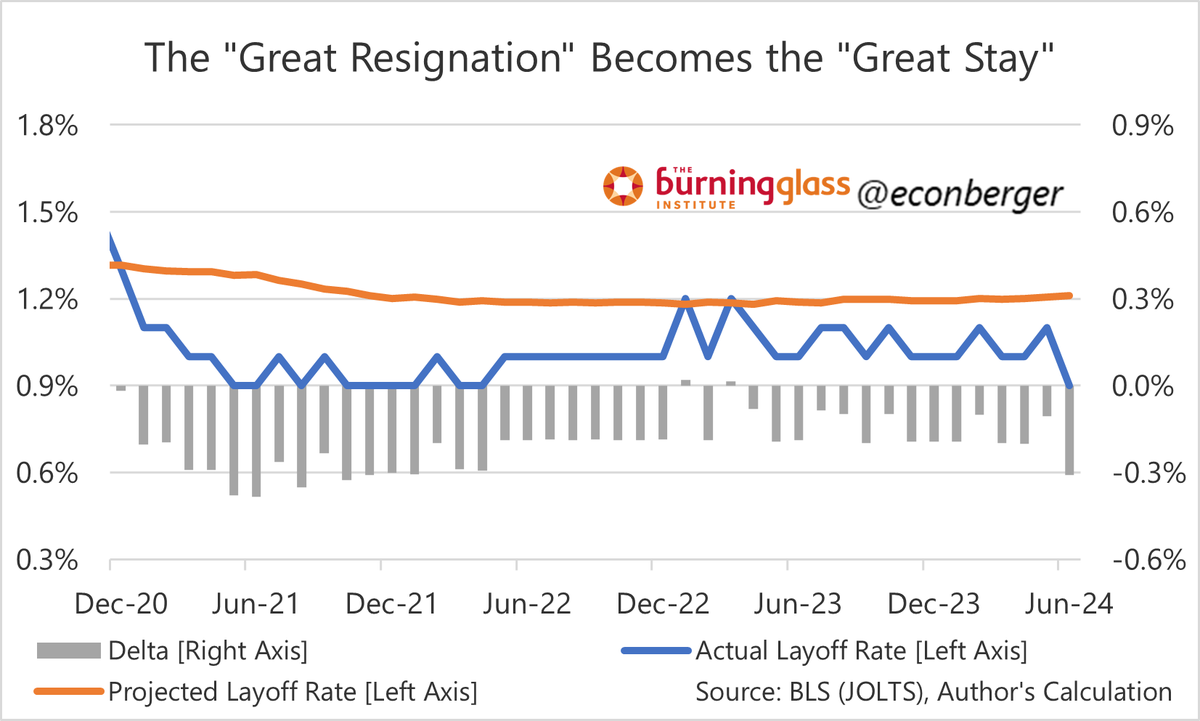
3/ And, strikingly, layoffs are back to matching their record low of 0.9%.
This is a weird labor market - nobody leaving, nobody coming in. "The Great Stay."
I think lots of people are just running with the 2008 GFC narrative and not thinking through whether it's applicable.
There's a real way in which "Wall Street" recovered from the GFC while "Main Street" didn't.
That's just not applicable here.
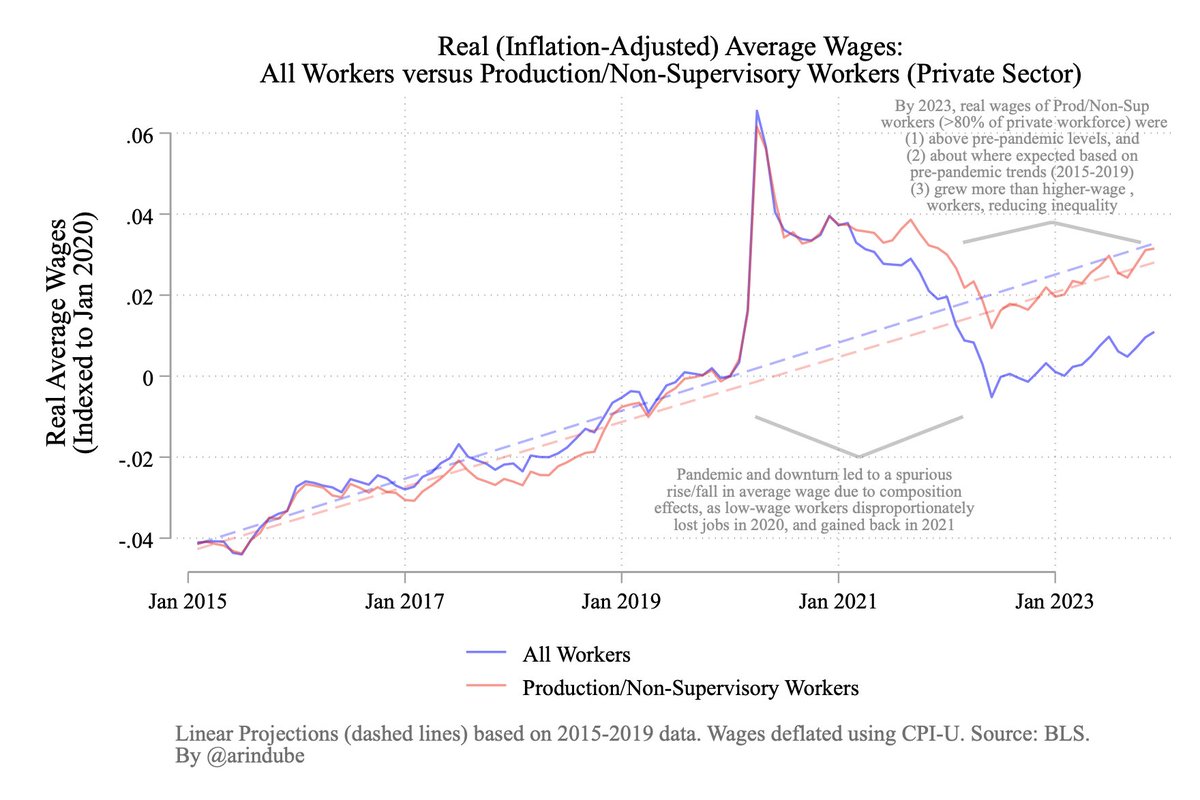
New data through December shows wage growth strongly outpacing inflation.
While the reduced gap between non-managerial vs managerial wages has remained (a good thing!), 2023 was a time of broad-based growth in real wages for most workers.
An American success story!