A French engineer who lives quietly in Paris has spent 30 years writing software that the entire internet now runs on without knowing his name.
He wrote the code that streams every YouTube video, every Netflix show, every TikTok clip. He wrote the code that runs the virtual servers underneath AWS, Google Cloud, and Microsoft Azure. He calculated more digits of pi than anyone in history. He has no Twitter. He has no marketing. He just keeps shipping.
His name is Fabrice Bellard.
Here is the story, because almost nobody outside the systems programming world knows what one man has built.
Fabrice was born in 1972 in Grenoble, France. He studied at École Polytechnique, the top French engineering school. He never went to Silicon Valley. He never built a startup empire. He just wrote code.
In 2000 he started a project called FFmpeg, an open-source multimedia framework for encoding, decoding, and streaming video. He was 28. The project did one thing nobody else had done well. It handled every video and audio format that existed, in one library, on every operating system. He led it himself for years.
Today FFmpeg is the invisible engine of the internet. YouTube uses it. Netflix uses it. VLC uses it. Chrome and Firefox use parts of it. Every Android phone, every iPhone, every smart TV, every video editing tool you have ever touched runs FFmpeg somewhere underneath. If you have watched a video on a screen in the last 20 years, Fabrice's code processed it.
He was not done.
In 2003 he started QEMU, a machine emulator and virtualizer. He wrote it solo until version 0.7.1 in 2005. QEMU lets you run any operating system on any other operating system. It became the foundation of modern virtualization. KVM, the Linux kernel hypervisor, runs on top of QEMU. Every major cloud provider, AWS, Google Cloud, Microsoft Azure, IBM Cloud, runs virtual machines on infrastructure built around it. The Quick Emulator is the most cited piece of cloud infrastructure code on Earth.
He kept going.
In 2001 he won the International Obfuscated C Code Contest with a small C compiler that grew into TCC, the Tiny C Compiler. TCC can compile and boot a Linux kernel from source in under 15 seconds. In 2004 he calculated the most digits of pi ever computed at the time, using a personal desktop computer and an algorithm he derived himself called Bellard's formula. In 2011 he wrote a complete PC emulator in pure JavaScript that runs Linux in your browser, a project called JSLinux that engineers still cannot believe is real.
In 2019 he released QuickJS, a small but complete JavaScript engine that fits where V8 cannot. In 2021 he released NNCP, a neural network based lossless data compressor that immediately took the lead on the Large Text Compression Benchmark.
Then he turned his attention to large language models. He built TextSynth Server, a web server with a REST API for running LLMs locally. He released ts_zip and ts_sms, compression utilities that use language models to compress text and short messages at ratios traditional algorithms cannot reach. He released TSAC, a very low bitrate audio compression system. In December 2025 he released Micro QuickJS, a new JavaScript engine for microcontrollers, separate from QuickJS, designed for environments with almost no memory.
Fabrice co-founded a telecom company called Amarisoft in 2012, where he serves as CTO. Amarisoft builds 4G and 5G base station software used by carriers and labs around the world. He has been running it for over a decade while continuing to ship personal projects from his own home page at bellard dot org
He has no Twitter. He has no Instagram. He gives almost no interviews. His personal website is a flat list of projects with no styling, no fonts, no marketing copy. Just titles and links.
A quiet French engineer who never moved to Silicon Valley wrote the code that quietly runs the internet.
He is still shipping.
As we approach our 4 year anniversary, a major milestone was reached: the activation of @MoonwellDeFi on @Ethereum.
Protocol upgrades now have the economic security of Ethereum, as well as significant improvements to the already best in class multichain governance system. 🌜🧵🌛
It was a great learning experience working with Simplicity to help recreate a native Bitcoin ICO model that lets us interact with BTC, BRC20, and Runes.
Should we take this to mainnet?
@newmichwill@StaniKulechov enabling e-mode with up to 93% LTV on rsETH was reckless from a risk management standpoint. Even if AAVE is not the origin of this incident, the fragility of the protocol has been exposed (and exploited) and they are to blame for their risk management decision imho
@jonasstarkx@0xethermatt what is crazy to me is that despite 2008 people still do not understand systemic risk: allowing e-mode on AAVE and allowing 0.93:1 seems crazy . in the governance vote (8/24 and 12/25) zero mention of bridge risk...
Why is Everyone Quiet about the Cross-Chain Honey Pots?
$10B+ at risk?
This post will cover:
1. DVNs on @LayerZero_Fndn
2. ISMs on @hyperlane
3. OFTs & Warp Assets
4. Non-dormant addresses on @ether_fi and @renzoai multisigs
"Decentralised Verifier Network" aka DVNs by LayerZero
LayerZero Labs DVN: 2/3 multisig
Nethermind DVN: 1/1 multisig
Stargate DVN: 1/1
Google Cloud DVN: 2/3
Horizen DVN: 2/2
Source: You gotta go to Etherscan and call the signerSize and quorum functions. Here are the contracts: Link [1] (in the reply)
Note: There is no guarantee that these multisigs are actually distributed and not maintained by a single person like in the case of Multichain.
The name "DVN" itself is misleading. It certainly mislead me into trusting them more. A DVN is a modular validator entity inside LayerZero. That means, if you choose a single DVN set-up, your cross chain messages will be solely validated by this DVN. You can choose multiple DVNs or m out n DVNs to secure your setup.
Most protocols (clients using LZ) have 2 DVN setups at max. I had to create this Dune dashboard myself to look into what's happening on-chain.
For instance, Stargate has 2 DVNs. Stargate DVN and Nethermind DVN. Both are 1/1 multisigs. Securing, checks notes, $442.84m.
Dune is doing a terrible job here, here's how the distribution of various configurations looks like. Look at the numbers that start tapering off as we go down the list. Dashboard link [2].
So, most protocols (clients using LZ) simply trust this one entity, LayerZero Labs, a 2/3 multisig. It's baffling to me that we're all fine with this and nobody is talking about it. We gotta push these teams towards more secure systems, rather push protocols that are using LayerZero to demand for more security.
Let's look at Hyperlane, LayerZero's biggest competitor at the moment.
First of all, thank God they call their default setup "Multisig ISM", ISM = "Interchain Security Module". They are at least honest about it. It is a multisig. Period.
Hyperlane has setup their default ISM to be a distributed set of validators with different quorums for different chains. Each of these validators in this multisig setups are different entities, like various DVNs on LayerZero.
Here's how their default setup looks like:
Arbitrum: 3/5 multisig
Base: 2/5
Blast: 2/3
BNB: 2/4
Ethereum: 3/7
Optimism: 2/5
(source: Link [3], note: they said this post prompted them to up their numbers, so this may have been updated)
It is not very far off from the LayerZero DVN setups. But atleast you can be sure that 3-7 of these entites are actively validating in the system. It also seems better than using a single LayerZero Labs DVN setup. By the way, in a m/n multisig setup, if n is >> m, you are compromised if ANY of the m keys are compromised. In their BNB setup, 2/4, if any of the 2 validators out of 4 are compromised, you are compromised.
If you compare these with Wormhole's default 13/19 setup, Wormhole looks a lot better. But I've heard it is upgradable. Do they need 13/19 signers to upgrade? I don't know.
There are two main arguments by the GMPs (General Messaging Protocols, LZ & HL in this case) defending the lack of security of individual setups at the moment.
1. You can make it as secure as you want by adding as many DVNs/ISMs as possible. This is a marketplace and the market isn't choosing their security right.
2. You can upgrade to a more secure setup when they are available.
Choosing your own security
In fact, I'm writing about this after I had to choose my own setup for my protocol built on LayerZero. I had no idea what to choose. LayerZero does not provide any information on the current usage distribution of DVNs, nor do they advice you on a secure setup as they want to be agnostic. Layerzeroscan only provides data on the distribution of messages by different protocols using LZ. But that is not useful to me at all. They don't even tell us what DVNs these protocols are using. That's why I built my own Dune dashboard.
Here are the most used DVNs across major EVM chains:
Outside of the top 6 DVNs I mentioned at the top of this post, none of the DVNs are getting any volume. Why would a protocol choose to even trust DVNs other than the active ones? What guarantee is there that they are active and will be active in the future? What if you brick your system by choosing a dying DVN? If a DVN is not getting any volume, they would rather turn off their nodes as it costs to run a DVN.
It's the same with complex DVNs or ISMs. If there is an ISM that is not being used, that means, it is not battle tested. If it is not securing any value, why would you trust it to secure your protocol? So the argument that these GMPs are agnostic marketplaces does not hold true at all. Someone has to help the crypto protocols choose the right setups.
It is as if Amazon offered a default product for all of your searches and gave you a list of other options without product availability, reviews or even a description.
In my experience, Hyperlane is more eager to engage their clients with education than LayerZero.
It should be easier for more DVNs to start competing in the GMP marketplaces. In reality, there is no way for them to market themselves to the protocols using Hyperlane/LayerZero outside of shouting into the void on Twitter. Apparently the teams(LZ said so) are currently working on dashboards to showcase more data about individual DVNs/ISMs. Maybe this post pushed them to do so.
The second main argument is that, protocols should use this trusted setup now, so that they can upgrade to a ZK bridge or a restaked security setup later down the line.
The Upgradability of Your Setup
First of all, I want to highlight that this is so far from the crypto ethos that got me into this space. Mutability, smh. Let's compare an ERC20 with an omnichain token.
An ERC20
1. Has a fixed supply that nobody can change (most of em)
2. Exists on a blockchain where nobody, including the team itself, can mint extra ERC20s
An OFT or A Warp Asset
1. Has a fixed supply in theory, but an unlimited number of tokens can be minted if the interop setup is compromised, unless there is a rate limit.
2. Has its interop setup managed by a multisig controlled by the token issuer (protocol). This multisig can change the rate limit as well (lol?).
3. Exists on multiple blockchains where if one of the chains is malicious, they might be able to mint as many tokens as possible, unless there is a rate limit, which can be changed.
Let's look at team multisigs for a second. At least they are dormant addresses locked up in a basement, right? Right?
@ether_fi is a protocol with $5.5B+ in TVL.
Here is the multisig (Link[4]) securing their weETH OFT. 5 out of these 6 wallets have been active in the last 2 months. That means a higher likelihood of getting their private keys stolen.. For context, Ronin ($600m) and Harmony Bridge ($100m) hacks were due to comprises of multisigs.
@renzoai is a protocol with $1.5B in TVL. And their ezETH is an xERC20. It is also secured by a 3/5 (multisig Link [5]). All 5 of these addresses have been active recently. And they all seem to be kinda interlinked. But I am not an expert on-chain sleuth to comment on that though.
Will Ethena's USDe ever depeg? Perhaps not due to their stablecoin design, but rather because of their interop setup (LayerZero Labs DVN + Horizen DVN, basically a 4/5). At least 7 of their 9 multisig addresses are dormant.
So, can we say a total of around $10B+ is at risk here?
I am not blaming these GMPs. They are simply selling a setup. I am pushing the community to demand enough security from the protocols that are using these setups. Did we all forget that the bridge hacks have accounted for >50% of all funds we have lost? Now we are offering billions more on a platter to the hackers around the world. Kim Jong-Un is probably rubbing his hands right now.
Native Bridges, Ignored, And Left for Dead
It is easy to point out problems than to offer solutions. What is the best security for cross-chain messaging/tokens right now then? I would suggest studying wstETH by Lido. It uses native bridges to bridge and also to control the upgradable token setups on L2s. The upgradability is controlled by the Lido DAO on L1. Except the upgradability aspect of this, I have no issues with this setup. There is no way an unlimited amount of wstETH can be minted in this case.
There will be solutions based on restaking in the future, hopefully they will offer a much better security than what we have today.
Closing Thoughts
I used to think very highly of LayerZero as a protocol. A protocol that is marketed https://t.co/jxO3ChhU2J as a peer next to Bitcoin and Ethereum. Bitcoin, Ethereum, LayerZero. But I do not feel strongly about it anymore. I don't think it's even close. Bitcoiners chose the smaller blocks chain, Ethereans still care about the solo stakers, but the protocols using LayerZero are fine with one or two DVN setups.
This is not a post targeted towards any of the GMPs/protocols mentioned here. I wanted to voice out my concern because I hold a lot more ETH than I hold ZRO (I do hold some ZRO, sandmanarc.eth). I have also integrated LayerZero into the protocol I am currently building. Although I am having second thoughts about it now.
Let's demand better standards from our industry. - A humble community member, Sand
Only one chance in this lifetime…
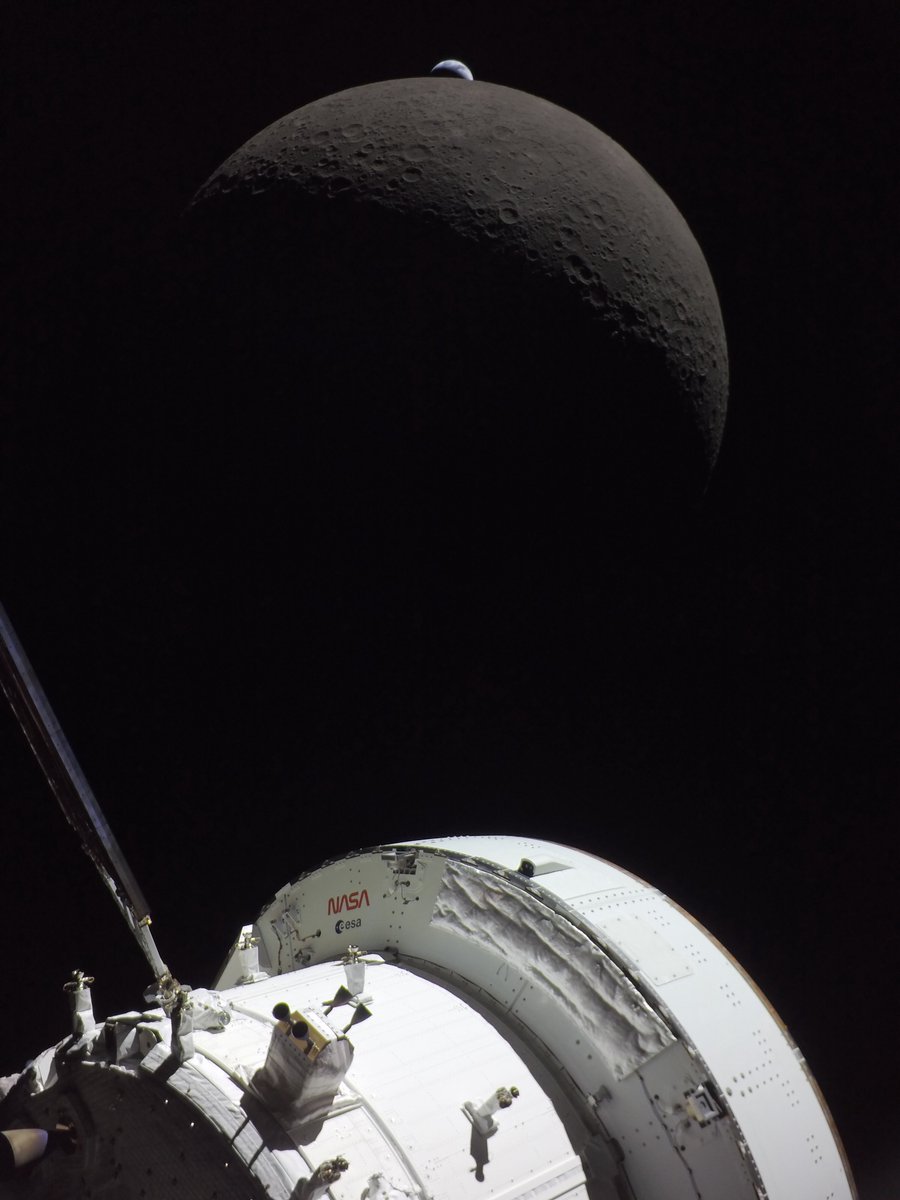
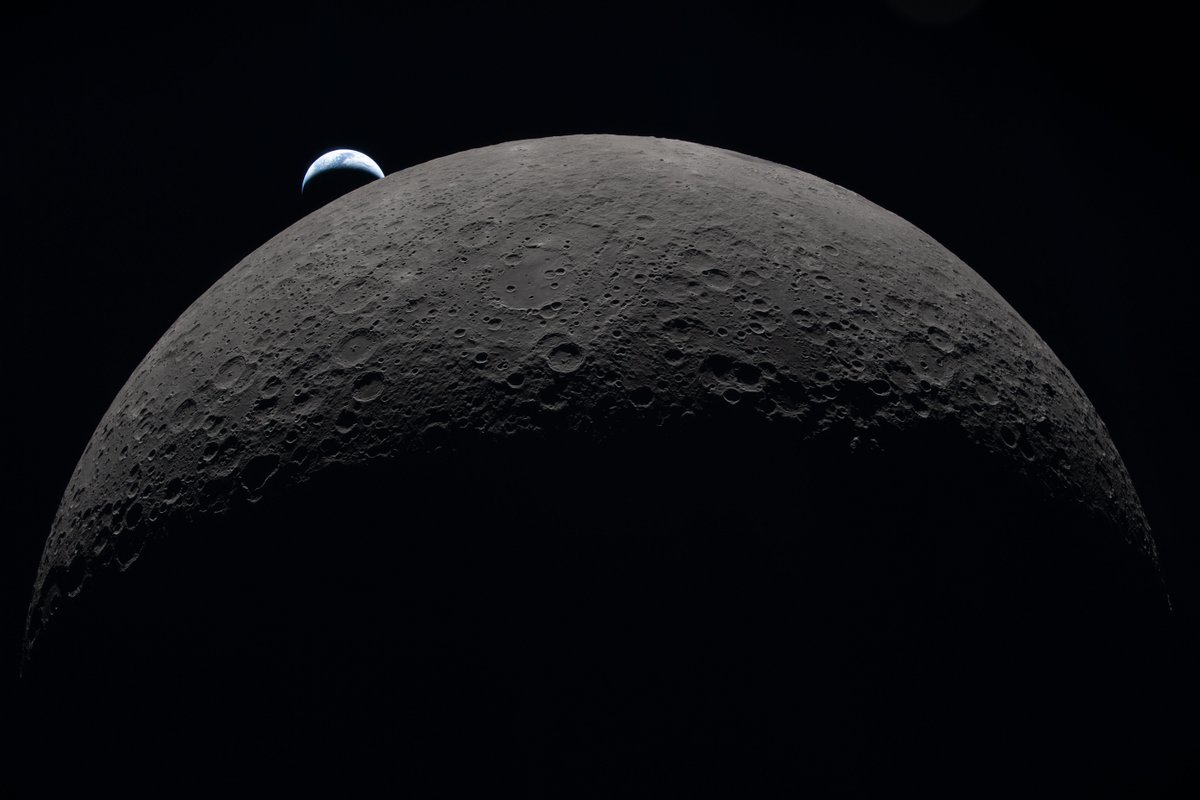
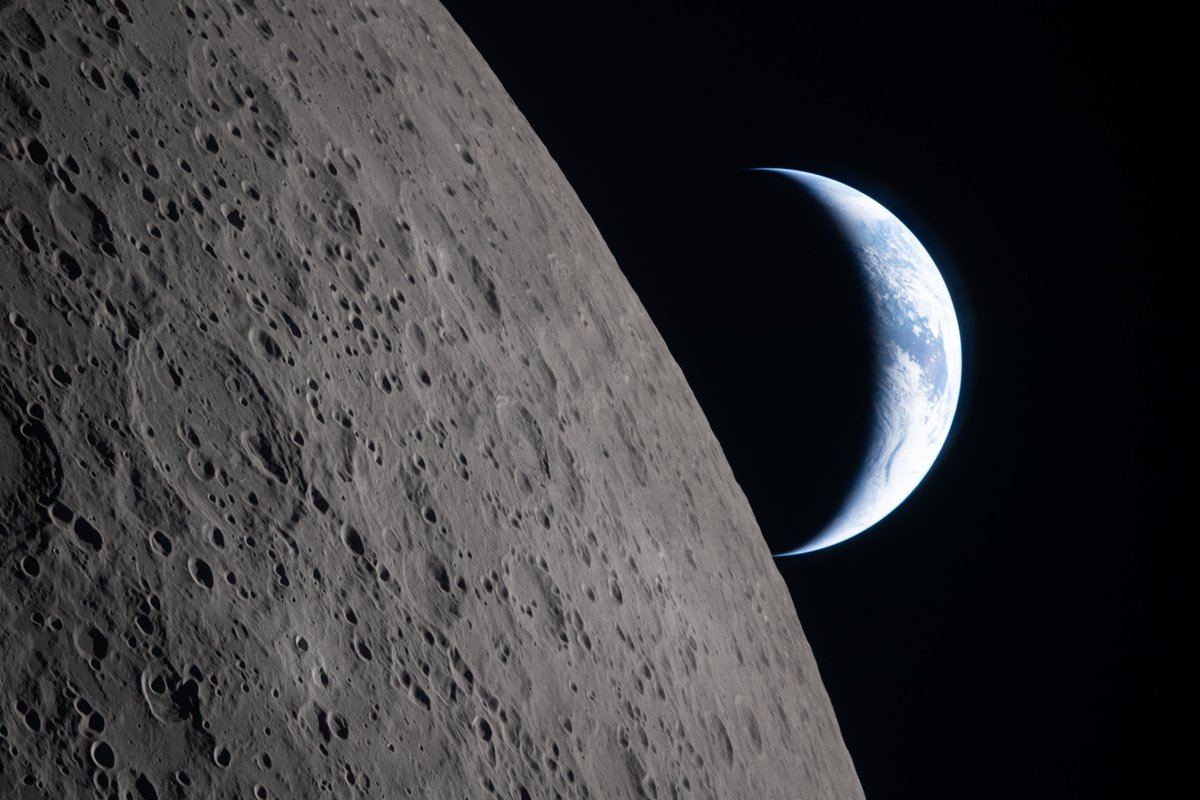
Like watching sunset at the beach from the most foreign seat in the cosmos, I couldn’t resist a cell phone video of Earthset. You can hear the shutter on the Nikon as @Astro_Christina is hammering away on 3-shot brackets and capturing those exceptional Earthset photos through the 400mm lens. @AstroVicGlover was in window 3 watching with @Astro_Jeremy next to him.
I could barely see the Moon through the docking hatch window but the iPhone was the perfect size to catch the view…this is uncropped, uncut with 8x zoom which is quite comparable to the view of the human eye. Enjoy.
@TimDraper what is your position on how to address quantum computer risks ? it looks as if bitcoin is headed for a fork. how contentious it will be i don't know but in 18months the question will be even more pressing most likely ?
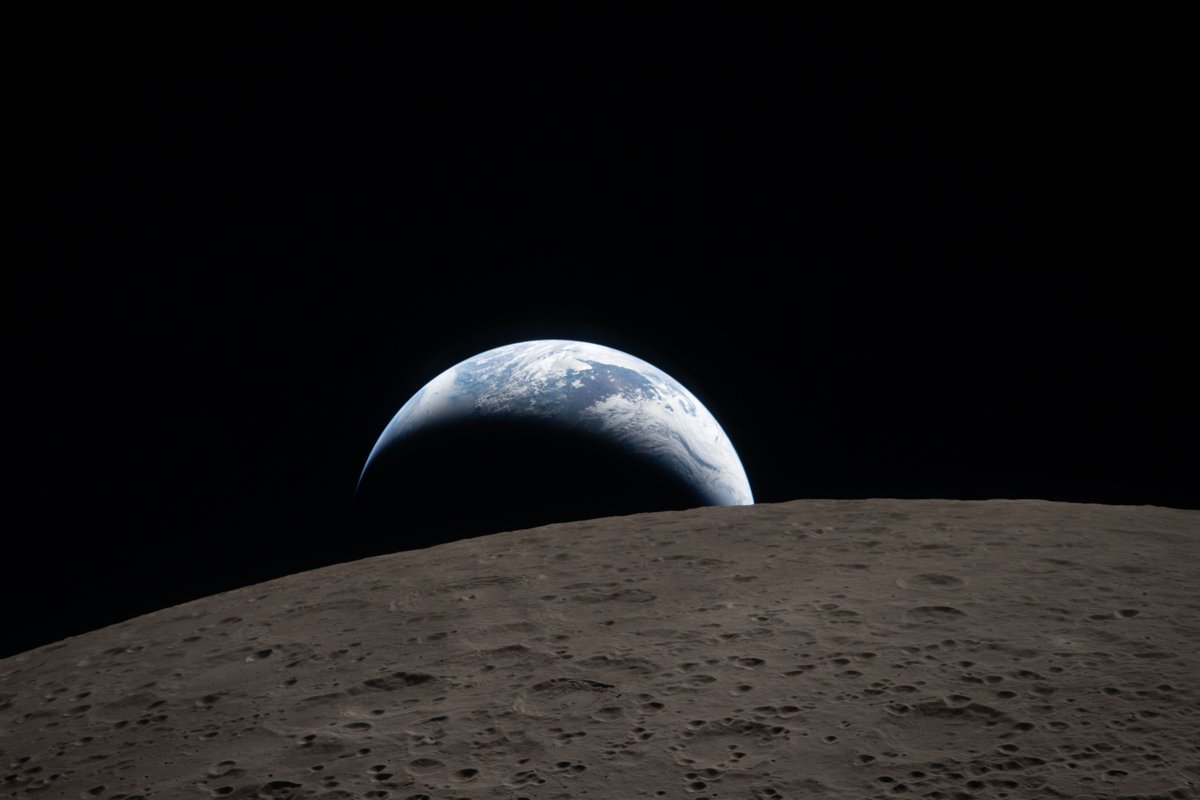
Hello, Moon. It’s great to be back.
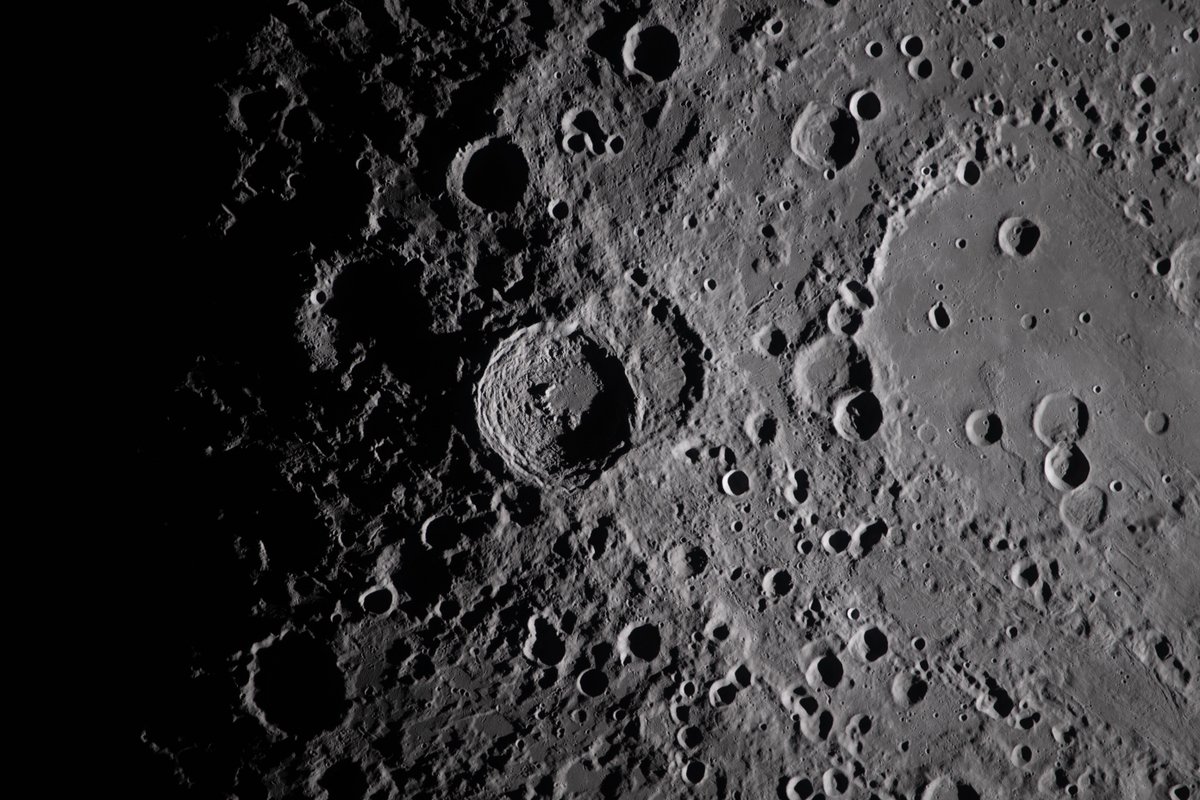
Here’s a taste of what the Artemis II astronauts photographed during their flight around the Moon. Check out more photos from the mission: https://t.co/rzM1P0QbOl
(I encountered an uneasy surprise when I got an email from an instance of Mythos Preview while eating a sandwich in a park. That instance wasn't supposed to have access to the internet.)
Introducing Project Glasswing: an urgent initiative to help secure the world’s most critical software.
It’s powered by our newest frontier model, Claude Mythos Preview, which can find software vulnerabilities better than all but the most skilled humans.
https://t.co/NQ7IfEtYk7


![sandmanarc's tweet photo. Why is Everyone Quiet about the Cross-Chain Honey Pots?
$10B+ at risk?
This post will cover:
1. DVNs on @LayerZero_Fndn
2. ISMs on @hyperlane
3. OFTs & Warp Assets
4. Non-dormant addresses on @ether_fi and @renzoai multisigs
"Decentralised Verifier Network" aka DVNs by LayerZero
LayerZero Labs DVN: 2/3 multisig
Nethermind DVN: 1/1 multisig
Stargate DVN: 1/1
Google Cloud DVN: 2/3
Horizen DVN: 2/2
Source: You gotta go to Etherscan and call the signerSize and quorum functions. Here are the contracts: Link [1] (in the reply)
Note: There is no guarantee that these multisigs are actually distributed and not maintained by a single person like in the case of Multichain.
The name "DVN" itself is misleading. It certainly mislead me into trusting them more. A DVN is a modular validator entity inside LayerZero. That means, if you choose a single DVN set-up, your cross chain messages will be solely validated by this DVN. You can choose multiple DVNs or m out n DVNs to secure your setup.
Most protocols (clients using LZ) have 2 DVN setups at max. I had to create this Dune dashboard myself to look into what's happening on-chain.
For instance, Stargate has 2 DVNs. Stargate DVN and Nethermind DVN. Both are 1/1 multisigs. Securing, checks notes, $442.84m.
Dune is doing a terrible job here, here's how the distribution of various configurations looks like. Look at the numbers that start tapering off as we go down the list. Dashboard link [2].
So, most protocols (clients using LZ) simply trust this one entity, LayerZero Labs, a 2/3 multisig. It's baffling to me that we're all fine with this and nobody is talking about it. We gotta push these teams towards more secure systems, rather push protocols that are using LayerZero to demand for more security.
Let's look at Hyperlane, LayerZero's biggest competitor at the moment.
First of all, thank God they call their default setup "Multisig ISM", ISM = "Interchain Security Module". They are at least honest about it. It is a multisig. Period.
Hyperlane has setup their default ISM to be a distributed set of validators with different quorums for different chains. Each of these validators in this multisig setups are different entities, like various DVNs on LayerZero.
Here's how their default setup looks like:
Arbitrum: 3/5 multisig
Base: 2/5
Blast: 2/3
BNB: 2/4
Ethereum: 3/7
Optimism: 2/5
(source: Link [3], note: they said this post prompted them to up their numbers, so this may have been updated)
It is not very far off from the LayerZero DVN setups. But atleast you can be sure that 3-7 of these entites are actively validating in the system. It also seems better than using a single LayerZero Labs DVN setup. By the way, in a m/n multisig setup, if n is >> m, you are compromised if ANY of the m keys are compromised. In their BNB setup, 2/4, if any of the 2 validators out of 4 are compromised, you are compromised.
If you compare these with Wormhole's default 13/19 setup, Wormhole looks a lot better. But I've heard it is upgradable. Do they need 13/19 signers to upgrade? I don't know.
There are two main arguments by the GMPs (General Messaging Protocols, LZ & HL in this case) defending the lack of security of individual setups at the moment.
1. You can make it as secure as you want by adding as many DVNs/ISMs as possible. This is a marketplace and the market isn't choosing their security right.
2. You can upgrade to a more secure setup when they are available.
Choosing your own security
In fact, I'm writing about this after I had to choose my own setup for my protocol built on LayerZero. I had no idea what to choose. LayerZero does not provide any information on the current usage distribution of DVNs, nor do they advice you on a secure setup as they want to be agnostic. Layerzeroscan only provides data on the distribution of messages by different protocols using LZ. But that is not useful to me at all. They don't even tell us what DVNs these protocols are using. That's why I built my own Dune dashboard.
Here are the most used DVNs across major EVM chains:
Outside of the top 6 DVNs I mentioned at the top of this post, none of the DVNs are getting any volume. Why would a protocol choose to even trust DVNs other than the active ones? What guarantee is there that they are active and will be active in the future? What if you brick your system by choosing a dying DVN? If a DVN is not getting any volume, they would rather turn off their nodes as it costs to run a DVN.
It's the same with complex DVNs or ISMs. If there is an ISM that is not being used, that means, it is not battle tested. If it is not securing any value, why would you trust it to secure your protocol? So the argument that these GMPs are agnostic marketplaces does not hold true at all. Someone has to help the crypto protocols choose the right setups.
It is as if Amazon offered a default product for all of your searches and gave you a list of other options without product availability, reviews or even a description.
In my experience, Hyperlane is more eager to engage their clients with education than LayerZero.
It should be easier for more DVNs to start competing in the GMP marketplaces. In reality, there is no way for them to market themselves to the protocols using Hyperlane/LayerZero outside of shouting into the void on Twitter. Apparently the teams(LZ said so) are currently working on dashboards to showcase more data about individual DVNs/ISMs. Maybe this post pushed them to do so.
The second main argument is that, protocols should use this trusted setup now, so that they can upgrade to a ZK bridge or a restaked security setup later down the line.
The Upgradability of Your Setup
First of all, I want to highlight that this is so far from the crypto ethos that got me into this space. Mutability, smh. Let's compare an ERC20 with an omnichain token.
An ERC20
1. Has a fixed supply that nobody can change (most of em)
2. Exists on a blockchain where nobody, including the team itself, can mint extra ERC20s
An OFT or A Warp Asset
1. Has a fixed supply in theory, but an unlimited number of tokens can be minted if the interop setup is compromised, unless there is a rate limit.
2. Has its interop setup managed by a multisig controlled by the token issuer (protocol). This multisig can change the rate limit as well (lol?).
3. Exists on multiple blockchains where if one of the chains is malicious, they might be able to mint as many tokens as possible, unless there is a rate limit, which can be changed.
Let's look at team multisigs for a second. At least they are dormant addresses locked up in a basement, right? Right?
@ether_fi is a protocol with $5.5B+ in TVL.
Here is the multisig (Link[4]) securing their weETH OFT. 5 out of these 6 wallets have been active in the last 2 months. That means a higher likelihood of getting their private keys stolen.. For context, Ronin ($600m) and Harmony Bridge ($100m) hacks were due to comprises of multisigs.
@renzoai is a protocol with $1.5B in TVL. And their ezETH is an xERC20. It is also secured by a 3/5 (multisig Link [5]). All 5 of these addresses have been active recently. And they all seem to be kinda interlinked. But I am not an expert on-chain sleuth to comment on that though.
Will Ethena's USDe ever depeg? Perhaps not due to their stablecoin design, but rather because of their interop setup (LayerZero Labs DVN + Horizen DVN, basically a 4/5). At least 7 of their 9 multisig addresses are dormant.
So, can we say a total of around $10B+ is at risk here?
I am not blaming these GMPs. They are simply selling a setup. I am pushing the community to demand enough security from the protocols that are using these setups. Did we all forget that the bridge hacks have accounted for >50% of all funds we have lost? Now we are offering billions more on a platter to the hackers around the world. Kim Jong-Un is probably rubbing his hands right now.
Native Bridges, Ignored, And Left for Dead
It is easy to point out problems than to offer solutions. What is the best security for cross-chain messaging/tokens right now then? I would suggest studying wstETH by Lido. It uses native bridges to bridge and also to control the upgradable token setups on L2s. The upgradability is controlled by the Lido DAO on L1. Except the upgradability aspect of this, I have no issues with this setup. There is no way an unlimited amount of wstETH can be minted in this case.
There will be solutions based on restaking in the future, hopefully they will offer a much better security than what we have today.
Closing Thoughts
I used to think very highly of LayerZero as a protocol. A protocol that is marketed https://t.co/jxO3ChhU2J as a peer next to Bitcoin and Ethereum. Bitcoin, Ethereum, LayerZero. But I do not feel strongly about it anymore. I don't think it's even close. Bitcoiners chose the smaller blocks chain, Ethereans still care about the solo stakers, but the protocols using LayerZero are fine with one or two DVN setups.
This is not a post targeted towards any of the GMPs/protocols mentioned here. I wanted to voice out my concern because I hold a lot more ETH than I hold ZRO (I do hold some ZRO, sandmanarc.eth). I have also integrated LayerZero into the protocol I am currently building. Although I am having second thoughts about it now.
Let's demand better standards from our industry. - A humble community member, Sand](https://pbs.twimg.com/media/GU--WTPa4AEZH1Q.jpg)
![sandmanarc's tweet photo. Why is Everyone Quiet about the Cross-Chain Honey Pots?
$10B+ at risk?
This post will cover:
1. DVNs on @LayerZero_Fndn
2. ISMs on @hyperlane
3. OFTs & Warp Assets
4. Non-dormant addresses on @ether_fi and @renzoai multisigs
"Decentralised Verifier Network" aka DVNs by LayerZero
LayerZero Labs DVN: 2/3 multisig
Nethermind DVN: 1/1 multisig
Stargate DVN: 1/1
Google Cloud DVN: 2/3
Horizen DVN: 2/2
Source: You gotta go to Etherscan and call the signerSize and quorum functions. Here are the contracts: Link [1] (in the reply)
Note: There is no guarantee that these multisigs are actually distributed and not maintained by a single person like in the case of Multichain.
The name "DVN" itself is misleading. It certainly mislead me into trusting them more. A DVN is a modular validator entity inside LayerZero. That means, if you choose a single DVN set-up, your cross chain messages will be solely validated by this DVN. You can choose multiple DVNs or m out n DVNs to secure your setup.
Most protocols (clients using LZ) have 2 DVN setups at max. I had to create this Dune dashboard myself to look into what's happening on-chain.
For instance, Stargate has 2 DVNs. Stargate DVN and Nethermind DVN. Both are 1/1 multisigs. Securing, checks notes, $442.84m.
Dune is doing a terrible job here, here's how the distribution of various configurations looks like. Look at the numbers that start tapering off as we go down the list. Dashboard link [2].
So, most protocols (clients using LZ) simply trust this one entity, LayerZero Labs, a 2/3 multisig. It's baffling to me that we're all fine with this and nobody is talking about it. We gotta push these teams towards more secure systems, rather push protocols that are using LayerZero to demand for more security.
Let's look at Hyperlane, LayerZero's biggest competitor at the moment.
First of all, thank God they call their default setup "Multisig ISM", ISM = "Interchain Security Module". They are at least honest about it. It is a multisig. Period.
Hyperlane has setup their default ISM to be a distributed set of validators with different quorums for different chains. Each of these validators in this multisig setups are different entities, like various DVNs on LayerZero.
Here's how their default setup looks like:
Arbitrum: 3/5 multisig
Base: 2/5
Blast: 2/3
BNB: 2/4
Ethereum: 3/7
Optimism: 2/5
(source: Link [3], note: they said this post prompted them to up their numbers, so this may have been updated)
It is not very far off from the LayerZero DVN setups. But atleast you can be sure that 3-7 of these entites are actively validating in the system. It also seems better than using a single LayerZero Labs DVN setup. By the way, in a m/n multisig setup, if n is >> m, you are compromised if ANY of the m keys are compromised. In their BNB setup, 2/4, if any of the 2 validators out of 4 are compromised, you are compromised.
If you compare these with Wormhole's default 13/19 setup, Wormhole looks a lot better. But I've heard it is upgradable. Do they need 13/19 signers to upgrade? I don't know.
There are two main arguments by the GMPs (General Messaging Protocols, LZ & HL in this case) defending the lack of security of individual setups at the moment.
1. You can make it as secure as you want by adding as many DVNs/ISMs as possible. This is a marketplace and the market isn't choosing their security right.
2. You can upgrade to a more secure setup when they are available.
Choosing your own security
In fact, I'm writing about this after I had to choose my own setup for my protocol built on LayerZero. I had no idea what to choose. LayerZero does not provide any information on the current usage distribution of DVNs, nor do they advice you on a secure setup as they want to be agnostic. Layerzeroscan only provides data on the distribution of messages by different protocols using LZ. But that is not useful to me at all. They don't even tell us what DVNs these protocols are using. That's why I built my own Dune dashboard.
Here are the most used DVNs across major EVM chains:
Outside of the top 6 DVNs I mentioned at the top of this post, none of the DVNs are getting any volume. Why would a protocol choose to even trust DVNs other than the active ones? What guarantee is there that they are active and will be active in the future? What if you brick your system by choosing a dying DVN? If a DVN is not getting any volume, they would rather turn off their nodes as it costs to run a DVN.
It's the same with complex DVNs or ISMs. If there is an ISM that is not being used, that means, it is not battle tested. If it is not securing any value, why would you trust it to secure your protocol? So the argument that these GMPs are agnostic marketplaces does not hold true at all. Someone has to help the crypto protocols choose the right setups.
It is as if Amazon offered a default product for all of your searches and gave you a list of other options without product availability, reviews or even a description.
In my experience, Hyperlane is more eager to engage their clients with education than LayerZero.
It should be easier for more DVNs to start competing in the GMP marketplaces. In reality, there is no way for them to market themselves to the protocols using Hyperlane/LayerZero outside of shouting into the void on Twitter. Apparently the teams(LZ said so) are currently working on dashboards to showcase more data about individual DVNs/ISMs. Maybe this post pushed them to do so.
The second main argument is that, protocols should use this trusted setup now, so that they can upgrade to a ZK bridge or a restaked security setup later down the line.
The Upgradability of Your Setup
First of all, I want to highlight that this is so far from the crypto ethos that got me into this space. Mutability, smh. Let's compare an ERC20 with an omnichain token.
An ERC20
1. Has a fixed supply that nobody can change (most of em)
2. Exists on a blockchain where nobody, including the team itself, can mint extra ERC20s
An OFT or A Warp Asset
1. Has a fixed supply in theory, but an unlimited number of tokens can be minted if the interop setup is compromised, unless there is a rate limit.
2. Has its interop setup managed by a multisig controlled by the token issuer (protocol). This multisig can change the rate limit as well (lol?).
3. Exists on multiple blockchains where if one of the chains is malicious, they might be able to mint as many tokens as possible, unless there is a rate limit, which can be changed.
Let's look at team multisigs for a second. At least they are dormant addresses locked up in a basement, right? Right?
@ether_fi is a protocol with $5.5B+ in TVL.
Here is the multisig (Link[4]) securing their weETH OFT. 5 out of these 6 wallets have been active in the last 2 months. That means a higher likelihood of getting their private keys stolen.. For context, Ronin ($600m) and Harmony Bridge ($100m) hacks were due to comprises of multisigs.
@renzoai is a protocol with $1.5B in TVL. And their ezETH is an xERC20. It is also secured by a 3/5 (multisig Link [5]). All 5 of these addresses have been active recently. And they all seem to be kinda interlinked. But I am not an expert on-chain sleuth to comment on that though.
Will Ethena's USDe ever depeg? Perhaps not due to their stablecoin design, but rather because of their interop setup (LayerZero Labs DVN + Horizen DVN, basically a 4/5). At least 7 of their 9 multisig addresses are dormant.
So, can we say a total of around $10B+ is at risk here?
I am not blaming these GMPs. They are simply selling a setup. I am pushing the community to demand enough security from the protocols that are using these setups. Did we all forget that the bridge hacks have accounted for >50% of all funds we have lost? Now we are offering billions more on a platter to the hackers around the world. Kim Jong-Un is probably rubbing his hands right now.
Native Bridges, Ignored, And Left for Dead
It is easy to point out problems than to offer solutions. What is the best security for cross-chain messaging/tokens right now then? I would suggest studying wstETH by Lido. It uses native bridges to bridge and also to control the upgradable token setups on L2s. The upgradability is controlled by the Lido DAO on L1. Except the upgradability aspect of this, I have no issues with this setup. There is no way an unlimited amount of wstETH can be minted in this case.
There will be solutions based on restaking in the future, hopefully they will offer a much better security than what we have today.
Closing Thoughts
I used to think very highly of LayerZero as a protocol. A protocol that is marketed https://t.co/jxO3ChhU2J as a peer next to Bitcoin and Ethereum. Bitcoin, Ethereum, LayerZero. But I do not feel strongly about it anymore. I don't think it's even close. Bitcoiners chose the smaller blocks chain, Ethereans still care about the solo stakers, but the protocols using LayerZero are fine with one or two DVN setups.
This is not a post targeted towards any of the GMPs/protocols mentioned here. I wanted to voice out my concern because I hold a lot more ETH than I hold ZRO (I do hold some ZRO, sandmanarc.eth). I have also integrated LayerZero into the protocol I am currently building. Although I am having second thoughts about it now.
Let's demand better standards from our industry. - A humble community member, Sand](https://pbs.twimg.com/media/GU-9dKna4AEeHbN.jpg)
![sandmanarc's tweet photo. Why is Everyone Quiet about the Cross-Chain Honey Pots?
$10B+ at risk?
This post will cover:
1. DVNs on @LayerZero_Fndn
2. ISMs on @hyperlane
3. OFTs & Warp Assets
4. Non-dormant addresses on @ether_fi and @renzoai multisigs
"Decentralised Verifier Network" aka DVNs by LayerZero
LayerZero Labs DVN: 2/3 multisig
Nethermind DVN: 1/1 multisig
Stargate DVN: 1/1
Google Cloud DVN: 2/3
Horizen DVN: 2/2
Source: You gotta go to Etherscan and call the signerSize and quorum functions. Here are the contracts: Link [1] (in the reply)
Note: There is no guarantee that these multisigs are actually distributed and not maintained by a single person like in the case of Multichain.
The name "DVN" itself is misleading. It certainly mislead me into trusting them more. A DVN is a modular validator entity inside LayerZero. That means, if you choose a single DVN set-up, your cross chain messages will be solely validated by this DVN. You can choose multiple DVNs or m out n DVNs to secure your setup.
Most protocols (clients using LZ) have 2 DVN setups at max. I had to create this Dune dashboard myself to look into what's happening on-chain.
For instance, Stargate has 2 DVNs. Stargate DVN and Nethermind DVN. Both are 1/1 multisigs. Securing, checks notes, $442.84m.
Dune is doing a terrible job here, here's how the distribution of various configurations looks like. Look at the numbers that start tapering off as we go down the list. Dashboard link [2].
So, most protocols (clients using LZ) simply trust this one entity, LayerZero Labs, a 2/3 multisig. It's baffling to me that we're all fine with this and nobody is talking about it. We gotta push these teams towards more secure systems, rather push protocols that are using LayerZero to demand for more security.
Let's look at Hyperlane, LayerZero's biggest competitor at the moment.
First of all, thank God they call their default setup "Multisig ISM", ISM = "Interchain Security Module". They are at least honest about it. It is a multisig. Period.
Hyperlane has setup their default ISM to be a distributed set of validators with different quorums for different chains. Each of these validators in this multisig setups are different entities, like various DVNs on LayerZero.
Here's how their default setup looks like:
Arbitrum: 3/5 multisig
Base: 2/5
Blast: 2/3
BNB: 2/4
Ethereum: 3/7
Optimism: 2/5
(source: Link [3], note: they said this post prompted them to up their numbers, so this may have been updated)
It is not very far off from the LayerZero DVN setups. But atleast you can be sure that 3-7 of these entites are actively validating in the system. It also seems better than using a single LayerZero Labs DVN setup. By the way, in a m/n multisig setup, if n is >> m, you are compromised if ANY of the m keys are compromised. In their BNB setup, 2/4, if any of the 2 validators out of 4 are compromised, you are compromised.
If you compare these with Wormhole's default 13/19 setup, Wormhole looks a lot better. But I've heard it is upgradable. Do they need 13/19 signers to upgrade? I don't know.
There are two main arguments by the GMPs (General Messaging Protocols, LZ & HL in this case) defending the lack of security of individual setups at the moment.
1. You can make it as secure as you want by adding as many DVNs/ISMs as possible. This is a marketplace and the market isn't choosing their security right.
2. You can upgrade to a more secure setup when they are available.
Choosing your own security
In fact, I'm writing about this after I had to choose my own setup for my protocol built on LayerZero. I had no idea what to choose. LayerZero does not provide any information on the current usage distribution of DVNs, nor do they advice you on a secure setup as they want to be agnostic. Layerzeroscan only provides data on the distribution of messages by different protocols using LZ. But that is not useful to me at all. They don't even tell us what DVNs these protocols are using. That's why I built my own Dune dashboard.
Here are the most used DVNs across major EVM chains:
Outside of the top 6 DVNs I mentioned at the top of this post, none of the DVNs are getting any volume. Why would a protocol choose to even trust DVNs other than the active ones? What guarantee is there that they are active and will be active in the future? What if you brick your system by choosing a dying DVN? If a DVN is not getting any volume, they would rather turn off their nodes as it costs to run a DVN.
It's the same with complex DVNs or ISMs. If there is an ISM that is not being used, that means, it is not battle tested. If it is not securing any value, why would you trust it to secure your protocol? So the argument that these GMPs are agnostic marketplaces does not hold true at all. Someone has to help the crypto protocols choose the right setups.
It is as if Amazon offered a default product for all of your searches and gave you a list of other options without product availability, reviews or even a description.
In my experience, Hyperlane is more eager to engage their clients with education than LayerZero.
It should be easier for more DVNs to start competing in the GMP marketplaces. In reality, there is no way for them to market themselves to the protocols using Hyperlane/LayerZero outside of shouting into the void on Twitter. Apparently the teams(LZ said so) are currently working on dashboards to showcase more data about individual DVNs/ISMs. Maybe this post pushed them to do so.
The second main argument is that, protocols should use this trusted setup now, so that they can upgrade to a ZK bridge or a restaked security setup later down the line.
The Upgradability of Your Setup
First of all, I want to highlight that this is so far from the crypto ethos that got me into this space. Mutability, smh. Let's compare an ERC20 with an omnichain token.
An ERC20
1. Has a fixed supply that nobody can change (most of em)
2. Exists on a blockchain where nobody, including the team itself, can mint extra ERC20s
An OFT or A Warp Asset
1. Has a fixed supply in theory, but an unlimited number of tokens can be minted if the interop setup is compromised, unless there is a rate limit.
2. Has its interop setup managed by a multisig controlled by the token issuer (protocol). This multisig can change the rate limit as well (lol?).
3. Exists on multiple blockchains where if one of the chains is malicious, they might be able to mint as many tokens as possible, unless there is a rate limit, which can be changed.
Let's look at team multisigs for a second. At least they are dormant addresses locked up in a basement, right? Right?
@ether_fi is a protocol with $5.5B+ in TVL.
Here is the multisig (Link[4]) securing their weETH OFT. 5 out of these 6 wallets have been active in the last 2 months. That means a higher likelihood of getting their private keys stolen.. For context, Ronin ($600m) and Harmony Bridge ($100m) hacks were due to comprises of multisigs.
@renzoai is a protocol with $1.5B in TVL. And their ezETH is an xERC20. It is also secured by a 3/5 (multisig Link [5]). All 5 of these addresses have been active recently. And they all seem to be kinda interlinked. But I am not an expert on-chain sleuth to comment on that though.
Will Ethena's USDe ever depeg? Perhaps not due to their stablecoin design, but rather because of their interop setup (LayerZero Labs DVN + Horizen DVN, basically a 4/5). At least 7 of their 9 multisig addresses are dormant.
So, can we say a total of around $10B+ is at risk here?
I am not blaming these GMPs. They are simply selling a setup. I am pushing the community to demand enough security from the protocols that are using these setups. Did we all forget that the bridge hacks have accounted for >50% of all funds we have lost? Now we are offering billions more on a platter to the hackers around the world. Kim Jong-Un is probably rubbing his hands right now.
Native Bridges, Ignored, And Left for Dead
It is easy to point out problems than to offer solutions. What is the best security for cross-chain messaging/tokens right now then? I would suggest studying wstETH by Lido. It uses native bridges to bridge and also to control the upgradable token setups on L2s. The upgradability is controlled by the Lido DAO on L1. Except the upgradability aspect of this, I have no issues with this setup. There is no way an unlimited amount of wstETH can be minted in this case.
There will be solutions based on restaking in the future, hopefully they will offer a much better security than what we have today.
Closing Thoughts
I used to think very highly of LayerZero as a protocol. A protocol that is marketed https://t.co/jxO3ChhU2J as a peer next to Bitcoin and Ethereum. Bitcoin, Ethereum, LayerZero. But I do not feel strongly about it anymore. I don't think it's even close. Bitcoiners chose the smaller blocks chain, Ethereans still care about the solo stakers, but the protocols using LayerZero are fine with one or two DVN setups.
This is not a post targeted towards any of the GMPs/protocols mentioned here. I wanted to voice out my concern because I hold a lot more ETH than I hold ZRO (I do hold some ZRO, sandmanarc.eth). I have also integrated LayerZero into the protocol I am currently building. Although I am having second thoughts about it now.
Let's demand better standards from our industry. - A humble community member, Sand](https://pbs.twimg.com/media/GU-74oCa4AEZgKT.jpg)







![sandmanarc's tweet photo. Why is Everyone Quiet about the Cross-Chain Honey Pots?
$10B+ at risk?
This post will cover:
1. DVNs on @LayerZero_Fndn
2. ISMs on @hyperlane
3. OFTs & Warp Assets
4. Non-dormant addresses on @ether_fi and @renzoai multisigs
"Decentralised Verifier Network" aka DVNs by LayerZero
LayerZero Labs DVN: 2/3 multisig
Nethermind DVN: 1/1 multisig
Stargate DVN: 1/1
Google Cloud DVN: 2/3
Horizen DVN: 2/2
Source: You gotta go to Etherscan and call the signerSize and quorum functions. Here are the contracts: Link [1] (in the reply)
Note: There is no guarantee that these multisigs are actually distributed and not maintained by a single person like in the case of Multichain.
The name "DVN" itself is misleading. It certainly mislead me into trusting them more. A DVN is a modular validator entity inside LayerZero. That means, if you choose a single DVN set-up, your cross chain messages will be solely validated by this DVN. You can choose multiple DVNs or m out n DVNs to secure your setup.
Most protocols (clients using LZ) have 2 DVN setups at max. I had to create this Dune dashboard myself to look into what's happening on-chain.
For instance, Stargate has 2 DVNs. Stargate DVN and Nethermind DVN. Both are 1/1 multisigs. Securing, checks notes, $442.84m.
Dune is doing a terrible job here, here's how the distribution of various configurations looks like. Look at the numbers that start tapering off as we go down the list. Dashboard link [2].
So, most protocols (clients using LZ) simply trust this one entity, LayerZero Labs, a 2/3 multisig. It's baffling to me that we're all fine with this and nobody is talking about it. We gotta push these teams towards more secure systems, rather push protocols that are using LayerZero to demand for more security.
Let's look at Hyperlane, LayerZero's biggest competitor at the moment.
First of all, thank God they call their default setup "Multisig ISM", ISM = "Interchain Security Module". They are at least honest about it. It is a multisig. Period.
Hyperlane has setup their default ISM to be a distributed set of validators with different quorums for different chains. Each of these validators in this multisig setups are different entities, like various DVNs on LayerZero.
Here's how their default setup looks like:
Arbitrum: 3/5 multisig
Base: 2/5
Blast: 2/3
BNB: 2/4
Ethereum: 3/7
Optimism: 2/5
(source: Link [3], note: they said this post prompted them to up their numbers, so this may have been updated)
It is not very far off from the LayerZero DVN setups. But atleast you can be sure that 3-7 of these entites are actively validating in the system. It also seems better than using a single LayerZero Labs DVN setup. By the way, in a m/n multisig setup, if n is >> m, you are compromised if ANY of the m keys are compromised. In their BNB setup, 2/4, if any of the 2 validators out of 4 are compromised, you are compromised.
If you compare these with Wormhole's default 13/19 setup, Wormhole looks a lot better. But I've heard it is upgradable. Do they need 13/19 signers to upgrade? I don't know.
There are two main arguments by the GMPs (General Messaging Protocols, LZ & HL in this case) defending the lack of security of individual setups at the moment.
1. You can make it as secure as you want by adding as many DVNs/ISMs as possible. This is a marketplace and the market isn't choosing their security right.
2. You can upgrade to a more secure setup when they are available.
Choosing your own security
In fact, I'm writing about this after I had to choose my own setup for my protocol built on LayerZero. I had no idea what to choose. LayerZero does not provide any information on the current usage distribution of DVNs, nor do they advice you on a secure setup as they want to be agnostic. Layerzeroscan only provides data on the distribution of messages by different protocols using LZ. But that is not useful to me at all. They don't even tell us what DVNs these protocols are using. That's why I built my own Dune dashboard.
Here are the most used DVNs across major EVM chains:
Outside of the top 6 DVNs I mentioned at the top of this post, none of the DVNs are getting any volume. Why would a protocol choose to even trust DVNs other than the active ones? What guarantee is there that they are active and will be active in the future? What if you brick your system by choosing a dying DVN? If a DVN is not getting any volume, they would rather turn off their nodes as it costs to run a DVN.
It's the same with complex DVNs or ISMs. If there is an ISM that is not being used, that means, it is not battle tested. If it is not securing any value, why would you trust it to secure your protocol? So the argument that these GMPs are agnostic marketplaces does not hold true at all. Someone has to help the crypto protocols choose the right setups.
It is as if Amazon offered a default product for all of your searches and gave you a list of other options without product availability, reviews or even a description.
In my experience, Hyperlane is more eager to engage their clients with education than LayerZero.
It should be easier for more DVNs to start competing in the GMP marketplaces. In reality, there is no way for them to market themselves to the protocols using Hyperlane/LayerZero outside of shouting into the void on Twitter. Apparently the teams(LZ said so) are currently working on dashboards to showcase more data about individual DVNs/ISMs. Maybe this post pushed them to do so.
The second main argument is that, protocols should use this trusted setup now, so that they can upgrade to a ZK bridge or a restaked security setup later down the line.
The Upgradability of Your Setup
First of all, I want to highlight that this is so far from the crypto ethos that got me into this space. Mutability, smh. Let's compare an ERC20 with an omnichain token.
An ERC20
1. Has a fixed supply that nobody can change (most of em)
2. Exists on a blockchain where nobody, including the team itself, can mint extra ERC20s
An OFT or A Warp Asset
1. Has a fixed supply in theory, but an unlimited number of tokens can be minted if the interop setup is compromised, unless there is a rate limit.
2. Has its interop setup managed by a multisig controlled by the token issuer (protocol). This multisig can change the rate limit as well (lol?).
3. Exists on multiple blockchains where if one of the chains is malicious, they might be able to mint as many tokens as possible, unless there is a rate limit, which can be changed.
Let's look at team multisigs for a second. At least they are dormant addresses locked up in a basement, right? Right?
@ether_fi is a protocol with $5.5B+ in TVL.
Here is the multisig (Link[4]) securing their weETH OFT. 5 out of these 6 wallets have been active in the last 2 months. That means a higher likelihood of getting their private keys stolen.. For context, Ronin ($600m) and Harmony Bridge ($100m) hacks were due to comprises of multisigs.
@renzoai is a protocol with $1.5B in TVL. And their ezETH is an xERC20. It is also secured by a 3/5 (multisig Link [5]). All 5 of these addresses have been active recently. And they all seem to be kinda interlinked. But I am not an expert on-chain sleuth to comment on that though.
Will Ethena's USDe ever depeg? Perhaps not due to their stablecoin design, but rather because of their interop setup (LayerZero Labs DVN + Horizen DVN, basically a 4/5). At least 7 of their 9 multisig addresses are dormant.
So, can we say a total of around $10B+ is at risk here?
I am not blaming these GMPs. They are simply selling a setup. I am pushing the community to demand enough security from the protocols that are using these setups. Did we all forget that the bridge hacks have accounted for >50% of all funds we have lost? Now we are offering billions more on a platter to the hackers around the world. Kim Jong-Un is probably rubbing his hands right now.
Native Bridges, Ignored, And Left for Dead
It is easy to point out problems than to offer solutions. What is the best security for cross-chain messaging/tokens right now then? I would suggest studying wstETH by Lido. It uses native bridges to bridge and also to control the upgradable token setups on L2s. The upgradability is controlled by the Lido DAO on L1. Except the upgradability aspect of this, I have no issues with this setup. There is no way an unlimited amount of wstETH can be minted in this case.
There will be solutions based on restaking in the future, hopefully they will offer a much better security than what we have today.
Closing Thoughts
I used to think very highly of LayerZero as a protocol. A protocol that is marketed https://t.co/jxO3ChhU2J as a peer next to Bitcoin and Ethereum. Bitcoin, Ethereum, LayerZero. But I do not feel strongly about it anymore. I don't think it's even close. Bitcoiners chose the smaller blocks chain, Ethereans still care about the solo stakers, but the protocols using LayerZero are fine with one or two DVN setups.
This is not a post targeted towards any of the GMPs/protocols mentioned here. I wanted to voice out my concern because I hold a lot more ETH than I hold ZRO (I do hold some ZRO, sandmanarc.eth). I have also integrated LayerZero into the protocol I am currently building. Although I am having second thoughts about it now.
Let's demand better standards from our industry. - A humble community member, Sand](https://pbs.twimg.com/media/GU_BLA2a4AIpyV_.jpg)